

30 Gallon Fish Tank Dimensions: Standard, Breeder, or Tall?
A 30-gallon label doesn't summon one exact tank shape into existence. The most common 30 gallon fish tank dimensions are about 36 x 12 x 16 inches, but breeder and tall versions can have wildly different footprints. Same water volume, completely different boss fight when you're trying to fit it on a stand.
Before you buy, check the actual dimensions, filled weight, stand fit, placement, equipment clearance, and maintenance access. The right tank is the one that fits your room and your fish plans without turning water-change day into a side quest.
Key Takeaways
- A standard 30-gallon tank is often around 36 x 12 x 16 inches.
- Breeder tanks are wider, often near 36 x 18 x 12 inches.
- Tall versions can be about 24 x 12 x 24 inches.
- A filled setup usually weighs roughly 275 to 350 pounds.
- Buy the stand, lid, light, and filter for the exact tank model, not the gallon label.
30 Gallon Fish Tank Dimensions: What Size Should You Expect?
The common standard or long format measures roughly 36 inches long x 12 inches wide x 16 inches high. Measurements are listed in that order: length x width x height. Some tanks land closer to 36 x 13 x 16 inches once exterior trim enters the chat.
Glass thickness, rim design, and manufacturer choices all create small differences. One maker's "30 gallon long" can be a little wider or taller than another's. Standard aquarium specifications list examples around 36.13 x 12.5 x 16.88 inches, plus tall models near 24.3 x 12.5 x 25.25 inches.
The Common Standard or Long 30-Gallon Footprint
A 36-inch length gives fish more horizontal swimming room. The 12-inch front-to-back depth keeps the tank relatively narrow, which helps in smaller rooms but limits how far you can build an aquascape toward the front glass.
Measure the full outside footprint, including plastic trim. Then reserve rear clearance for a hang-on-back filter, tubing, cords, and air lines. Measuring only the glass is how you unlock the surprise sequel called "why won't the tank sit against the wall?"
Why the Gallon Label Does Not Tell You Everything
"Gallon" is nominal capacity, not a promise about the water you will keep inside. Substrate, rocks, driftwood, plants, filter intakes, and the gap below the rim all reduce usable water volume.
A wider breeder can hold a similar advertised amount while looking like a completely different tank. Compare the manufacturer's listed exterior dimensions before ordering a stand, lid, light, or filter. The gallon number is useful, but it is not the whole character sheet.
Compare Standard, Breeder, and Tall 30-Gallon Aquarium Shapes
The name on the box is not law. Brands use "long," "breeder," "high," and "extra-high" with enough inconsistency to keep aquarium forums thriving. Verify the model's actual spec sheet before you commit.
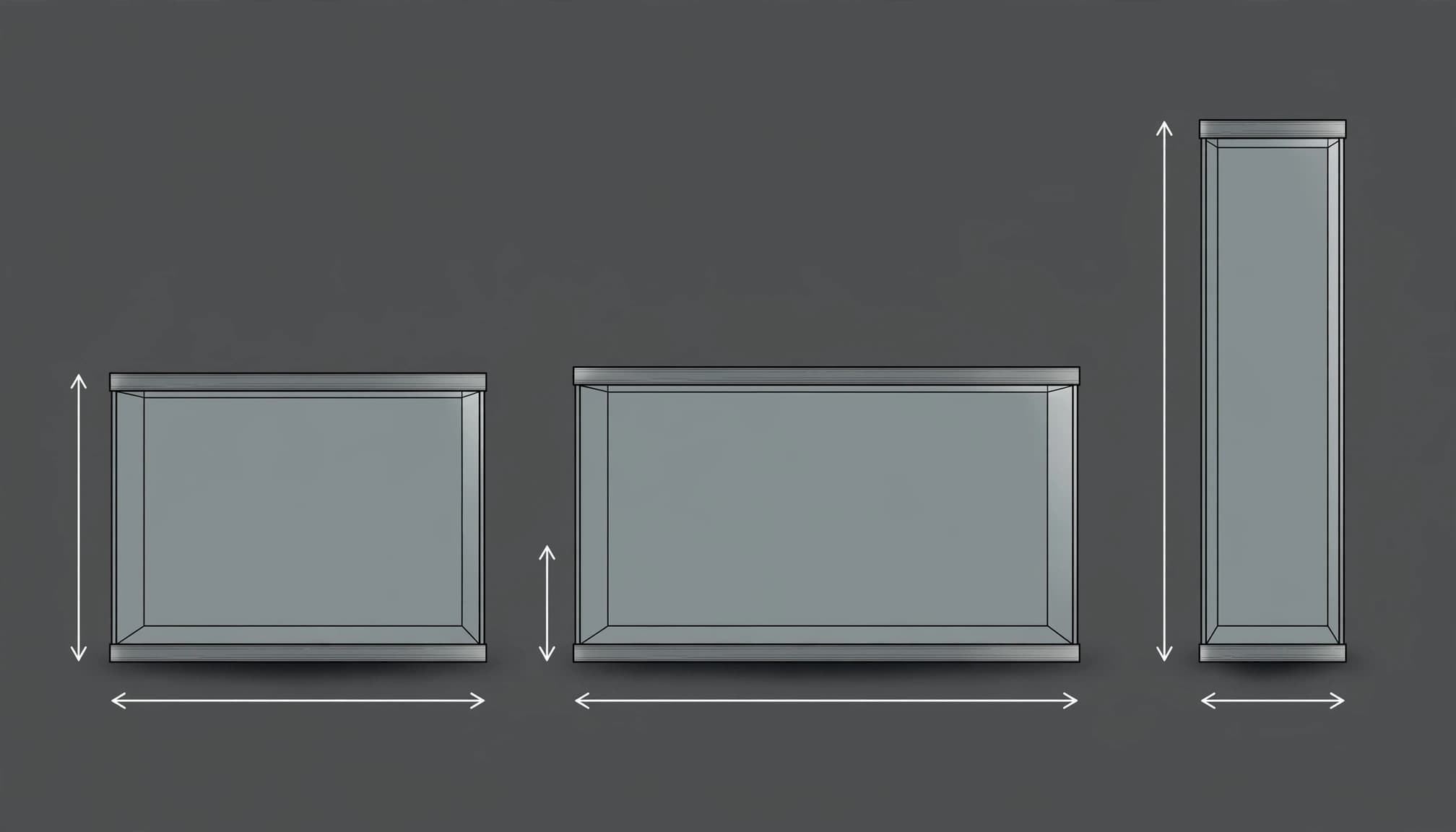
| Tank style | Approximate outside dimensions | Best fit |
|---|---|---|
| Standard or long | 36 x 12 x 16 inches | Horizontal swimming room |
| Breeder | 36 x 18 x 12 inches | Hardscape and bottom area |
| Tall or high | 24 x 12 x 24 inches | Smaller floor footprint |
The aquarium sizes, weights, and dimensions guide is a useful cross-check, but the product page for your exact tank wins every time.
Standard 30-Gallon Tank: More Length for Active Swimmers
The 36 x 12 x 16-inch shape is the familiar default. It gives you a long viewing pane, a practical stand footprint, and open horizontal water for fish that spend their day cruising instead of hovering like tiny haunted drones.
Its narrow depth is the tradeoff. You can still build a great planted layout, but large stone, chunky wood, and deep foreground slopes eat space fast.
30-Gallon Breeder Tank: More Depth and Floor Area
A common breeder format is about 36 x 18 x 12 inches. Those extra 6 inches of front-to-back depth change everything. You get more room for layered plants, rocks, wood, caves, and fish that care about floor territory.
The lower height also makes planting and cleaning less annoying. But this is not a standard tank wearing a wider hat. It needs a breeder-specific stand that supports the entire 18-inch-deep base.
Tall or Extra-High 30-Gallon Tanks: More Height, Less Floor Space
Tall tanks often measure near 24 x 12 x 24 inches. Some models come closer to 24.25 x 12.5 x 24.75 inches. They work when you have limited floor space and want a vertical display.
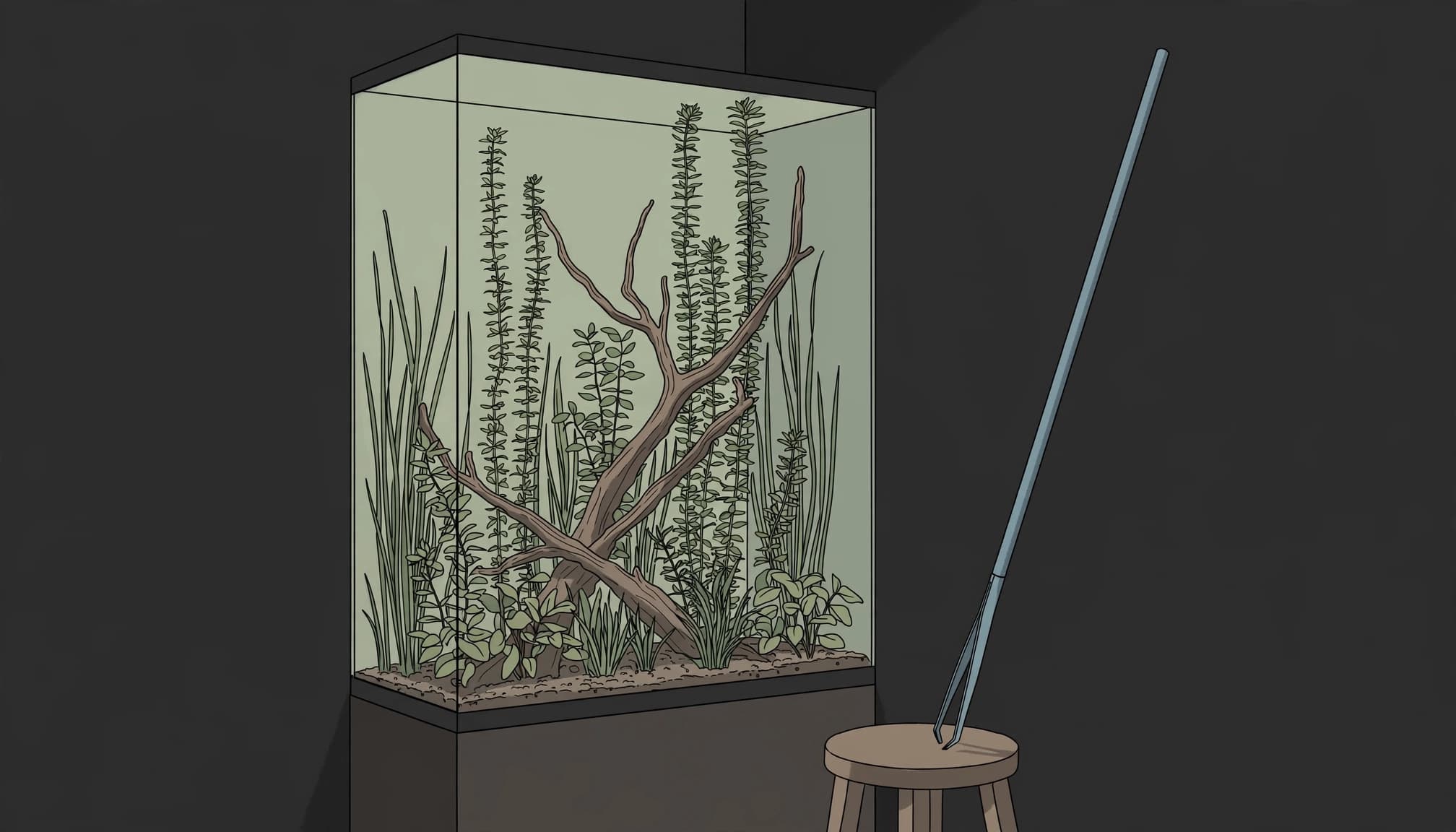
Height has consequences. You may need a step stool, long-handled maintenance tool, and a light that reaches the bottom well. Tall plants and branchy decor look great here, but cleaning the substrate can feel like fishing for loot in a dungeon.
How Much Does a Filled 30-Gallon Aquarium Weigh?
Plan for roughly 275 to 350 pounds once the aquarium is full and stocked with equipment. A quick estimate of 10 to 12 pounds per gallon helps with planning, but it is not an engineering rating for your floor or furniture.
The final number changes with tank shape, glass thickness, substrate, stones, wood, and water level. A bare standard tank and a rock-heavy planted breeder are not carrying the same payload.
Water, Glass, Substrate, and Decor All Add Weight
Thirty gallons of water alone weigh about 250 pounds. Then add the glass tank, gravel or sand, rocks, driftwood, lid, light, heater, filter, and whatever other aquatic DLC you install.
Heavy stone can push the final setup toward the upper end of the range, or beyond it. Published aquarium weights and sizes charts put a 30-gallon breeder at 36 x 18 x 12 inches and about 48 pounds empty, before any water or hardscape arrives.
Choose a Level Stand That Supports the Full Footprint
Use a purpose-built aquarium stand rated for your exact tank shape and full load. Support should extend under the entire base, especially with an 18-inch-deep breeder. A smaller stand under a wider tank is not improvisation. It is a leak-prequel.
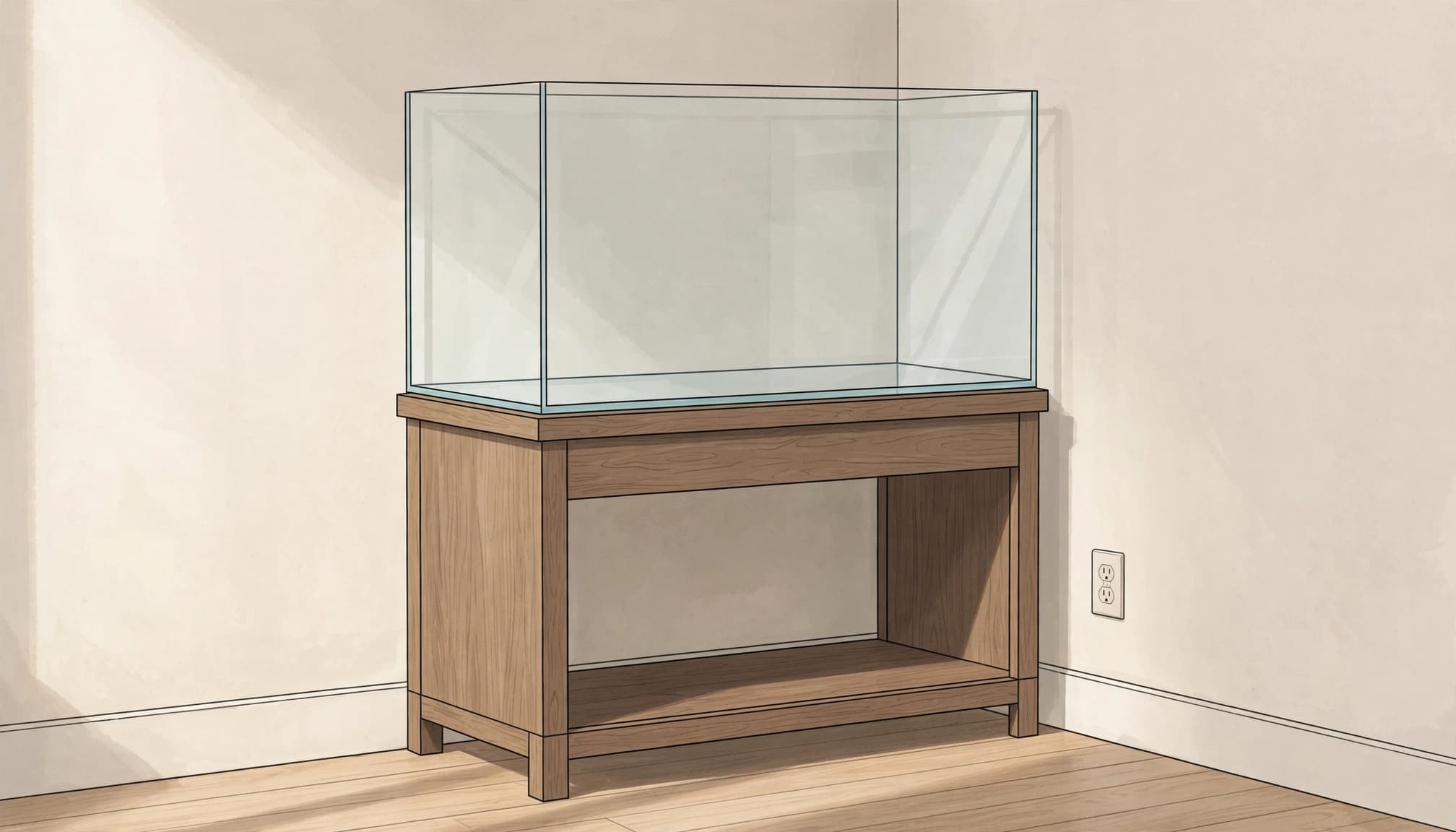
Set the stand in its final location, check that it is level, and then place the empty tank on it. An uneven base can create pressure points that lead to leaks, cracks, tipping, or glass failure. Never move a stand with a filled aquarium on top.
A tank that looks level can still twist under load. Check the stand before water, substrate, and rocks turn a small mistake into a 300-pound problem.
How to Check Your Room, Equipment, and Maintenance Space
Your room needs to fit more than a glass rectangle. Plan for access behind, above, and around the aquarium before the tank arrives at your door.
Measure the Tank Location Before You Buy
Measure available length, depth, and height. Add rear space for cords, hoses, airline tubing, and filter bodies. Leave enough top clearance to remove the lid, lift a light, and reach inside without doing elbow acrobatics.
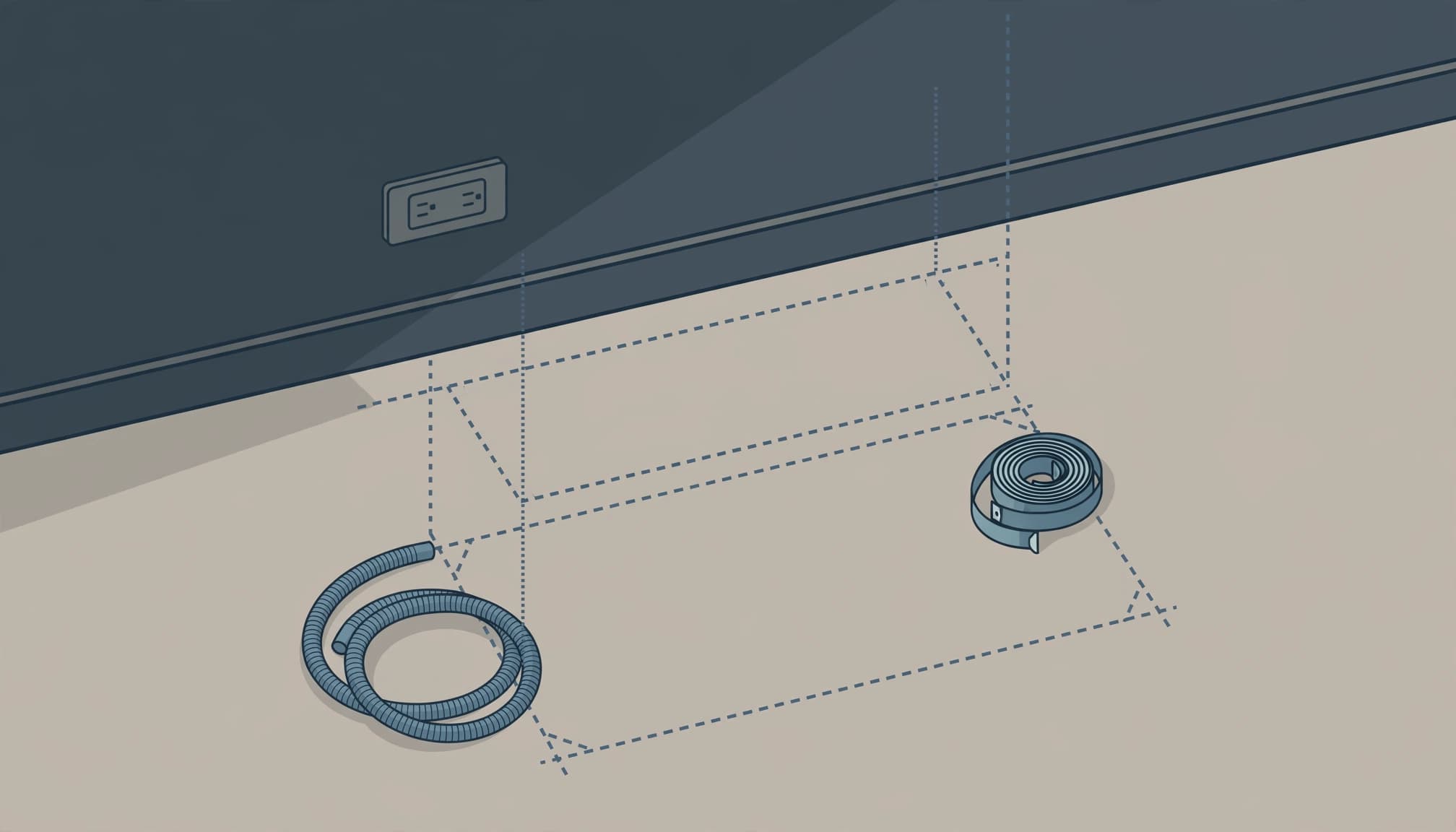
Check doorways, stairwells, and tight hallway turns if the tank must travel through them. A 36 x 18-inch breeder needs noticeably more floor depth than a 36 x 12-inch standard model, even though both may wear a 30-gallon badge.
Match the Filter, Light, Lid, and Canopy to the Exact Model
Equipment marked "for 30 gallons" may work for water volume but still fit the tank poorly. Tank length controls light coverage. Height affects light penetration and how far you must reach during maintenance.
Breeder tanks can need wider lids and canopies. Tall models may need longer intake and return lines. Confirm the dimensions of every accessory before ordering, including the filter's rear clearance and the light's mounting brackets.
Use the Shape to Guide Your Fish and Aquascape Plans
A standard long tank favors fish that use horizontal swimming space. A breeder gives you more floor area for caves, plants, wood, and bottom-oriented fish. Tall tanks suit vertical plants and upward-growing decor, but offer less long-distance swim room.
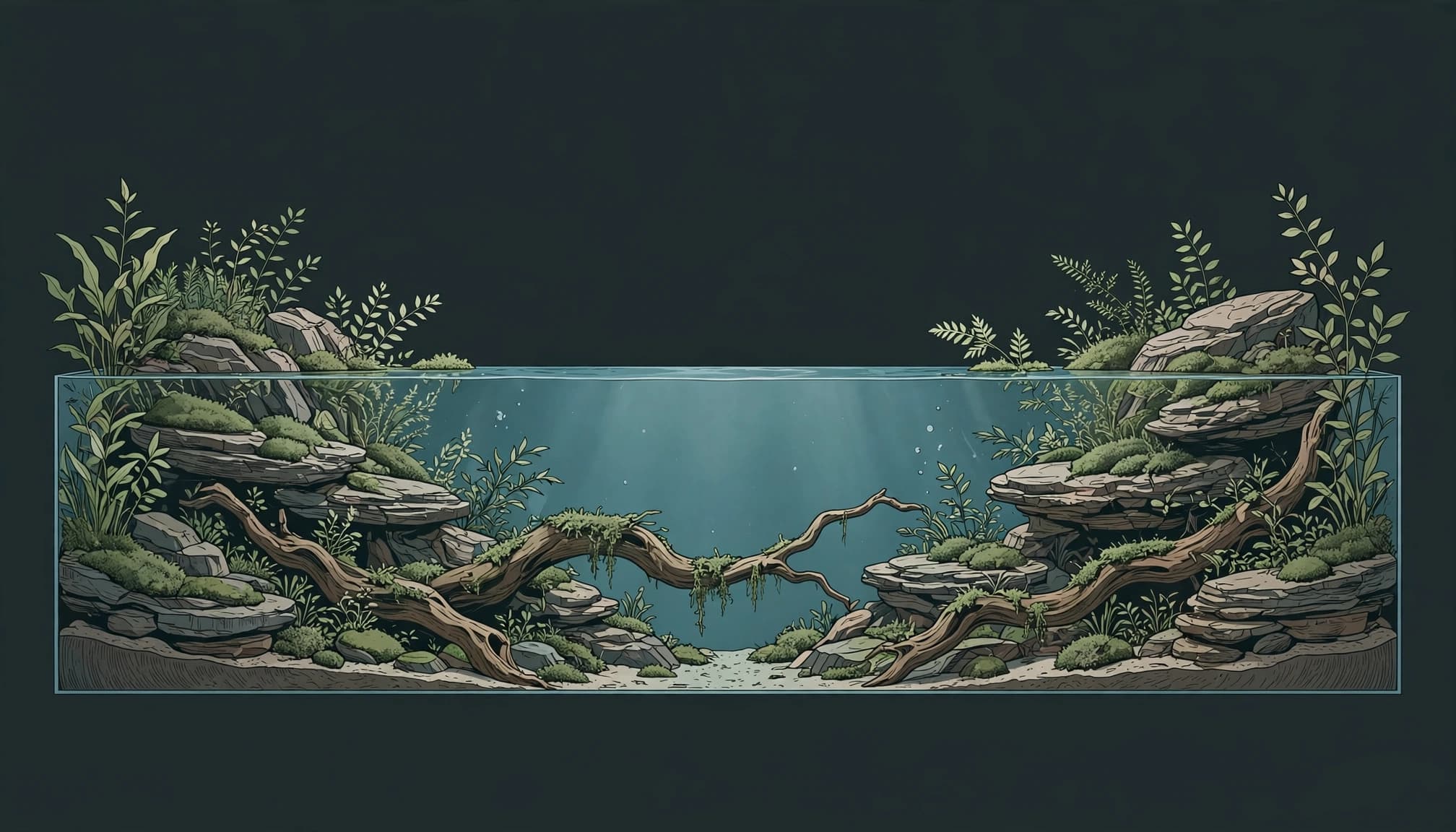
Don't use a fixed stocking number as a shortcut. Consider adult fish size, swimming behavior, territory, filtration, maintenance habits, and water quality. Your aquascape should leave open water where your fish will actually use it.
Frequently Asked Questions
Is a 30-gallon tank the same size as a 29-gallon tank?
Not usually. Many 29-gallon tanks are around 30 x 12 x 18 inches, while the common standard 30-gallon is longer and lower at roughly 36 x 12 x 16 inches. Always compare the listed dimensions instead of assuming nearby gallon sizes share a footprint.
Can you put a 30-gallon aquarium on regular furniture?
Only if the furniture is designed and rated to support the aquarium's full footprint and loaded weight. Most ordinary dressers, shelves, and media consoles were not built for several hundred pounds of water concentrated in one place.
Does thicker glass reduce the inside space?
Yes, a little. Exterior dimensions include glass panels, trim, and sometimes frames. The interior water volume is smaller than the outer measurements imply, then substrate and decor reduce it further.
Do you need a lid made for the exact aquarium model?
You do. A 36-inch standard lid may not fit a 36 x 18-inch breeder, and tall tanks can have different rim dimensions. Check length, depth, hinge placement, and filter cutouts before buying.
Where should you place the electrical outlet?
Keep the outlet accessible, not trapped behind an immovable stand. Use drip loops in every cord so water cannot run into the outlet, and leave enough room to unplug equipment during maintenance.
Choose the Shape Before You Choose the Setup
The standard answer is about 36 x 12 x 16 inches, but 30 gallon fish tank dimensions can become much wider with a breeder or much taller with a high model. The label tells you water volume. It does not tell you whether the tank fits your stand, your wall, or your maintenance routine.
Confirm the manufacturer's dimensions, filled-weight estimate, stand rating, and equipment fit before you buy. Pick the shape that matches your available space, fish behavior, aquascaping plans, and the amount of reaching, lifting, and cleaning you can live with. Good tank planning beats aquarium chaos every time.