

Anime Male Drawing Poses That Stop Looking Stiff
A cool anime guy with a dead-straight spine and matching stick arms has the energy of an NPC waiting for dialogue input. Anime male drawing poses work when the body says something before you add the hair spikes, jacket chains, or emotionally devastating eye bags.
The right pose can show confidence, panic, speed, boredom, grief, or "I have already won this boss fight." Start with movement and body language, then build the anatomy and details around it.
Key Takeaways
- Start every pose with a clear line of action, not a finished head.
- Tilt shoulders and hips differently to keep the body from looking copy-pasted.
- Use bent knees, uneven limbs, and overlap to make action read fast.
- Build hands, clothes, hair, and accessories after the skeleton holds up.
- Practice one reference in multiple moods, angles, and levels of exaggeration.
Anime Male Drawing Poses That Make Characters Feel Alive
A pose isn't decoration. It's your character's first line of dialogue, except nobody has to read a speech bubble. Pick it based on the scene, the mood, and who this guy is when nobody's watching.
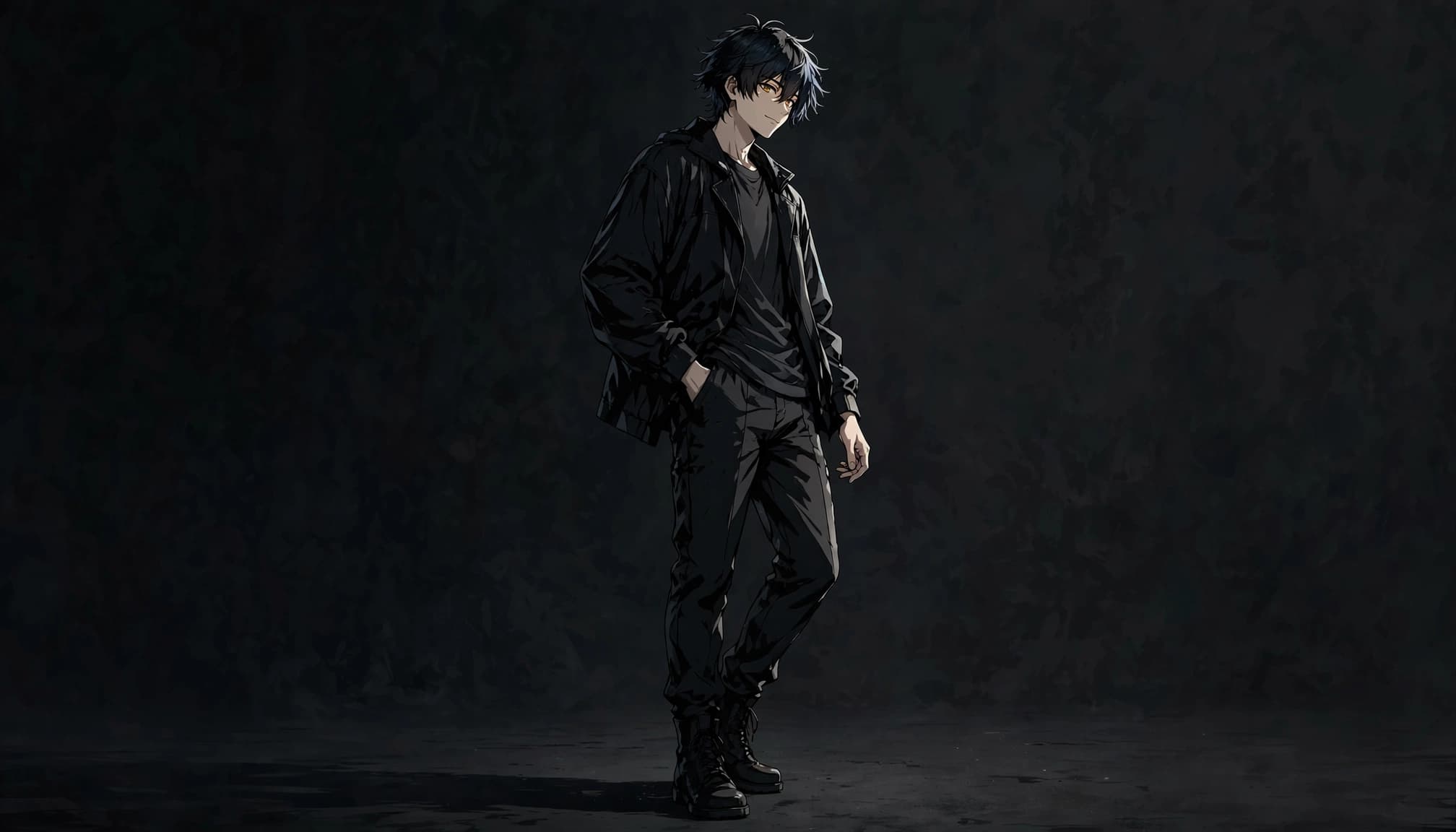
Confident Standing Poses for Strong Character Designs
Relaxed standing poses hit harder than the usual chest-out mannequin stance. Shift weight onto one leg, let one hip rise, and angle the shoulders against it. That small opposition makes the body feel alive.
Crossed arms can read guarded, arrogant, or patient. Hands on hips can read authoritative. A wider stance feels solid, while feet placed closer together can make a confident character look composed rather than ready to fight everyone in the food court.
Avoid one perfect vertical line running from head to ankles. Humans aren't loading screens.
Action Poses for Fighting, Running, and Jumping
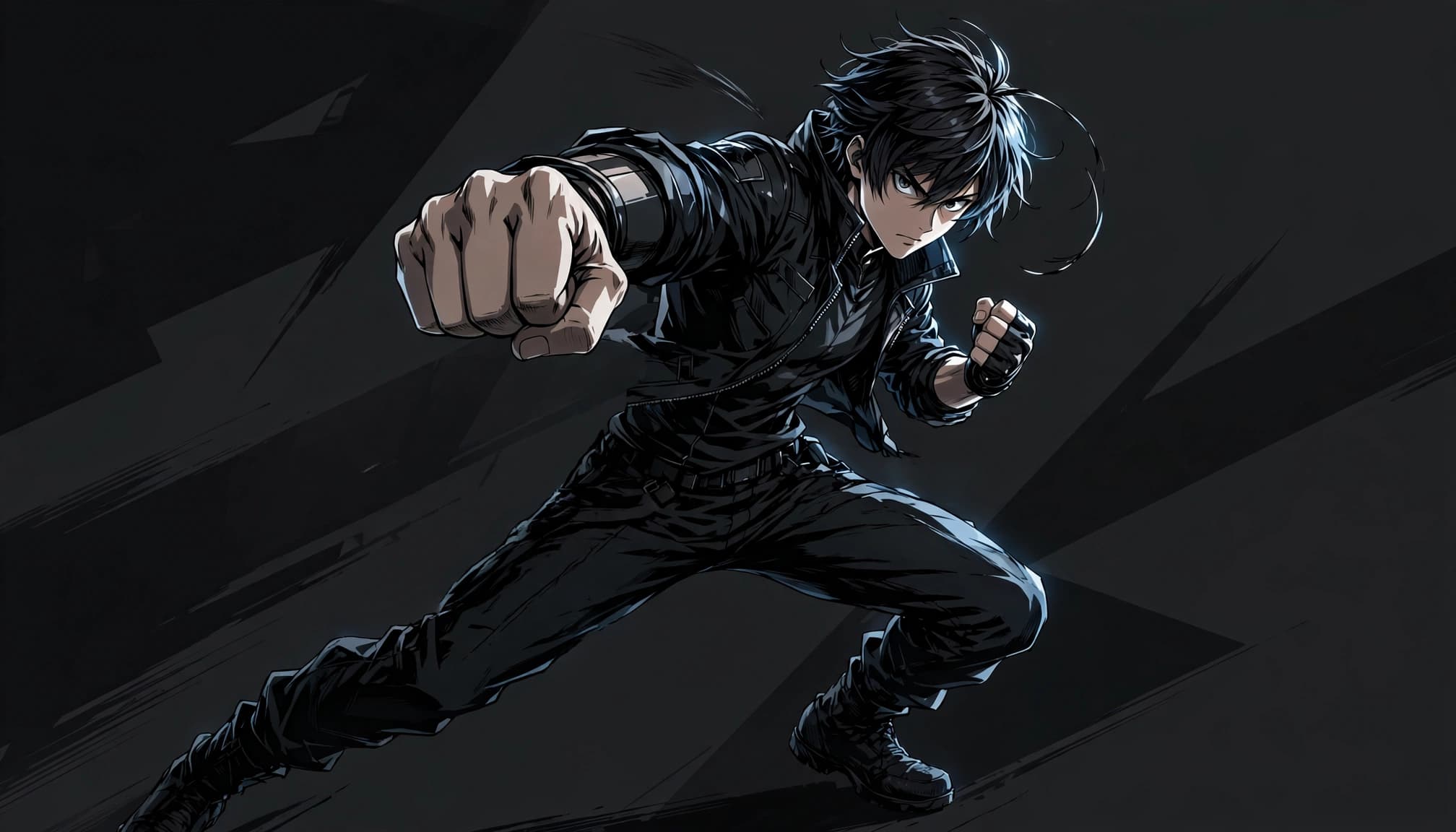
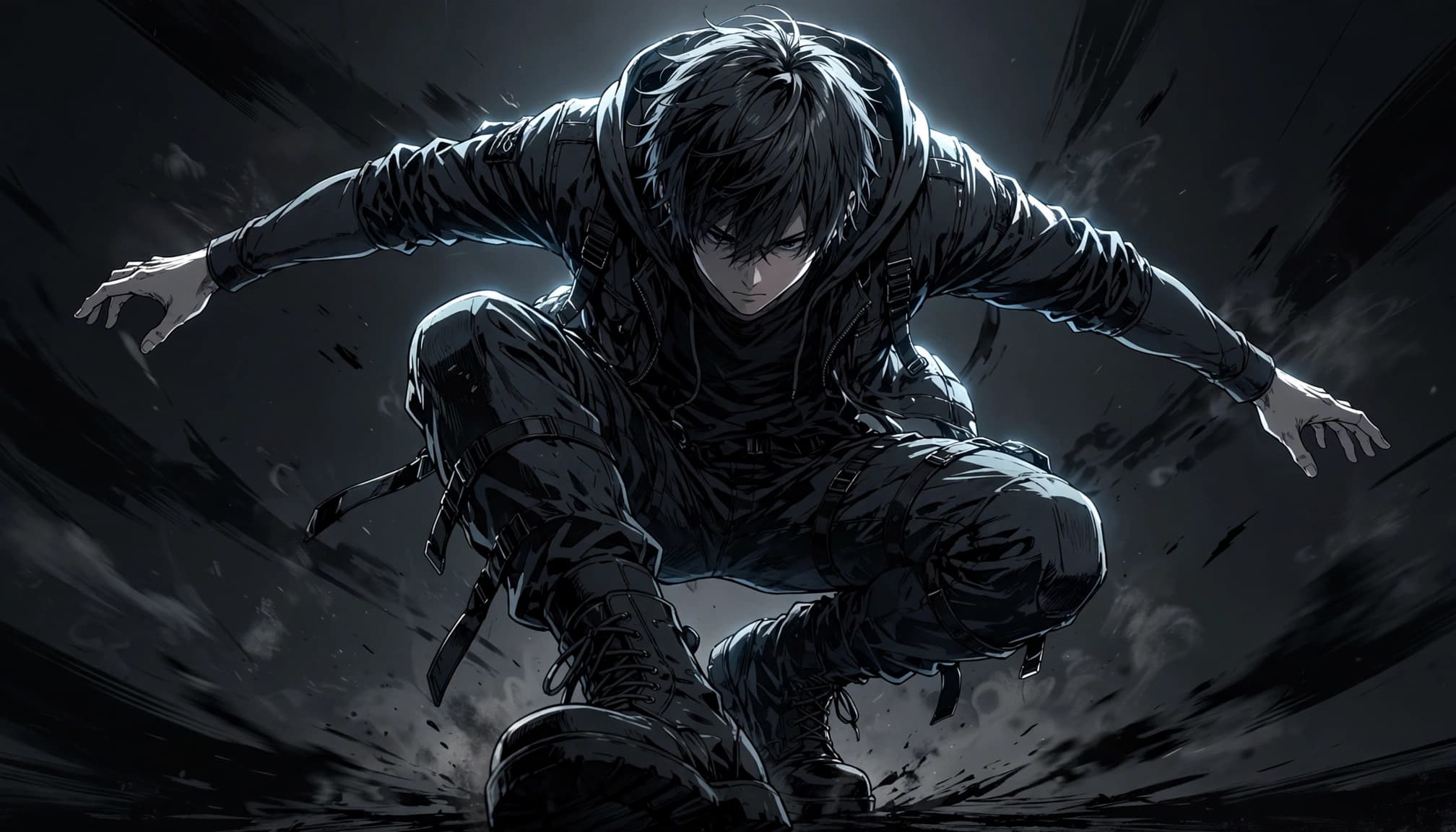
For combat, running, kicking, or dramatic rooftop nonsense, begin with one strong direction. A punch might drive forward in a sharp diagonal. A jump can arc upward, then snap into a curve.
Bend the knees. Twist the torso. Make one arm extend farther than the other. Open hands can sell speed and balance, while clenched fists bring tension. Push the pose past neutral, but keep the center of gravity believable. If both feet leave the ground, the body needs a reason for its momentum.
Sitting, Walking, and Everyday Anime Male Poses
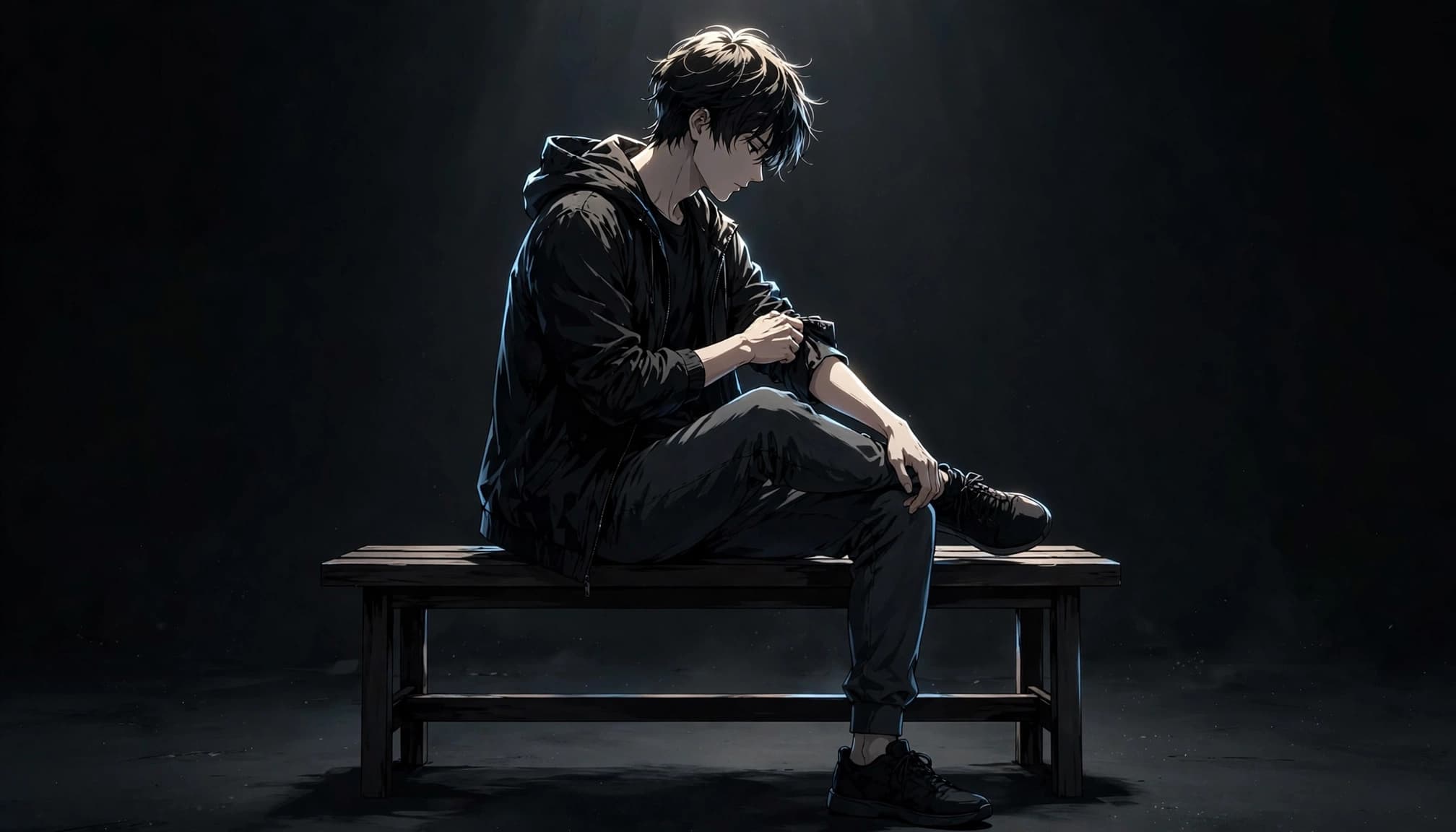
Daily-life poses are where personality sneaks in. Draw him leaning against a wall, walking with one hand in a pocket, squatting to check something, lying on a couch, or sitting with crossed legs and a slouch.
Watch where weight lands. A seated character compresses at the waist and thighs. A walker has one shoulder slightly forward. Clothing bunches at elbows, knees, and the hips. Tiny gestures, checking a phone, adjusting a sleeve, rubbing the back of the neck, do more work than twelve random belts.
Emotional and Character-Driven Poses
Don't outsource every emotion to the face. A sad character can fold inward, lower his head, and hide his hands. A nervous character might pull at a cuff or lock his elbows close to his ribs.
Anger needs a firmer base, raised chest, tight fists, or a forward lean. Excitement expands outward with lifted arms and a loose spine. Design the pose around what happened to him five seconds ago. Facial expressions are the patch notes, not the whole game.
How to Build Anime Male Poses From Gesture to Finished Drawing
Good anime male drawing poses don't begin with eyelashes. They begin with a rough body that can survive without them.
Start With the Line of Action and Basic Skeleton
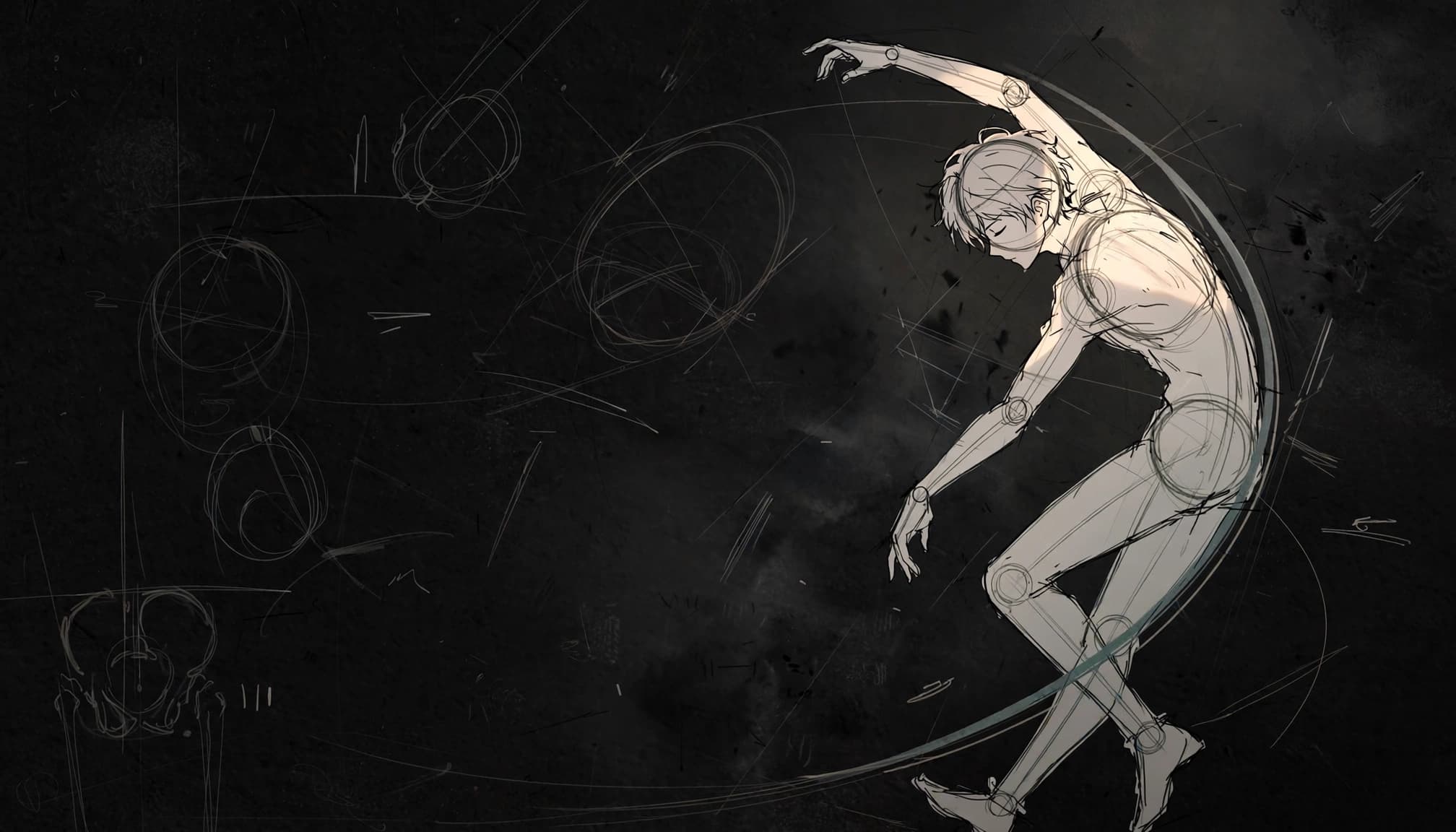
Draw one curved or angled line for the pose's main force. It might sweep through the spine during a kick, lean forward in a sprint, or sink down for a tired character.
Add a head shape, a rib cage, a pelvis block, and limb lines. Keep them loose. You are locating direction, not performing surgery on a sketchbook. Gesture gives the viewer an instant read on where the character is moving and what his body is doing.
Check Proportions, Balance, and Foreshortening
Anime proportions are flexible. A larger head can make a character youthful or cute. Longer legs can make him fashion-editorial and mildly impossible. What matters is consistency inside the design.
Compare the head to the rib cage, pelvis, arms, and legs before you add muscles. Then check balance. If you dropped a vertical line from the head and torso, would the planted foot support it? If not, shift the pelvis or move a foot.
Foreshortening looks scary because the arm or leg points toward the viewer and appears shorter. Start with simple cylinders. Make the nearer hand or shoe larger, overlap the forms, and let perspective do its job.
Add Hands, Feet, Clothing, and Facial Details Last
Hands and feet are tiny chaos goblins, so block them in first as wedges, mittens, and palm shapes. Refine fingers only after the arm angle works. Do the same with shoes, using a simple block for the toe and heel.
Clothes react to the body underneath. Put folds where fabric compresses or pulls: elbows, knees, shoulders, waist, and the inside of a bent arm. Finish with hair, eyes, accessories, and facial expression. Every detail should back up the pose's mood.
Use a Quick Pose Checklist Before You Clean the Lines
Pause before the clean line pass. Ask yourself:
- Is the action readable at thumbnail size?
- Could the feet and legs carry the body's weight?
- Do the shoulders and hips tilt like separate parts of a torso?
- Are limbs overlapping in a way that makes depth obvious?
- Does the body language fit the character's emotion?
Flip your canvas horizontally or look at the drawing from across the room. Stiffness loves hiding in plain sight until you flip it and suddenly see the cursed noodle arm.
Find Better Anime Male Pose References and Practice More Efficiently
References aren't cheating. They are visual receipts that knees bend, shoulders rotate, and nobody's wrist works like a plastic fork.
Choose References by Movement, Camera Angle, and Mood
Search for the exact problem in front of you. Try "low-angle punching pose," "seated side view," "walking from behind," or "tired man leaning wall." Generic searches produce generic results. Your character deserves better than Default Action Hero 03.
Collect front, side, back, three-quarter, and overhead views. Keep references with readable silhouettes and clear weight placement. A photo can show gravity, while anime screenshots can show how far you can push a gesture before it becomes visual soup.
Adjust 3D Pose Tools Instead of Settling for Generic Angles
PoseMy.Art lists more than 6,300 premade poses, scenes, and animations, including anime models. SetPose offers an editable 3D model and an anime pose library. PoseMirror uses 33 body landmarks and allows per-joint adjustments.
Block your figure, rotate the camera, then inspect the foreshortening before drawing. Change the model until the view matches your scene. Keep the result as a guide, not a prison cell. Your anatomy choices, clothing, proportions, and character attitude still belong to you.
A reference gives you gravity and camera logic. Your drawing gives it a soul, plus the jacket that looks like it cost 40,000 yen.
Practice With Timed Gesture Drawing and Pose Variations
Use 30-second rounds for movement. Spend two minutes on structure. Give yourself five minutes when you want to study folds, hands, and expression without entering a seven-hour rendering spiral.
Redraw the same reference as a smug rival, an exhausted protagonist, and a shy guy who regrets attending the party. Then change the camera angle or exaggerate the curve of the spine. Repetition builds control. Finished illustrations are nice, but ugly little studies are where your hands stop lying to you.
Avoid the Mistakes That Make Male Anime Poses Look Stiff
Mirror-image arms and legs flatten a figure fast. Break symmetry by bending one knee, pushing one elbow back, or putting one hand higher. Equal weight on both feet also creates mannequin mode, so shift the pelvis toward the supporting leg.
Don't hide both hands behind the body unless secrecy is the point. Fix weak silhouettes by separating arms from the torso or moving a leg forward. If details arrive before structure, return to the gesture line. The skeleton gets the final boss fight first.
For real-body landmarks beneath the stylization, explore the Institute of Human Anatomy. A broader human anatomy study video can also help when joints and major forms refuse to cooperate.
Frequently Asked Questions
What is the easiest anime male pose to draw first?
Start with a relaxed standing pose and a slight weight shift. Use a simple head, rib cage, pelvis, and leg lines before adding a hoodie, hair, or expression. It teaches balance without asking you to draw a flying spin kick on day one.
How do you make an anime male character look more muscular?
Build the muscles over a clear rib cage, pelvis, and limb structure. Broaden the shoulders, taper the torso toward the waist, and use a few clear muscle planes. Don't inflate every body part equally, unless your goal is a character built like a vending machine.
How can you draw anime male hands in different poses?
Start with a palm block and grouped finger shapes. Turn the palm first, then adjust finger overlap and length to match the action. Practice fists, open hands, pointing, and relaxed fingers from several angles, because one front-facing hand pose will not carry the whole squad.
Should you use references when drawing anime poses?
Yes. References improve anatomy, movement, perspective, and camera angles. Use them as a framework, then change the clothing, proportions, expression, and design until the character is unmistakably yours.
Keep the Pose Doing the Talking
Strong anime male drawing poses come down to a readable gesture, believable balance, simple structure, and body language that matches the character. Start with the skeleton, choose references that fit the action, and give yourself permission to redraw the same pose badly several times.
Loose studies aren't wasted effort. They're where your personal style starts showing up, one crooked shoulder and dramatic hand gesture at a time.