

Applehead Siamese Kittens: Looks, Care, and Choosing One
TrendReactTees.STORE TeamApplehead Siamese kittens are Siamese-type cats commonly described by a rounder head and sturdier build. Cat people can make that affection part of the outfit with a Cat Mom Legend Tee or a Cat Needs Alone Time Sit In Dark Tee.
"Applehead" is a popular description, not a separate breed label recognized by every cat registry. The look can be appealing, but it doesn't tell you a kitten's pedigree, health, or personality.
If you're considering one, focus on the cat in front of you: its coat and build, its observed behavior, its family health information, and the care it has received. Start by sorting out what the applehead label actually means.
This post may contain affiliate links. If you make a purchase through these links, I may earn a small commission at no extra cost to you.
Key Takeaways
- "Applehead" usually describes a rounder-headed, more substantial Siamese-type cat, not a universally recognized separate breed.
- Siamese cats have blue eyes and a pointed coat pattern, with four traditional colors: seal, chocolate, blue, and lilac.
- Head shape doesn't establish health, temperament, or pedigree.
- Ask about family health, records, parentage, and the kitten's observed behavior before choosing.
- Adoption and responsible breeders are both possible paths to a Siamese-type cat.
What Does "Applehead Siamese" Mean?
"Applehead" and "traditional" are informal labels for Siamese-type cats with a rounder head and more solid build than the long, angular show type. People don't use the terms consistently, and they aren't separate Siamese varieties recognized by every registry.
The Cat Fanciers' Association (CFA) standard describes a long, tapering wedge-shaped head and elongated body lines. Its Siamese breed profile describes the long, lean show type, but that standard doesn't prove that every cat with a different head shape lacks Siamese ancestry.
There's also disagreement about which look is more historically authentic. The National Siamese Cat Club argues that early descriptions better match the wedge-shaped type; other groups and enthusiasts use "traditional" for rounder cats. Treat those as competing interpretations, not a settled verdict about a kitten's origins.
How the Rounder Look Compares With the Wedge-Head Type
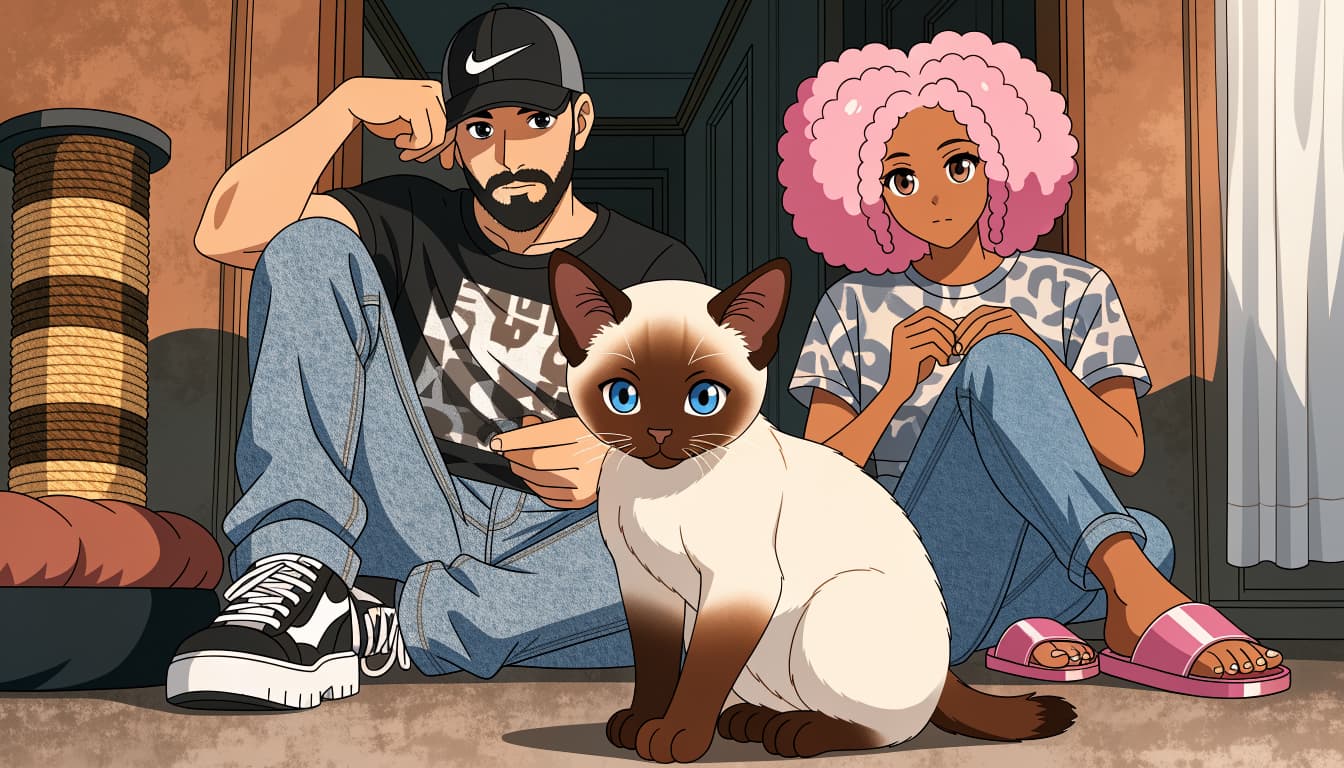
Applehead cats are commonly described as having a broader, rounder head, a shorter-looking muzzle, and a sturdier or more muscular body. In the CFA show standard, the head forms a long wedge from nose to ear tips, with an elongated body and long legs.
These are general descriptions, not a measuring system. Individual cats vary, and head shape alone doesn't establish a cat's registration, health, or temperament. If a seller uses "applehead" as proof of a particular pedigree or personality, ask what records support the claim.
Pointed Coat Colors and Blue Eyes
Siamese cats have a short, fine coat and a pointed pattern: the face, ears, paws, and tail are darker than the lighter body. Their eyes are blue. CFA lists the four traditional Siamese colors as seal, chocolate, blue, and lilac point in its Siamese highlights.
What Can You Expect From an Applehead Siamese Kitten?
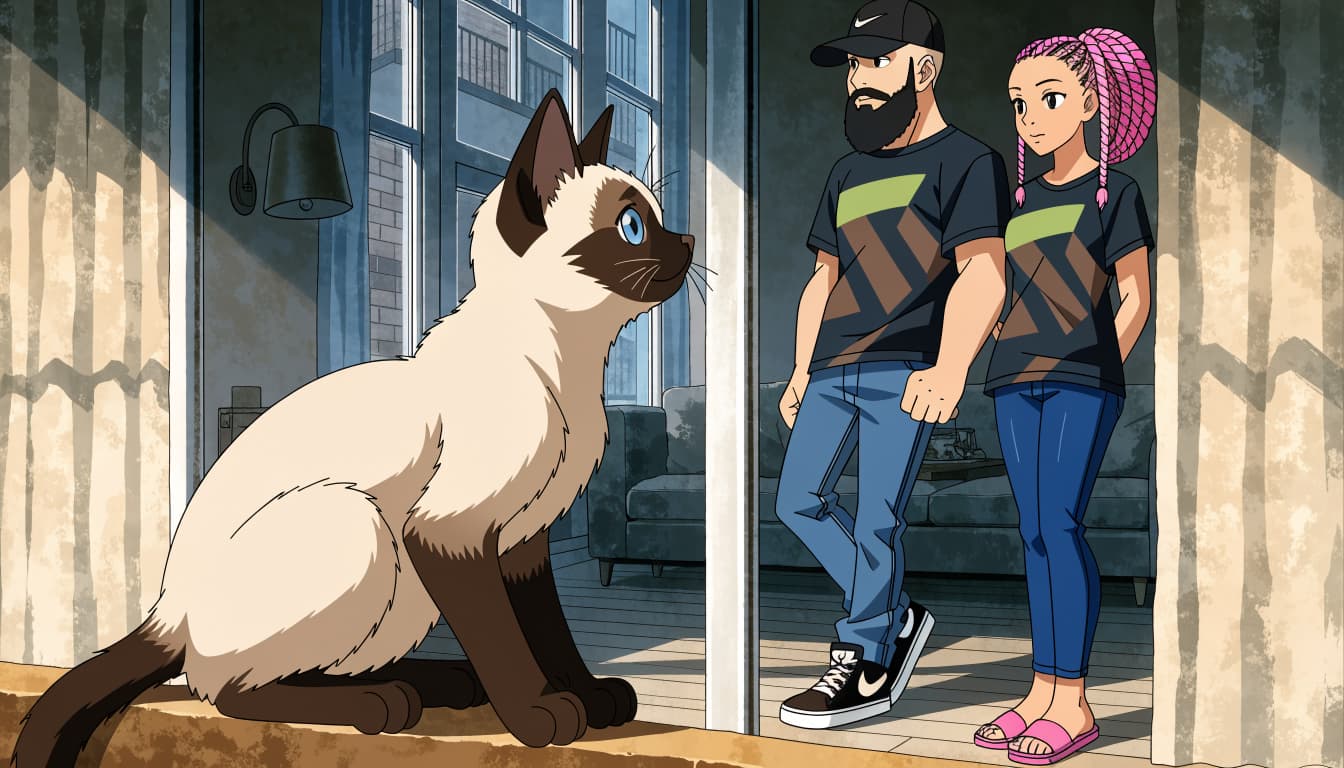
Expect the familiar Siamese combination of blue eyes, a short coat, and darker points against a paler body. In the applehead description, the kitten may also have a rounder head and more substantial build than a wedge-type Siamese. Those traits won't necessarily look fully defined in a young kitten.
Coat shade, proportions, and facial shape can change as the cat grows. A kitten's appearance is a clue to its current look, not a reliable way to confirm its ancestry or health. If a particular lineage matters to you, ask for the pedigree or registration details the seller has, rather than relying on a photo or label.

Look at the Kitten, Not Just the Label
When you meet a kitten, notice how it moves, explores, rests, and responds to ordinary activity. A round face may catch your eye first; the individual cat's behavior and records should carry more weight in your decision.
A seller's description of "applehead" can mean a visual style rather than a formal breed category. Ask what the term means to them and whether they have pedigree or registration paperwork to support any lineage claims.
Personality Depends on the Individual Cat
Siamese cats have a reputation for being social and vocal, but that doesn't guarantee that every kitten will be chatty or eager to greet strangers. There's no established temperament difference between applehead and wedge-head types.
Ask how the kitten responds to people, gentle handling, household sounds, and other animals. The answers can help you picture a real cat in your home, rather than a personality forecast based on head shape.
Health, Everyday Care, and What to Ask Your Vet
Siamese breed guidance identifies progressive retinal atrophy (PRA), an inherited condition that can lead to blindness, and amyloidosis, which can affect the liver. These are breed-level concerns, not evidence that one head type is healthier than another.
A veterinarian can help you plan preventive care around your kitten's individual needs. Ask the breeder or rescue for dated veterinary and treatment records, then bring those records to the first visit. Avoid assuming a breed label or a DNA result covers every health question.
Ask About PRA Testing and Family Health History
Ask whether the parents have genetic test results for the CEP290-associated rdAc variant, and how the breeder uses those results when planning pairings. UC Davis Veterinary Genetics Laboratory offers a test for this specific variant. When both parents are carriers, the expected outcome for each kitten is a 25% chance of being affected, a 50% chance of being a carrier, and a 25% chance of inheriting neither copy of the variant. Those figures apply to this variant, not every possible cause of retinal disease.
Ask whether amyloidosis has appeared in either side of the family. Its underlying genetics are still being studied, so family history is useful context rather than a guarantee. Parentage DNA verification, including a report offered by UC Davis, compares possible parents with an offspring. It is not a disease test.
Prepare a Safe, Calm Home for Your Kitten
Set up a secure indoor space before the kitten arrives. Have a litter area, scratching surfaces, a carrier, and the food the kitten already eats. If you plan to change food, ask how to make the transition without abruptly replacing its familiar diet.

Request dated veterinary and treatment records, then arrange a veterinary visit to review the kitten's care needs. You'll have a clearer starting point than trying to reconstruct its history from memory after the move.
How to Find and Choose an Applehead Siamese Kitten Safely
You can look for a kitten through a responsible breeder, a shelter, or a Siamese-focused rescue. The word "applehead" may describe a seller's preferred look rather than a registered breed type, so ask what they mean by it. A registry or pedigree can document recorded identity and lineage, but it doesn't tell you whether a kitten has received good care or fits your household.
When possible, meet the kitten and its mother. Ask to see where the kittens live, how they respond to people, and what health information is available. Request registration or adoption paperwork, pedigree details if applicable, and dated veterinary records. Take time to read the written terms for payment, pickup, and what happens if the placement doesn't work out.
Pressure to pay immediately, photos a seller won't discuss live, and evasive answers about the parents are reasons to slow down. If meeting in person isn't practical, a live video conversation can help you see the kitten and its surroundings. A flawless listing can't answer your questions; a straightforward conversation often can.
Questions to Ask a Breeder or Rescue
Ask who the kitten's parents are, whether PRA test results are available, and whether amyloidosis has appeared in the family. Find out what the seller knows about the kitten's response to people, handling, ordinary household sounds, and other animals.
You can also ask what paperwork comes with the kitten, which veterinary and treatment records are available, and what support the breeder or rescue offers if the placement doesn't work out. These questions help you understand the specific kitten and the terms of the placement.
Keep the Paperwork in Context
A pedigree or registration document may help explain recorded parentage, while medical records describe care the kitten has received. Neither replaces spending time with the individual cat or asking about its family health.
If a seller makes a claim about ancestry or testing, ask which record supports it and what it covers. Parentage confirmation and health screening answer different questions, so don't treat one as a substitute for the other.
Streetwear & Casual Styling
A cat-themed tee pairs easily with jeans and simple sneakers. For a Cyber-Brutalist Anime Graphic Tee look, let the shirt carry the visual noise and keep the rest of the outfit low-key. The Reassuring My Cat Good Boy Tee brings the cat-parent energy; the Cats Virtual Life More Fulfilling Than Mine Tee adds gamer humor to the fit. For more casual outfits with gaming cat tees, start with a graphic you'd wear even when the cat isn't supervising.
Frequently Asked Questions
Is an Applehead Siamese a Separate Breed?
"Applehead" is a common descriptive label for a rounder-headed Siamese-type cat. It isn't a separate breed recognized by every registry. Ask what a breeder means by the term and what paperwork they have for the kitten.
Are Applehead Siamese Cats Healthier Than Wedge-Head Siamese?
Available breed information doesn't establish a health advantage based on head shape. Focus on documented family health, relevant test results, veterinary records, and care for the individual kitten.
Will You Know a Kitten's Adult Head Shape Right Away?
A kitten's proportions develop as it grows, so its young face may not predict its adult appearance exactly. Head shape alone also can't confirm ancestry or health.
Can You Adopt a Siamese-Type Kitten?
Yes. Check shelters and breed-rescue groups as well as breeders. Review whatever background and medical records are available, and spend time with the cat to see whether its behavior suits your home.
Choose the Kitten, Not the Label
"Applehead" gives you a quick description of a look, but it can't tell you what living with a particular cat will be like. Health records, family history, observed personality, and a responsible placement matter more than the label.
Ask direct questions, make a calm space for your kitten, and plan for ongoing veterinary care. The right match is the individual cat whose needs and temperament fit your home.