

Are Axolotls Freshwater? The Water Rules That Keep Them Safe
Yes, axolotls are freshwater animals. If your late-night pet-research tab is asking, "are axolotl freshwater?", the answer is a clean yes, no ocean DLC required.
An axolotl is a fully aquatic salamander, not a fish and definitely not a saltwater creature. Its water needs aren't complicated, but heat, untreated tap water, and random salt additions can turn a cute tank setup into chaos fast.
Get the habitat right before your future little water dragon moves in.
https://www.youtube.com/watch?v=GPJhx2xbz0U
Key Takeaways
- Axolotls are freshwater salamanders native to the Xochimilco waterways near Mexico City.
- Saltwater and brackish water are not suitable everyday homes for an axolotl.
- Cool, dechlorinated, cycled water matters more than chasing one perfect pH number.
- Ammonia and nitrite must stay at 0 ppm, while nitrate should remain low.
- A calm filter flow, weekly partial changes, and regular testing keep the tank from going goblin mode.
Are Axolotl Freshwater Animals? The Clear Answer
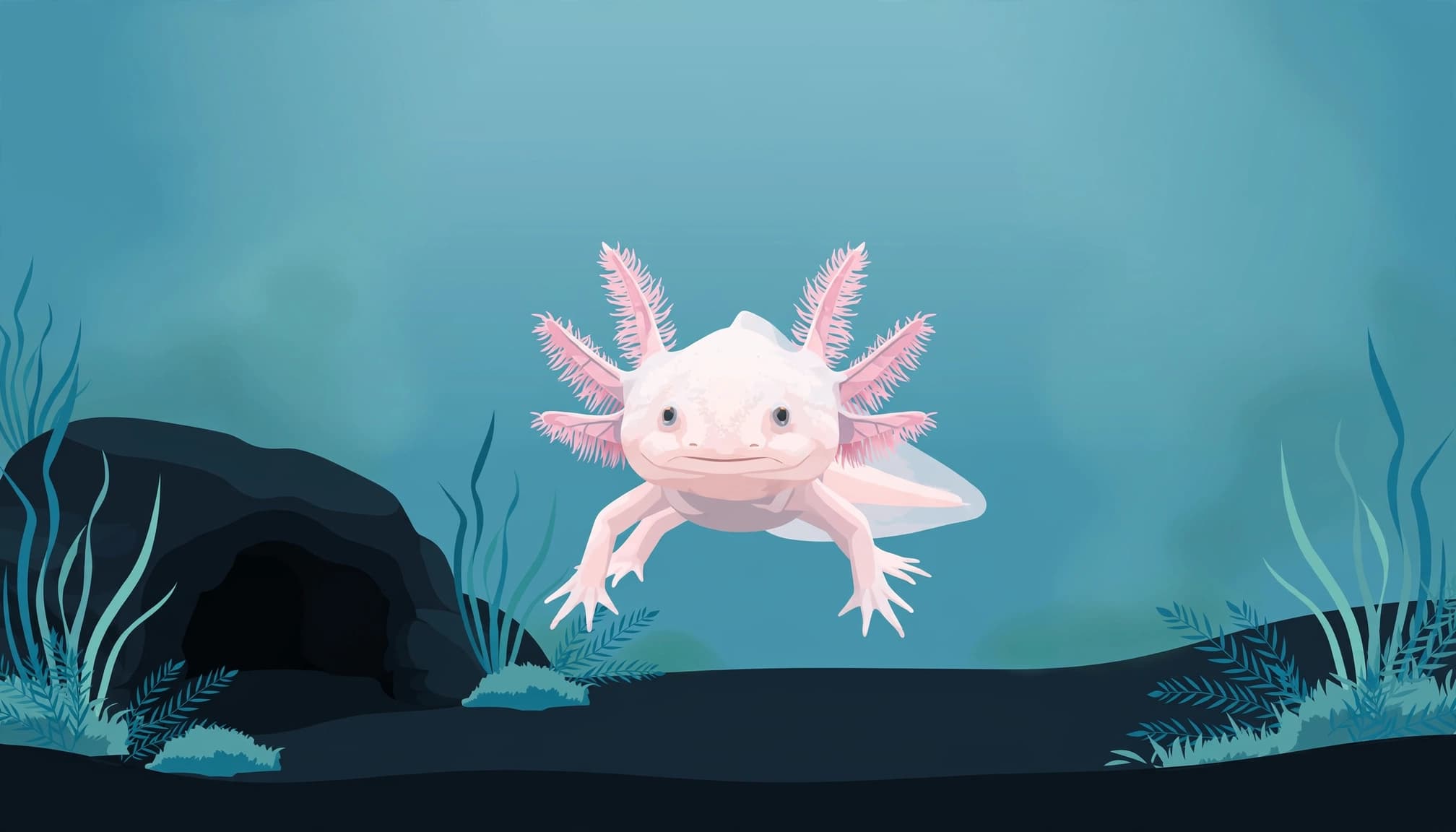
Axolotls are freshwater salamanders called Ambystoma mexicanum. They spend their whole lives in water, keeping the feathery external gills and aquatic lifestyle that make them look like they escaped an anime creature-design meeting.
They are amphibians, though. That means they aren't fish, marine animals, or weird little brackish-water residents. The Natural History Museum's axolotl overview explains their unusual life cycle and amphibian biology.
Freshwater has very little dissolved salt. Saltwater has a lot. Brackish water sits between the two, like a questionable crossover episode nobody asked for. Axolotls belong in the first category only.
Where Axolotls Live in the Wild
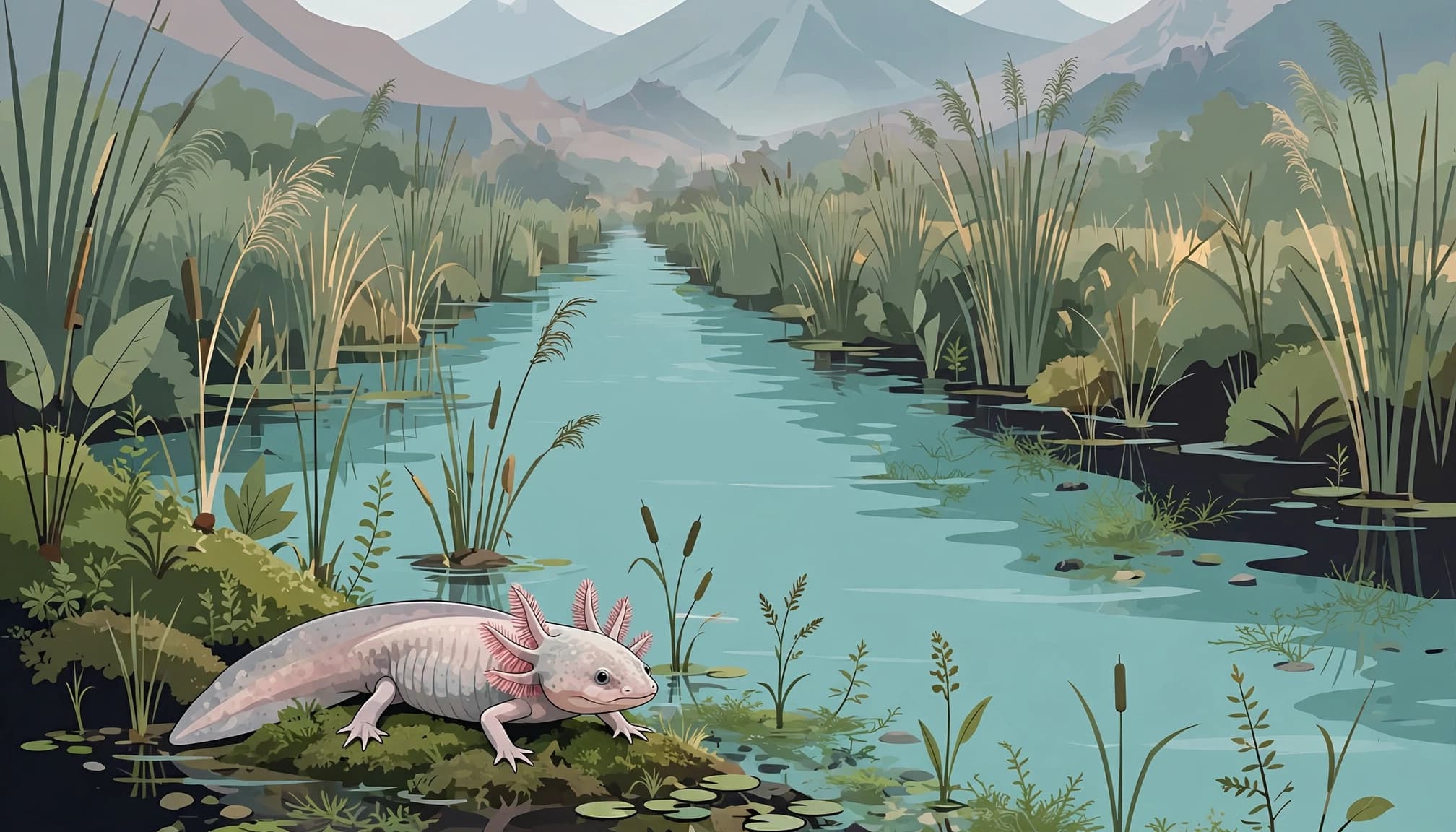
Wild axolotls come from the Xochimilco lake and canal system near Mexico City. Their historic home is made up of cool freshwater lakes, canals, springs, and water fed by mountain snowmelt. No coral reef. No surf. No tiny pirate ship decor required.
Their natural habitat has been heavily reduced, and wild populations are critically endangered. A scientific review of the axolotl's Xochimilco habitat describes the pressure this species faces in its remaining native waterways.
That origin tells you plenty about aquarium care. Axolotls need clean, cool freshwater with room to rest and hide. Their tank shouldn't imitate a tropical reef or a fast river trying to speedrun stress.
Can Axolotls Live in Saltwater or Brackish Water?
No. Don't keep an axolotl in saltwater or brackish water as routine housing.
Aquarium salt is not a standard axolotl tank additive. Their skin and external gills are delicate, and regular salt exposure can irritate or harm them. A short-term claim that an axolotl "tolerated" salt doesn't make a marine tank safe. Surviving a bad setting is not thriving in it.
Some treatment plans may involve controlled salt exposure for a narrow veterinary reason. That's not a DIY side quest. Use salt only with qualified exotic-vet guidance and exact instructions.
What Water Do Axolotls Need in an Aquarium?
Your axolotl needs cool, dechlorinated, cycled freshwater with stable chemistry. Exact targets vary slightly between care sources, but sudden changes are the real villain.
A useful target is about 15-18 C (59-64 F), with pH near 7.4-7.6. A broader pH range around 6.5-8.0 can work when conditions stay stable. Moderately hard water, around 7-14 dGH and 3-8 dKH, is a practical baseline.
Keep the Water Cool, Clean, and Dechlorinated
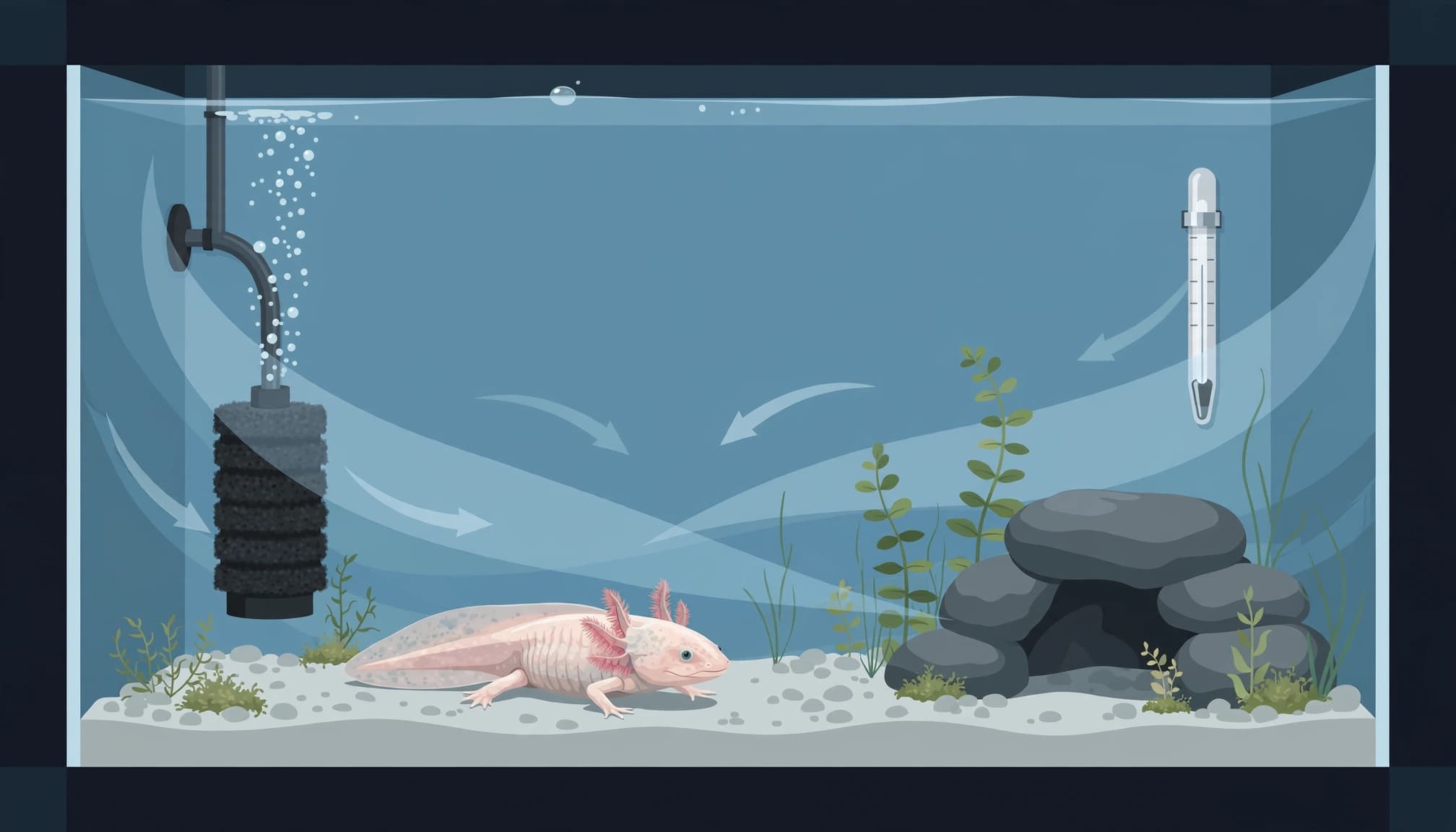
Warm water is a problem. Temperatures above roughly 22-24 C (72-75 F) become increasingly risky, especially when the tank stays hot for days.
Most homes don't need an aquarium heater for axolotls. In warmer climates, you may need a cooling fan, frozen bottle rotation outside the tank, or an aquarium chiller. Check temperatures daily during summer heat waves, because your room temperature can betray you without warning.
Tap water can work after you treat it with a conditioner that removes chlorine and chloramine. Never use untreated tap water. It can damage gills and wipe out beneficial filter bacteria.
The Water Tests That Matter Most
Test temperature, ammonia, nitrite, nitrate, pH, GH, KH, and salinity. The biggest numbers are ammonia and nitrite, which must both read 0 ppm in a cycled tank.
Keep nitrate low, often below 10-20 ppm depending on your care routine and test results. The cool, plant-rich freshwater conditions of axolotl habitat are a useful reminder that clean water beats decorative gimmicks.
Crystal-clear water can still contain ammonia. Your tank's vibes are not a water test.
Avoid distilled water or extremely soft water for long-term housing. It lacks the mineral content that helps maintain stable hardness and chemistry.
Why Slow Water Flow and Regular Changes Help
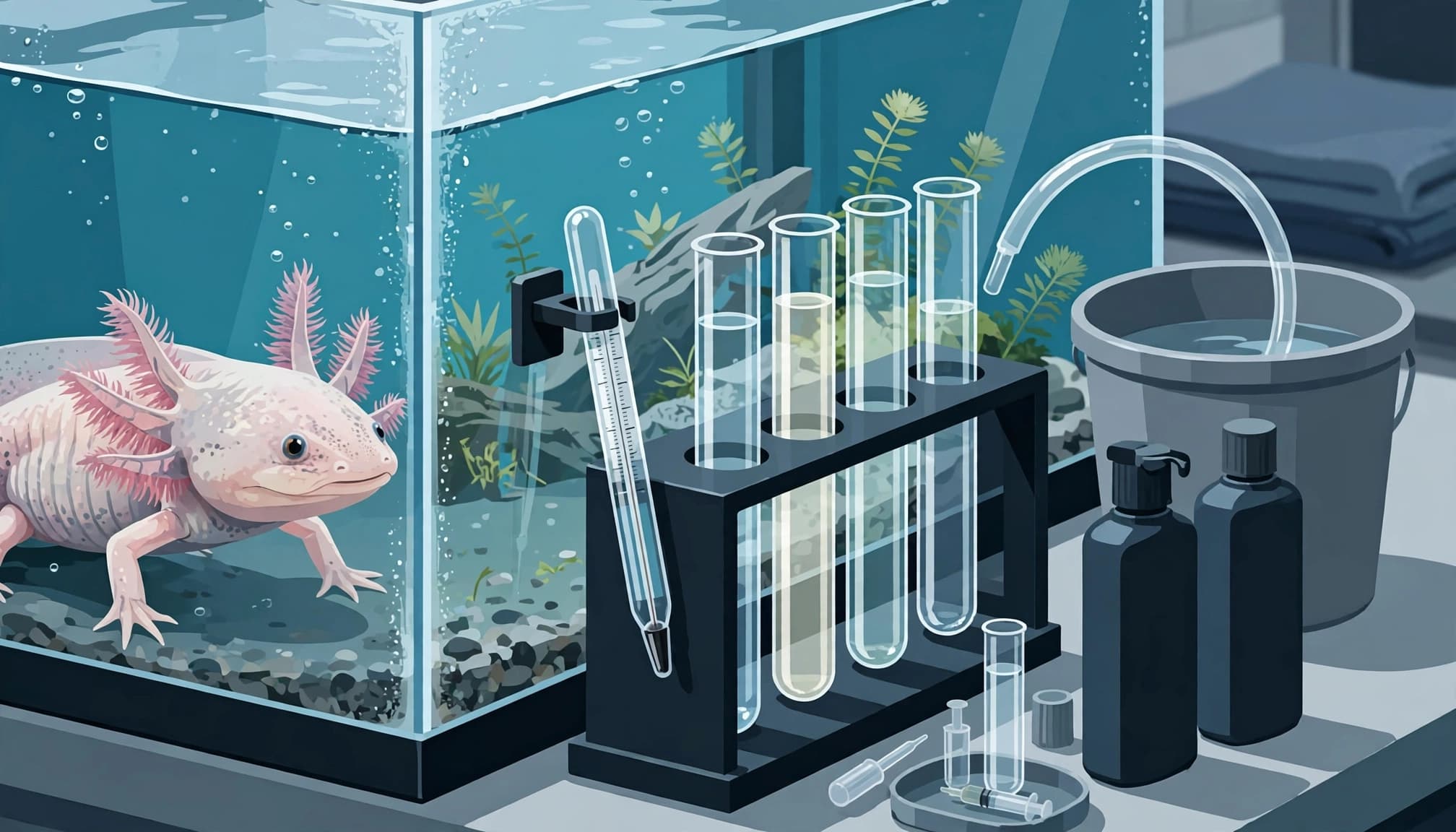
Axolotls prefer still or slow-moving water. Strong current can stress them, push them around, and mess with those fluffy external gills.
Use filtration that handles waste, then soften the output with a sponge filter, spray bar, baffle, or similar setup. You want clean water, not a tiny underwater boss battle.
A roughly 30% weekly water change is a sensible starting point. Adjust the schedule for tank size, feeding, stocking, and nitrate readings. Match new water closely to the tank's temperature and chemistry.
How to Set Up a Safe Freshwater Axolotl Tank
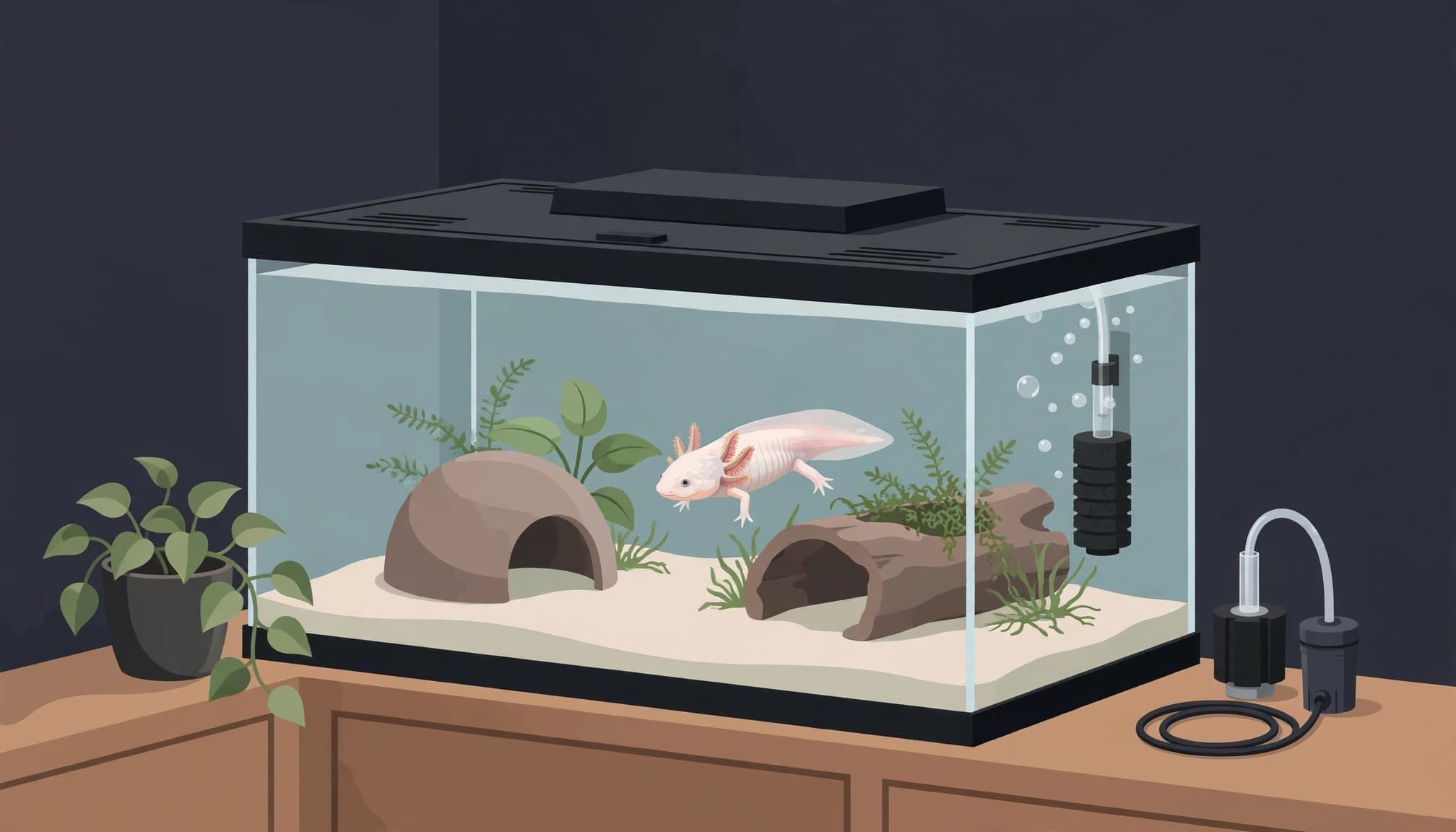
Water parameters matter, but the tank itself can't be an afterthought. A safe setup needs a fully cycled aquarium, enough floor space, low stress, smooth surfaces, and daily observation.
Plan for at least 20 gallons for one adult axolotl. A larger tank footprint gives you more stable water and more room for your axolotl to move without doing laps like it's trapped in a loading screen.
Cycle the Tank Before You Add Your Axolotl
Cycling means building beneficial bacteria in the filter and tank. Those bacteria process waste before it becomes dangerous ammonia and nitrite.
Don't trust a calendar alone. Test the water until ammonia and nitrite both read 0 ppm in a functioning cycle. Adding an axolotl to an uncycled tank can create a nasty water-quality spike fast.
Choose a Low-Stress Tank Environment
Put the aquarium in a low-traffic spot away from direct sun and heat sources. Use subdued lighting, multiple hiding places, and a secure lid. Axolotls don't need bright lights, and they may hide more when the room feels too exposed.
A smooth bare bottom or fine, safe substrate is better than sharp gravel or small stones. Small rocks can be swallowed, which is a medical bill waiting for its villain monologue.
Common Water Mistakes to Avoid
Skip routine salt, untreated tap water, overheated tanks, and strong filter flow. Test water regularly rather than guessing based on looks.
Don't overfeed, replace every piece of filter media at once, or make giant water changes with mismatched water. If nitrate rises, increase partial changes and review feeding before panic-buying random chemicals.
Your goal is boring consistency. For an axolotl, boring is elite.
Frequently Asked Questions
Can Axolotls Live in Regular Tap Water?
Tap water can work after a proper conditioner removes chlorine and chloramine. You still need to test its temperature, pH, GH, and KH, because municipal water isn't identical everywhere.
If your tap water runs warm or extremely soft, you may need to adjust your aquarium plan before bringing home an axolotl.
Do Axolotls Need a Water Heater?
Usually, no. Axolotls prefer cool water around 15-18 C (59-64 F), so a heater is often unnecessary.
In many homes, cooling the tank is the bigger problem. Watch the thermometer during summer and near heat-producing electronics.
Can You Use Aquarium Salt to Treat an Axolotl?
Routine aquarium salt is not appropriate for axolotl care. Salt treatment should only happen for a defined veterinary reason with expert instructions for concentration and exposure time.
Too much salt, or salt left in the tank, can damage sensitive skin and gills. Don't treat a mystery problem with a mystery scoop.
Can Axolotls Live in Distilled Water?
Not as a long-term home. Distilled water lacks the minerals that help keep aquarium chemistry stable.
Properly conditioned freshwater with moderate hardness is the safer choice. Test it first, then make slow adjustments if needed.
How Often Should You Change Axolotl Tank Water?
Start with a partial water change each week, often around 30%. Your nitrate readings, tank size, feeding routine, and filter performance should decide the final schedule.
Match the replacement water closely for temperature and chemistry. A sudden water-parameter plot twist can stress your axolotl even when the new water is clean.
Keep It Freshwater, Keep It Stable
Axolotls are freshwater salamanders, full stop. Their best aquarium water is cool, clean, dechlorinated, cycled, and low in current.
Saltwater isn't an everyday option, and chasing one perfect number won't save an unstable tank. Consistency beats gadget clutter, panic additives, and guesswork.
Before you bring an axolotl home, test the water, check the temperature, and make sure the tank has finished cycling. Your tiny gilled roommate deserves better than a chaos build.