

What Do Baby Marijuana Plants Look Like? A Visual Guide
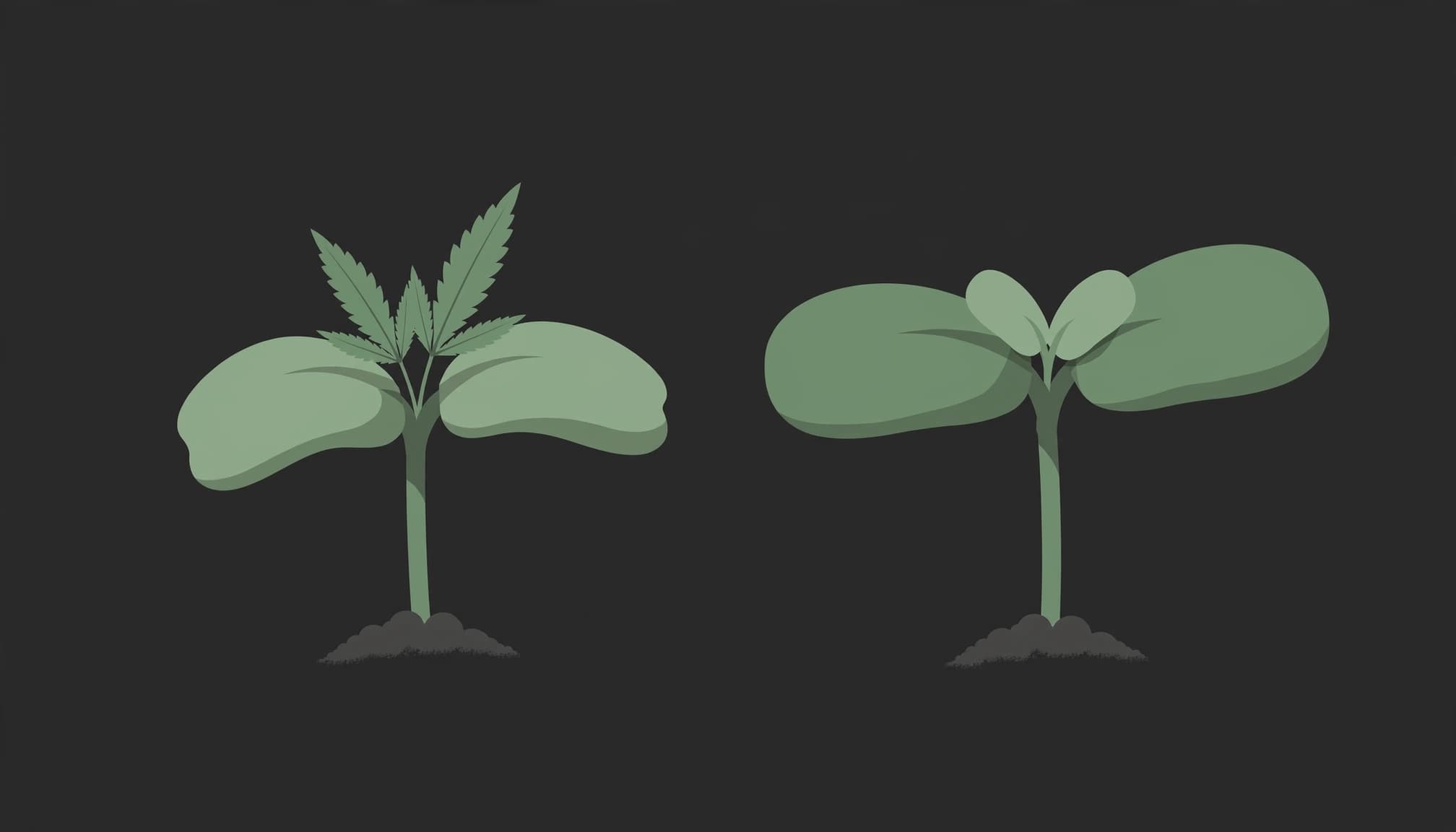
If you're wondering what do baby marijuana plants look like, the short answer is: they usually start with two smooth, rounded leaves, then grow small serrated leaves that look more familiar. A brand-new cannabis seedling does not arrive looking like a tiny version of the leaf on a poster, because biology enjoys a slow reveal.
You can use its early shape, color, and growth pattern as clues. You can't use one tiny leaf to confirm its sex, potency, strain, future size, or legal status. Here's what to look for without turning a baby plant into a botanical crime scene.
Key Takeaways
- Baby cannabis plants first show two rounded cotyledons, not the classic multi-blade leaf.
- Serrated true leaves emerge from the center soon after the cotyledons open.
- Early leaves may have one, three, or five leaflets before gaining more.
- Healthy seedlings are usually upright, evenly green, and producing fresh center growth.
- You can't reliably identify sex, potency, strain, or legality from a young plant's appearance.
What Do Baby Marijuana Plants Look Like?
The earliest seedling is small enough to miss if you aren't looking closely. You'll usually see a thin upright stem with two rounded starter leaves at the top. Those first leaves are called cotyledons. They are smooth-edged, oval, and nothing like the famous jagged cannabis leaf.
Between them, tiny new leaves start to push upward. Those are the true leaves, and they begin the plant's more recognizable look. Grow Weed Easy's seedling photos show the usual shift from rounded cotyledons to narrow, serrated growth.
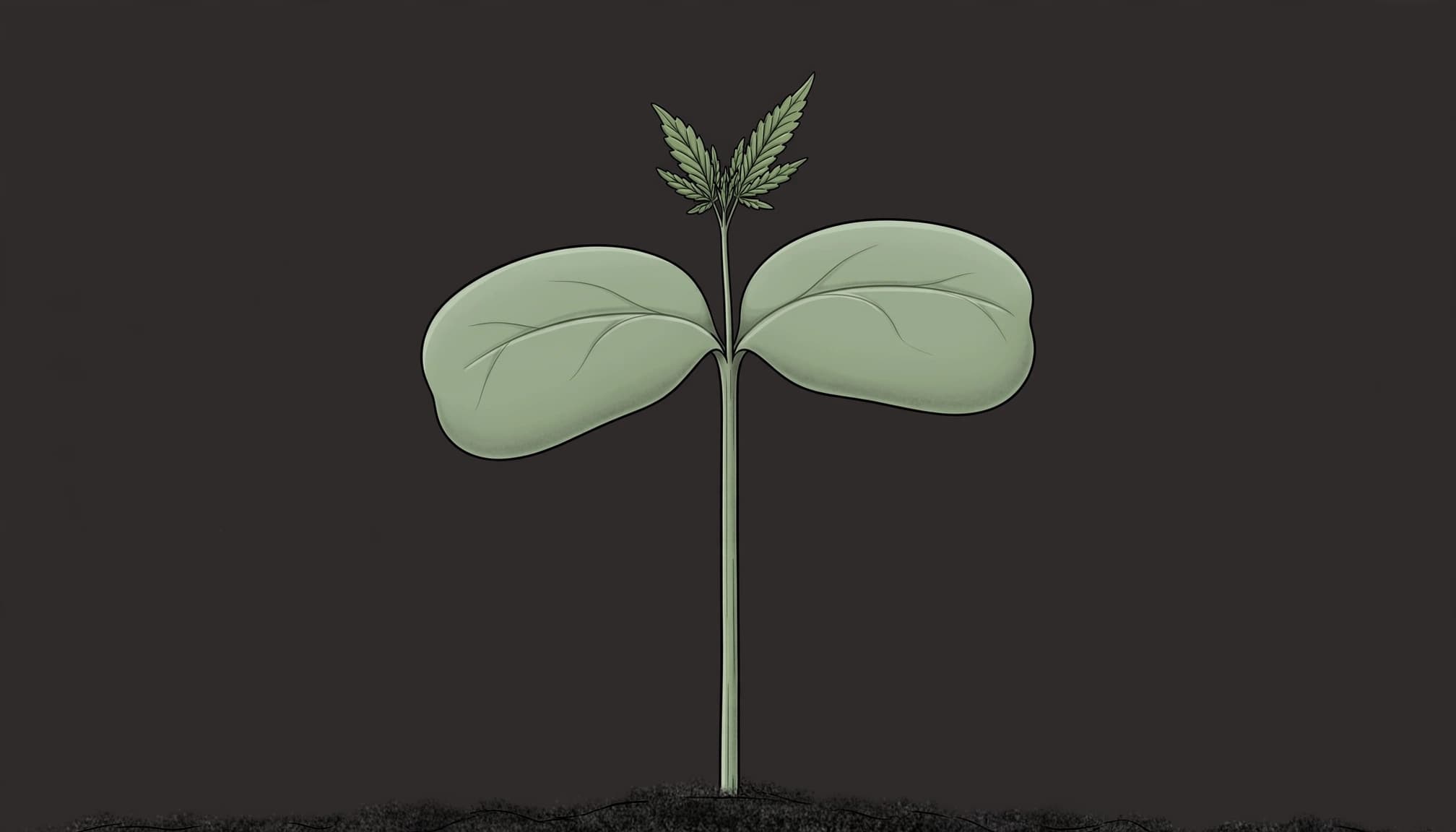
Cotyledons are the opening scene
Cotyledons are the first leaves that appear after a seed sprouts. Think of them as the tutorial level. They feed the young plant before it has enough leaf surface to do more on its own.
A healthy pair often looks symmetrical and medium green. They may be small, but they should look intact rather than shredded, mushy, or dramatically curled.
True leaves bring the serrated edges
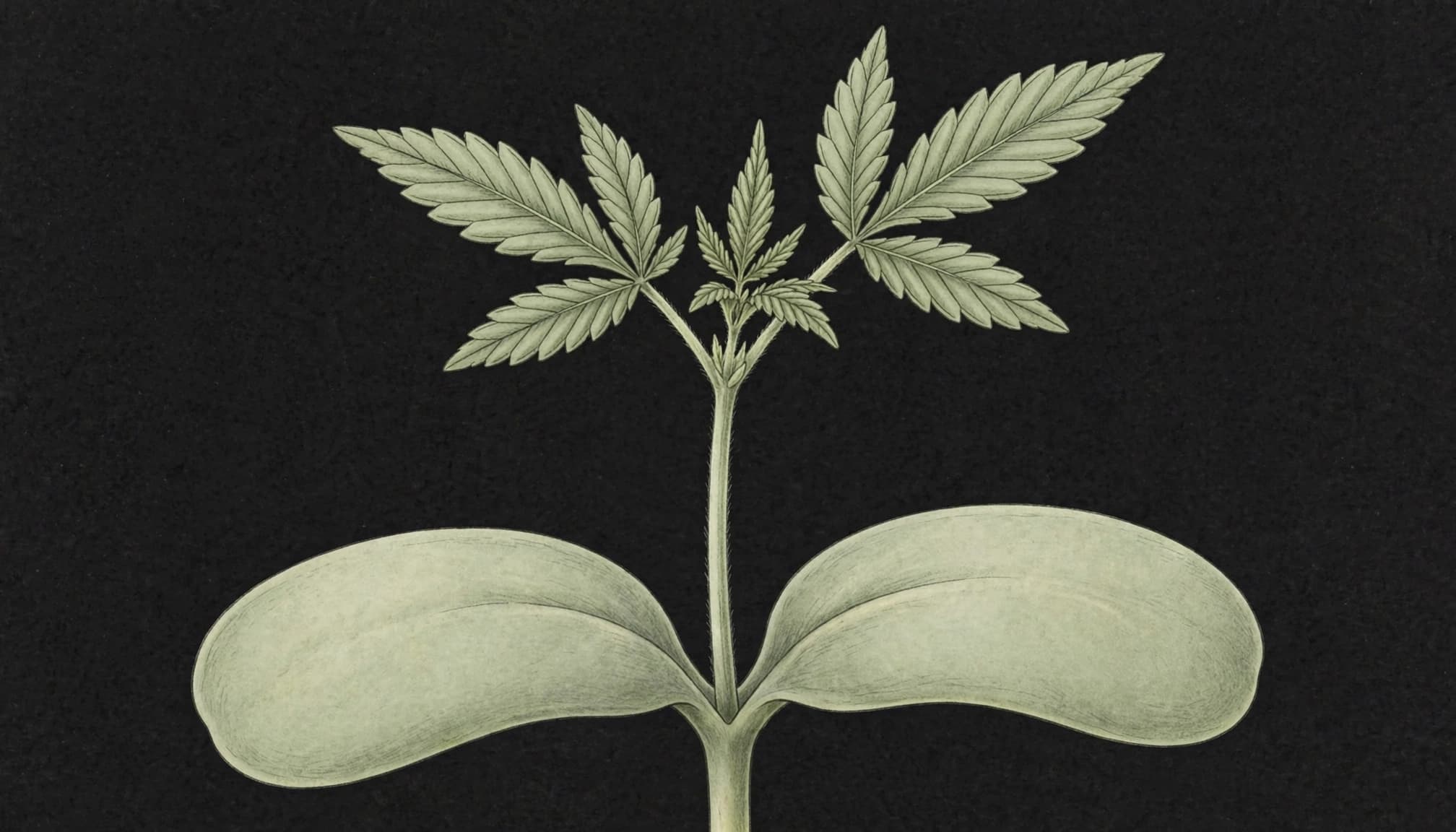
True leaves emerge from the center and have jagged edges. The first set can look oddly simple, sometimes with one narrow blade per leaf. Later sets may have three or five leaflets.
So, what do baby marijuana plants look like at a glance? Compact, green, upright, and slightly underwhelming at first. Genetics, light, and handling can change the details, so don't expect every seedling to follow the exact same character design.
How a Cannabis Seedling Changes During Its First Few Weeks
Cannabis growth does not run on a perfect countdown timer. One seedling may move fast, while another takes its time. Still, the visual sequence is fairly consistent.
The seed cracks, then the cotyledons open
The process starts when the seed coat splits and a pale taproot emerges. After the shoot reaches the surface, the stem straightens and lifts the two cotyledons into view.
During the first few days, the plant often looks almost comically small. The cotyledons open wide, while the center holds a tiny folded cluster of future true leaves.
More leaflets arrive as the plant fills out
Around the first week, early serrated true leaves often become easier to spot. Over the next one to two weeks, new sets stack upward from the center. The stem becomes firmer, and the plant starts looking less like a sprout and more like a tiny plant with opinions.
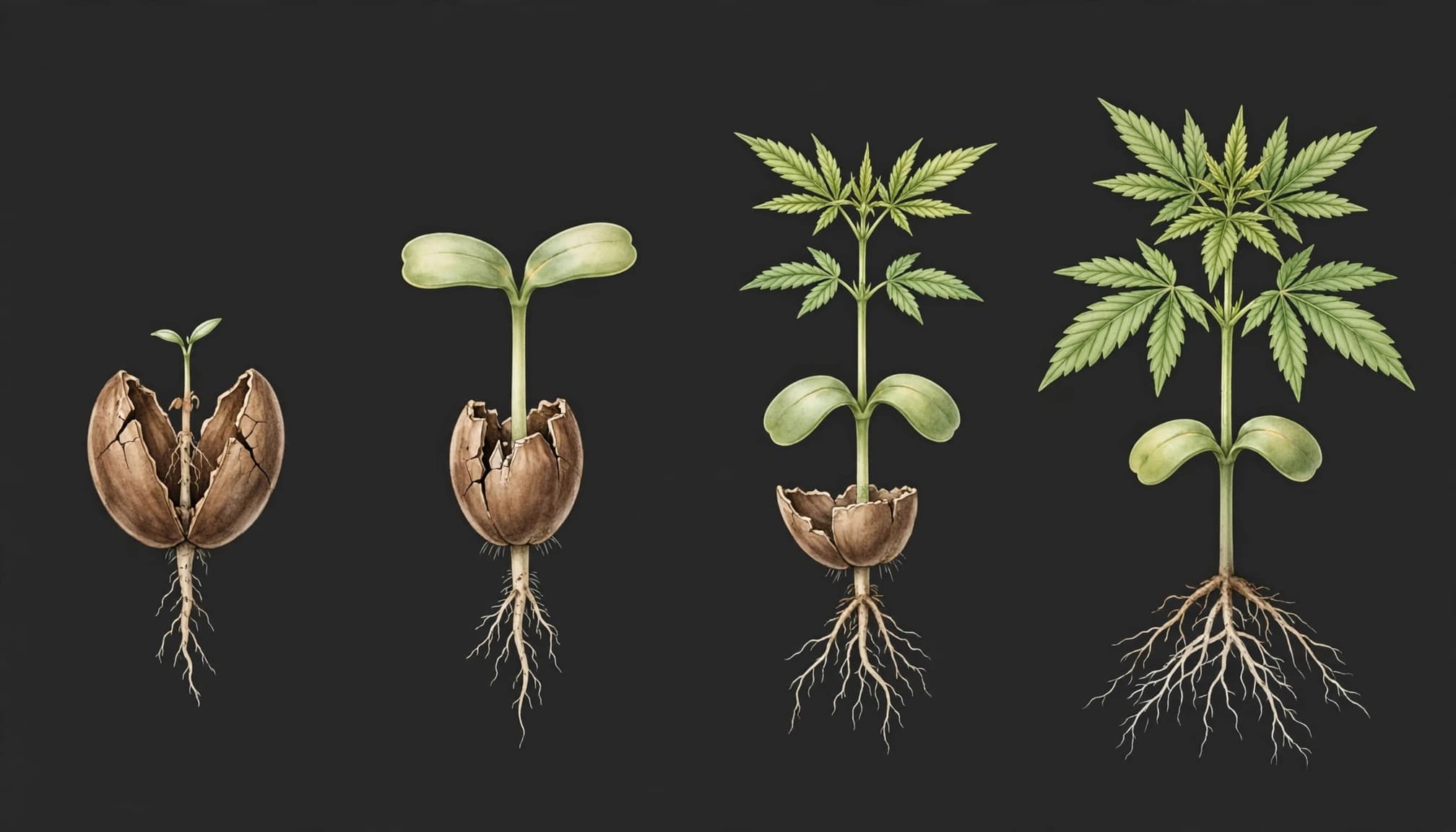
By weeks two through four, you may see a thicker stem, wider leaf spread, and a bushier silhouette. Early fan leaves can have three blades, then five, and later more. That pattern isn't law carved into a stone tablet. Seedsman's visual growth guide notes that cannabis leaf sets can show one, three, five, seven, or nine blades.
When people ask what do baby marijuana plants look like, size matters less than structure. Look for a central growth point, paired leaves at each level, and new serrated growth that becomes more complex over time.
Healthy Seedling Signs Versus Common Problems
A healthy cannabis seedling usually looks alert rather than floppy. Its stem stands upright, its color is fairly even, and new leaves keep appearing from the center. The cotyledons may eventually fade, but they should not collapse while the plant is still barely getting started.
Green, upright, and making new growth
Healthy color ranges from bright to medium green. A seedling might not be perfectly symmetrical, because plants are not manufactured phone cases. What matters is steady progress.
Look for these general signs:
- The stem is upright and gradually becoming more stable.
- New leaves are emerging from the center.
- Leaf edges are mostly intact and not severely curled.
- The cotyledons remain attached during the earliest stage.
New center growth is usually a better clue than one weird-looking leaf.
Warning signs worth watching
Very pale or yellow leaves can point to stress. A long, thin, weak stem may mean the plant is stretching. Drooping leaves, curled edges, torn tissue, or stalled growth also deserve attention.
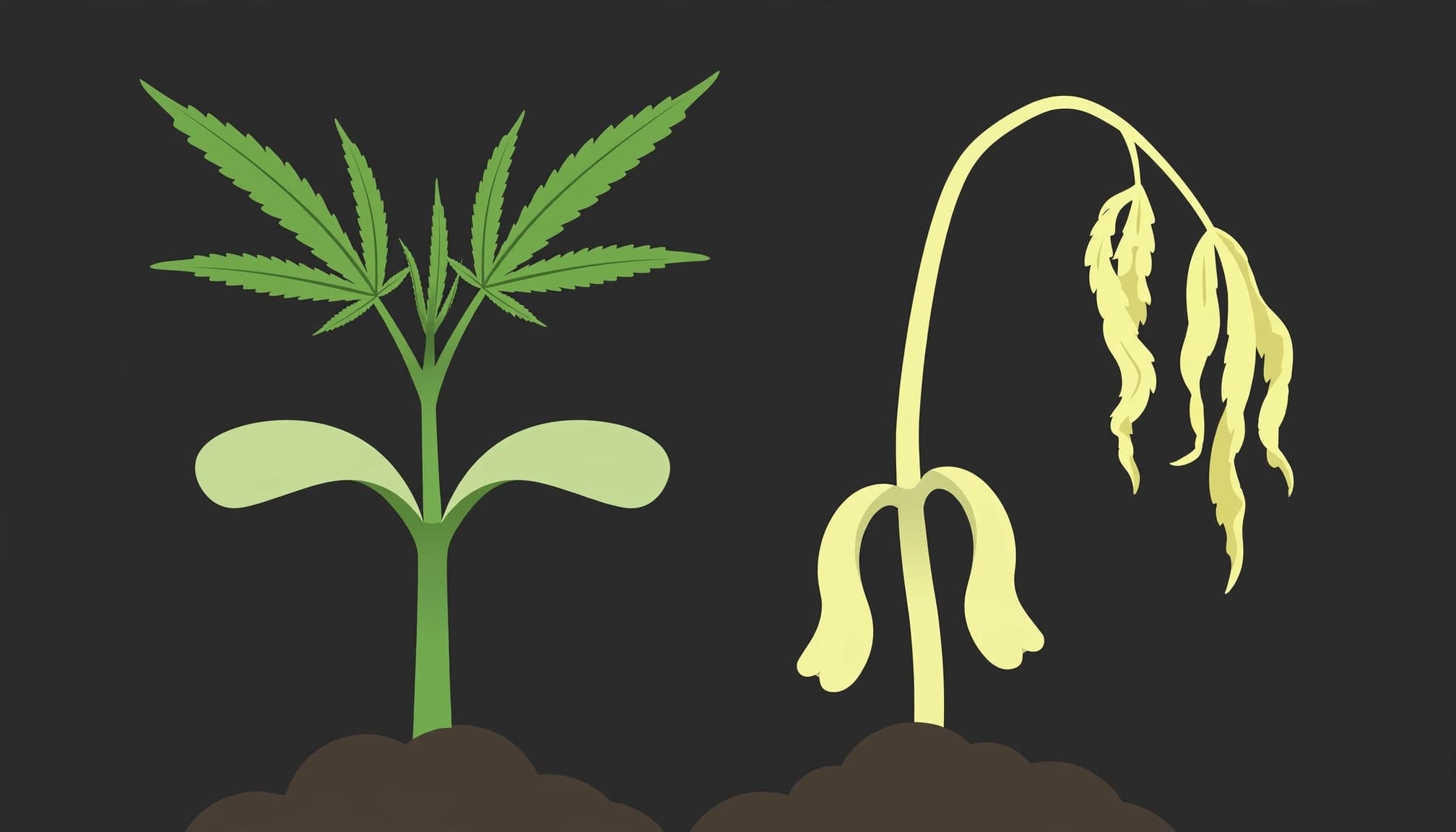
A wet-looking, pinched, or narrowing stem base is more concerning than a single misshapen leaf. Moisture, temperature, airflow, light, genetics, and rough handling can all change what you see. Avoid treating one off-looking leaf as a full red-alert notification. Watch the overall direction of growth instead.
What You Can and Cannot Identify From a Young Plant
A young plant can offer useful visual clues, but it can't answer every question you throw at it. Cotyledons and early serrated leaves may suggest cannabis, yet other volunteer plants can look similar while they're tiny. Leaf shape alone is not a foolproof species test.
Sex is not visible at the seedling stage
You usually cannot tell whether a cannabis seedling is male or female by looking at its early leaves. Clear visual sex traits appear later, after the plant develops pre-flowers. Agdia's StudFinder information notes that visual identification is often not accurate until six to eight weeks after germination.
Leaf count does not reveal sex. A three-blade leaf isn't a male clue, and a five-blade leaf isn't a female clue. The plant is still in its opening credits.
Appearance cannot prove legality or potency
You also can't identify strain, cannabinoid content, potency, future height, or legal status from a seedling photo. Two plants can look nearly identical while having very different genetics and legal situations.
Cannabis rules vary by country, state, and local area. Marijuana remains federally controlled in the United States even where state laws allow some medical or adult use, as explained by the Congressional Research Service. Check your current state and local rules before possessing or growing any plant.
Frequently Asked Questions
Do baby marijuana plants start with the familiar seven-blade leaf?
No. They usually begin with two rounded cotyledons, followed by simple serrated true leaves. Early true leaves may have one or three blades before later leaves develop five, seven, or more.
How quickly do true leaves appear?
True leaves often begin appearing within the first several days after cotyledons open. Timing varies with genetics and conditions, so don't expect your seedling to hit an exact schedule like it is speedrunning a game.
Does a seedling's leaf count reveal its sex?
No. Leaflet count is not a reliable sex marker. You need later plant development for visual sex traits, or a specialized testing method where legal and appropriate.
Are yellow cotyledons always a problem?
Not always. Cotyledons can yellow as the plant matures and shifts its energy toward true leaves. Yellowing is more concerning when it appears early alongside drooping, weak growth, or no new leaves.
How can you tell a cannabis seedling from a weed or volunteer plant?
Compare several traits, not one leaf. Look for paired early leaves, serrated true leaves, a central growth pattern, and changes across several days. If identification matters, use reliable botanical references instead of trusting a single blurry photo from the internet.
For a broader picture of how laws vary across the country, check the NCSL cannabis policy overview. Rules can shift, and local restrictions may add another layer.
The Simple Visual Answer
Baby marijuana plants usually begin with two rounded cotyledons on a thin stem. Small serrated true leaves appear next, then grow more complex as the seedling matures.
Don't get baited by one strange leaf or the absence of a seven-blade fan leaf. Healthy color, upright growth, and fresh center leaves tell you more than a single feature. Sex and legality remain off-screen at this stage, so treat early appearance as a clue, not a verdict.