

Cream French Bulldog With Blue Eyes: What to Know
TrendReactTees.STORE TeamA cream French Bulldog with blue eyes has two separate traits: cream fur doesn't cause blue eyes, and blue eyes aren't part of the breed's accepted show standard. That distinctive look can be adorable, but health records tell you more than a photo ever will.
If your dog-lover wardrobe needs an upgrade, our My Therapist Is A Dog Tee and Dog Eats Custom Kibble Tee bring the pet-parent humor. Before you fall for a puppy's aesthetic, here's what to know about appearance, health, and choosing a breeder.
This post may contain affiliate links. If you make a purchase through these links, I may earn a small commission at no extra cost to you.
Key Takeaways
- Cream describes the coat, while blue eyes relate to eye pigmentation. One doesn't cause the other.
- The American Kennel Club accepts cream coats but disqualifies blue eyes and merle in its French Bulldog standard.
- Eye color alone can't tell you whether a dog is healthy or carries merle genetics.
- Ask breeders for documented health results for both parents, including eye, hip, patella, and cardiac screening.
- Plan for routine grooming, veterinary care, training, and exercise suited to your Frenchie's breathing.
What a cream French Bulldog with blue eyes may look like

Picture a compact Frenchie with a short, pale coat and eyes that look blue against all that creamy fur. It's a striking combination, but each feature tells you something different.
Coat color and eye color are separate
Cream describes the dog's fur. Blue-looking eyes relate to pigmentation in the iris, and a dog can have blue or partly blue eyes for reasons that aren't explained by its cream coat.
You might notice blue in both eyes or only part of an eye. Lighting and photographs can make colors look different, too. A puppy's photo might be excellent at stopping your scroll, but it can't give you a genetic readout.
Where merle fits into the picture
Merle is a coat pattern associated with variations in pigmentation. It can be linked to blue or partly blue eyes, but blue eyes alone don't prove a dog has merle genetics.
The following breeder video shows examples of merle appearances. Treat it as a visual reference, not a way to identify your own dog's genes from a photo.
If you're considering a puppy and want to understand its background, ask for documented genetic results. Color names in an ad aren't a substitute for those results.
What the French Bulldog breed standard says about cream coats and blue eyes

The AKC French Bulldog standard treats coat and eye color as separate features. Cream is an accepted coat color, while blue or green eyes, including visible traces of either color, are disqualifying. Merle is also listed as disqualifying.
What that means for the show ring
A cream coat can meet the standard's color description, but blue eyes don't meet its eye-color requirement. Lighter brown eyes are acceptable under the standard, although they aren't desirable.
That distinction matters if you plan to pursue conformation showing, where dogs are judged against the breed standard. Eye color by itself still doesn't identify the genes behind a dog's appearance.
What that means for your pet
A show disqualification doesn't tell you whether a Frenchie will be a loving companion. It also doesn't diagnose a health condition or replace a veterinary exam.
You can appreciate a dog's looks while keeping the show rules in perspective. The breed standard describes the qualities judges look for; your veterinarian and the dog's health records help answer different questions.
Health checks to discuss when your Frenchie has blue eyes
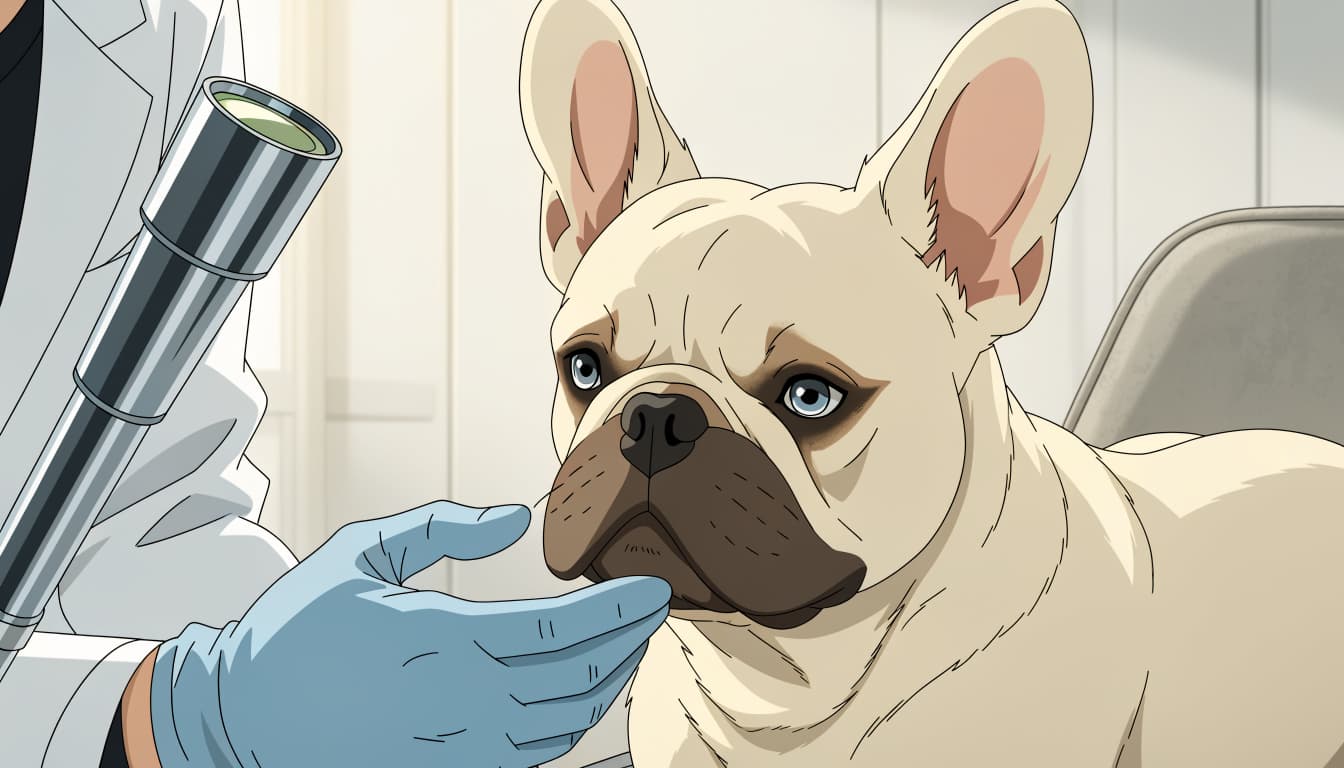
Blue eyes alone don't establish that your Frenchie has an eye problem. Your dog's comfort and vision matter more than the color of its irises.
Know when to call your veterinarian
Contact your veterinarian if you notice redness, discharge, squinting, or signs that your dog has trouble seeing. Holding an eye shut is another reason to seek attention promptly.
Don't assume a change is harmless because your dog has always had unusual-looking eyes. Your veterinarian can examine the eye and recommend care based on what they find.
Ask about breed health screening
The French Bull Dog Club of America lists hip, eye, patella, and cardiac evaluations among its health testing and registry requirements. The club also recommends annual eye recertification.
An eye screening involves a CAER examination by a board-certified veterinary ophthalmologist. Hip, kneecap, and heart evaluations address other areas of health; they aren't replaced by an eye exam or a DNA color panel.
A CHIC number can show that required screening was completed, but it doesn't guarantee that every result was normal. Look at the individual findings with your veterinarian. Screening gives you information, not a lifetime health guarantee.
How to choose a responsible French Bulldog breeder
A cute puppy photo can do a lot of heavy lifting in an ad. Your job is to look past the aesthetics and ask for details about the dogs, their care, and their health.
Request records for both parents
Ask for documented hip, eye, patella, and cardiac results for each parent. Look for the eye exam date and whether the results are registered with the Orthopedic Foundation for Animals.
You can also ask about recommended DNA screening, including juvenile hereditary cataracts and cystinuria type 3. A breeder should be able to discuss the results with you rather than relying on a vague promise that the parents are "health tested."
If merle genetics are part of your questions, request documented genetic results for the parents. A coat label, an eye color, or a quick glance at a photo won't answer that question reliably.
Meet the puppy and ask about daily care
Spend time with the puppy when possible. Ask about its veterinary visits, social experiences, feeding routine, and the environment where it's being raised.
Watch how the puppy moves and responds to people. You'll learn more by paying attention to the individual dog than by treating a color description like a personality profile.
Be cautious about paying extra for blue eyes or accepting a pitch that a rare color guarantees health or temperament. A responsible breeder should welcome thoughtful questions, including the ones that have nothing to do with the puppy's color.
Everyday care for your cream French Bulldog
A cream coat and blue eyes don't decide your dog's personality, training needs, or care requirements. The Frenchie in front of you does.
Keep up with grooming and veterinary care
Brush your dog's short coat as needed to remove loose hair and dirt. Check the skin during grooming, and ask your veterinarian about any irritation or changes you notice.
Facial folds can collect moisture and debris, so clean and dry them according to your veterinarian's advice. Regular tooth brushing, nail care, and routine veterinary visits also belong in your care plan. A pale coat doesn't come with a free pass on any of them.
Talk with your veterinarian about food portions and healthy body condition. Keeping your Frenchie at an appropriate weight can make everyday movement more comfortable.
Choose activity that suits your dog
French Bulldogs can have breathing limitations related to their short-faced anatomy. Ask your veterinarian what exercise and heat precautions make sense for your dog's health, age, and tolerance.
Choose comfortable walks and play sessions, with breaks when your dog needs them. Avoid pushing through noisy breathing, distress, or overheating. If your dog seems to be struggling to breathe, stop the activity and seek veterinary advice promptly.
Short, reward-based training sessions can fit into your routine, too. Your dog's attention and comfort are better guides than a color-based prediction about its temperament.
Streetwear & Casual Styling
Your Frenchie's distinctive look can inspire a casual outfit without pretending its eye color says anything about its health or personality.
For an easy dog-walk fit, pair our Best Dog Mom Tee with relaxed jeans and sneakers. Want more internet-brain energy? Style the If They Could Use Internet We'd Be In Trouble Tee with dark pants and a lightweight jacket.
Our Cyber-Brutalist Anime Graphic Tees let your pet-parent humor do the talking. Your dog can focus on the important business of sniffing everything.
Frequently Asked Questions
Can a puppy's blue eyes change color?
Yes, a puppy's eye color can change as it develops. You shouldn't count on a particular outcome or assume a breeder can predict the final shade from an early photo.
Do short-coated French Bulldogs shed?
Yes. A short coat can still leave loose hair on your clothes and furniture, including when that coat is cream. Regular brushing can help you collect some of it.
Can a French Bulldog live in an apartment?
A Frenchie can live in an apartment if you can meet its exercise, training, and care needs. Consider the individual dog's behavior and your ability to provide comfortable activity, veterinary care, and attention.
Can you train an older French Bulldog?
Yes. An older Frenchie can learn with patient, reward-based training. Keep sessions comfortable and adjust them for any mobility or breathing concerns your veterinarian identifies.
Can you adopt a cream French Bulldog with blue eyes?
You may find one through a rescue or shelter, although you can't assume a particular dog will be available. Ask about the dog's known history, veterinary care, and behavior so you can prepare for the individual you're bringing home.
Choose the Frenchie, not just the look
A cream French Bulldog with blue eyes can turn heads, but its coat and eye color are separate traits. Neither tells you everything about the dog behind the photo.
Give health records, veterinary guidance, and the individual dog's needs more weight than a color label. You'll be better prepared for the companion you bring home, distinctive eyes and all.