

Dark Drawing Ideas Easy: Spooky Sketches for Beginners
Dark art doesn't demand anatomy wizardry, expensive supplies, or a PhD in drawing every cursed little finger correctly. You can make an eerie image with circles, rectangles, huge shadows, silhouettes, and one light source doing all the emotional damage.
If "dark drawing ideas easy" is the phrase rattling around your search bar, start here. These prompts are built for sketchbooks, late-night doodles, and anyone who wants gothic, spooky, horror, or dark fantasy energy without drawing a 900-year-old vampire cathedral in perfect perspective.
Key Takeaways
- Strong contrast beats detailed realism every time.
- Start with one subject, one light source, and large black shapes.
- Silhouettes, fog, empty space, and crooked lines do half the spooky work.
- Pencil, marker, charcoal, and one accent color can all create a dark mood.
- Keep some details hidden. Your viewer's imagination is a menace when given room.
Dark Drawing Ideas Easy Enough for Any Beginner
Every prompt here starts as basic geometry, then gets haunted. Think circles for moons and eyes, rectangles for doors and houses, triangles for trees, and giant black blobs for anything lurking in the foreground.
- Draw a moonlit silhouette of a figure, cat, or tree against one huge moon.
- Make a haunted house from a rectangle, triangle roof, tiny windows, and one crooked chimney.
- Draw a single eye in the dark, with only the iris catching light.
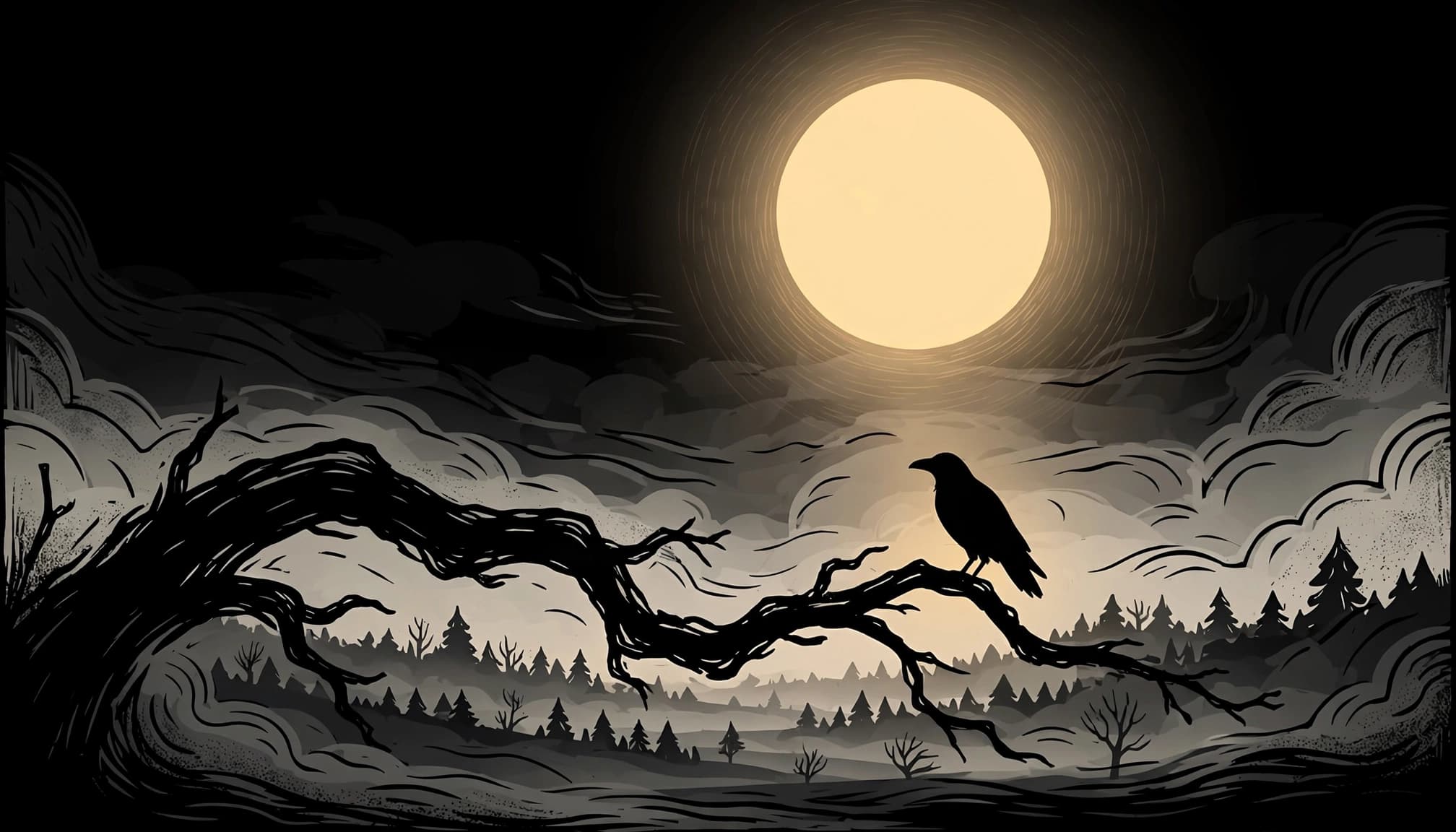
- Sketch a raven on a branch as an oval body, triangle beak, and claw-like twig shapes.
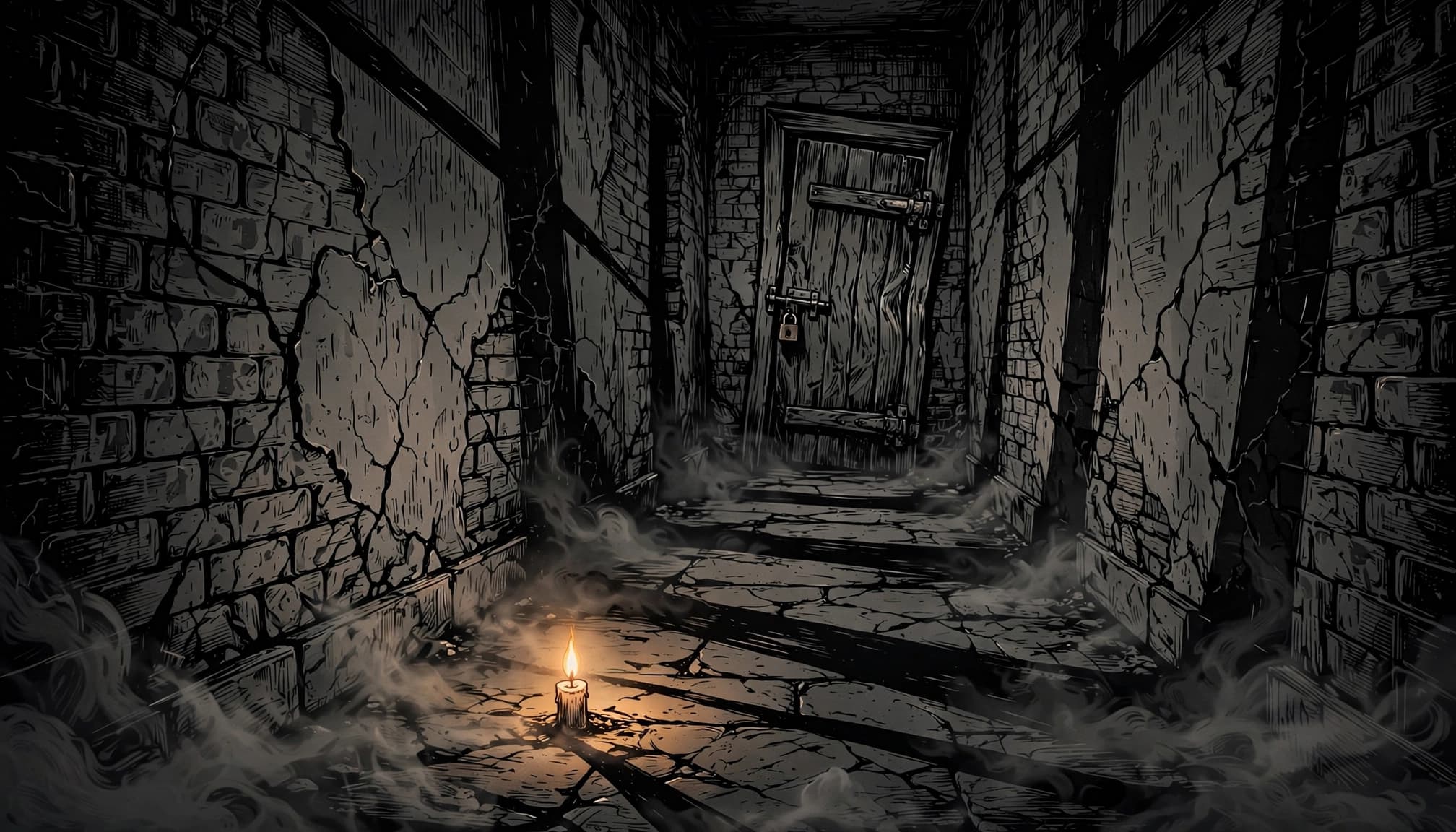
- Place a candle surrounded by shadows in a nearly black room.
- Turn a rectangle into a cracked mirror, then let one strange reflection break the symmetry.
- Draw a crooked door with a tiny keyhole and too much darkness beneath it.
- Build a graveyard with uneven headstones, one dead tree, and a pale moon.
- Make a foggy forest with repeated thin trunks that fade into gray pencil haze.
- Draw a floating ghost as a sheet-like curve, not a full anatomy boss fight.
- Sketch a creepy doll with a round head, button eyes, and one tilted limb.
- Use a simple oval and jaw shape for a skull, then bury half of it in shadow.
- Fill a moonlit sky with tiny bats around a moon, using loose M-shaped wings.
- Give a pumpkin an unusual expression, sad, furious, suspicious, or terminally over it.
- Draw hands reaching from darkness as partial shapes, not perfect hands. Let the black space eat the wrists.
A silhouette is simply a dark shape against a lighter background. That tiny rule is why a raven, house, or figure can look dramatic without a thousand details. LibreTexts' explanation of shape and silhouette is useful when your sketch feels more blob than ominous omen.
For every idea, simplify the part you fear drawing. A forest is repeated lines. A ghost is a floating curve. A doll is a circle with a dress shape. Nobody is grading your branch anatomy at 1:13 a.m.
Simple Tools and Techniques That Make a Drawing Look Dark
Start with what you already own. A pencil and eraser are enough. Add a black marker for brutal graphic shadows, charcoal for smoky textures, a tissue or blending stump for mist, and one colored pencil if you want a red eye or warm candle flame.
Build the drawing in this order: sketch basic shapes, pick one light source, fill the darkest areas, add a few details, then soften selected edges. One bright spot surrounded by darkness hits harder than fifty gray marks fighting for attention.
How to Draw Shadows, Silhouettes, and Fog Without Overcomplicating Them
Put a black foreground shape in front of a pale moon, candle glow, or lit window. That's your silhouette, and it already has more drama than an over-rendered sketch with nowhere to look.
Fade distant trees and buildings with lighter pressure. Smudge soft horizontal pencil strokes across their bases for fog. Check your drawing from across the room. If the main shape and light source still read, you're cooking. If everything becomes gray soup, deepen the focal shadow.
The darkest black should not be everywhere. Save it for the place you want people to stare at first.
How to Choose the Right Materials for Your Style
Pencil gives you controlled shading and easy fixes. Marker makes flat, graphic blacks. Charcoal creates dirty, smoky texture with almost zero patience required. Limited color adds drama without turning the page into a corrupted RGB loading screen.
A red pencil can make an eye, thread, or tiny flame feel wrong in the best way. For monochrome ideas with one chaotic accent, borrow some visual fuel from these black-and-white graphic tee outfit ideas. Don't wait for a perfect art kit. Your pencil is not holding you back, it's innocent.
Build a Strong Spooky, Gothic, or Dark Fantasy Scene
A complete dark scene follows one small formula: subject + setting + mood. A raven becomes a story when it's on a dead branch above a cemetery. A candle becomes a story when it burns beside a locked door.
Make two or three thumbnail sketches first. Keep them tiny. Choose one focal point, repeat a few shapes, and use one dominant light source. A candlelit scene wants deep corners. Moonlight wants large silhouettes. Window light wants long striped shadows.
Easy Gothic Drawing Ideas With Old Objects and Architecture
Draw an old key, cracked clock, antique mirror, locked door, broken window, candlelit church, spiral staircase, or ivy-covered stone wall. You don't need complex perspective to sell the mood.
Use worn edges, short cracks, repeated window shapes, and black corners. A staircase can be a stack of narrowing rectangles. A church can be a tall box, pointed roof, and one glowing window. Gothic art loves decay. Give it a few scuffs and let it brood.
Spooky Horror Prompts That Use Simple Shapes
Try a scarecrow, hidden eyes in a forest, a shadow puppet, haunted doll, crooked house, skeleton hand, graveyard, or ghost behind a rainy window. Keep the outline readable, then hide the information people expect.
A face behind fog is creepier than a fully drawn face. One eye in a tree line is worse than twelve, because now your brain is doing unpaid overtime. Use mystery, odd proportions, and empty space instead of gore.
Dark Fantasy Scenes You Can Sketch in Minutes
A fallen angel, ruined throne, cursed garden, masked traveler, abandoned shrine, or lantern-carrying figure can suggest a whole fantasy campaign in five minutes. Use a huge moon, jagged mountain, broken arch, or strange sky shape to imply scale.
Make the figure small against the setting. That simple size difference makes the world feel hostile and enormous. If creepy-cute gaming aesthetics are your flavor of chaos, these gamer graphic tees with creepy-cute designs sit in the same haunted neighborhood.
A Fast Step-by-Step Method for Your Next Dark Sketch
For anyone hunting "dark drawing ideas easy," use this five-step loop whenever your page feels intimidating:
- Choose one subject, such as a raven, candle, skull, or crooked house.
- Draw a tiny thumbnail with only the biggest shapes.
- Set one light source, a moon, candle, window, or lantern.
- Block in the darkest shapes with marker, pencil, or charcoal.
- Add only a few mood details, such as fog, cracks, bats, rain, or one glowing eye.
Try a raven under a full moon. Draw the moon first, then a black branch across it, then the raven as a compact silhouette. Add two pale fog bands below. Stop before you explain every feather. The mystery is doing its job.
Draw Paint Academy's simple-object practice advice supports starting with a few basic forms instead of building a full haunted megaplex on day one.
Common Beginner Mistakes That Flatten a Dark Drawing
Even shading makes everything look equally important. Fix it by choosing a few large black areas and leaving bright paper around the light source.
Too many details create visual static. Several competing lights make the scene confused. Outlining every object makes the image feel like a worksheet. Use softer edges in fog and background areas, then save your sharpest edge and darkest black for the focal point.
How to Turn One Prompt Into a Daily Sketch Challenge
Redraw one idea three ways. Put your raven in moonlight, then candlelight, then behind a rainy window. Change the camera angle, weather, background, or creature silhouette.
Give yourself seven low-pressure sessions. Spend 10 minutes per sketch and don't force a finished piece. Day one can be a haunted house. Day seven can be the same house viewed from below, with a giant moon and one suspicious window. Tiny repetitions teach more than waiting for inspiration to respawn.
Frequently Asked Questions
What is the easiest dark drawing idea to start with?
Start with a tree, raven, figure, or haunted house in front of a large moon. One clean outline and strong contrast make it forgiving. You can mess up the details and still have a readable image.
Do you need special supplies to make dark art?
No. Regular paper, a pencil, and an eraser are enough to make a strong dark sketch. Marker adds graphic blacks, charcoal adds smoke, and one accent color changes the mood, but none of them are mandatory DLC.
How do you make a drawing look creepy without adding gore?
Hide faces, tilt familiar objects, add fog, distort proportions, and leave large empty spaces. A figure partly covered by a curtain or tree line is more unsettling than a fully explained monster. Let the viewer invent the worst version.
How can you improve a dark drawing that looks too flat?
Pick one light source, darken the foreground, and fade objects as they move back. Add overlapping shapes, then make some edges sharp and others soft. Value contrast basics can help you spot where adjacent lights and darks need more separation.
Let the Shadows Do Their Job
Effective dark art is about mood, contrast, and one clear idea, not perfect anatomy or a supply haul that empties your wallet. Start with a basic shape, choose a light source, and let big shadows carry the scene.
Pick one prompt tonight. Make it gothic, spooky, horror-coded, or dark fantasy chaos. Save the sketch you like most, even if it's weird. Especially if it's weird.