

Dark Skin Anime Characters You Remember Beyond the Design
Some anime characters enter a scene and hijack your attention before anyone says a word. The dark skin anime characters you remember longest usually have more going on than a striking color palette. They've got the attitude, skills, ambitions, and occasionally terrible decisions to back up the look.
You'll find memorable examples in Bleach, Naruto: Shippuden, and series well outside the usual battle-anime rotation. One distinction matters before you start collecting favorites: skin tone is visible; race and cultural identity aren't always confirmed. A character's design doesn't give you their full biography, no matter how confident the comment section sounds. Let's start with the characters themselves.
Key Takeaways
- Yoruichi, Tōsen, Killer Bee, and Darui are memorable for their roles and personalities, not only their designs.
- Carole, Atsuko, and Kilik show how varied these characters can be across anime genres.
- Hair, clothing, posture, and color contrast help you recognize a character; story gives you a reason to care.
- Dark-skinned describes appearance. It doesn't automatically tell you a character's race, heritage, or cultural identity.
- Strong representation gives characters agency, goals, and room to be different from one another.
Dark skin anime characters worth knowing
This isn't a definitive ranking. Anime has too many genres, decades, and fiercely defended favorites for that particular comment-section war. These characters are a good place to start because each gives you something concrete to remember.
If you're new to Bleach, this Yoruichi character analysis offers a closer look at one of the first names on the list.
Yoruichi, Tōsen, and other memorable faces from Bleach
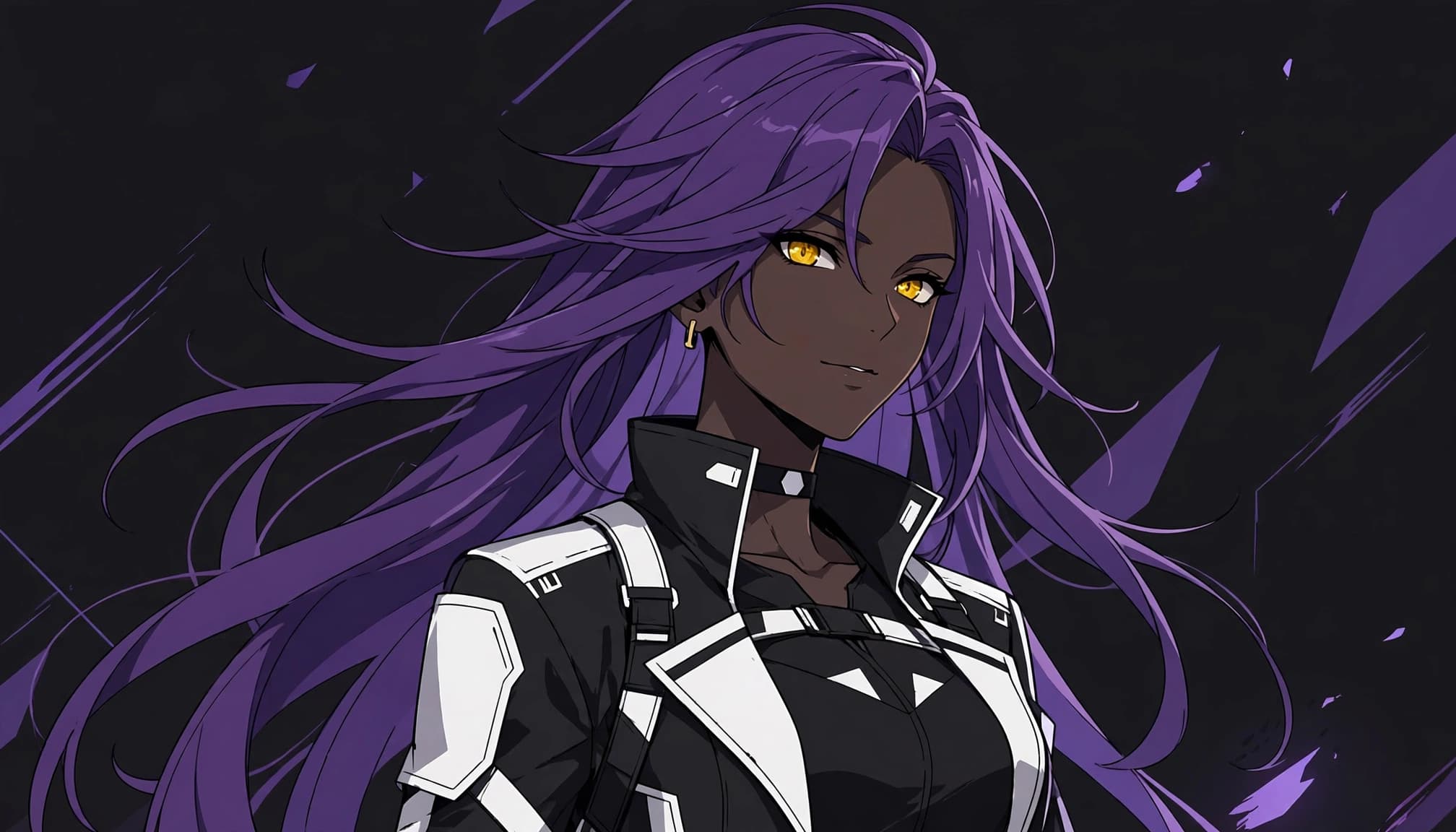
Yoruichi Shihōin has the kind of entrance that makes everyone else look like they're waiting for the animation budget. She's fast, confident, and fully aware of both facts. Her hair can appear purple-tinted in animated scenes, while her eyes read yellow or gold. Those colors catch your eye, but her teasing confidence and combat ability do the heavy lifting.
She also has history beyond the next fight. Yoruichi is a former captain of the Gotei 13's 2nd Division and a former leader of the Stealth Force. Her Bleach character profile gives you a sense of how much sits behind that relaxed attitude. When she acts like she knows more than everyone in the room, she often does. Rude for them, excellent for you.
Kaname Tōsen brings a different kind of presence. The former 9th Division captain is a serious, controlled figure whose decisions carry weight in Bleach. His commitment to justice, and the direction he takes it, make him worth discussing long after you've noticed his appearance. Putting him beside Yoruichi also makes the point: two dark-skinned characters in one series don't need matching personalities or matching stories.
Killer Bee and Darui bring distinct energy to Naruto
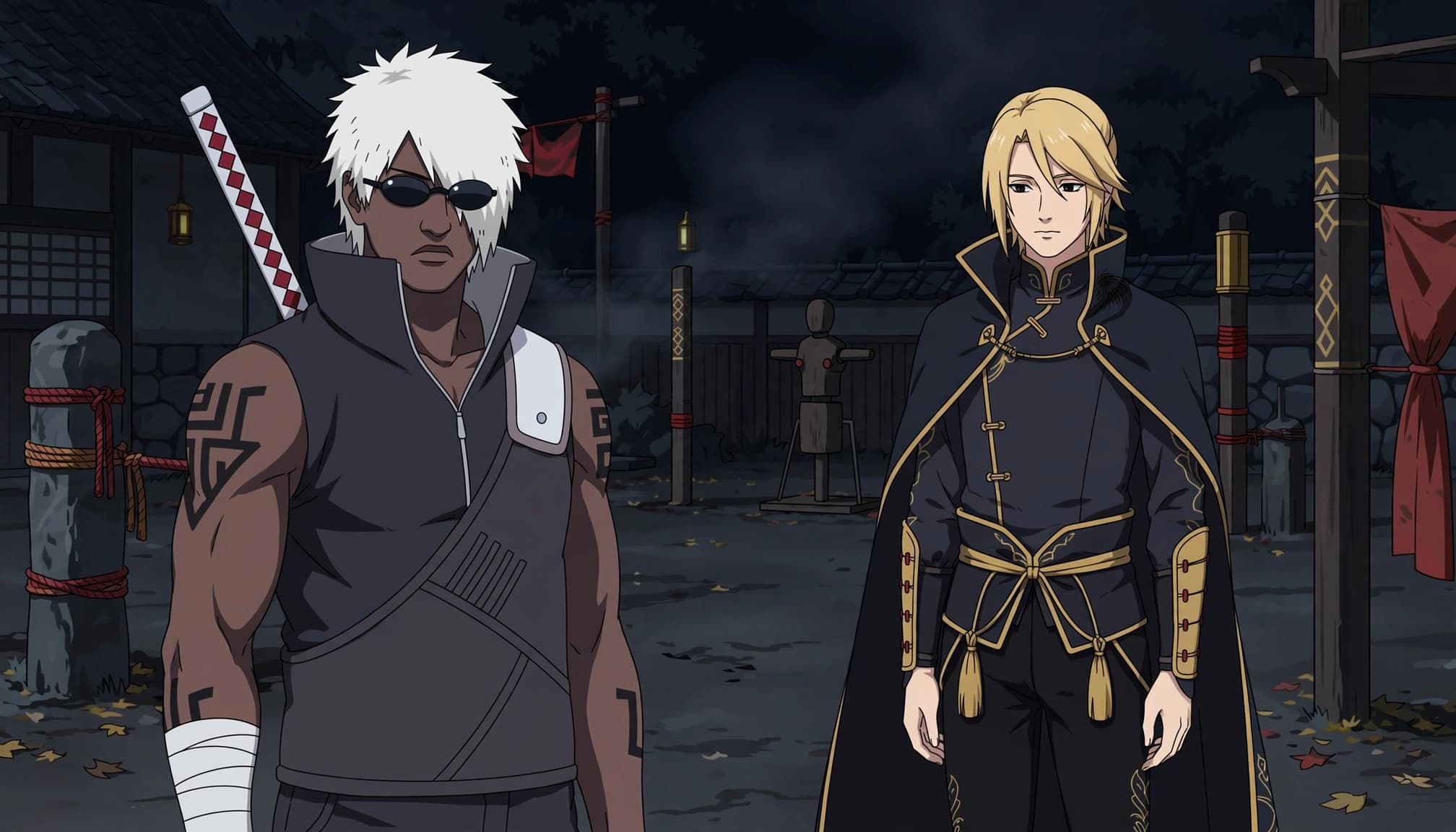
Killer Bee doesn't blend into the background of Naruto: Shippuden. His white hair, sunglasses, shoulder marking, and imposing build give you an instant visual read. Then he starts rapping. Your read needs an update.
Bee is the Eight-Tails' jinchūriki, a role with serious stakes, yet he refuses to become a permanently grim exposition machine. His humor and unpredictable rhythm sit alongside real fighting skill. Watch him interact with Naruto and you get more than a flashy opponent or a convenient teacher. He's a person with his own style, relationships, and priorities, even when his rhymes deserve a timeout.
Darui runs at a different speed. His pale blond hair creates its own contrast, but his composed manner is the stronger identifier once you've spent time with him. He's a capable Hidden Cloud ninja who later becomes the Fifth Raikage. That later title matters if you're discussing where his story goes, rather than treating every appearance as the same moment in the timeline.
Put Bee and Darui together and you get a useful reminder: sharing a village or a visible trait doesn't make characters interchangeable. One can fill the room with noise; the other can own a scene without raising his voice.
Carole, Atsuko, and Kilik stand out in other series
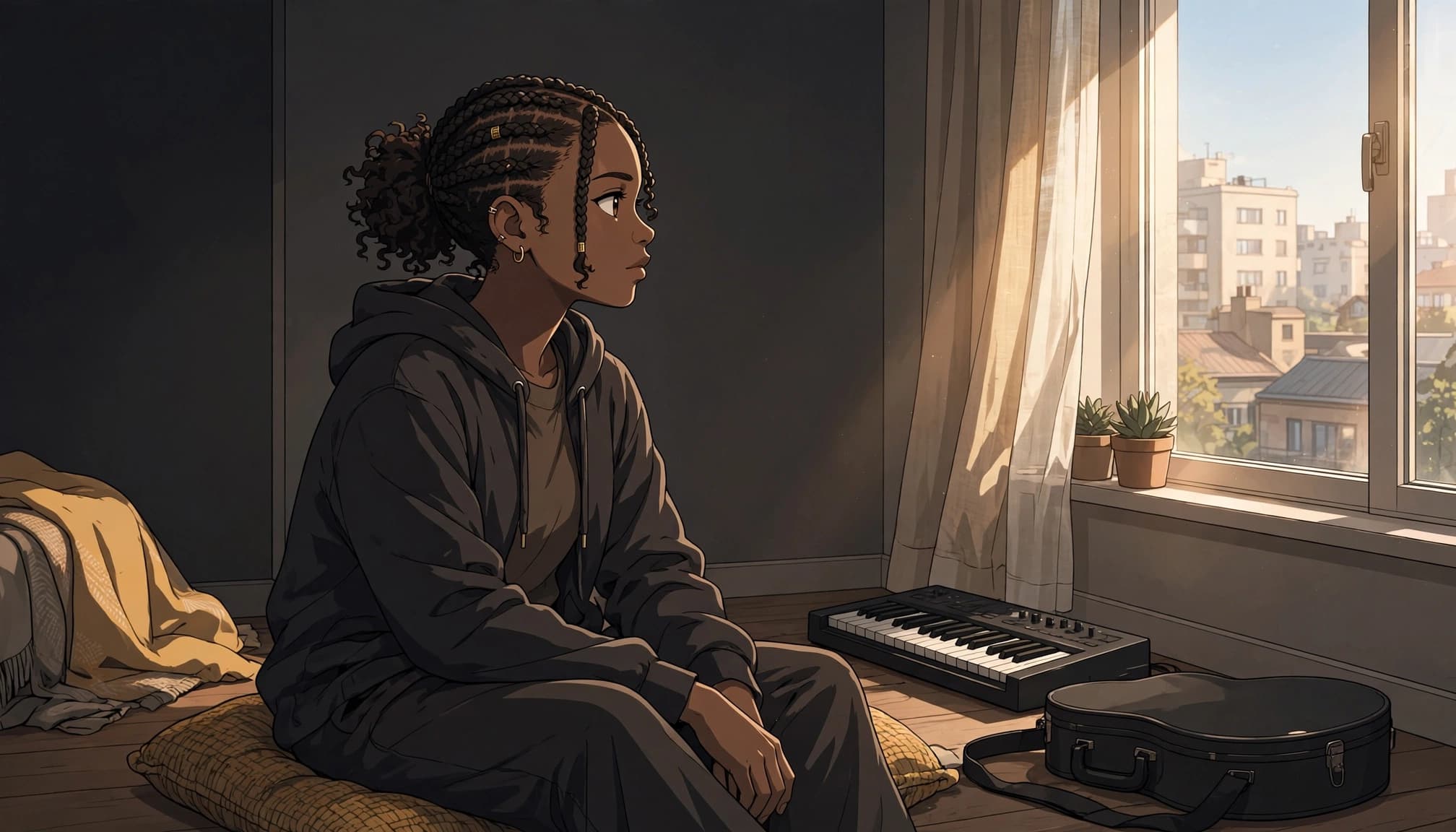
You don't have to stay inside a ninja village or a Soul Society battle to find dark-skinned characters with stories worth your time. Carole Stanley, one of the leads in Carole & Tuesday, wants to make music. Her partnership with Tuesday Simmons is the center of the series, so you see her talent alongside the work and uncertainty of chasing that goal. She isn't waiting for a tournament arc to become interesting.
In Michiko & Hatchin, Atsuko Jackson has a much rougher assignment. She's a police officer pursuing Michiko Malandro, and their shared past makes the chase more complicated than a simple hero-versus-villain setup. You can recognize Atsuko by her look, but her tension with Michiko is what gives her scenes a charge.
Then there's Kilik Rung in Soul Eater, a student meister at the DWMA. He's part of a world where weapon partners, wild outfits, and supernatural fights are ordinary school problems. Kilik fits the show's bold visual style without being a copy of its louder characters. You don't need to invent a background the story hasn't confirmed to appreciate what he adds to the cast.
What makes these anime character designs so striking?
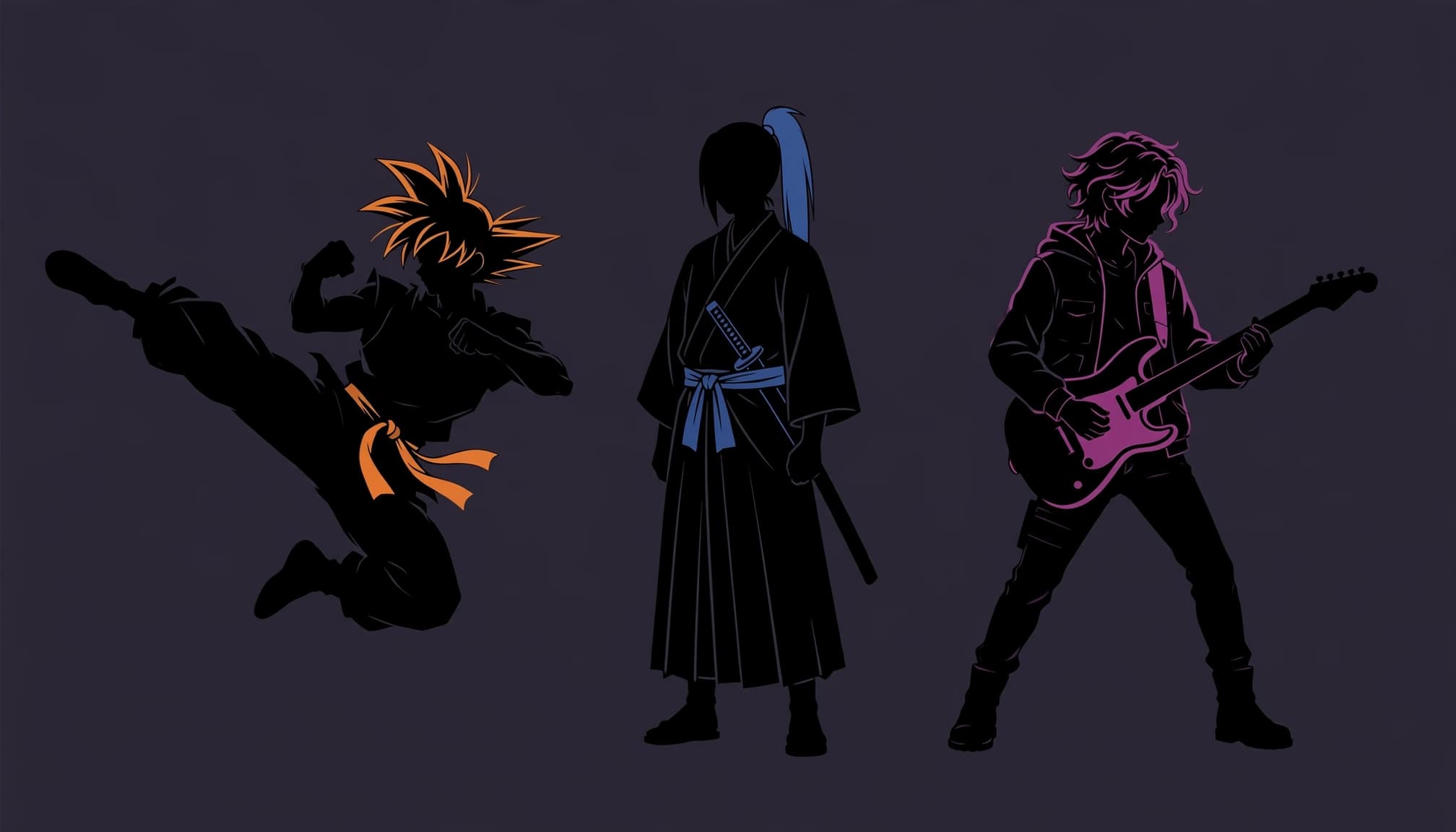
A character can grab your attention in one frame. Staying memorable takes a little more work. Color and silhouette get you to look; behavior makes you remember whose scene it was.
Hair, clothing, and color contrast make a strong first impression
Yoruichi's purple-tinted hair and golden eyes, Darui's pale blond hair, and Killer Bee's white hair all create contrast. They don't create the same character. Bee's sunglasses and shoulder marking add to his unmistakable outline, while Yoruichi's athletic styling suits someone who can end a fight before you've finished your snack.
Look at posture, too. A relaxed stance can tell you plenty when you know the person could move in an instant. Clothes and small signature details help distinguish characters even in a crowded scene. Skin tone is one part of the design, not the whole design brief.
The same principle carries into fan style. A strong graphic can suggest the energy you love without pasting an entire cast onto your chest. If that sounds like your kind of outfit, anime graphic tees with standout designs are a useful place to find ideas. Sometimes a sharp silhouette says more than a wall of visual noise.
Personality and story give a design lasting impact
Bee's hair gets your attention. His raps, humor, and skill make him impossible to mistake for anyone else. Carole's musical ambitions turn her into someone you want to follow, not a still image you admire for five seconds.
Yoruichi's confidence works because her actions support it. Darui's restraint works because he's capable when the pressure rises. Atsuko's pursuit of Michiko has history behind it, while Tōsen's choices give you plenty to argue about after the episode ends.
That's the difference between recognizing a character and caring what happens next. If you remember the goal, the conflict, or the terrible joke they committed to, the design has a story attached. A character sheet alone can't do that job.
How to talk about skin tone and representation with care
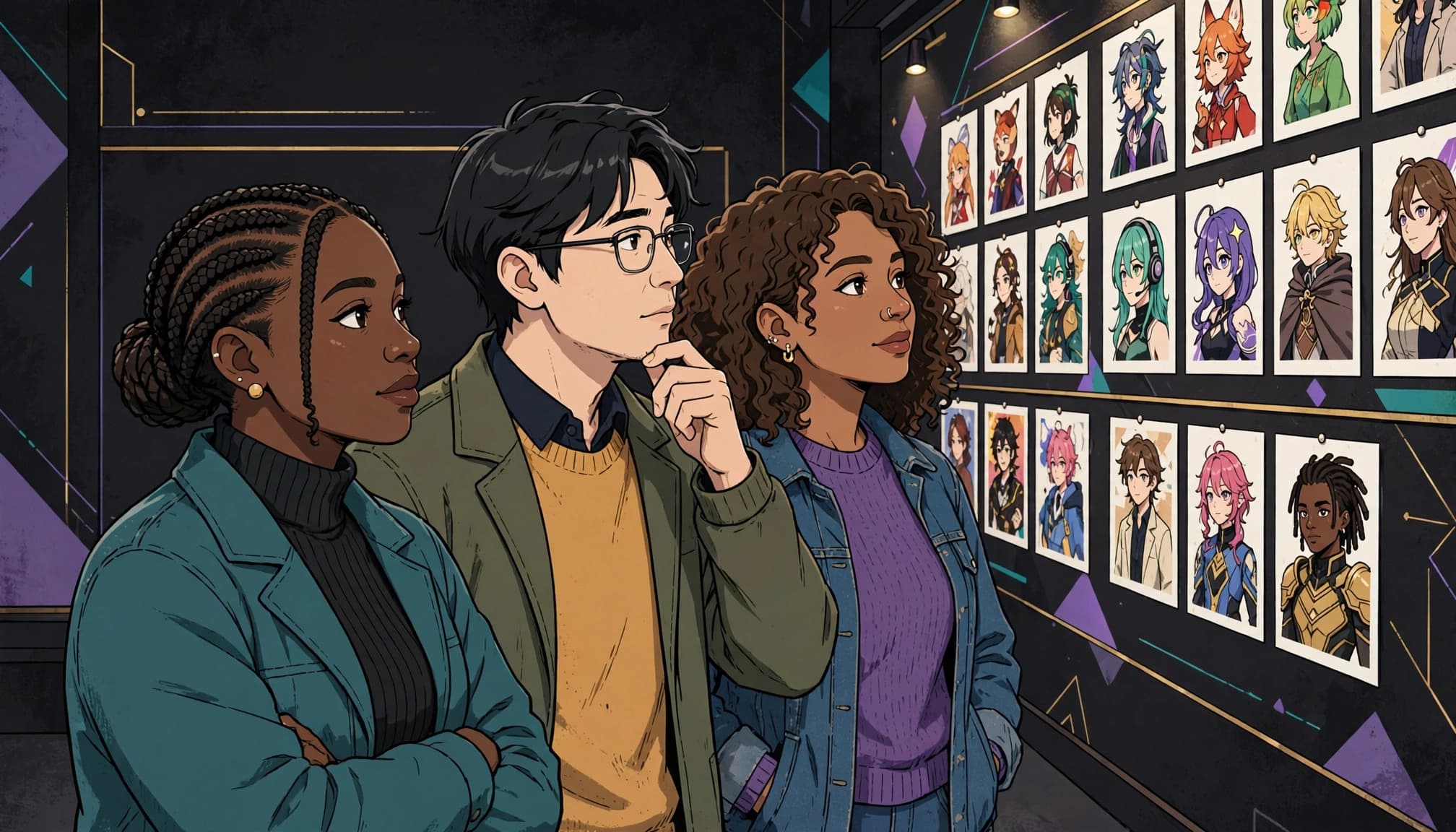
Fandom can identify a character by a single strand of hair, then get wildly confident about an identity the story never states. You can avoid that mismatch without turning every conversation into a seminar. Start with what you can see, and separate it from what canon actually confirms.
Dark-skinned, Black, and tan do not mean the same thing
Dark-skinned describes how someone's skin looks. Black can describe racial identity, not one exact shade. Tan may describe a skin tone or a change in skin color, depending on context. Those words aren't interchangeable, and a color palette isn't a family tree.
A dark-skinned anime character isn't automatically Black. Black characters can also have many different skin tones. If a series or creator confirms someone's identity, you can say so. If not, calling the character dark-skinned when you're talking about appearance is clear and accurate.
Fan labels may still vary, especially when people connect with a character in personal ways. You can respect that connection without presenting a guess as official lore. The goal isn't to police every casual conversation. It's to avoid claiming the story told you something it didn't.
Representation feels stronger when characters have depth
Visibility matters. Seeing a dark-skinned character in a major role can mean a lot when you're used to spotting people like yourself somewhere behind the main cast. But screen time alone isn't a personality. You want characters who make choices, pursue goals, build relationships, and occasionally mess things up.
Carole gets to chase music. Yoruichi has authority, skill, and a playful streak. Tōsen's decisions invite disagreement. Those roles give viewers more to connect with than an appearance category does. They also leave room for different reactions: you don't have to like every character to be glad the cast has range.
No single character can stand in for every viewer or community. More varied roles mean more chances to find someone you connect with for reasons that go beyond a first glance. That's better for the story and much more fun to discuss afterward.
Frequently Asked Questions
Who is the most famous dark-skinned anime character?
There's no official answer, and popularity depends on who you ask. Yoruichi Shihōin is a widely recognized example, especially among Bleach fans. If she's your first pick, you've got plenty of company, but it isn't a measured ranking.
Are dark-skinned anime characters always Black?
No. A character's visible skin tone doesn't automatically confirm their race or heritage. If you want to describe identity rather than appearance, check what the story or creator has confirmed instead of treating a fan label as canon.
Which anime series feature several dark-skinned characters?
Bleach gives you Yoruichi and Tōsen, while Naruto: Shippuden includes Killer Bee and Darui. Those examples make both series good starting points, not winners of an imaginary character-count contest. Their designs, roles, and identities aren't all the same.
Why are dark-skinned characters often paired with light hair?
Light hair can create immediate visual contrast, as it does with Killer Bee and Darui. It's one design choice among many, alongside clothing, silhouette, and posture. It isn't a rule, and it doesn't tell you that characters share a background.
Keep the character, not just the color palette
The dark skin anime characters who stay with you do more than look good in a screenshot. You remember their choices, their goals, and the way they change a scene. Great design gets your attention; characterization keeps it.
If one name here is new to you, try their series and see what the character does beyond the first impression. Then share the one you can't forget, even if their best moment involves a questionable rap.