

Do Labradoodle Puppies Shed? What Their Coats Tell You
TrendReactTees.STORE TeamLabradoodle puppies can shed, but the amount depends on the individual dog and its coat. Some leave little visible hair around your home, while others keep your lint roller on the payroll.
No generation label guarantees a shed-free coat or an allergy-safe dog. If you're already embracing dog-parent life, our My Therapist Is A Dog Tee and Dog Eats Custom Kibble Tee bring that energy to your wardrobe.
This post may contain affiliate links. If you make a purchase through these links, I may earn a small commission at no extra cost to you.
Before you commit to a lifetime of puppy cuddles and possible couch cleanup, here's what your puppy's coat can tell you.
Key Takeaways
- Labradoodle puppies can shed, and even puppies in the same litter may leave different amounts of hair around your home.
- Hair, fleece, and wool describe broad coat tendencies, not guaranteed shedding levels or grooming needs.
- F1, F1B, and multigenerational labels describe ancestry. None promises a nonshedding or allergy-safe dog.
- Start with gentle brushing at least twice a week, then adjust for your puppy's coat.
- Bald patches, irritated skin, or sudden changes in shedding deserve veterinary attention.
Do Labradoodle Puppies Shed? Coat Type Makes a Difference
Yes, Labradoodle puppies shed, although you may notice much less loose hair on one puppy than another. Even littermates can inherit different coat textures. A fluffy puppy photo doesn't come with a reliable forecast for your sofa.
For a visual introduction to the three common coat descriptions:
Hair, fleece, and wool coats can shed differently
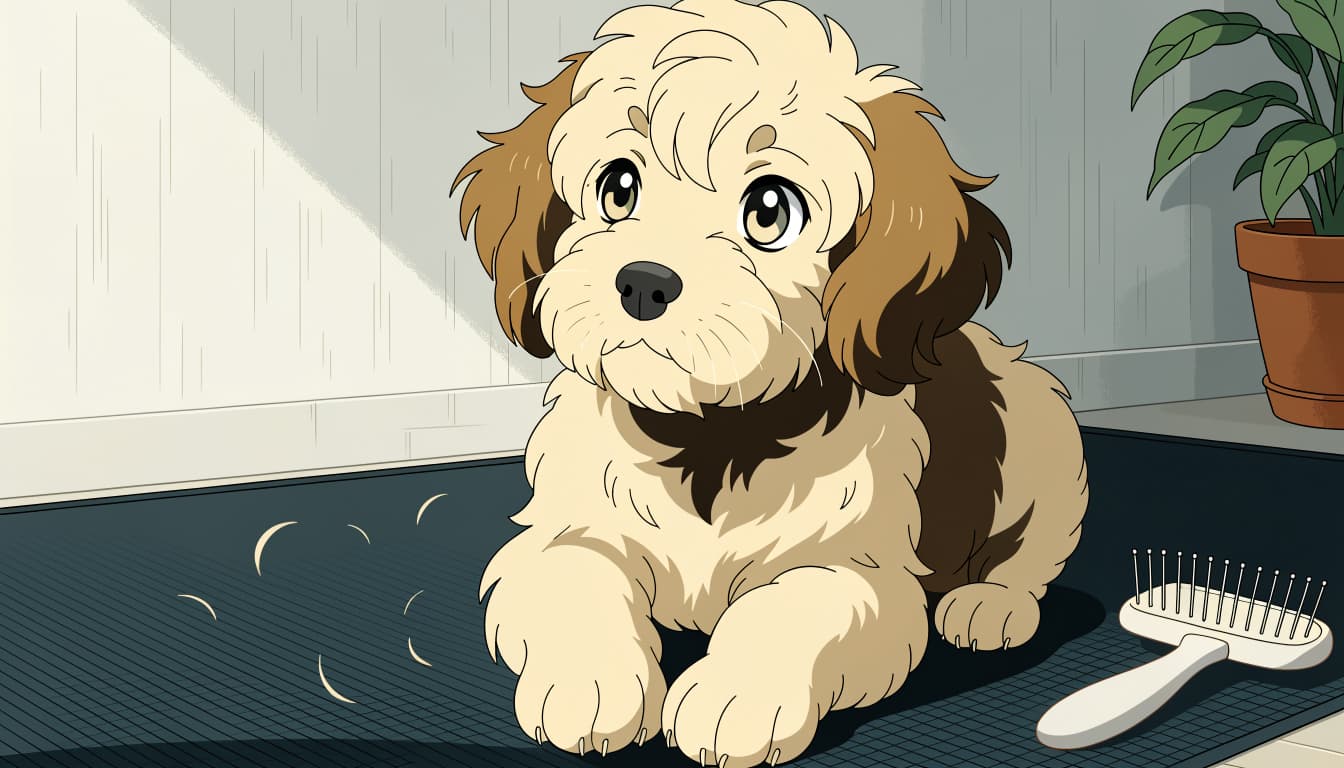
A hair coat is often straighter and more Labrador-like. You may find more loose hair on clothing and furniture, though the amount varies.
Fleece coats are commonly soft and wavy, with a tendency toward less visible shedding. Wool coats are curlier and may leave less hair around your home, but loose hair can stay caught in the coat. Tangles and mats need your attention either way.
These categories are useful clues, not a three-option guarantee. For another look at how texture affects upkeep, our Jack Russell coat care guide compares rough and smooth coats in a different kind of dog.
F1, F1B, and multigenerational labels do not guarantee a coat
An F1 Labradoodle has a Labrador Retriever parent and a Poodle parent. An F1B is commonly an F1 bred back to a Poodle, so you may see a lower-shedding coat.
Multigenerational breeding can aim for more consistent traits across puppies. Still, each label describes ancestry, not an exact amount of hair on your black jeans. Ask about the individual puppy and its parents rather than treating a generation label as a receipt for a particular coat.
Your puppy coat may not predict the adult coat
Your puppy's soft coat can change as the dog matures. Texture, visible shedding, and grooming needs may all look different later.
There's no universal coat-change date to circle on your calendar. Pay attention to the coat you have now, and adjust your care as it develops.
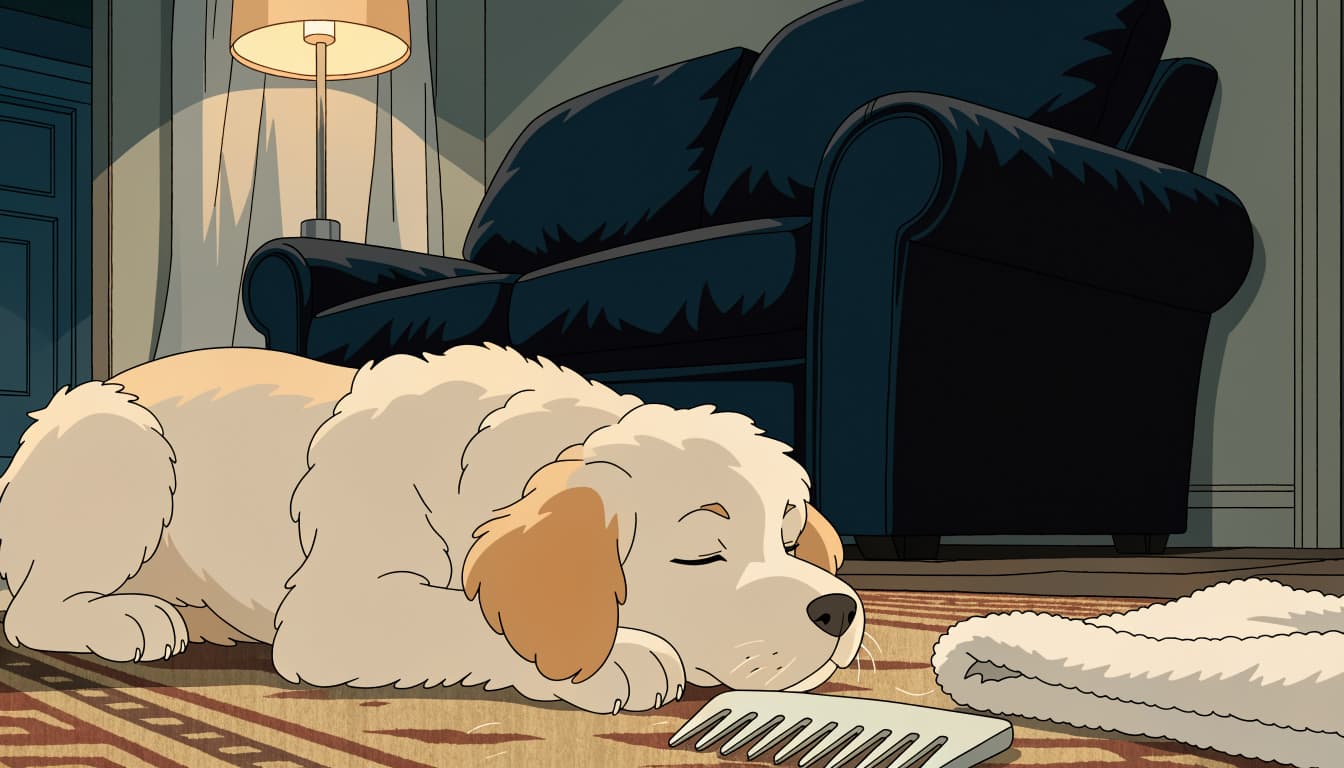
How to Manage Labradoodle Puppy Shedding and Coat Care
Your goal is a comfortable, clean coat, not a magic setting that turns shedding off. The right routine depends on your puppy's coat length, density, texture, and tolerance for handling.
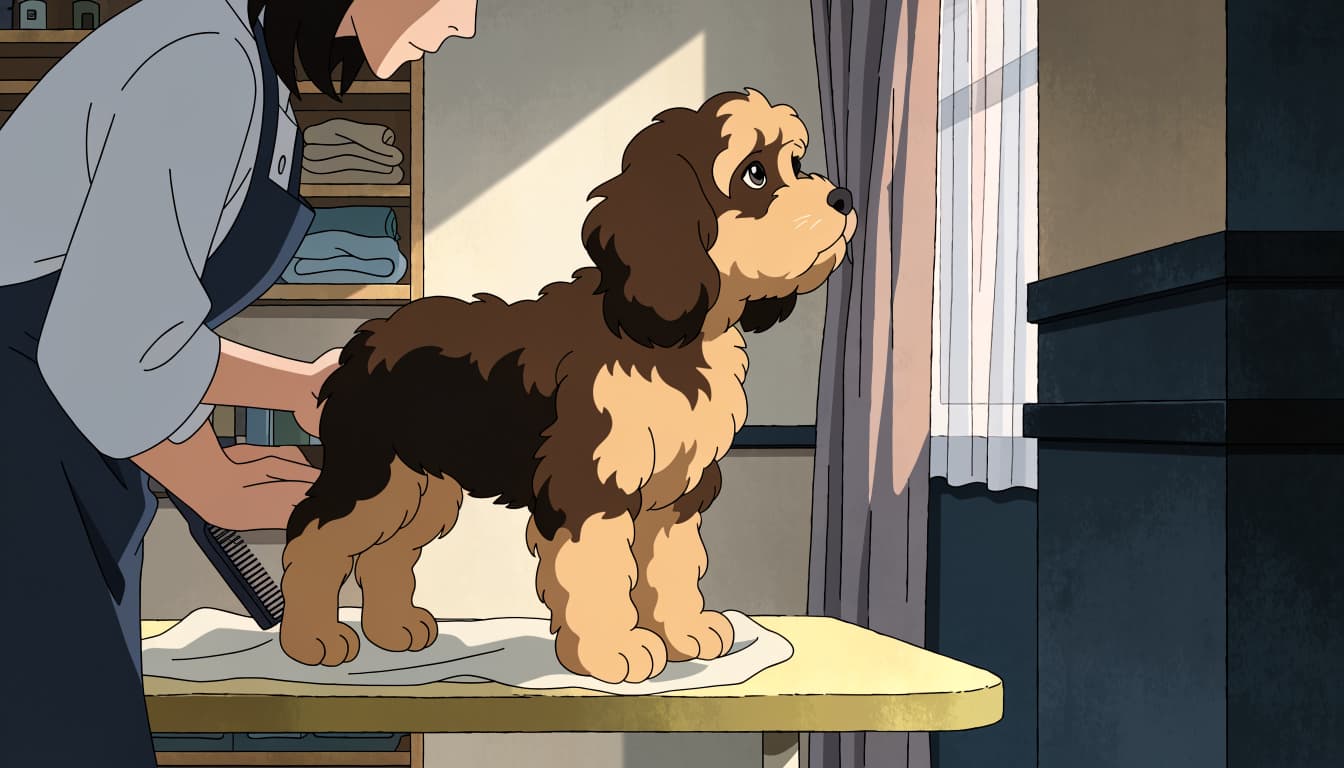
Build a gentle brushing routine
Start brushing at least twice a week. A longer, denser, or curlier coat may need more frequent attention, sometimes daily, to keep tangles manageable.
Choose a brush and comb suited to your puppy's coat. Work gently in small sections, and look for knots behind the ears, under the legs, and where a collar or harness rubs. A comb can help you find tangles hiding beneath a smooth-looking surface.
Keep early sessions short and pair calm handling with rewards. If your puppy pulls away, pause and try again later. You want the brush to become a familiar object, not the villain in a weekly grooming arc.
Check the coat after muddy walks or time in vegetation, too. Remove loose debris, and notice any changes in the skin beneath the hair. If a mat is tight or close to the skin, ask a groomer or veterinarian for help rather than cutting it out with scissors.
Keep bathing and professional grooming coat-appropriate
Bathe your puppy when dirty using a dog-safe product. Rinse thoroughly, since leftover product can irritate skin, and dry the coat carefully. If your puppy has skin irritation, ask your veterinarian which products and handling are appropriate.
A groomer can recommend care for your dog's particular coat and comfort level. Some coats need more frequent professional attention than others, so skip the idea that one calendar fits every Labradoodle.
The Virginia Tech Veterinary Teaching Hospital's coat health advice also connects skin and coat changes with overall health. Grooming is a useful time to notice those changes, not diagnose them.
When Shedding Is Normal and When to Call Your Vet
Finding loose hair on a blanket can be ordinary hair replacement. What matters is the full picture: your puppy's usual coat, the skin underneath, and whether anything has changed.
The American Kennel Club's guide to hair loss distinguishes thinning or bald areas from ordinary shedding. A little fur on the floor doesn't automatically mean something is wrong.
Look for bald spots, thinning, or irritated skin
Contact your veterinarian if you notice obvious bald patches, a thinning coat, or hair loss that appears suddenly or keeps progressing. Shedding paired with itching, redness, bumps, scabs, or sores also deserves a call.
Normal shedding shouldn't leave your puppy's skin irritated or damaged. Look beneath the coat during gentle brushing, especially if your puppy keeps scratching or licking one area.
Take a clear photo if you can, and note when you first noticed the change. That gives your veterinarian useful context if the appearance shifts before the appointment. Avoid applying a treatment based on a guess or a social media diagnosis.
Do not treat sudden changes as routine shedding
You know your puppy's usual cleanup situation better than a generic shedding chart does. If the amount of loose hair changes sharply, especially alongside skin changes or another health change, ask your veterinarian for advice.
Mention changes in appetite, thirst, energy, or behavior if you've noticed them. Your veterinarian can assess the whole picture rather than judging the coat alone.
Several conditions can cause similar-looking skin signs. For example, Cornell's guide to canine atopic dermatitis describes redness and scratching, but those signs don't identify a cause by themselves. Your puppy doesn't need an internet detective board. Your puppy needs an appropriate examination.
Streetwear & Casual Styling
Your puppy's coat care and your outfit are separate projects. One involves a brush and a watchful eye. The other gets to have a little more personality.
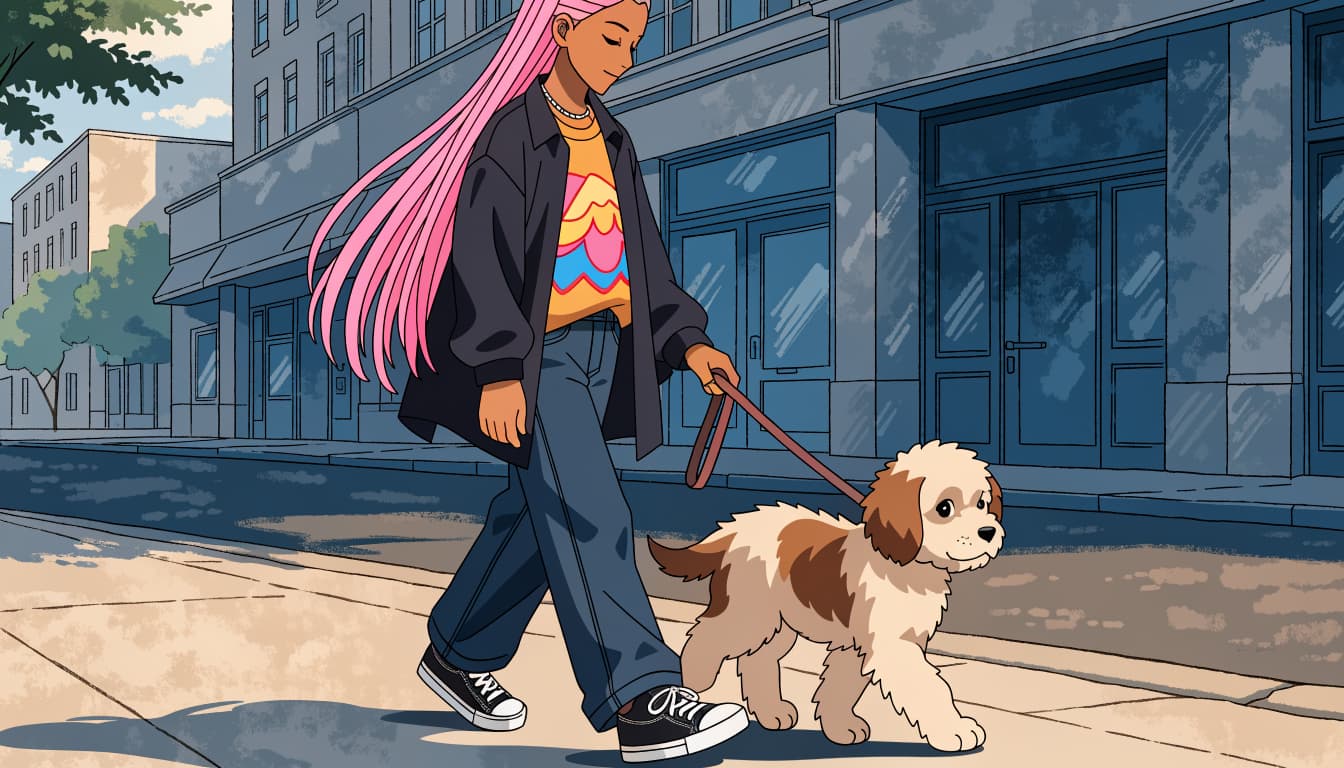
For an easy dog-walk look, build around Cyber-Brutalist Anime Graphic Tees with comfortable jeans, an open overshirt, and sneakers you can move in. Keep the layers simple so the graphic gets its moment without competing with every other piece.
Our Best Dog Mom Tee works with a relaxed jacket and your favorite everyday denim. If your style calls for a little more pet-parent magic, pair the Fur Mama Magic Tee with a loose hoodie and comfortable footwear.
Choose an outfit that lets you focus on the walk. Your puppy's leash and suitable walking gear still come first, even when your tee has main-character ambitions.
Frequently Asked Questions
Are Labradoodle puppies hypoallergenic?
No Labradoodle is guaranteed hypoallergenic. Allergens can come from dander, saliva, and skin secretions, so a coat that leaves less hair on your furniture isn't an allergy shield.
If allergies are a concern, discuss your situation with a medical professional before bringing a puppy home. A generation label can't tell you how you'll react.
Do F1B Labradoodle puppies shed less?
An F1B may shed less on average when its ancestry includes a Poodle backcross. Your individual puppy can still shed, and the amount may differ from another F1B's.
Ask about the puppy's coat and parent history, but treat those details as clues. The label doesn't guarantee a particular adult coat.
How often should you brush a Labradoodle puppy?
Twice a week is a reasonable starting point. Longer, denser, or curlier coats may need more frequent or daily brushing, especially if tangles form quickly.
Adjust the routine to your puppy's comfort and the condition of the coat. A groomer can help you choose suitable tools if you're unsure what works.
Can you tell how much a puppy will shed by looking at its coat?
Appearance offers clues, but it can't reliably predict the adult coat or an exact shedding level. A straighter coat may leave more visible hair, while a curlier one may hold more loose hair within the coat.
Looking at parent coats adds context, and your puppy's development adds more information over time. Neither gives you a certainty.
Make Room for the Puppy You Have
Labradoodle puppies can shed, and their coats don't all follow the same script. Texture and ancestry help you prepare, but your individual dog's coat gives you the most useful information.
Keep grooming gentle, watch for changes, and contact your veterinarian about unusual hair loss or irritated skin. You can enjoy the puppy cuddles while staying realistic about the brush, the cleanup, and the occasional hair on your favorite tee.