

Eyebrow Mapping Chart: Your Three-Point Brow Guide
An eyebrow mapping chart helps you find likely brow start, arch, and tail points before your tweezers get ambitious. Those three landmarks give you a starting guide, not a rule that makes every face wear identical brows.
With a straight edge, a washable pencil, and decent lighting, you can mark both brows before removing hair. Your natural growth, thickness, and asymmetry still get a vote, because your face wasn't built in a character creator.
Start with the three-point method below, then use the at-home routine to check the map against the brows you already have.
Key Takeaways
- Use the side of your nostril as the anchor for the three-point mapping method described below.
- Mark the start, arch, and tail before shaping, then compare both brows with your face relaxed.
- Keep your natural thickness and growth pattern instead of plucking every hair outside the map.
- Clean your tools, remove obvious strays slowly, and pause often to check the result.
- Ask a brow professional for guidance before making major changes or correcting over-tweezed areas.
Eyebrow Mapping Chart: Find Your Start, Arch, and Tail
Your three landmarks help you plan where the brow begins, peaks, and ends. Keep the straight edge beside your face, away from your eye.
Use this chart while looking straight ahead.
| Landmark | How to find it | What it helps you see |
|---|---|---|
| Start | Align the side of your nostril toward the inner eye corner. | A possible brow-head position. |
| Arch | Pivot toward the outer edge of your iris. | A possible peak position. |
| Tail | Align the nostril with the outer eye corner. | A possible endpoint. |
Treat these as planning points. A hair outside the map hasn't committed a crime.
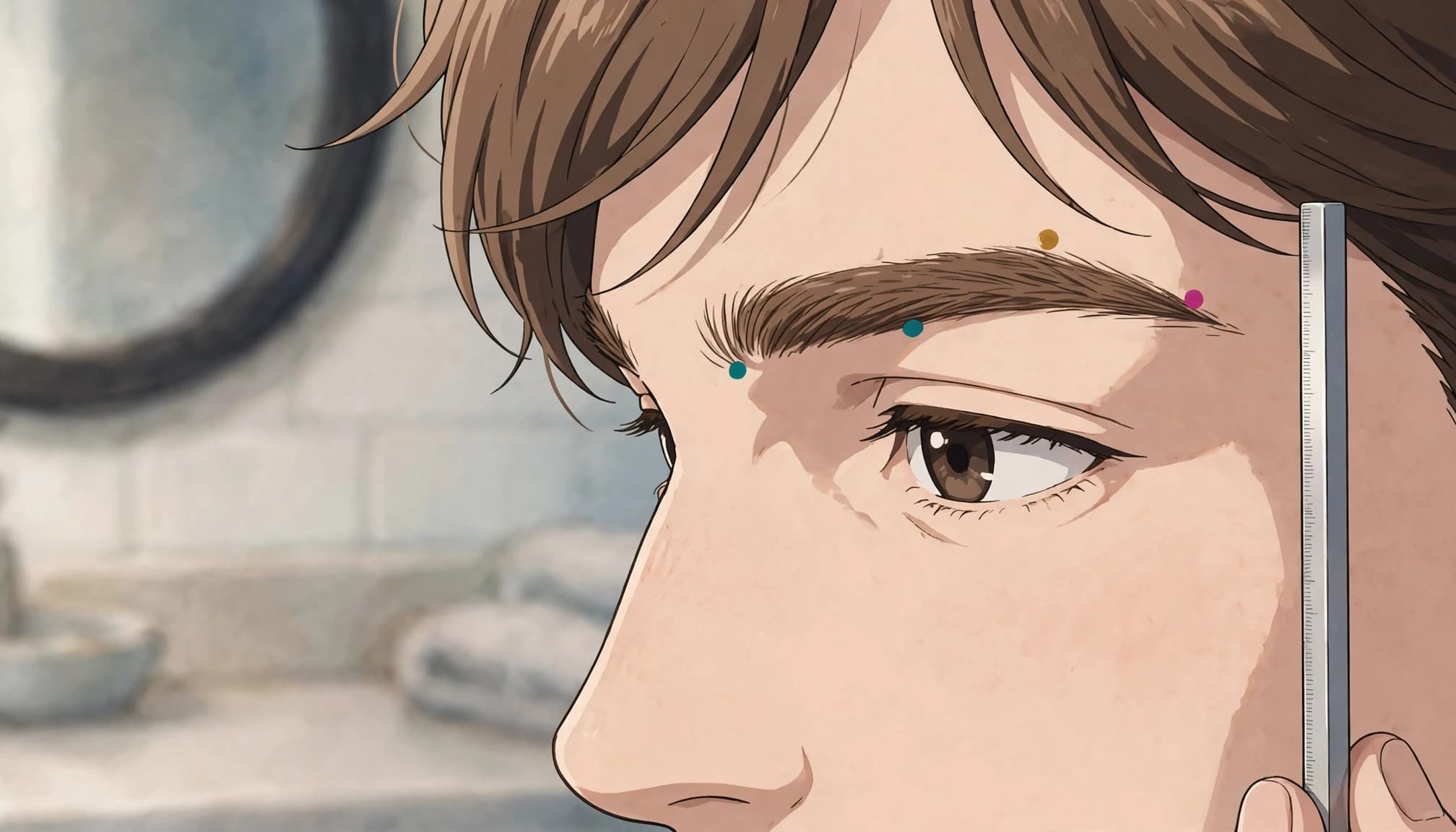
Mark the brow head where the nose line meets the brow
Place your straight edge beside the nostril and angle it toward the inner eye corner. Make a small dot where that line crosses your brow.
The nose reference differs slightly between charts. Choose one anchor and use it consistently rather than switching methods halfway through.
Locate the arch and tail without forcing symmetry
Pivot the straight edge toward the outer edge of your iris while looking forward. Mark its intersection with the brow.
Next, pivot toward the outer eye corner and mark the tail. Repeat on the other side using that side's facial landmarks.
Your points may differ slightly. Keep both sets visible before deciding whether any adjustment makes sense.
For a visual demonstration of another tool-based approach, ItsChristineG's beginner tutorial shows mapping with pre-inked string.
How to Use an Eyebrow Mapping Chart at Home
Give yourself enough time to map without rushing. Brows are a poor place to speedrun your morning routine.
A clear mirror and steady light matter more than an elaborate kit. You need to see your whole face, not inspect one hair like forensic evidence.
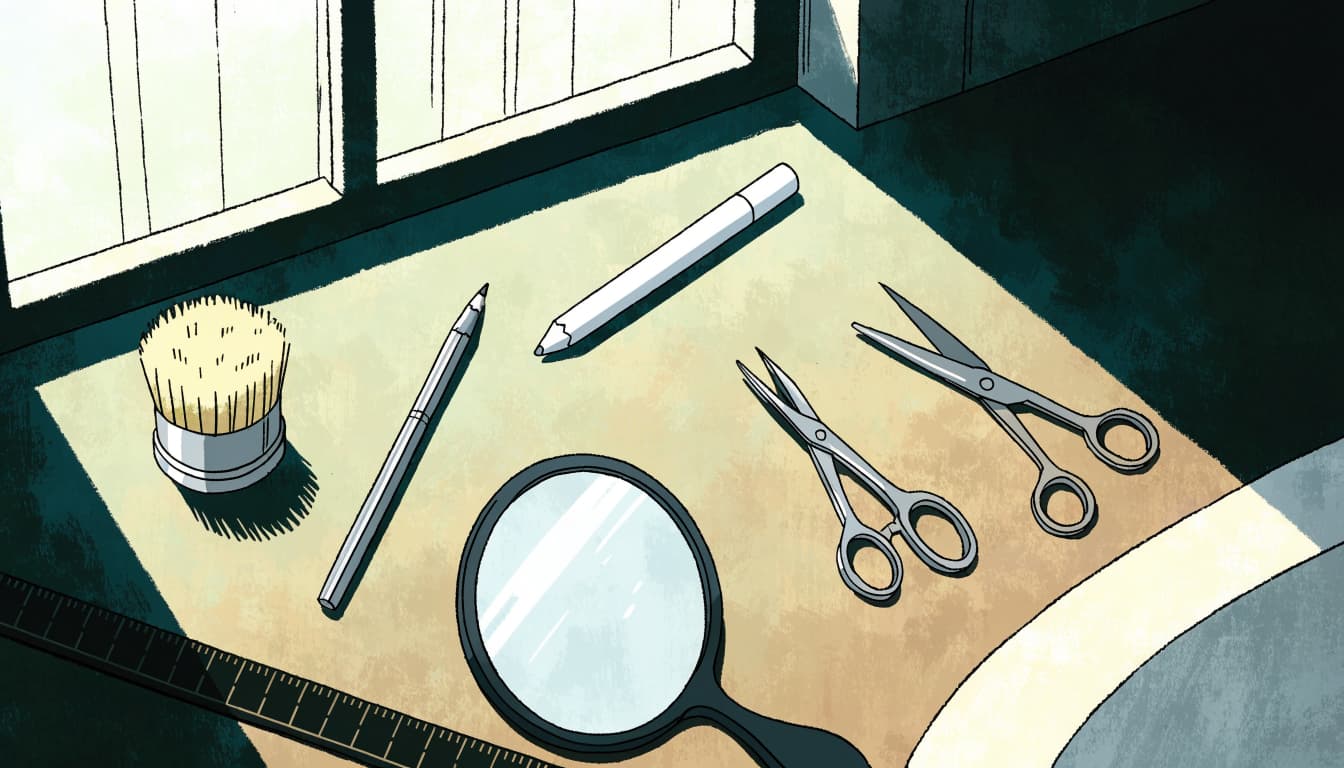
Set up your tools and map both brows first
Start with clean, dry skin and washed hands. Gather a clean pencil or straight edge, brow pencil or white eyeliner, spoolie, tweezers, small scissors, and mirror.
Brush your hairs into their usual position before marking. Keep the dots small and easy to remove.
Map both brows completely before reaching for the tweezers. Comparing an untouched brow with a half-plucked one makes judging balance harder.
Keep scissors nearby only if you already know how to trim conservatively. Owning them doesn't mean you need to use them.
Review the outline with your face relaxed
Sit upright, face the mirror, and relax your forehead. Raised brows change what you're judging.
Look at the dots alongside your existing hair growth. If helpful, connect them lightly with your pencil without drawing a thick outline.
Check the overall spacing, curve, and length at a normal viewing distance. Turn your head slightly afterward to see whether the planned tail follows your natural brow.
If the outline feels wrong, wipe it away and remap. Pencil gives you a redo. Tweezers are less generous.
Shape Slowly and Protect Your Natural Brow Line
The map helps you plan a shape. It doesn't calculate how many hairs deserve eviction.
Before removing anything, separate obvious stray hairs from the hairs that form your brow's edge. When you're unsure which category a hair belongs to, leave it.
Clean your tools and remove individual strays
As an at-home cleaning precaution, wipe compatible metal tweezers with 70% isopropyl alcohol and let them air-dry. Follow the manufacturer's care directions, and remember that this doesn't sterilize the tool.
Hold the skin taut and pull one hair at a time in its direction of growth. Pause after a few hairs and check both brows.
Avoid tweezing irritated or broken skin. The American Academy of Dermatology identifies plucking as a possible cause of folliculitis around hair follicles.
Stop if your skin becomes uncomfortable. Getting every last stray today isn't worth continuing through irritation.
Skip aggressive trimming and digging at bumps
Brush hairs back into place before judging length. Trimming across the entire brow can remove hairs that contribute to its fullness.
If one unusually long tip extends beyond the shape, trim cautiously. Keep the blades away from your eye.
Don't dig at a bump while shaping. Cleveland Clinic's guidance on visible ingrown hairs discusses alcohol-cleaned tweezers in that separate context; it isn't a routine brow-mapping protocol.
A mapped point can suggest where you'd fill a gap with pencil. It doesn't automatically justify removing neighboring hairs to match it.
Adjust the Brow Map to Your Face and Know When to Get Help
Your eyebrow mapping chart gives you reference points. Thickness, curve, hair direction, and personal taste determine what you do with them.
Professional brow-mapping explanations describe plotting a proposed shape around facial features. You can use that planning approach without treating symmetry as a guaranteed result.

Choose a shape that works with your natural growth
Landmark placement and styling are separate decisions. An arch dot doesn't tell you how high to raise the brow or how thin to make it.
Keep the strongest parts of your natural shape. If your brows grow straighter, you don't need to carve a dramatic peak because a face-shape graphic demands one.
Try a proposed change with removable pencil first. You can compare a softer curve or longer-looking tail without sacrificing hair.
Sparse patches also deserve patience. Removing fuller neighboring areas can turn a small gap into a larger styling problem.
Consider professional mapping for a more tailored plan
A brow professional may use mapping string, a ruler, or a pencil. Their nose anchor or arch target may differ from yours.
Explain what you want to keep, including thickness, a softer curve, or your existing tail. Mapping should be a visual planning conversation, not a surprise reveal.
Ask to see the proposed shape before major shaping or any pigment service. Check it with your face relaxed.
If you've over-tweezed or can't judge the outline confidently, get guidance before removing more. Perfect mirror symmetry isn't a realistic promise.
Streetwear & Casual Styling
Once your grooming is handled, you can get dressed without turning your entire face into another project. A brushed natural brow or a more defined shape can complement an everyday look. Neither requires a matching aesthetic certification.
TrendReactTees.STORE's Cyber-Brutalist Anime Graphic Tees give you a bold focal point. The cyber-brutalist graphic tee style combines anime imagery with glitch textures and harsh digital visuals. Your outfit can carry the chaos while the rest stays straightforward.
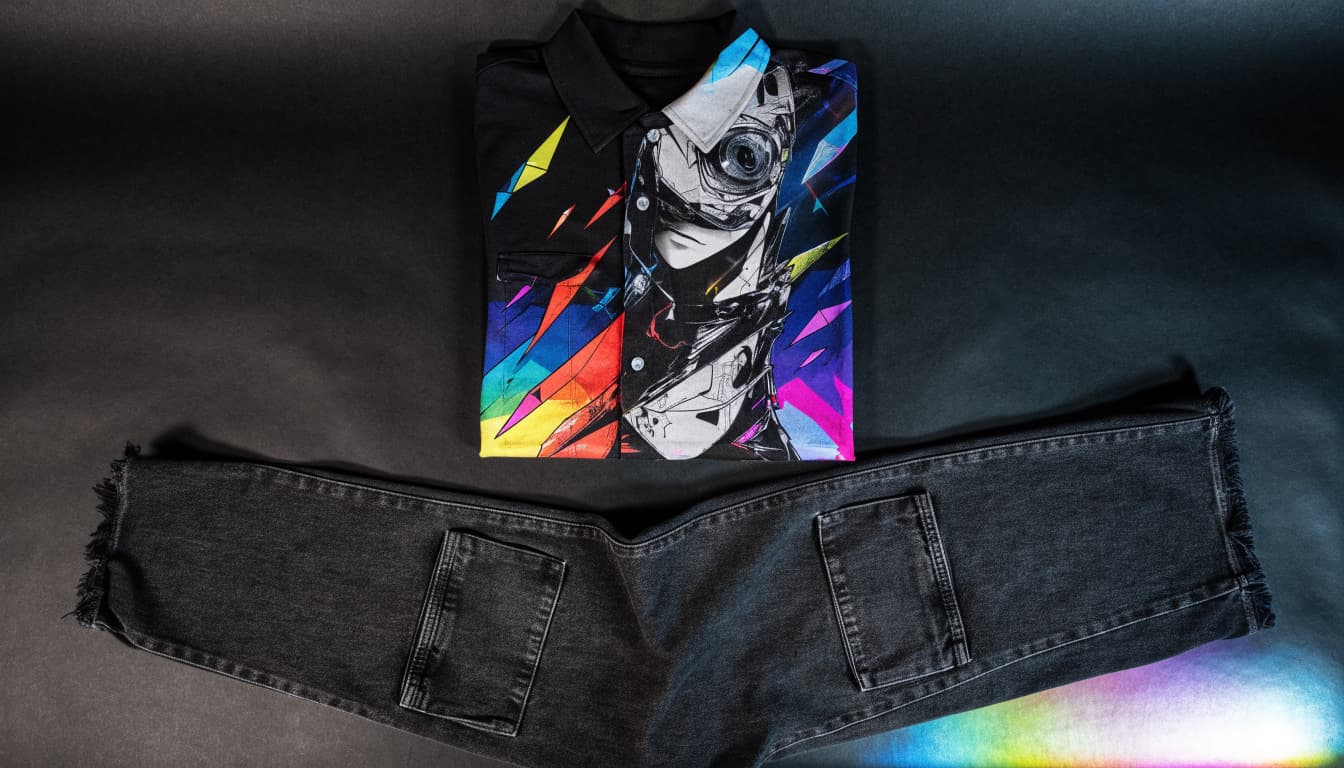
Pair bold anime artwork with relaxed cargos and simple sneakers for an easy silhouette. Dark-wash denim gives you another option when you want fewer pockets and less volume.
For layers, try an open overshirt or lightweight jacket that leaves the central artwork visible. Pull a color from the print into one accessory rather than making every item compete.
Keep proportions comfortable: a roomy tee works with relaxed pants, while a shorter outer layer can define the outfit. You don't need six statement pieces conducting simultaneous boss fights.
Your brows and clothes are separate styling choices. Let both reflect your preferences without forcing them into one rigid formula.
Frequently Asked Questions
Is there one correct eyebrow mapping method?
You'll find several versions of the three-point approach. For example, Beautiful Brows & Lashes' brow-mapping reference points aim the arch line through the center of the iris, rather than its outer edge. Use one method consistently, then judge the result against your natural growth.
Should your brow tails sit higher than the brow heads?
You don't need to follow a universal tail-height rule. Your natural growth and preferred look affect the endpoint. If you're considering a lifted-looking tail, test it with pencil before removing hair underneath or shortening the existing tail.
Can you map your brows if they are uneven?
Yes, and you can record the differences rather than immediately trying to erase them. A straight-on photo taken with relaxed brows can help you compare the mapped points later. If matching them would require substantial removal, keep the fuller shape and seek advice.
How often should you reshape your eyebrows?
Wait until new stray hairs are visible instead of following a fixed calendar. Between sessions, brushing or lightly filling your brows may be enough. Recheck the overall shape before each cleanup so repeated small adjustments don't gradually make your brows thinner than intended.
Keep Your Brow Shape, Keep Your Options
Use the start, arch, and tail as reference points before touching your tweezers. Map both brows, compare them with your face relaxed, and adjust the plan around your existing growth.

Keep removal conservative, especially when you're uncertain about an edge or sparse patch. A washable mark is easy to change; an over-plucked section takes more patience.
The best map helps you make thoughtful choices without erasing your own brow shape. You can look put together and still look like you.