

Frog Poop vs Snake Poop: Spot the Actual Clues
You find a dark little log near the pond, beside the pet enclosure, or on the patio. Cool. Your yard has dropped a side quest into your lap.
With frog poop vs snake poop, color can bait you into a bad guess because both can look dark and log-shaped. The useful tells are moisture, texture, location, and whether there's a white or cream urate section hanging around like unwanted DLC.
Key Takeaways
- Frog feces is often dark, damp, cylindrical, and a little shiny when fresh.
- Snake waste commonly includes dark feces plus white, cream, or chalky urates.
- Color and size overlap, so don't identify a dropping by one clue alone.
- Hair, feathers, scales, or bone fragments can support a snake-poop ID.
- Keep pets and kids away, use gloves, and wash your hands after cleanup.
Frog Poop vs Snake Poop: The Main Differences at a Glance
The fastest answer is not "it's black, so it's probably a snake." Nature does not care about your tidy detective board. Both animals can leave dark waste, especially after a heavy meal or a damp night.
A fresh frog dropping often looks like a dark brown or black mini-cylinder. Snake waste can also be dark, but it may look firmer, more irregular, smeared, or oddly segmented. The strongest clue is a pale urate mass attached to it or nearby.
| Clue | Frog feces | Snake waste |
|---|---|---|
| Color | Usually dark brown to black | Dark feces, often with pale urates |
| Shape | Often cylindrical | Irregular, firm, or log-shaped |
| Moisture | Damp or glossy when fresh | Often firmer, sometimes pasty |
| White portion | Usually no clear urate cap | White, cream, or chalky urates are common |
| Prey remains | Tiny insect bits may appear | Fur, feathers, scales, or bone can appear |
| Size | Varies by frog and meal | Varies by snake, meal, and hydration |
Size is a chaos goblin of a clue. A large frog can leave a surprisingly substantial dropping. A small snake can leave little more than a dark smear and a pale blob. Body size, diet, hydration, and the timing of the last meal all change the output.
What frog droppings usually look like
Frog poop is commonly dark brown to nearly black, moist, and tube-like. When it's fresh, it can have a faint sheen that makes it look wetter than you expected from something so tiny.
A frog can produce a dropping that seems comically big compared with its body. In wet soil, near a pond, or after rain, it may soften and break down fast. Frogs eat insects and other small prey, so tiny undigested bits can show up, but that is not a reliable ID badge.
What makes snake droppings different
Snake waste often has two distinct pieces: a dark fecal portion and pale urates. The urates can be white, off-white, or cream-colored. Fresh ones may look semi-solid or toothpaste-like. Dried ones can turn chalky and crumbly.
Because snakes swallow prey whole, you might spot hair, feathers, scales, or small bone fragments. That can make the answer feel obvious, but don't treat its absence as a plot twist. Not every snake dropping shows visible prey remains.
Why White Urates Usually Point to Snake Waste
Snakes don't produce a big puddle of watery urine like mammals. They remove much of their nitrogen waste as uric acid, which exits as a pale, semi-solid material called urates. That is why snake poop often has the classic dark-and-white combo.
Frog feces doesn't normally have a distinct white urate cap in the same recognizable form. A wet dark dropping with no clear pale portion is more consistent with frog feces, especially near water or insect-heavy spots. It is still a clue, not courtroom evidence.
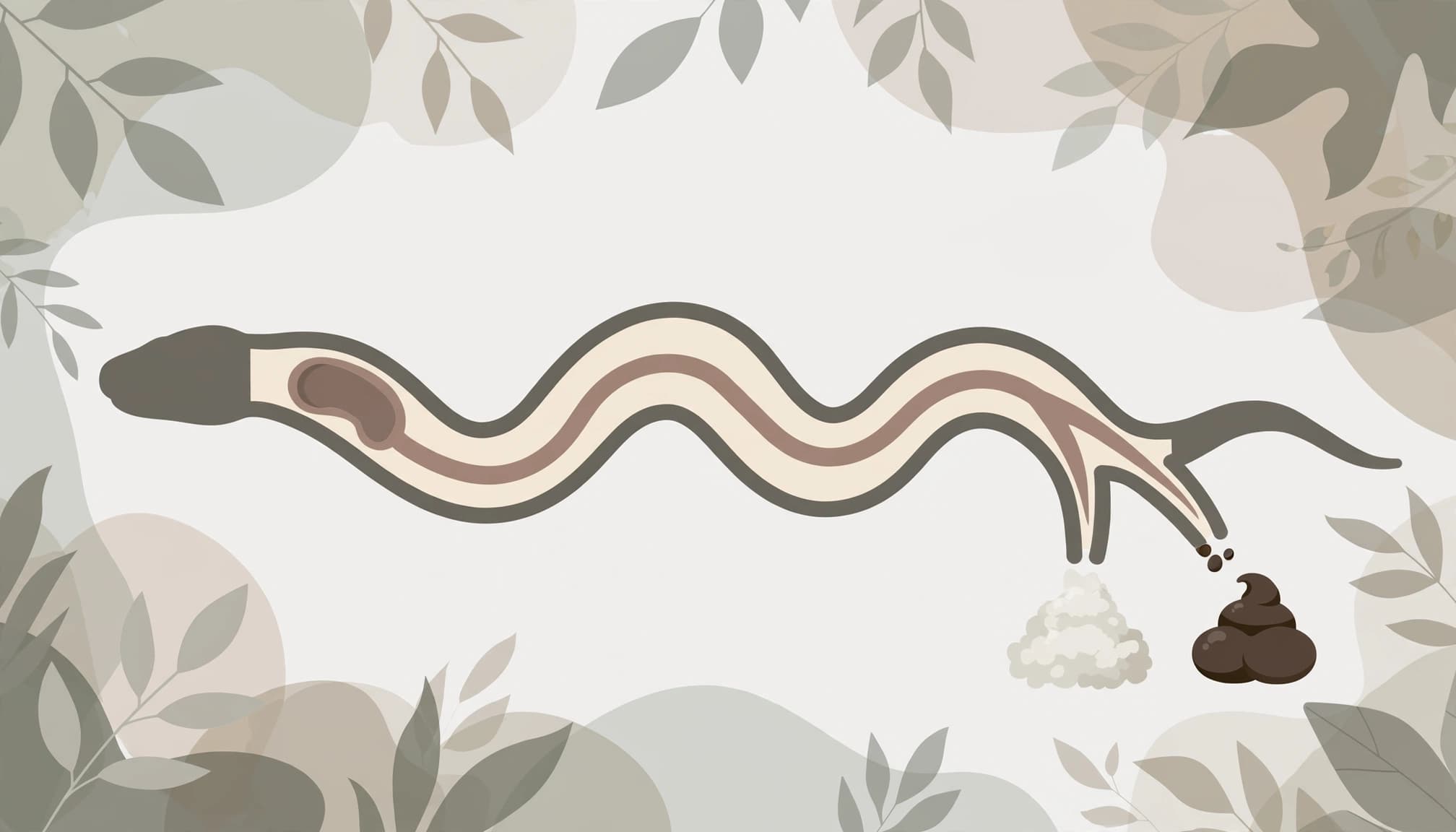
A white section helps most when it is paired with the right texture and location. Rain-soaked mystery poop has already corrupted the save file.
The pale material may be attached to the stool, sitting beside it, blended into it, or almost invisible under soil. Old, washed, squashed, or insect-covered droppings are lousy evidence. Don't call an animal based on a single color patch.
How urates form and change as they dry
Fresh snake urates can look soft, creamy, and paste-like. As they dry, they may become hard, cracked, chalky, or slightly yellowed. Sunlight, substrate, soil, water, and enclosure bedding all mess with the original appearance.
A white urate that turns a little off-white after drying isn't automatically alarming. But in a pet snake, yellow, orange, green, or blue urates can point to a health issue. If the color change comes with poor appetite, lethargy, dehydration, or straining, contact a qualified reptile veterinarian.
When snake feces contain hair, feathers, or bone
A snake eats prey whole, then processes the parts its body can use. Fur, feathers, scales, tiny bones, teeth, or nails can sometimes pass in feces or appear in a nearby regurgitated bolus.
Those remains strengthen a snake-poop call. They are not required for one. A snake that ate a hairless prey item, or fully digested a meal, may leave waste with no obvious fragments at all.
Use Habitat and Location to Identify the Dropping More Reliably
Location gives you context that color cannot. Frogs and snakes can share a backyard, especially near water, mulch, rock piles, and sheds. Still, where you find the sample can narrow the suspects.
Before cleanup, take a quick look without getting close:
- Note whether the spot is wet, dry, sheltered, or exposed to rain.
- Look for a white or cream urate section beside the dark material.
- Check for obvious prey remains without touching the waste.
- Think about what animals use that area, then clean up with gloves.
Frog poop in yards, pools, and damp areas
Frogs often hang out where water, shelter, and bugs stack up. That can mean a pond edge, pool deck, damp window sill, door threshold, or garden bed. Outdoor lights are insect buffets, so frogs may post up nearby.
A wet, dark dropping without a clear white portion fits frog feces more often than snake waste. It still doesn't prove it. A snake can travel through the same area, and rain can erase the useful parts fast.
Snake poop in homes, gardens, and enclosures
In a pet terrarium or vivarium, snake feces and urates are often left on the substrate after a meal. You may find the dark fecal mass with a white or cream section stuck beside it, which is a far better clue than size alone.
Outdoors, check protected routes: near sheds, garages, crawl spaces, woodpiles, rock borders, and garden hiding spots. The dropping can blend into soil like it activated stealth mode. Other animals leave similar waste, so keep your call tentative.
Safe cleanup and basic health precautions
Keep children and pets away until the waste is gone. Put on disposable gloves, use paper towels or a disposable scoop, seal everything in a bag, then wash your hands with soap and running water.
The FDA's reptile and amphibian Salmonella guidance warns that reptiles, amphibians, their droppings, and their habitats can carry Salmonella. Don't touch your face, phone, snacks, or food-prep surfaces during cleanup. Clean and disinfect enclosure surfaces according to the product label.
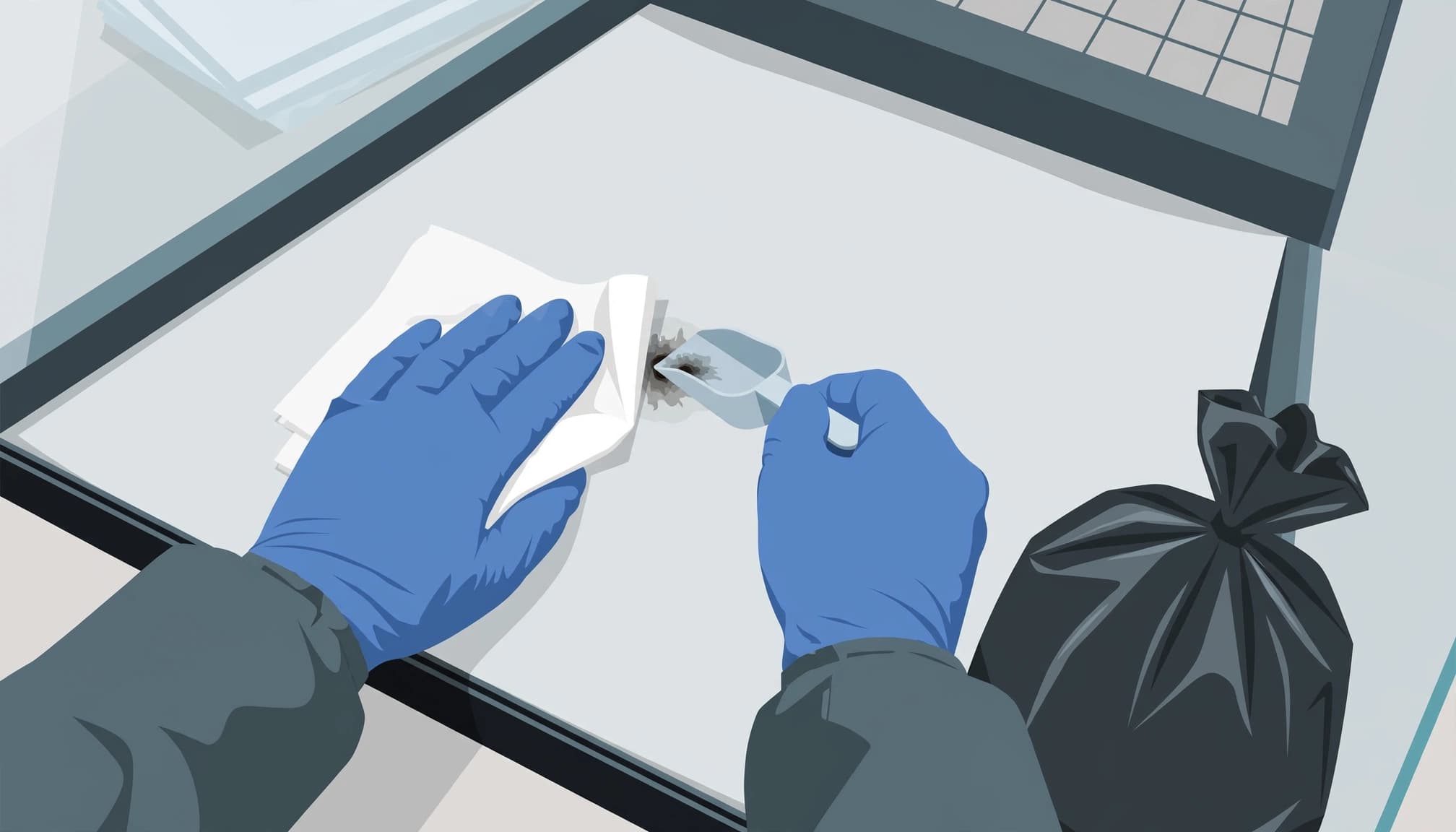
If the animal is still there, don't poke it, chase it, or try a main-character capture scene. Contact a local wildlife professional if you need help identifying or moving it.
Frequently Asked Questions
Can frog poop have white material in it?
It can pick up white debris, dried soil, insect parts, or residue from the surface where it lands. That is not the same as a distinct pale urate portion. A separate white or cream, chalky mass is more characteristic of snake waste.
Can snake poop be completely dark?
Yes. The urate portion may be mixed into the stool, hidden underneath it, washed away, or too old to recognize. A dark dropping alone cannot rule out a snake, which is why frog poop vs snake poop needs more than one visual clue.
How long does snake poop take to dry?
Drying time depends on airflow, humidity, sunlight, substrate, and the dropping itself. In a warm, dry enclosure, the urates may harden quickly. Outdoors after rain, waste can stay soft, spread out, or become too degraded for a confident ID.
Should you worry about a pet snake's odd urate color?
A single slightly yellowed urate may happen as material dries. Persistent yellow, orange, green, or blue urates deserve a reptile veterinarian's input, especially if your snake also seems dehydrated, weak, uninterested in food, or strained during elimination.
What if you find poop but never see the animal?
Treat the area as shared wildlife space, not proof that a snake has moved into your rent-free mental real estate. Clean the waste safely, reduce hiding places near the home if needed, and watch for repeated signs. A wildlife professional can help when sightings or droppings keep showing up.
The Practical Answer
Frog feces is usually a wet, dark, cylindrical dropping. Snake waste is more likely to include a white or cream urate section, plus possible prey remains such as fur or feathers.
Color and size can overlap hard, so use texture, habitat, moisture, and the pale urate clue together. Keep the mystery poop off your hands, clean it with gloves, and get professional help when the animal or dropping refuses to identify itself.