

How Long Do Mini French Bulldogs Live?
TrendReactTees.STORE TeamMini French bulldogs don't have a proven, separate lifespan estimate. The American Kennel Club lists 10 to 12 years for French Bulldogs generally, but that range isn't a promise for your dog.
"Mini" is a marketing label, so health history and care tell you more than the name. If your dog already runs your camera roll, our Dog Eats Custom Kibble Tee and My Therapist Is A Dog Tee get the assignment.
For your dog's health, start with what the available lifespan figures can and can't tell you.
This post may contain affiliate links. If you make a purchase through these links, I may earn a small commission at no extra cost to you.
Key Takeaways
- No reliable lifespan estimate exists for a defined population of mini French bulldogs.
- The AKC's general French Bulldog estimate is 10 to 12 years, though individual lifespans vary.
- Breathing trouble, heat sensitivity, and spinal problems deserve veterinary attention, regardless of your dog's size label.
- Measured meals, suitable activity, preventive care, and prompt attention to symptoms support your dog's everyday health.
- Health records and honest information about breathing and mobility matter more than a seller's "mini" promise.
How Long Do Mini French Bulldogs Live?
There's no reliable lifespan figure for a defined mini French bulldog population. The American Kennel Club's French Bulldog guide lists a general life expectancy of 10 to 12 years, but it doesn't offer a separate estimate for dogs sold as mini.
Your Frenchie could live a shorter or longer life. The breed-guide range is useful context, not a countdown timer for your particular companion.
Why lifespan estimates vary
A 2025 survey of French Bulldogs in Germany reported a median age at death of 8.3 years. That figure came from 42 entries with a reported age at death or euthanasia, within a voluntary owner survey. It isn't a prediction for every Frenchie in Germany or elsewhere.
A UK life-table study produced a much lower estimate of 4.53 years at birth. Its authors noted that rapid growth in the breed's popularity may have biased the estimate downward, and the French Bulldog sample was small.
These figures come from different populations and methods. You shouldn't treat them as interchangeable or use any one number as your dog's personal expiration date.
What "mini French bulldog" means
"Mini" describes a dog marketed as small. It doesn't identify a standardized French Bulldog size category with a recognized lifespan benchmark.
Adult size, health, and history can vary among dogs sold under that label. Ask about both parents, available health records, and any breathing or mobility concerns. The word on the listing won't answer those questions for you.

Which Health Risks Can Affect a French Bulldog's Lifespan?
French Bulldogs can experience health problems that affect comfort and longevity. That doesn't mean every dog will develop them, but recognizing changes gives you a reason to seek care sooner.
Breathing trouble and heat sensitivity
Brachycephalic obstructive airway syndrome, or BOAS, refers to breathing difficulties linked to the anatomy of short-muzzled dogs. Narrowed airways can make moving air harder, especially during activity or in warm conditions.
In the German survey, 64% of the 574 dogs showed signs classified as BOAS-related. Owners reported a veterinary BOAS diagnosis for 13%. Those figures measure different things in one study; neither predicts your dog's individual risk.
Noisy breathing, poor exercise tolerance, and heat sensitivity deserve a conversation with your veterinarian. Your dog's breathing shouldn't get a free pass because the sound is familiar.
Spinal problems, including IVDD
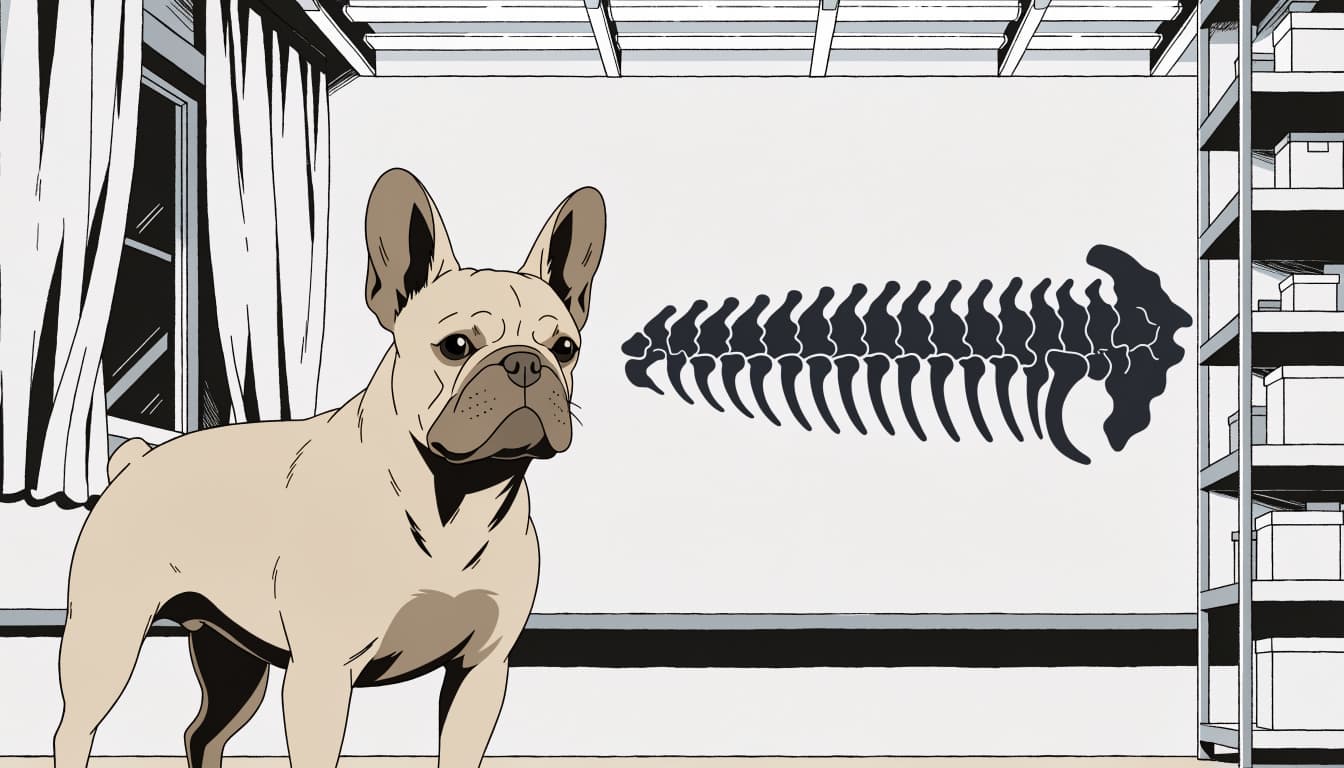
Intervertebral disc disease, or IVDD, affects the discs between the bones of the spine. Signs can include pain, weakness, reluctance to move, or trouble walking.
In the same German survey, 105 dogs, or 18% of the sample, had IVDD. Among affected dogs, 61% received their diagnosis between ages 1 and 4. Those findings describe the surveyed dogs, not a guaranteed lifetime risk.
The study also found associations between shorter muzzles and some airway and spinal problems. That doesn't establish a precise risk for an individual dog.
Contact your veterinarian promptly about pain or a change in movement. If your dog can't walk or is dragging its hind legs, seek emergency veterinary care.
How Can You Support a Longer, Healthier Life?
You can't select a lifespan setting for your dog. You can build a routine around its body, breathing, and comfort, with your veterinarian's help.
Keep your dog lean, active, and cool
Ask your veterinarian to recommend food portions and assess your dog's body condition. Measure meals and count treats toward daily intake. Those snack negotiations may be persuasive, but they aren't nutritional evidence.
Regular, low-impact activity can fit into your dog's routine. Adjust the pace to its age, breathing, movement, and recovery afterward. A gentle stroll in the shade may suit your dog better than a hot, high-energy outing.
Keep water available and avoid heavy exertion in heat. If your dog shows concerning signs, stop the activity and contact a veterinarian. Severe breathing difficulty or signs of heatstroke need emergency care.
Limit repeated high-impact jumping, especially if your dog has mobility concerns. A stable, nonslip ramp may help with furniture access when appropriate, though it can't guarantee prevention of spinal disease.

Keep up with preventive veterinary care
Schedule regular checkups and discuss the right timing for vaccinations and parasite prevention. Your veterinarian can adjust the plan for your dog's age, health, and lifestyle.
Dental care belongs in the routine, too. Ask about tooth brushing with dog toothpaste and have your dog's teeth assessed during veterinary visits. Dental chews aren't a substitute for brushing.
Pay attention to changes in appetite, behavior, breathing, and movement between appointments. A new reluctance to play or climb may be worth discussing, even if your dog otherwise seems like its usual tiny boss.
How to Choose and Care for a Mini French Bulldog
Small size can be appealing. It doesn't tell you whether a dog breathes comfortably, moves well, or has inherited health concerns.
Ask about health history and daily needs
Whether you're considering a puppy or an adult dog, ask the breeder, rescue, or current caregiver for available veterinary records. Discuss known health concerns, previous treatment, and what the dog is like during ordinary activity.
For a puppy, ask about the parents' health and breathing. For an adult, ask about changes in mobility, exercise tolerance, and any treatment already underway. A complete record may not always be available, but honest answers help you plan.
Watch how the dog moves and breathes in a calm setting. A short meeting can't rule out a health problem, so involve your veterinarian rather than treating your first impression as a medical assessment.
Consider your home routine, too. Your dog needs a comfortable place to rest, gentle handling, and care you can maintain. A tiny face doesn't settle the compatibility question.
Streetwear & Casual Styling
Your Frenchie's comfort comes first. Your outfit can still have main-character energy.
For a relaxed dog-walk look, pair our If They Could Use Internet Tee with straight-leg jeans and sneakers. The cyberpunk graphic brings the internet humor without demanding a full cosplay commitment.
Prefer a direct pet-parent statement? Style the Best Dog Mom Tee with relaxed pants and a light jacket. Both looks keep your hands free for the more important job: paying attention to your dog.
Frequently Asked Questions
Are mini French bulldogs a recognized breed?
No. "Mini" isn't a separate, standardized French Bulldog breed or size category. The label doesn't give you a reliable prediction of health, adult size, or lifespan.
Can a mini French bulldog live 12 years?
Some French Bulldogs may reach or exceed 12 years. The AKC's 10-to-12-year range is a general breed-guide estimate, though, and no individual lifespan is guaranteed.
Do mini French bulldogs live longer than standard French bulldogs?
Available evidence doesn't show that a smaller size or the mini label leads to a longer life. Your dog's health, body structure, inherited risks, and ongoing care are more useful considerations than the marketing name.
What symptoms mean you should call a veterinarian?
Contact your veterinarian promptly about breathing difficulty, unusual heat distress, pain, sudden weakness, or trouble walking. Severe breathing trouble, inability to walk, or dragging the hind legs calls for emergency care. Don't give your dog human pain medication.
Focus on the Dog, Not the Label
There's no reliable mini-specific lifespan number to put on your calendar. Use the general French Bulldog estimate as a broad reference, and remember that your dog's individual health matters more than a seller's size claim.
Give your Frenchie a strong everyday care routine: measured meals, suitable activity, veterinary visits, and prompt attention to changes. Comfort and health deserve the lead role, even when your dog insists the lead role belongs to its treat collection.