Can You Give a Puppy Safe-Guard Goat Wormer?
TrendReactTees.STORE TeamIf you're asking how much safeguard goat wormer to give a puppy, the safest answer is: don't give the goat suspension unless your veterinarian directs you to use it. It isn't labeled for puppies, and a puppy's age, weight, health, and parasite diagnosis all matter.
Safe-Guard Canine granules have dog-specific label directions. Safe-Guard Goat Dewormer is a different product, with directions written for goats. Sharing an active ingredient doesn't make the products interchangeable.
For the pet-parent uniform outside the clinic, we have the My Therapist Is a Dog tee and the Best Dog Mom tee. First, though, let's keep the wormer decision focused on your puppy's health.
This post may contain affiliate links. If you make a purchase through these links, I may earn a small commission at no extra cost to you.
Key Takeaways
- Goat Safe-Guard has no puppy dose you should use without veterinary direction.
- Safe-Guard Canine is labeled for puppies at least 6 weeks old, with its own dose and schedule.
- The goat suspension's concentration allows a math conversion, but not a home dosing plan.
- Your veterinarian needs your puppy's age, accurate weight, symptoms, and parasite information.
- If your puppy already received the goat product, call your veterinarian with the exact details.
How much safeguard goat wormer to give a puppy
There is no universally safe, puppy-approved dose of Safe-Guard Goat Dewormer to recommend. Don't use the goat label's dose for your puppy. That label is for goats, not dogs.
The canine product has separate directions. The Safe-Guard Canine label from Merck Animal Health says it is for dogs and puppies 6 weeks and older. Its labeled dose is 50 mg/kg (22.7 mg/lb) once daily for three consecutive days. The granules are mixed with a small amount of the dog's usual food, and the dog must eat the entire medicated portion.
That is information for Safe-Guard Canine granules, not a recommendation to give goat suspension. Even for the canine product, a vet should help determine whether the puppy needs treatment and whether the product fits the suspected parasite. Safe-Guard Canine's NIH DailyMed label lists specific parasites it treats. It isn't a blanket answer for every cause of worms or digestive symptoms.
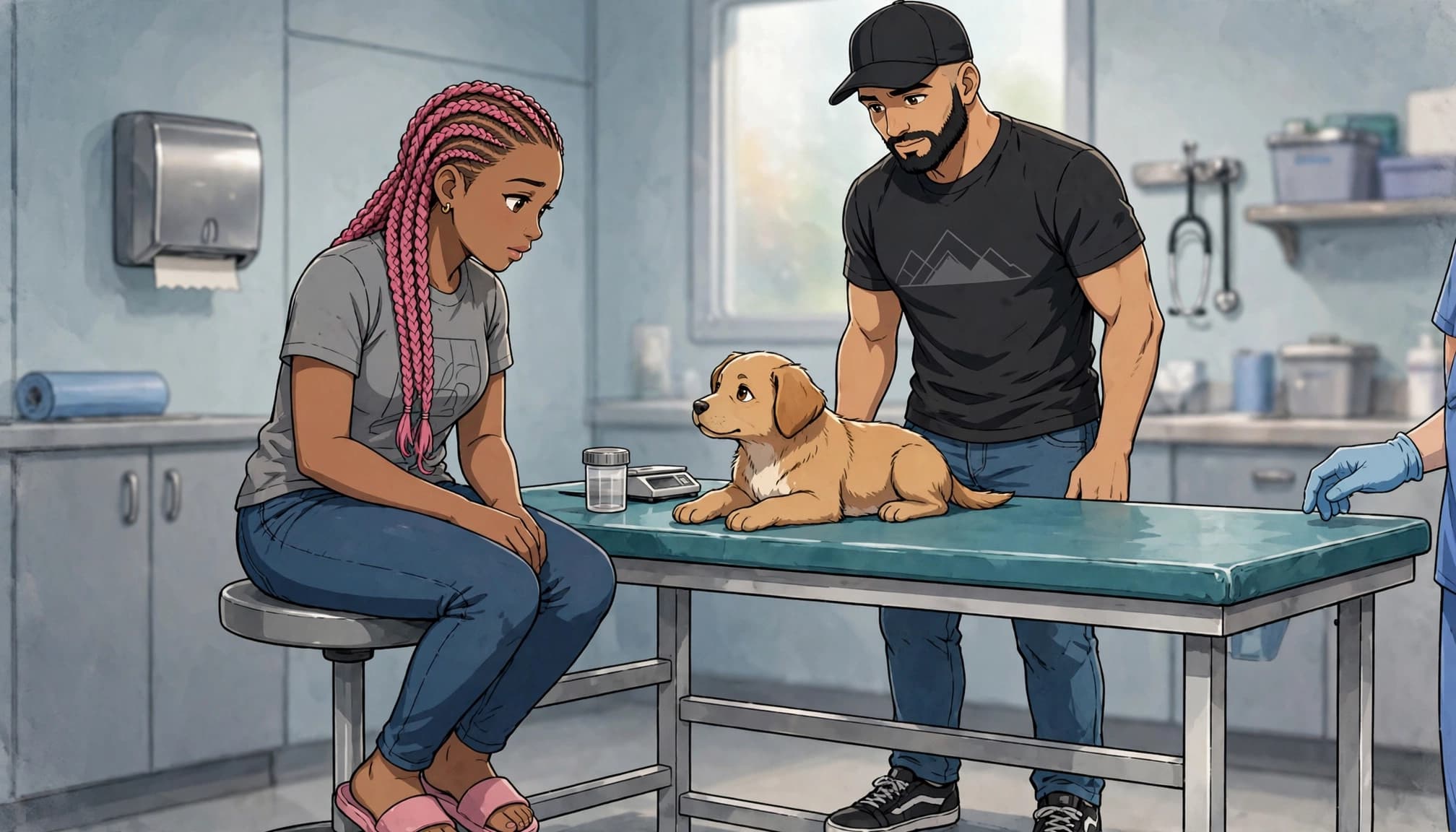
The dose conversion is math, not a puppy prescription
Safe-Guard Goat Dewormer is a 10% fenbendazole suspension, or 100 mg/mL. The canine product's labeled active-ingredient dose of 50 mg/kg corresponds mathematically to 0.5 mL/kg (0.227 mL/lb) of that suspension. The concentration is documented in the FDA's Safe-Guard Goat suspension summary.
That calculation only matches quantities of fenbendazole. It does not show that the livestock product is suitable or safe for your puppy. Don't use the conversion to measure a dose at home. Ask your veterinarian for product-specific instructions.
The canine label is the right comparison
Safe-Guard Canine's directions apply to its own formulation. Your veterinarian may recommend a different product, dose, or schedule after considering the puppy's condition and likely parasite. The number on the canine label doesn't turn into goat-product instructions when the active ingredient matches.
Why goat Safe-Guard directions do not apply to puppies
Safe-Guard Goat Dewormer is an oral suspension labeled for goats. Its directions specify a goat dose for particular goat parasites. The FDA's goat-drug listing identifies the goat product and its intended species.
Safe-Guard Canine, by contrast, is granules labeled for dogs and puppies at least 6 weeks old. It has dog-specific dosing and parasite indications. The dose, route, and treatment plan are tied to the actual product, not merely the name Safe-Guard or the ingredient fenbendazole.
A livestock formulation used off-label in a pet needs veterinary direction. Your puppy's size, age, health, other medications, and the parasite involved can all change what a veterinarian recommends. The goat label cannot answer those questions for a puppy.
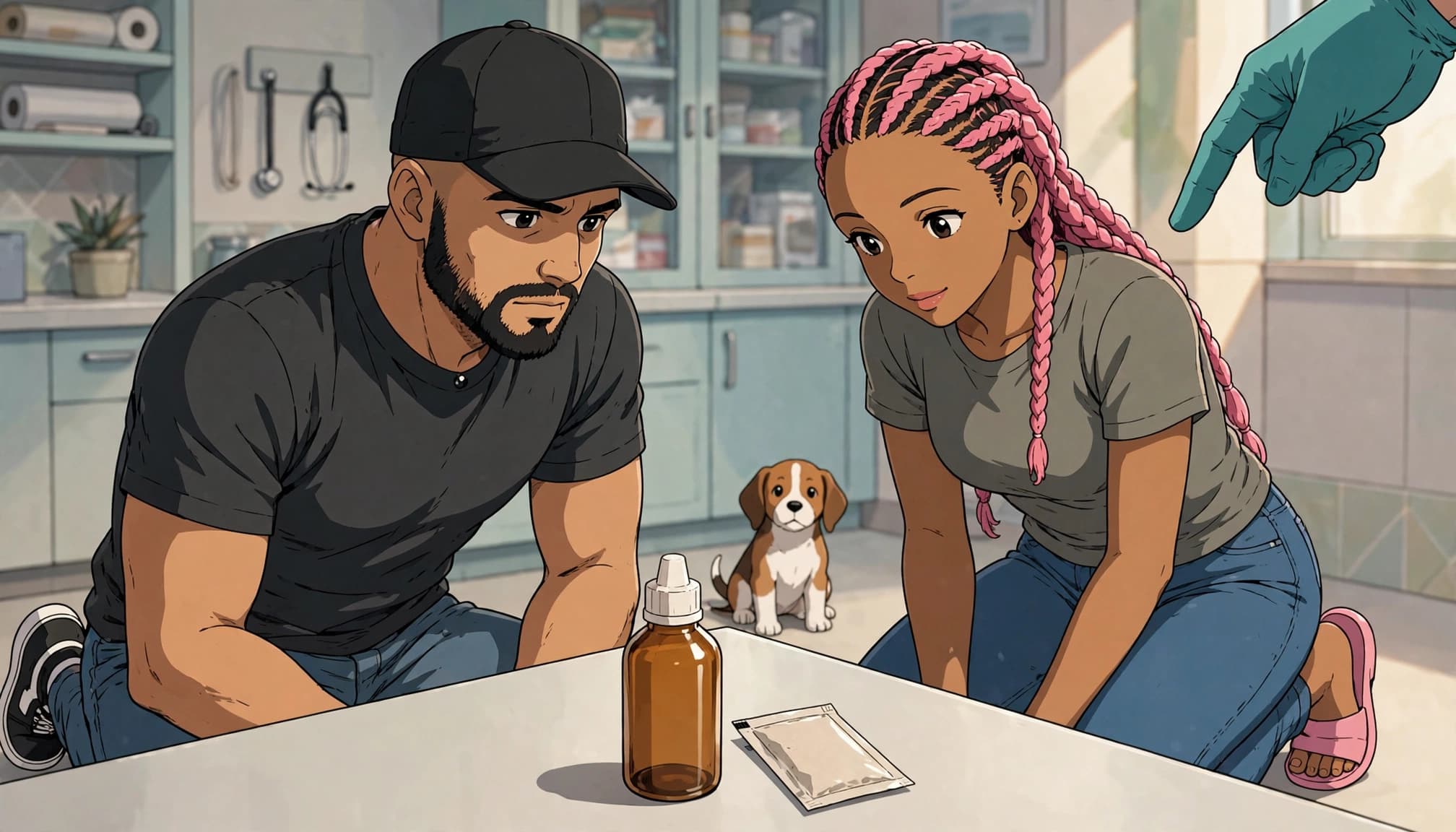
Concentration, parasite, and product label all matter
A liquid measured in milliliters and granules measured by weight aren't interchangeable because they contain the same active ingredient. A conversion can compare the amount of fenbendazole, but it doesn't account for whether that specific product or treatment plan is appropriate for a puppy.
Parasites also matter. Fenbendazole doesn't treat every type of worm, and similar symptoms can have different causes. A stool test or veterinary diagnosis can help identify the parasite and guide treatment instead of turning deworming into guesswork with a tiny, wiggly patient.
Puppies under six weeks or feeling sick need extra care
The Safe-Guard Canine label is for puppies 6 weeks and older. It also says not to deworm a sick dog or puppy. A younger puppy or one that is unwell needs veterinary assessment, not a livestock product and an improvised dose.
What to do before treating your puppy for worms
Before giving any dewormer, gather the details your veterinarian needs to choose a product and plan. Guessing at a puppy's size or treating a suspected parasite without diagnosis can lead to the wrong product or dose.
Start with an accurate weight and the puppy's age. Note symptoms, when they started, and any medicine the puppy has already received. If you have stool-test results, include them. A photo of the stool or a sample may also help your veterinarian assess the problem.
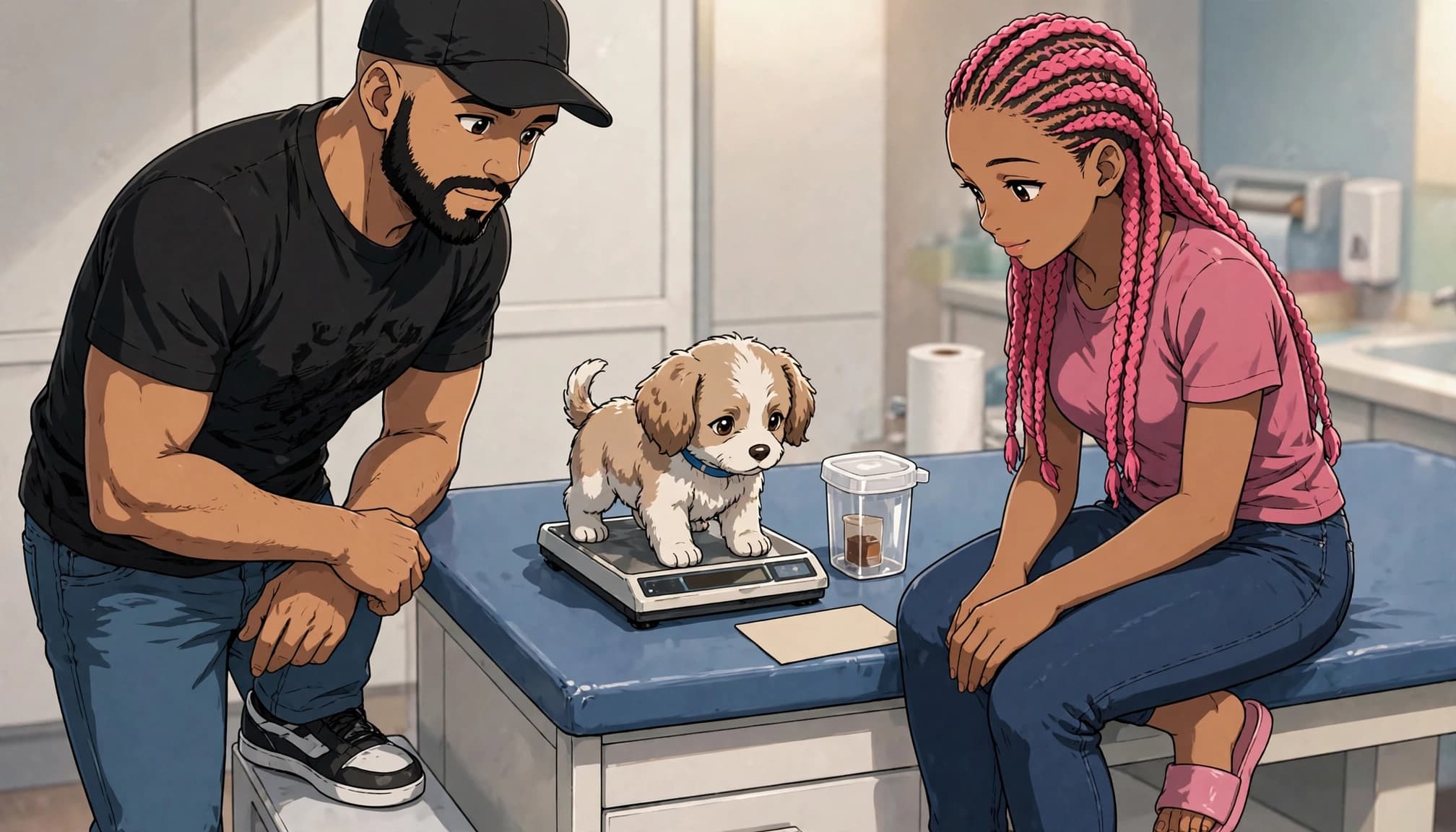
Ask your veterinarian which product and schedule fit
Bring the Safe-Guard container or a clear photo of its label. Tell the veterinarian the puppy's age, weight, symptoms, previous medicines, and any test results. That gives them a chance to distinguish the goat suspension from the canine granules before anyone reaches for a measuring tool.
Puppies may need repeat treatments, but schedules vary with age, parasite, product, and veterinary guidance. The Companion Animal Parasite Council's general guidelines describe routine parasite-control timing for young animals. That's general guidance, not an individual prescription or a substitute for the canine product label.
Measure and give only the prescribed formulation
If your veterinarian prescribes treatment, use the exact product and follow its instructions. Use the measuring tool intended for that formulation, and make sure your puppy receives the full prescribed amount. Don't combine the goat suspension's directions with the canine granules' directions.
If your puppy has already received goat dewormer
Don't assume the amount was safe or toxic based on the number of milliliters alone. Call your veterinarian promptly and share the product name, concentration, amount given, time it was given, and your puppy's age and weight. Keep the container or label photo nearby so you can read the details accurately.
If you can't reach your regular clinic, contact an emergency veterinary clinic for guidance. Don't give another dose while waiting for advice. Also, don't try to make your puppy vomit unless a veterinarian specifically tells you to.

Watch for changes and seek urgent veterinary help when needed
DailyMed reports vomiting in 3 of 240 dogs in U.S. clinical studies of the canine product. That doesn't prove fenbendazole caused any particular episode, and it doesn't tell you how your puppy will respond to goat suspension.
Get urgent veterinary help for severe or worsening symptoms, trouble breathing, collapse, repeated vomiting, or marked weakness. If your puppy seems different after treatment, tell the veterinarian what changed and when.
Streetwear & Casual Styling
Puppy care comes first. Your off-duty fit can still carry the pet-parent energy: pair a charcoal or black graphic tee with straight-leg jeans, a clean skate shoe, and a light jacket. A bold anime graphic gives the outfit its focal point without requiring a full wardrobe side quest.
Our Dog Eats Custom Kibble Living on Ramen tee brings the pet-parent joke, while the If They Could Use Internet tee leans into cyberpunk anime style. The shirt is the loud part; the rest of the fit can stay simple.
Frequently Asked Questions
Can you use Safe-Guard goat suspension instead of canine granules?
The goat suspension isn't labeled for puppies, so don't substitute it without veterinary direction. A shared active ingredient doesn't give both products the same approved use or instructions.
Can you give Safe-Guard to a puppy younger than six weeks?
The Safe-Guard Canine label is for puppies 6 weeks and older. A younger puppy needs veterinary guidance to determine what treatment, if any, is appropriate. Don't calculate an at-home dose from the goat product.
Does fenbendazole treat every type of worm in puppies?
No single dewormer covers every parasite, and treatment depends on which parasite is present. Safe-Guard Canine's label notes that it kills Taenia species of tapeworms; your vet can use diagnosis and symptoms to select an appropriate plan.
What if you are unsure how much your puppy weighs?
Get an accurate weight from a veterinary clinic or use a reliable scale, then confirm it with your veterinarian before giving a prescribed dose. Don't estimate or round the amount on your own. Small weight differences matter when the patient is still growing.
Keep the Dose Decision With Your Veterinarian
Safe-Guard Goat Dewormer's directions and the mathematical conversion aren't a home dosing plan for your puppy. The canine granules have their own label, age limit, and dose, while the right treatment still depends on the puppy and the parasite.
Call your veterinarian with your puppy's age, weight, symptoms, and the product label. Your puppy deserves the right diagnosis and a product-specific schedule, not a dose borrowed from the goat aisle.