

How Much to Feed a Golden Retriever Puppy
TrendReactTees.STORE TeamFiguring out how much to feed a golden retriever puppy starts with your puppy's age, weight, food calories, growth, and body condition. If your fluffy roommate acts hungry after every meal, you're not alone. Golden Retrievers can make an empty bowl look like a personal injustice.
Start with the food label and a veterinarian-guided calorie target, then adjust the portion as your puppy grows. While you're settling into dog-parent life, our Golden Retriever Luck Tee and Dog Eats Custom Kibble Tee bring the appropriate energy.
Here's how to turn those puppy-dog eyes into a practical feeding plan.
This post may contain affiliate links. If you make a purchase through these links, I may earn a small commission at no extra cost to you.
Key Takeaways
- Your puppy's daily portion depends on the food's calories and your puppy's individual needs, so a universal cup chart won't give you a reliable answer.
- Use the package feeding guide and a veterinarian-guided calorie target to calculate an estimated starting portion.
- Count treats as part of daily calories, and measure meals consistently rather than pouring kibble by eye.
- Choose a complete-and-balanced food suitable for large-size puppy growth, then monitor weight and body condition as your puppy grows.
- Agree on meal frequency and portion adjustments with your veterinarian, especially during rapid growth.
How much to feed a golden retriever puppy
There's no single number of cups that works for every Golden Retriever puppy. Two foods can have different calories per cup, while two puppies of the same age can need different amounts.
Start with the feeding guide on your food's package. Then ask your veterinarian for a daily calorie target based on your puppy's weight, growth, activity, and body condition. The package gives you a starting point, not a lifelong feeding contract.
https://www.youtube.com/watch?v=7K-jcjWIHGU

Turn the food label into a starting portion
Look for the food's calorie content in kcal per cup and find its feeding guide. Once you know your puppy's daily calorie target, subtract the calories reserved for treats. Divide the remaining calories by the food's calories per cup.
For a hypothetical example, imagine your veterinarian suggests 1,000 calories a day. You plan to use 80 calories for treats, leaving 920 calories for food. If that food contains 400 calories per cup, 920 divided by 400 equals 2.3 cups per day.
That's an example of the math, not a recommended portion for your puppy. Divide the daily amount across your agreed meal schedule, and revisit it as your puppy grows. VCA's puppy feeding guidance explains why calorie needs differ between individual dogs.
Count treats and measure each meal
Keep treats and snacks below 10% of your puppy's daily calories. Training rewards can add up fast, especially when your puppy discovers that sitting on command has a payout.
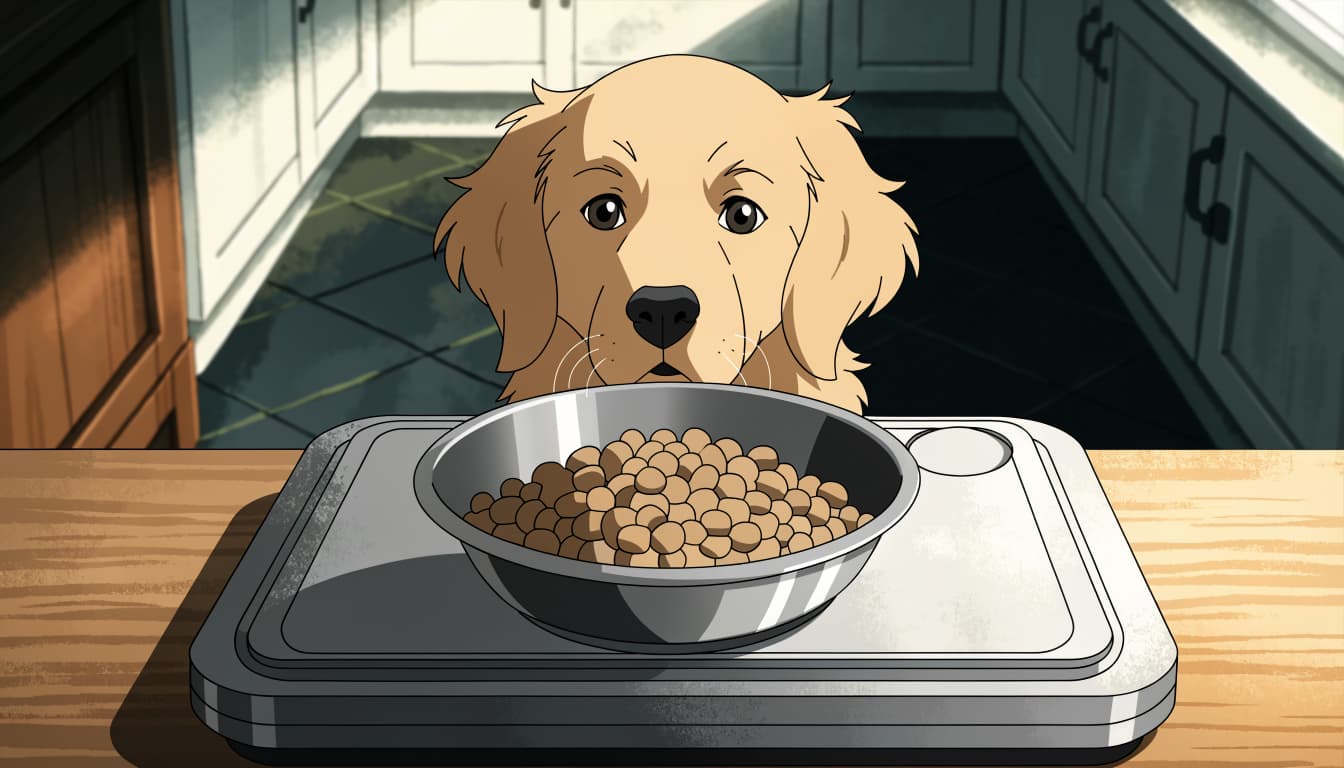
Measure meals consistently with the same cup, or use a kitchen scale to weigh portions. You can also set aside some of the measured daily kibble for training. That keeps the rewards coming without accidentally adding another meal's worth of calories.
Set meal times around your puppy's age and growth
Your puppy needs a meal schedule that fits their age and growth stage. General puppy guidance often uses two or three meals a day, while younger puppies may need more frequent meals.
For large-breed puppies, VCA recommends at least four small meals. Use your food's label as a starting point and agree on a schedule with your veterinarian. The number of meals can change as your puppy matures.
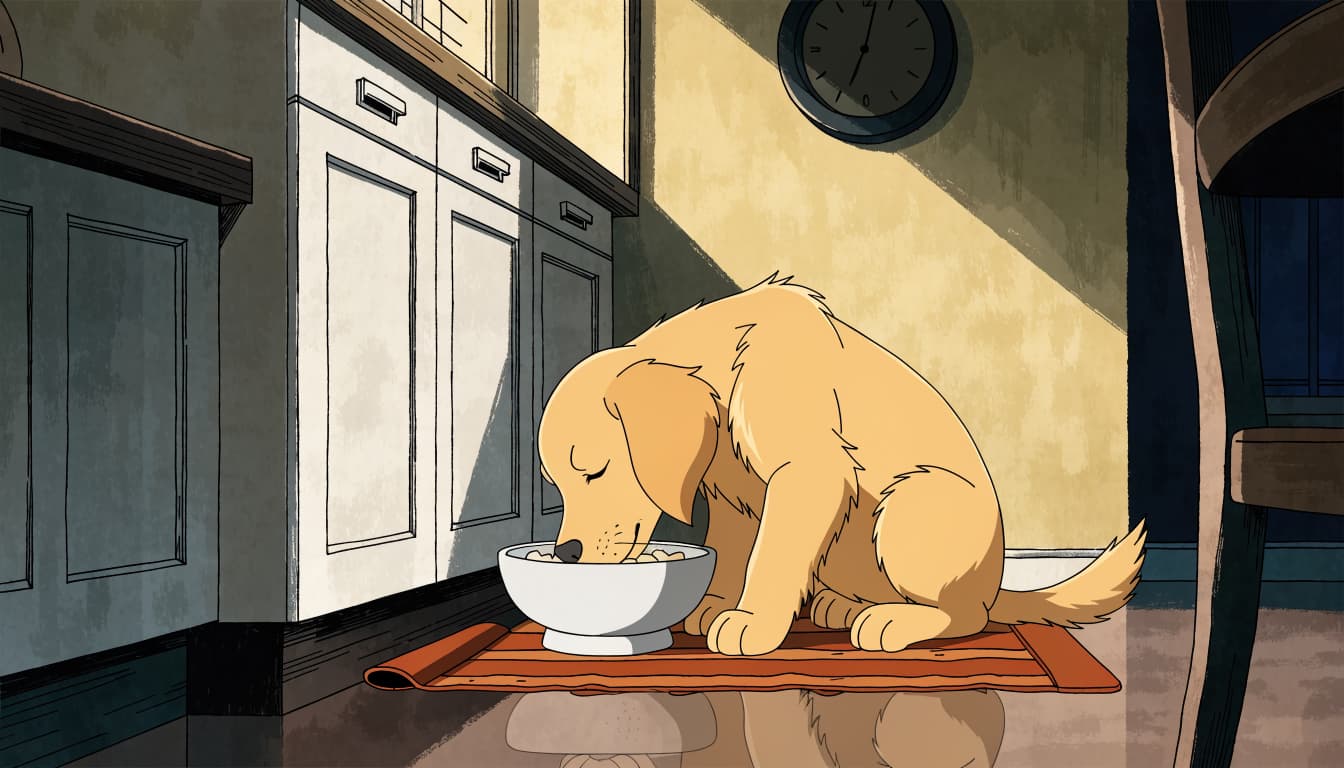
Use a steady routine instead of leaving food out
Offer measured meals at predictable times instead of keeping the bowl full all day. A routine makes it easier to see how much your puppy eats and notice when their appetite changes.
Divide the day's measured food among the planned meals. If you're feeding four meals, set aside each portion before the day gets busy. Keep fresh water available, and make sure everyone in your household knows which meals and treats your puppy has already received.
A shared routine also helps you spot a missed meal. If your puppy's appetite changes suddenly, that information is useful to your veterinarian.
Change portions as growth and appetite change
Calorie needs per pound are generally highest during the first four months and taper as a puppy approaches adult size. Your puppy's age alone, though, doesn't tell you exactly how much food belongs in the bowl.
Track weight and growth regularly, and review the trend with your veterinarian. Your puppy may ask for more food because food is wonderful, not because the portion is wrong. If your puppy looks thinner, gains weight quickly, or seems persistently hungry, discuss the feeding plan before making a big change.
Choose food that supports healthy large-breed growth
The food you choose affects both your portion calculation and your puppy's growth. Golden Retrievers typically qualify as large dogs, so look for a puppy food formulated to support large-size growth.
Even a suitable food can be overfed. Rapid weight gain can increase the risk of joint and skeletal problems while your puppy grows. A giant scoop isn't a shortcut to a healthier adult dog.
Check the nutritional adequacy statement
Find the AAFCO nutritional adequacy statement on the package, rather than relying on the front-of-bag claims. Look for a complete-and-balanced statement for growth that includes growth of large-size dogs, or wording that confirms the food is suitable for all life stages, including large-size puppy growth.
The statement tells you more about the food's intended use than a cute puppy picture. Once you've chosen a food, use that product's calorie information for your calculation. Switching foods can change the number of cups your puppy needs.
Your veterinarian can also help you decide when to move to adult food. Large-breed guidance often puts that transition around 12 to 18 months, but your puppy's development determines the timing.
Keep your puppy lean as you monitor portions
You should be able to feel your puppy's ribs easily without them sticking out, and you should see a waist when looking down from above. A body condition score of 4 to 5 out of 9 is a common ideal range. During large-breed growth, a lean target is often advised.
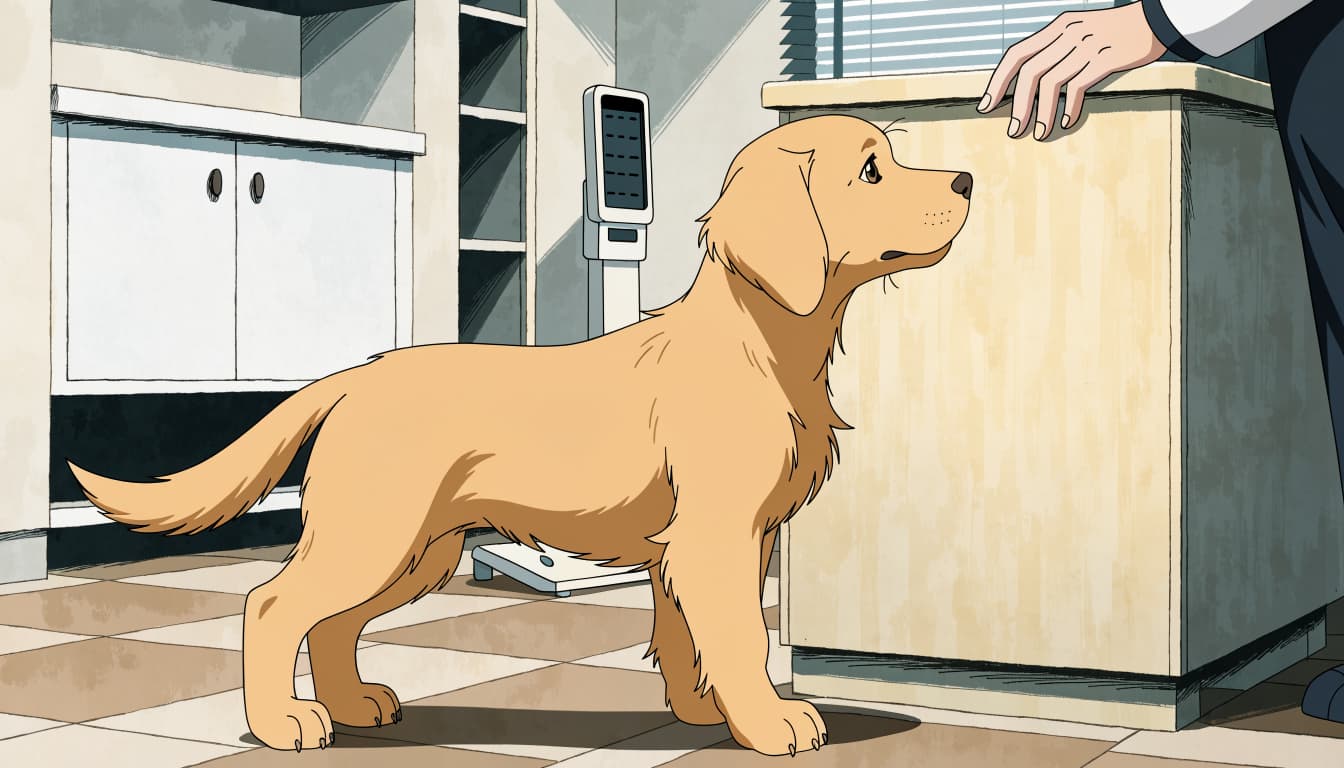
Golden Retriever fluff can hide changes, so use your hands as well as your eyes. Ask your veterinarian to assess body condition if your puppy's weight is changing quickly or you're unsure what you're feeling. VCA's large-breed puppy nutrition guidance covers the connection between feeding and healthy growth.
Streetwear & Casual Styling
Your puppy's feeding plan deserves the attention. Your dog-walk outfit can be a much easier decision.
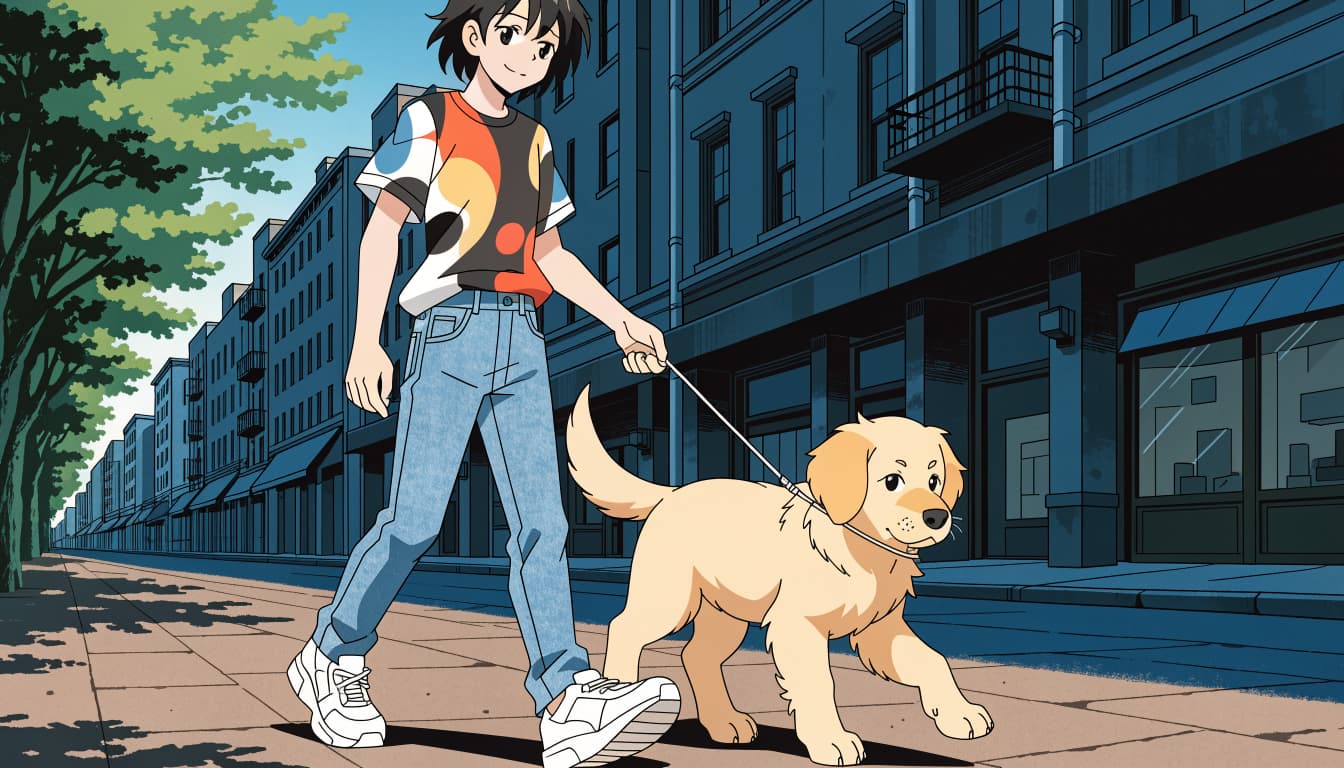
Keep your dog-parent look casual
Pair our Best Dog Mom Tee with relaxed jeans and comfortable sneakers for a look that works for a puppy walk or a pet-store run. Add a light jacket when you need one, and let the graphic do the talking.
You already carry treats, cleanup bags, and the emotional responsibility of being adored by a small golden creature. Your outfit doesn't need a complicated equipment menu.
Add a little internet humor
For a more playful look, style our If They Could Use the Internet Tee with dark jeans and low-profile sneakers. It's an easy way to bring our Cyber-Brutalist Anime graphic-tee aesthetic into your everyday rotation.
Keep the rest of your outfit simple if you want the graphic to stand out. Your puppy can handle the attention-grabbing part of the walk.
Frequently Asked Questions
Can you mix wet and dry food for your puppy?
Yes, you can combine them as long as the overall diet is appropriate for your puppy's growth. Count the calories in both foods and calculate how much of each fits the daily target. Your veterinarian can help you balance the combination.
What if your puppy eats too fast?
You can try spreading the measured meal in a slow-feeder bowl or using part of it during training. Keep the total portion the same. If fast eating comes with repeated regurgitation or other concerning signs, talk with your veterinarian.
How should you switch to a different puppy food?
Change foods gradually over several days rather than replacing the entire meal at once. Calculate the new portion using the new food's calorie content, since the same number of cups may provide different calories. Ask your veterinarian for guidance if digestive problems develop.
Does your puppy need calcium supplements?
Don't add calcium supplements to a complete-and-balanced large-breed puppy food unless your veterinarian recommends them. Large-breed growth depends on an appropriate nutrient balance, and extra calcium isn't automatically helpful. Bring the food label to your appointment if you have questions about the diet.
When should you call a veterinarian about appetite changes?
Contact your veterinarian if your puppy suddenly refuses food, seems persistently hungry, or has an unexplained change in weight. Vomiting, diarrhea, low energy, or other signs of illness make that call more urgent. Young puppies can become unwell quickly, so don't rely on appetite alone to judge how they're doing.
Can you use human food as a training reward?
Some human foods may be suitable in small amounts, but others are unsafe for dogs. Ask your veterinarian which options fit your puppy's diet, and count any approved extras toward the daily treat allowance. Keep rewards small enough that training doesn't crowd out balanced puppy food.
Build a Feeding Plan That Grows With Your Puppy
The food label and calorie math give you a practical starting portion. Your puppy's growth trend and body condition help you and your veterinarian decide when that portion needs to change.
Measure meals, count the training rewards, and keep up with regular weight checks. If your puppy gains weight quickly, seems underweight, or has a sudden appetite change, ask your veterinarian for help adjusting the plan. Your puppy gets a routine built for their needs, even when the empty bowl earns you an Oscar-worthy stare.