

How Much to Feed a Rottweiler Puppy
TrendReactTees.STORE TeamThere's no single cup amount that suits every Rottweiler puppy. How much to feed a Rottweiler puppy depends on age, current weight, growth, activity, body condition, and the calories packed into the food.
Use the feeding guide on your puppy's food as a starting point, measure the daily ration, then adjust it with your veterinarian as your puppy grows. The goal is steady growth and a healthy body condition, not a race to the biggest bowl.
For the humans managing the snack negotiations, our Dog Eats Custom Kibble Living On Ramen tee and My Therapist Is A Dog tee offer pet-parent humor. Your puppy's nutrition, however, belongs to a balanced growth diet, not the merch table.
This post may contain affiliate links. If you make a purchase through these links, I may earn a small commission at no extra cost to you.
Key Takeaways
- No fixed cup chart fits every Rottweiler puppy or every food.
- Use the package guide as a starting point, then review portions with your veterinarian.
- Measure meals and count treats as part of the daily calorie allowance.
- Choose complete-and-balanced food formulated for large-breed puppy growth.
- Track body condition and growth instead of feeding the same amount for months.
How Much to Feed a Rottweiler Puppy Each Day
Start with the daily range printed on your puppy's food package. Find the puppy's current weight and age, then follow the range for those details. The label is a starting point, not a prescription: calorie density, activity, growth, and individual body condition all affect how much your puppy needs. VCA's feeding guidance for growing puppies also recommends adjusting portions to the puppy rather than treating package amounts as exact.
A Rottweiler-specific example shows why one number won't work for every puppy. Royal Canin Rottweiler Puppy lists 358 calories per cup. Its U.S. guide for a 3-month-old puppy suggests 3⅞ cups daily for a puppy expected to weigh 88 pounds as an adult, and 4½ cups for one expected to weigh 110 pounds. Those are estimates for that particular food and projected adult weights, not a rule for every Rottweiler.
Once you've found the package's daily amount, divide it across your puppy's meals. If the guide gives a range, use your puppy's weight, growth, body condition, and your veterinarian's advice to choose a starting amount. Measure the total for the day, then portion it out. That makes it easier to spot whether snacks or second helpings are sneaking into the ration.
Calculate Your Puppy's Portions From Food Calories and Growth
You don't need a homemade calorie formula that pretends every Rottweiler grows on the same schedule. Build a useful starting plan from four details: your puppy's age, current weight, the food's calories per cup or gram, and the package feeding guide.
Record your puppy's weight at regular veterinary visits, and ask your veterinary team to review growth alongside body condition. The label's recommended amount can then be adjusted for the puppy in front of you, not an imaginary average dog. VCA's guide to choosing puppy food discusses matching food to a puppy's growth needs.
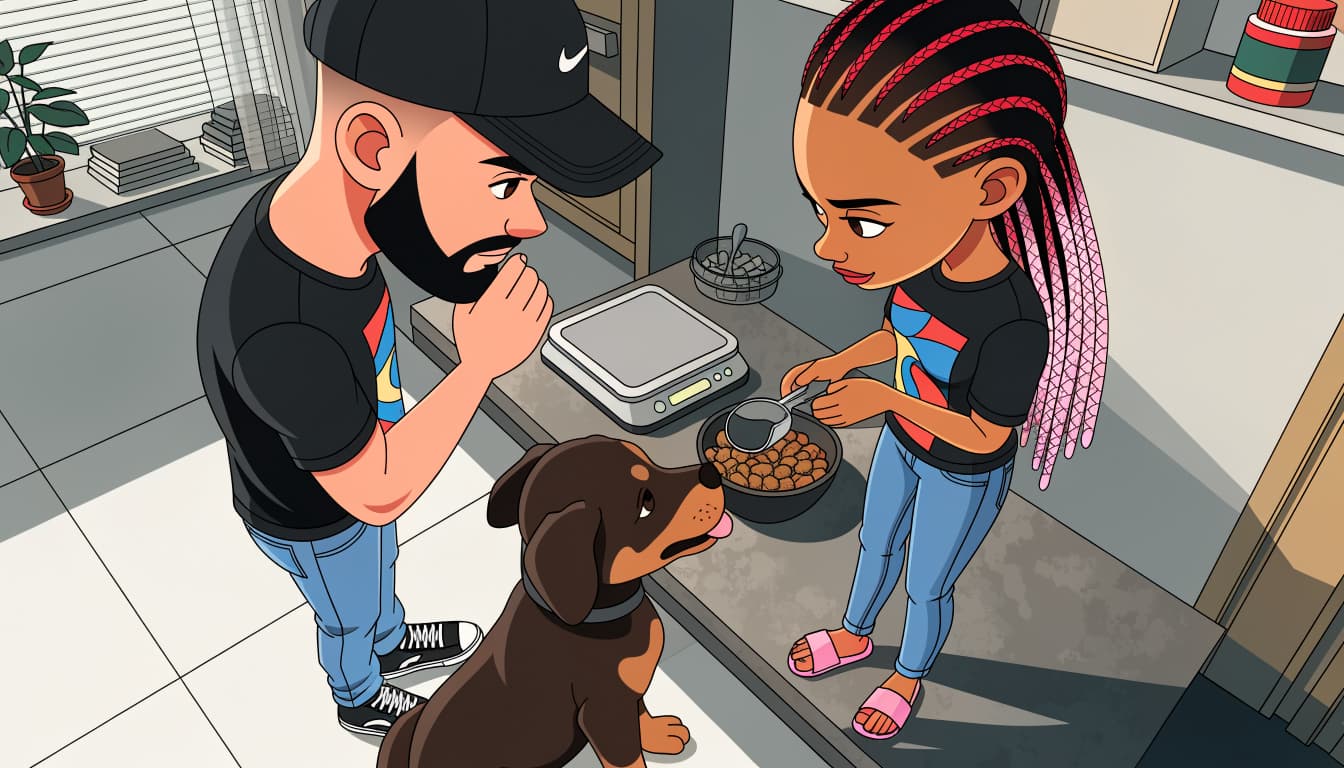
For accuracy, weigh the daily portion with a digital kitchen scale. Cups can be convenient, but the amount they hold can vary with kibble shape and how tightly you scoop. Set aside the day's full ration in the morning. Meals and training rewards can then come from that measured amount, with other treats counted separately.

Why the same number of cups can mean different calories
A cup of one puppy food may contain a different number of calories than a cup of another. Ingredients, kibble size, and energy density vary, so comparing cups alone can give you the wrong impression.
Check the label for calories per cup or per gram before comparing portions or changing foods. When you switch to a food with a different calorie density, don't assume the old scoop amount still fits. Use the new food's feeding guide as a starting point and ask your veterinarian how to adjust the daily ration.
Keep the label and growth record together
Note the food name, calories per cup or gram, daily amount, and your puppy's weight. Bring that information to appointments so your veterinary team can see what the puppy is actually eating and how growth is tracking.
When you're unsure whether a portion is working, avoid making a dramatic cut or increase on your own. A modest adjustment guided by the puppy's growth and body condition is more useful than reacting to one hungry look. Rottweilers are talented at presenting a case for additional kibble.
Choose a Meal Schedule That Fits Your Puppy's Age
Measured meals help you track appetite and daily intake. Feeding frequency varies by age and by veterinary guidance: general puppy advice often recommends two or three meals daily, while VCA's large- and giant-breed guidance recommends at least four small meals for puppies. Your veterinarian can help set a schedule that suits your puppy, especially during the youngest stages of growth.
Once you agree on a schedule, keep meal times reasonably consistent. Divide the measured daily ration among those meals rather than adding food each time your puppy makes a convincing argument. Regular meals also make changes in appetite easier to notice.
Avoid intense exercise immediately before or after meals. Calm, predictable feeding times are a better fit for a growing large-breed puppy than a full-speed play session right after dinner. If your puppy's age or routine makes the schedule tricky, discuss the options with your veterinary team.
Pick Large-Breed Puppy Food and Skip Extra Calcium
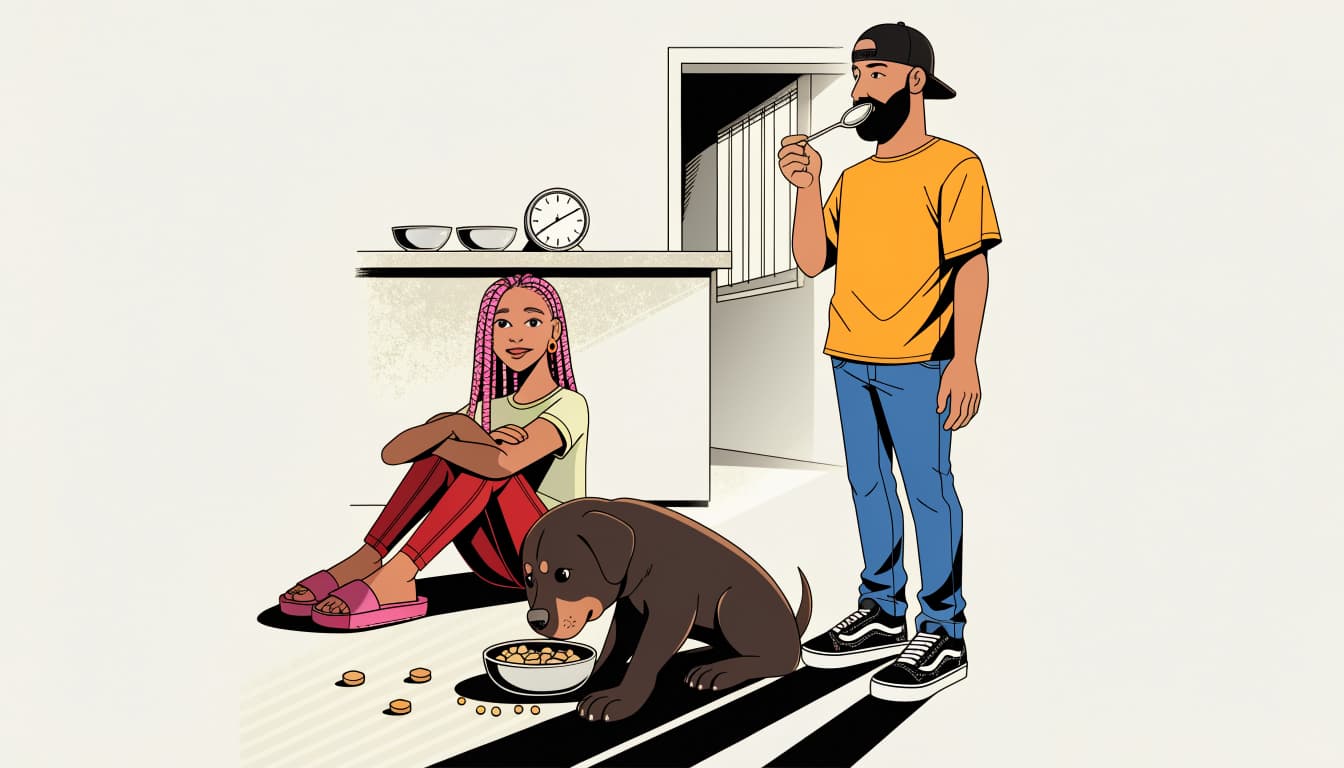
Choose food labeled complete and balanced for growth, with an AAFCO nutrient adequacy statement that includes growth of large-size dogs. Rottweilers are large-breed dogs, so a formula designed for large-breed puppy growth is a sensible place to start. The VCA guide to large-breed puppy nutrition explains why growth diets for large and giant breeds have specific nutrient considerations.
That label doesn't make overfeeding safe. Too many calories can push a large-breed puppy to grow faster than its developing skeleton can comfortably manage, raising the risk of skeletal and joint problems. A large-breed formula and a measured portion belong together.
Don't add calcium, bone meal, dairy, or supplements unless your veterinarian specifically directs you to. Large-breed puppies don't handle excess calcium the way adult dogs do, and extra calcium can interfere with healthy skeletal development. A balanced growth food is already formulated with nutrients in mind. Adding a supplement because the puppy is big or growing quickly can create a problem rather than solve one.

Adjust Food as Your Rottweiler Puppy Grows
One portion won't suit your puppy for the whole puppyhood campaign. Revisit the amount as age, weight, activity, and growth change. Regular weigh-ins and growth-chart reviews with your veterinary team help show whether your puppy is tracking well, even when the bag's chart seems to suggest otherwise.
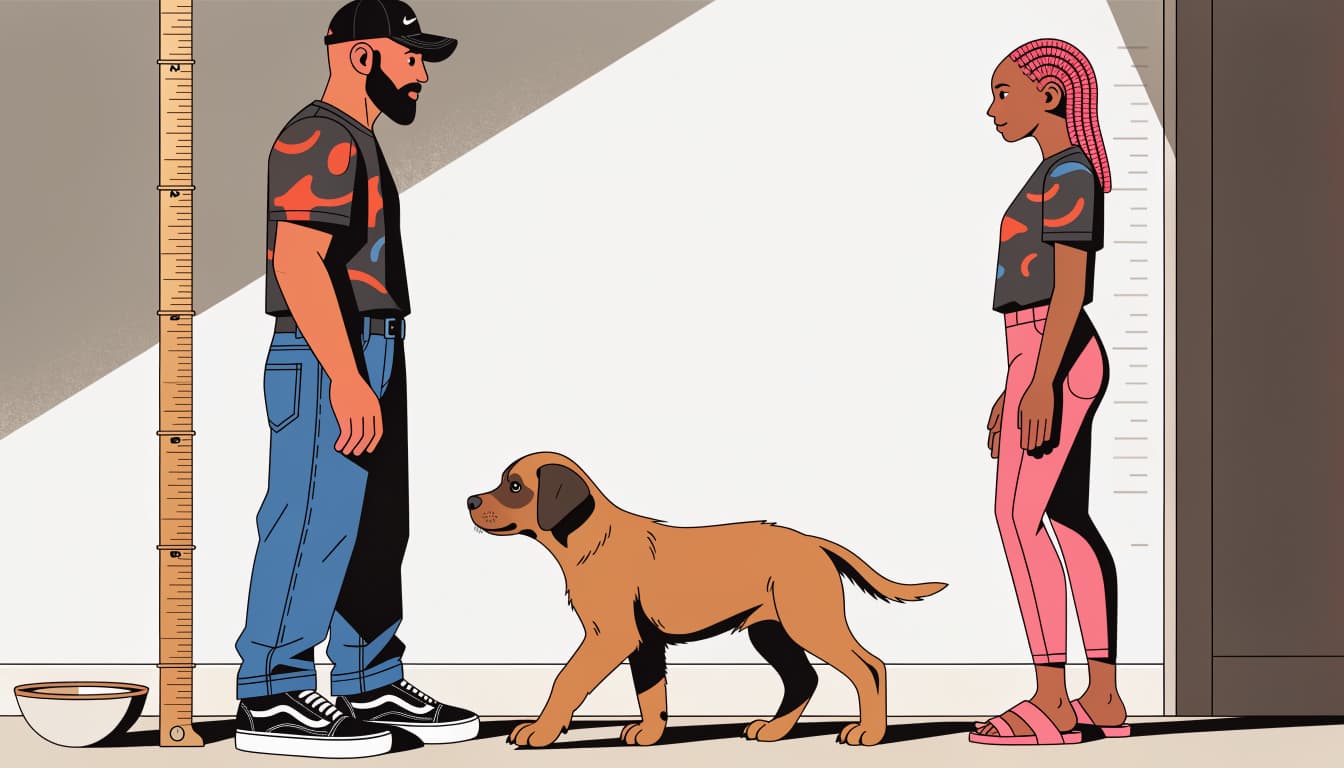
At home, check body condition. You should be able to feel your puppy's ribs without pressing hard, and there should be a visible waist when you look down from above. A round shape or a difficult-to-feel ribcage can indicate that the portion needs review. VCA's puppy-feeding advice on portion adjustments covers using body condition and growth to help assess how much to feed.
If your puppy gains too quickly, looks too thin, has a sudden change in appetite, or develops digestive trouble, contact your veterinarian rather than making a major food change alone. A change in appetite or weight can have more than one cause, and a professional can help decide what to do next.
Check body condition between weigh-ins
A scale gives you a number; body condition gives that number context. Look for the waist from above and feel for ribs without firm pressure. Fluffy fur, a big appetite, or a puppy's talent for looking tragically underfed at dinner doesn't replace those checks.
Keep notes on weight, food, portion, and appetite. That simple record can help your veterinarian recognize a trend instead of relying on one weigh-in or your memory of how much kibble went into the bowl last Tuesday.
Treats and training rewards still count
Treats and snacks should make up less than 10% of your puppy's daily calories. Keep extras small, and use part of the measured food allowance as training rewards when it works for your puppy. The Virginia-Maryland College of Veterinary Medicine's healthy-weight advice also emphasizes keeping treats within a small share of daily calories.
Streetwear & Casual Styling
Puppy care can involve a lot of waiting around while the tiny supervisor finishes a meal. For a casual look, build around a graphic tee with a relaxed fit, then add jeans and simple sneakers. Our Scream At Void My Human Understands tee brings dog-parent humor, while the If They Could Use Internet We'd Be In Trouble tee goes for a more chaotic pet-person vibe.
The Cyber-Brutalist Anime Graphic Tees work as the statement piece, so keep the rest of the outfit low-key. Your puppy can handle the dramatic entrance.
Frequently Asked Questions
Should you feed your Rottweiler puppy wet or dry food?
Either can work if the food is complete and balanced for large-breed puppy growth. Check the calories per serving, because wet and dry foods can have different energy density. Don't swap equal volumes without comparing their labels.
Can you leave puppy food out all day?
Measured meals make it easier to track appetite and intake, so they're generally preferable to free-feeding. Your veterinarian may recommend a different plan for an individual puppy based on its health or circumstances.
What should you do if your puppy skips a meal?
Monitor your puppy and contact your veterinarian if skipped meals repeat or come with vomiting, diarrhea, low energy, or other concerning signs. Don't force-feed. Your veterinarian can help you decide whether the change needs prompt attention.
When should you change from puppy food to adult food?
The timing depends on your puppy's growth, the food's directions, and your veterinarian's advice. Rottweilers mature slowly, so don't switch based on a birthday alone. Ask your veterinarian before changing the food or portion.
Keep the Portion Matched to Your Puppy
The right portion comes from your puppy's food calories, measured intake, steady growth, and healthy body condition, not a one-size-fits-all cup chart. Start with the package guide, then review the plan with your veterinarian as your puppy grows.
A Rottweiler puppy's appetite may seem to demand a larger serving every week. Let the scale, body condition, and veterinary guidance make the call.