

How Much to Feed a French Bulldog Puppy
TrendReactTees.STORE TeamThere isn't one daily portion that fits every French Bulldog puppy. Age, expected adult size, the calories in your puppy's food, and body condition all affect the amount, so use the feeding chart on your exact bag as your starting point.
While you sort out puppy portions, the human uniform can be handled with a Dog Eats Custom Kibble Tee or an If They Could Use Internet Tee. Your Frenchie still needs measured meals, not a fashion degree.
This post may contain affiliate links. If you make a purchase through these links, I may earn a small commission at no extra cost to you.
Key Takeaways
- Start with the feeding chart on your puppy's exact food, using age and expected adult weight when listed.
- Chart amounts are daily totals and vary with a food's calorie density.
- Divide the daily portion into age-appropriate meals and measure it consistently.
- Track growth, body condition, and treats, then adjust with your veterinarian's guidance.
- Seek veterinary advice for ongoing digestive issues, appetite changes, or concerning growth.
How Much to Feed a French Bulldog Puppy by Age and Weight
The right amount comes from your puppy's specific food chart, not a universal Frenchie rule. Different foods contain different calories per cup, and many charts use expected adult weight as well as age. Treat the package amount as a useful estimate, then adjust it to your puppy's growth and body condition with your veterinarian.
For a concrete example, Royal Canin French Bulldog Puppy lists daily portions for a 2-month-old puppy at 1¼ cups if the expected adult weight is 18 pounds, 1½ cups for 22 pounds, and 1⅞ cups for 31 pounds. Those are amounts for that product and those adult-weight examples. They aren't universal portions or veterinary prescriptions. See the Royal Canin French Bulldog Puppy chart for its specific feeding guidance.
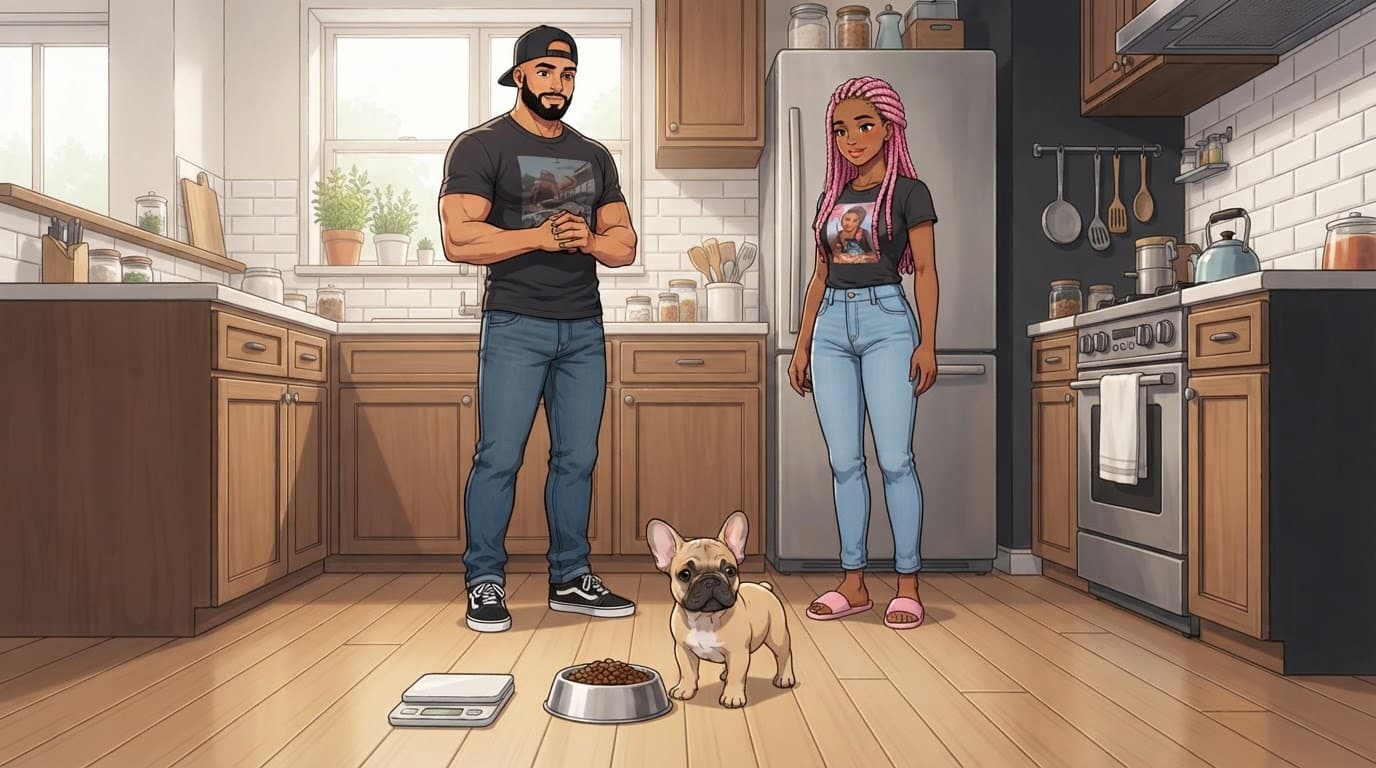
Use your puppy's expected adult size, not just today's weight
Find your puppy's age on the chart, then look for the row or column matching the expected adult weight if the guide is organized that way. That estimate can be tricky, especially while your dog is still growing. Your breeder may have information about the parents' size, and your veterinarian can help estimate adult weight and assess growth over time.
Don't pick an adult-weight row based on today's scale reading. A growing puppy's current weight and eventual adult size are different pieces of information.
Check calories per cup before comparing foods
A measuring cup holds the same volume of kibble, but not necessarily the same calories. Royal Canin's example food lists 373 kcal per cup; another puppy food may have a different calorie density and a different chart.
Use the calorie statement and feeding guide on your own bag. Copying a serving amount from another brand, a friend's dog, or a random online chart can give your puppy too much or too little.
Set a Meal Schedule That Fits Your Puppy's Age
Puppies need regular meals, but the schedule changes as they grow. A newly weaned puppy may need several small feedings. General guidance often moves to three meals a day around 3 months, then two meals somewhere between 4 and 6 months. These are broad ranges, not a timer that overrides your puppy's needs.
Very young puppies and puppies that aren't fully weaned need individualized feeding advice. Weaning generally begins around 3 to 4 weeks, and the transition to solid food takes time. If your puppy is still weaning, orphaned, or having trouble eating, ask a veterinarian for a feeding plan instead of using an ordinary puppy chart.
VCA gives general guidance on feeding growing puppies, including measured portions and regular meals. Follow your puppy's food label and veterinary advice when setting a schedule.
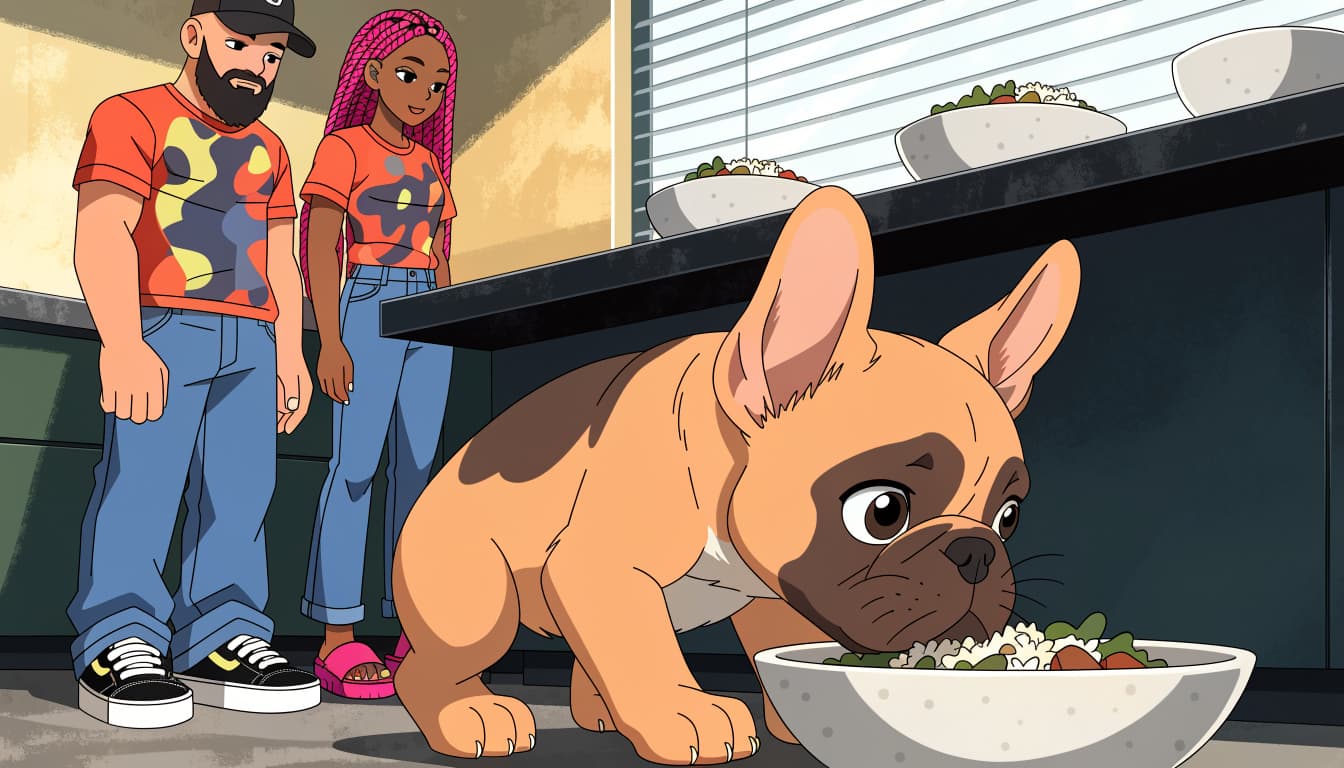
Measure the daily food and divide it across meals
The amount on a feeding chart is usually the total for the day, not a serving to repeat at every meal. If the daily guide says 1½ cups and your puppy eats three meals, divide that amount into three portions of ½ cup each.
A kitchen scale can make portions more consistent than estimating by eye, particularly with small puppies and small servings. Measure the full daily amount first, then split it up. That makes it easier to track what your puppy actually eats.
Keep treats within the daily food budget
Training snacks and table scraps can add calories quickly, even when each bite looks tiny. VCA guidance for young dogs says treats should make up no more than 10% of daily calories, while another VCA resource advises avoiding extra foods during growth. Given that difference, keep treats modest and ask your veterinarian what fits your puppy's diet. Here's VCA's guidance on treats for growing puppies.
Adjust Portions as Your Frenchie Grows
A feeding chart gives you a starting estimate, not a permanent setting. Reassess portions as your puppy gains weight and grows. Keep a simple record of food offered, treats, weight checks, and any changes to meals. That gives you and your veterinarian useful context if your puppy's growth seems too fast or too slow.
Appetite matters, but it isn't the only signal. Some puppies act hungry after finishing a meal; others leave food behind now and then. Consider the chart, the calories in the food, treats, activity, and body condition together rather than adding more food based on one excited stare.
VCA recommends tracking puppy growth and adjusting feeding based on individual needs. If you're unsure how your puppy is progressing, bring your notes and questions to a veterinary visit.
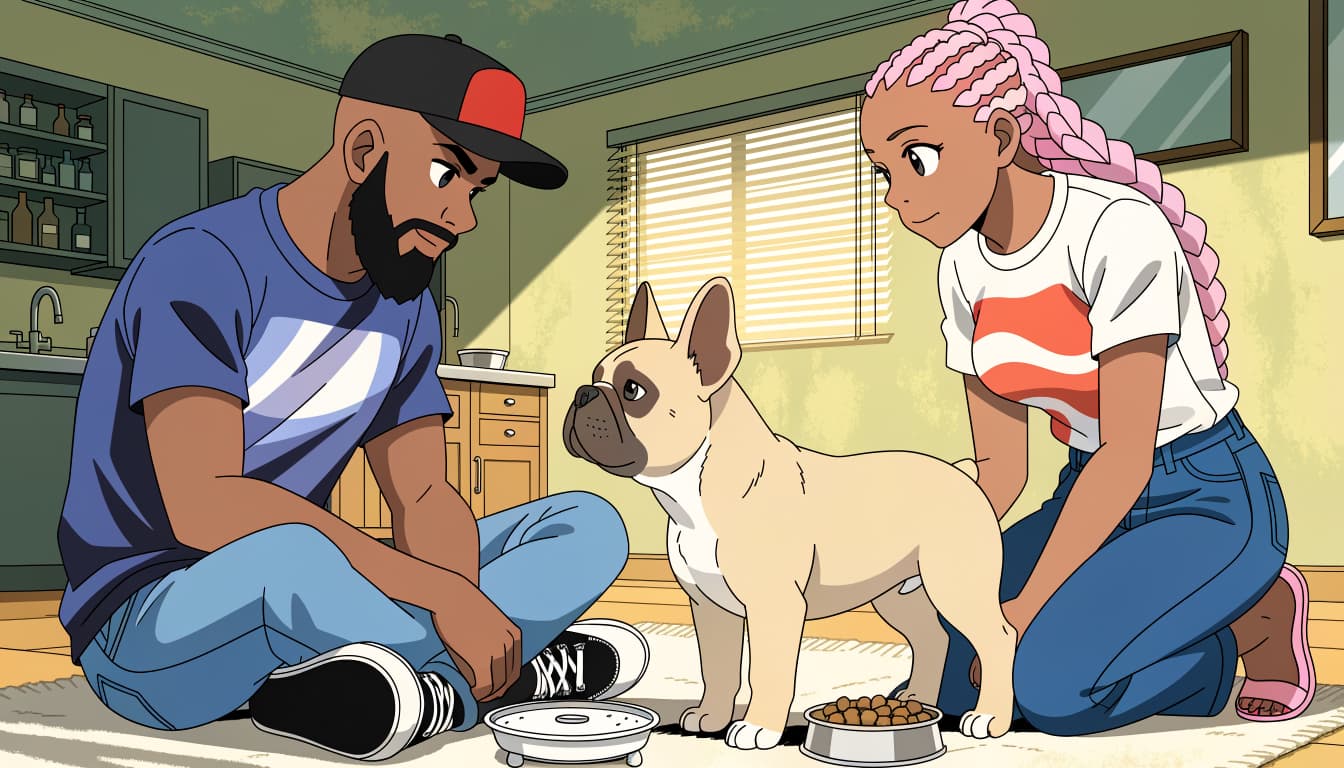
Use body condition as a practical check
You should be able to feel your puppy's ribs without pressing hard, while the body develops steadily rather than becoming visibly heavy. Body shape can be difficult to judge in a growing Frenchie, so don't turn a quick glance into a diagnosis.
If you can't tell whether your puppy is at a healthy condition, ask your veterinarian to assess weight and growth. Regular weigh-ins and professional guidance are more useful than guessing from one puppy photo.
Change food slowly when you switch brands
A sudden food change can upset digestion. VCA recommends transitioning over about 7 to 14 days, gradually increasing the new food while reducing the old food. For example, you can begin with mostly the current food and a smaller amount of the new one, then shift the balance over the transition.
If vomiting or diarrhea continues, contact your veterinarian rather than pushing through the switch. A puppy's stomach isn't a beta-testing environment.
Choose Puppy Food and Avoid Common Feeding Mistakes
Choose a food labeled complete and balanced for growth or for all life stages. That statement means the food is intended to provide complete nutrition for its listed life stage; foods labeled only for intermittent or supplemental feeding aren't meant to be the main diet. VCA explains what to look for in a food's nutritional adequacy statement.
The portion must match that food's own guide. Avoid free-feeding if you need to track intake, eyeballing each serving, adding uncounted snacks, or changing brands abruptly. Each habit makes it harder to tell whether your puppy is getting an appropriate amount.
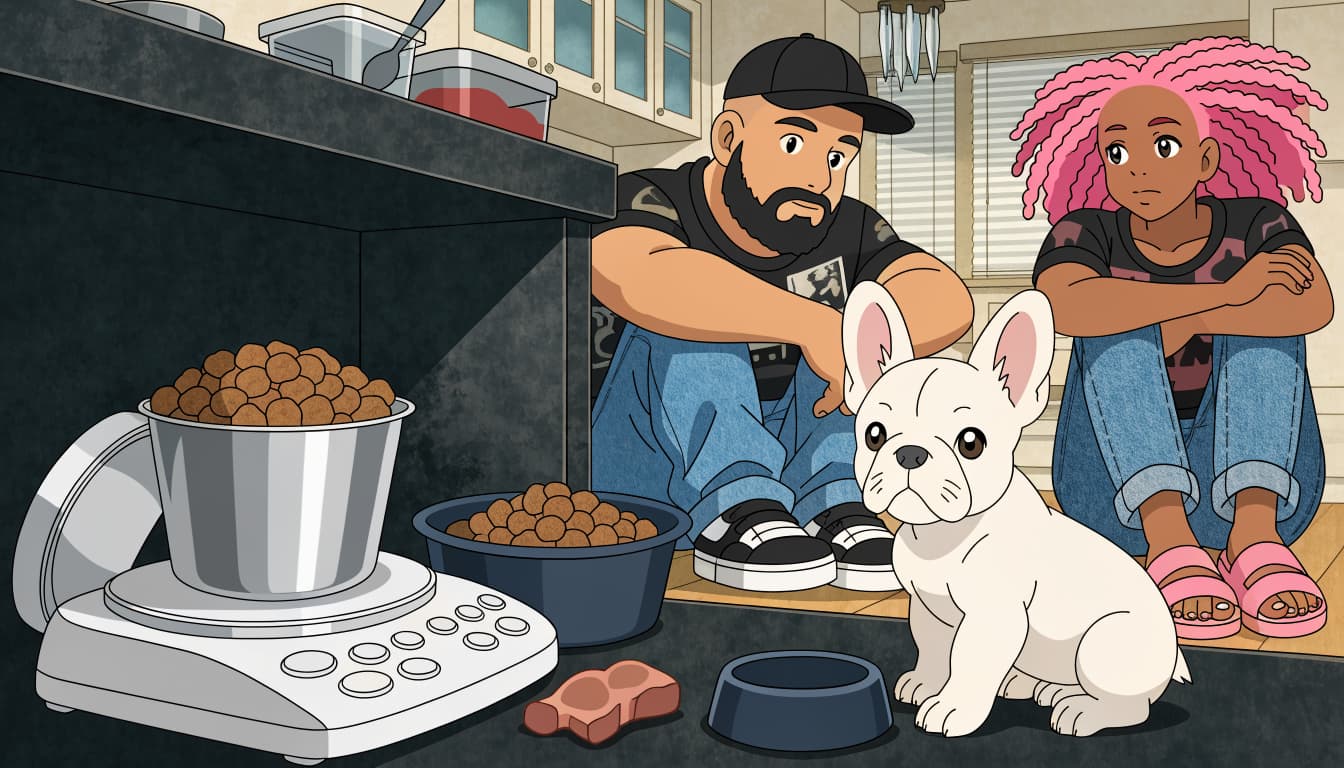
Follow the label, but treat its amount as a starting point
Package charts estimate needs for a typical puppy in the listed age and weight range. Your puppy may need a different portion based on growth, activity, body condition, and health. Measure the suggested daily amount first, then review it during growth checks with your veterinarian.
That gives you a sensible routine without pretending every Frenchie runs on the same kibble algorithm.
Know when to ask your veterinarian for help
Get veterinary advice if your puppy eats poorly, has ongoing vomiting or diarrhea, gains weight too quickly or too slowly, or isn't weaning as expected. Very young, orphaned, or unwell puppies may need a special feeding plan.
Bring the food package or a photo of its feeding chart to the appointment. Include the amount you offer, any treats, and how much your puppy leaves behind. Those details help your veterinarian make practical recommendations.
Streetwear & Casual Styling
Once the feeding chart is handled, your dog-walk outfit can be the low-stakes side quest. Build around a Cyber-Brutalist Anime Graphic Tee with simple jeans or relaxed cargos and comfortable shoes. The print gets the attention, while the rest of the fit stays ready for an actual walk.
Try My Therapist Is A Dog Tee or Puppin Irish Luck Tee for a casual dog-parent look. Apparel is for your outfit; your puppy's food and care stay on their own checklist.

Frequently Asked Questions
Can you feed a French Bulldog puppy once a day?
Growing puppies generally do better with their food divided into meals across the day. Follow the schedule on your puppy's food and your veterinarian's advice, especially if your puppy is very young or has a health concern.
Should you leave puppy food out all day?
Measured meals make it easier to track how much your puppy eats and notice appetite changes. Your veterinarian may recommend a different plan for an individual puppy, but routinely leaving food out can make intake harder to monitor.
What if your puppy seems hungry after a meal?
Begging doesn't prove the portion is too small. Review the food chart, treats, body condition, and growth together, then ask your veterinarian before increasing the daily amount.
When do French Bulldog puppies switch to adult food?
The timing depends on your puppy's growth and the food's guidance. Ask your veterinarian when to transition instead of relying on age alone, and change foods gradually to reduce the chance of digestive upset.
Feed the Puppy in Front of You
Start with the chart on the exact food you're using. Divide its daily amount into suitable meals, count treats, and adjust as your Frenchie grows.
If appetite, digestion, or growth raises concern, contact your veterinarian. The chart gives you a starting point; your puppy's progress tells you when the plan needs a closer look.