

How to Groom a Goldendoodle Puppy at Home
TrendReactTees.STORE TeamLearning how to groom a goldendoodle puppy starts with gentle practice and regular coat care. Your puppy doesn't need one dramatic makeover. It needs a routine that fits its coat and comfort level.
This post may contain affiliate links. If you make a purchase through these links, I may earn a small commission at no extra cost to you.
For the dog-parent wardrobe, our Best Dog Mom Tee and My Therapist Is A Dog Tee bring the appropriate energy.
Your puppy's coat may be wavy, curly, or somewhere in between. Start with a few calm minutes and let that particular fluffball set the pace.
Key Takeaways
- Start with brief, reward-based handling so your puppy can get comfortable with grooming tools.
- Brush longer or curl-prone coats every other day as a starting point, then adjust for tangles.
- Work through the coat in small sections, and ask a groomer for help with tight mats.
- Bathe your puppy when dirty, using dog shampoo and drying the coat fully.
- Keep up with nails, ears, and teeth, and get professional help when a task feels unsafe.
How to Groom a Goldendoodle Puppy at Home
A practical routine gives you time to check the coat, practice handling, and notice changes. Your puppy's texture and tolerance matter more than a schedule copied from another dog.
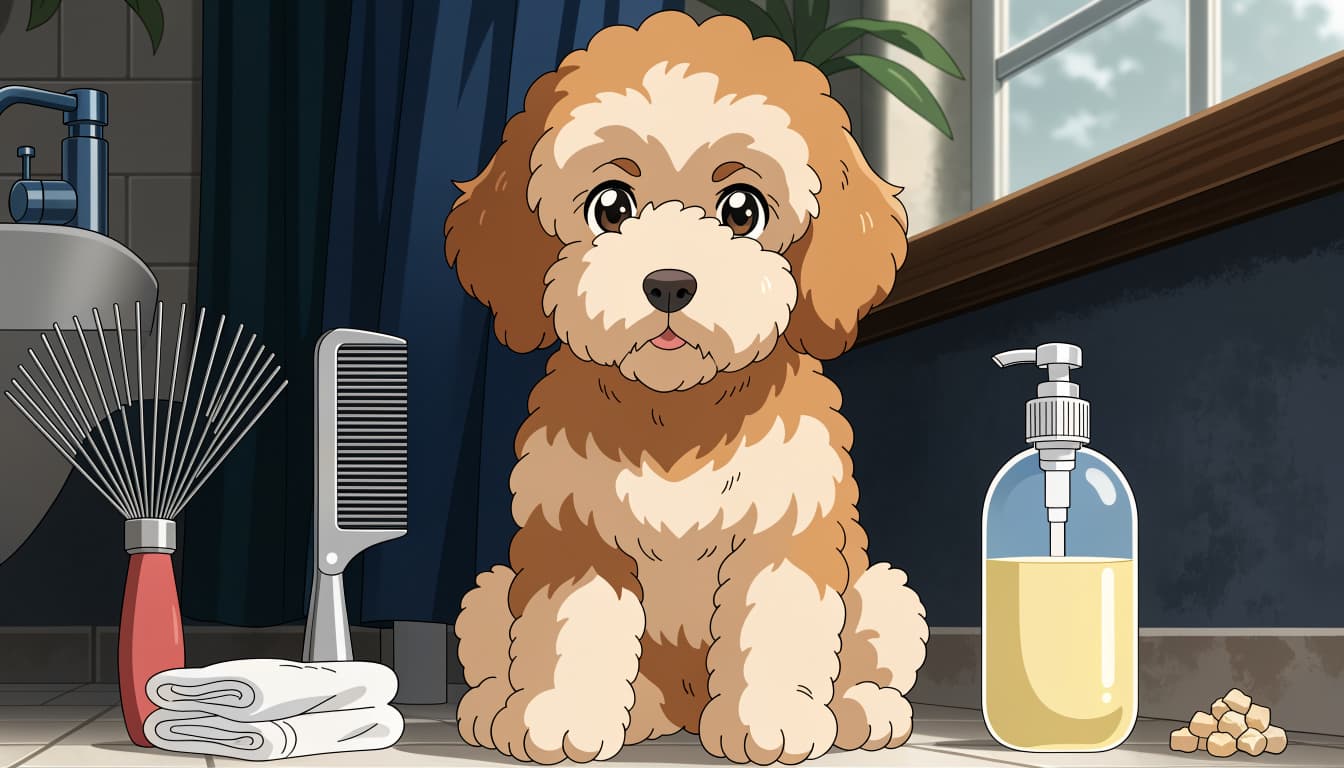
Gather a brush, comb, and dog-safe grooming basics
A slicker brush and metal comb are useful options for many longer or curlier coats. Choose tools that move through your puppy's hair comfortably, and avoid scraping the skin with the brush.
Keep dog shampoo, towels, and small treats nearby. A washable mat can give your puppy a comfortable place to stand or settle while you work. You don't need a salon's worth of equipment to begin.
Make each grooming session short, calm, and rewarding
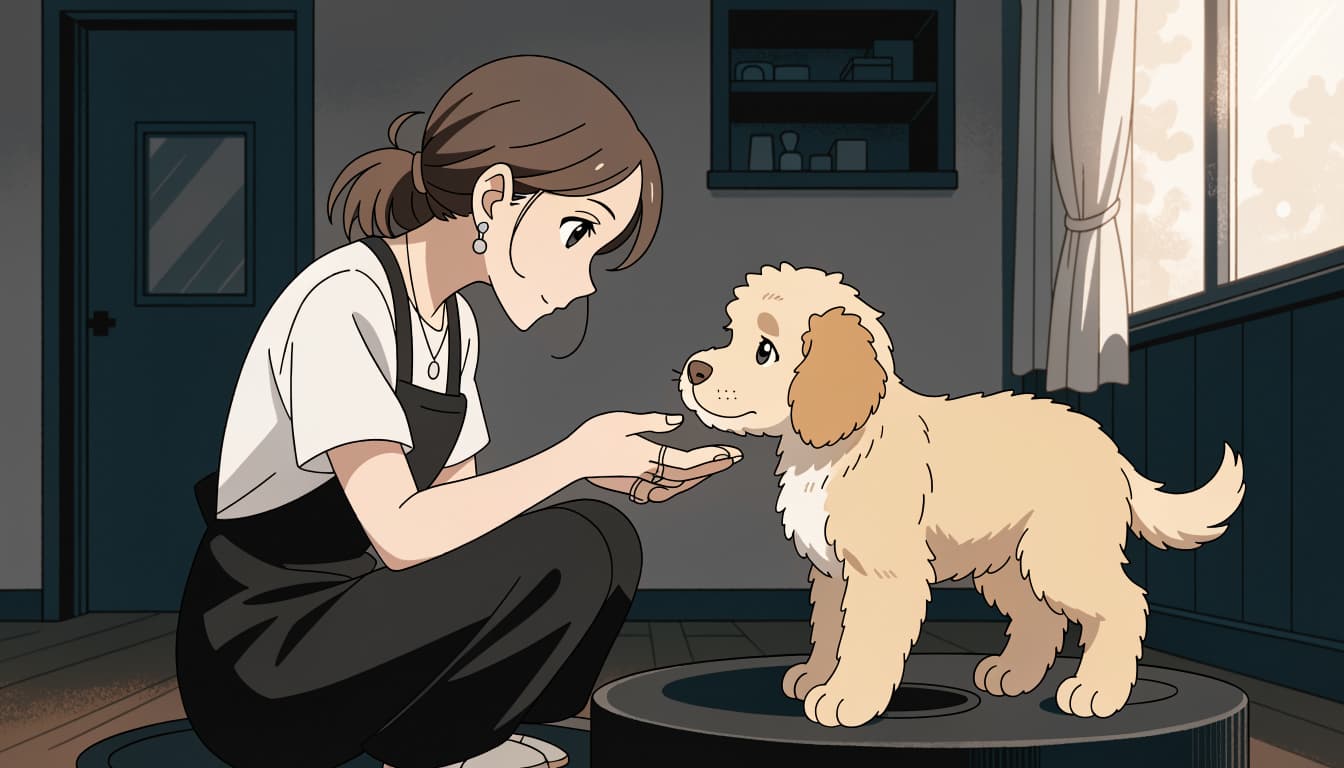
Let your puppy sniff the brush, then try a gentle stroke and offer a treat. Practice touching a paw, lifting an ear flap, or briefly handling the muzzle. Reward calm responses and give your puppy room to move away.
If your puppy looks worried, pause and return to an easier step. A few pleasant minutes can do more for future grooming than a full session your puppy spends trying to escape.
You can build duration gradually as your puppy gets comfortable. The goal is a dog that trusts the process, not a perfectly styled creature with a grudge against the comb.
Brush Your Puppy Often to Stop Tangles Before They Mat
For a longer or curl-prone coat, try brushing every other day as a starting point. Adjust if you find tangles forming sooner or if your puppy's coat length changes.
The American Kennel Club's home grooming advice also emphasizes choosing a brush suited to your dog's coat. Your puppy's curls get the deciding vote.
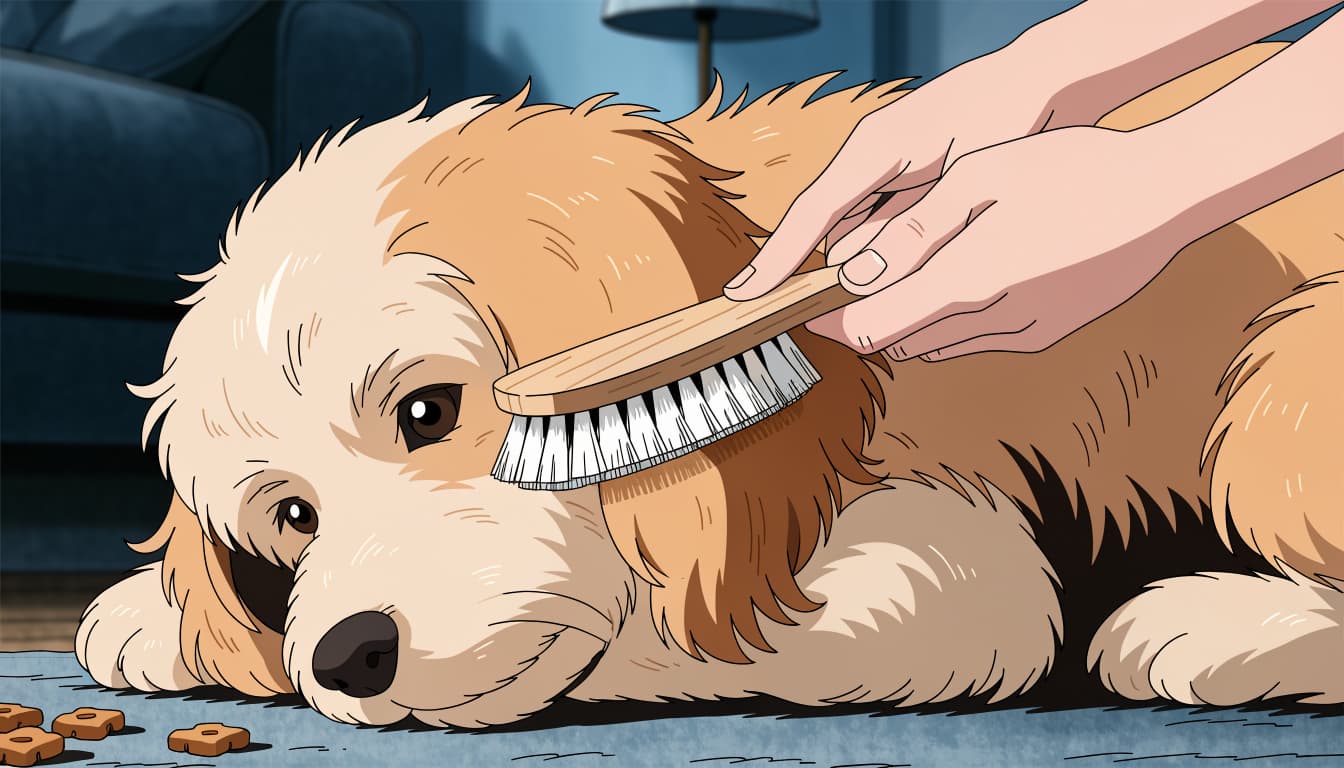
Work in small sections and check down to the skin
Part the hair gently and brush a small section at a time. Work through the coat rather than skimming its surface, using light strokes that don't drag across the skin.
Then run a metal comb through that section to check for snags near the skin. Pay attention behind the ears, under the collar, in the armpits, along the legs, and around the tail. Friction can turn those spots into tiny tangle factories.
Check the coat after muddy walks or trips through vegetation, too. Remove caught debris gently and look for irritation beneath the hair. Coat checks matter across breeds, although a Jack Russell's coat care routine won't necessarily match your Goldendoodle's.
Handle mats gently and know when to stop
If the comb catches, don't yank. A loose tangle may come apart with patient, gentle work, but a tight mat can pull painfully on your puppy's skin.
Don't bathe over mats, and don't try to cut them close to the skin with scissors or clippers. Ask a professional groomer to handle tight or widespread matting. Your puppy's comfort outranks an at-home grooming victory.
Bathe and Dry Your Goldendoodle Puppy Without Stress
Bathe your puppy when it's dirty rather than following a rigid calendar. Brush away loose hair and manageable tangles first, and get help with tight mats before you start.
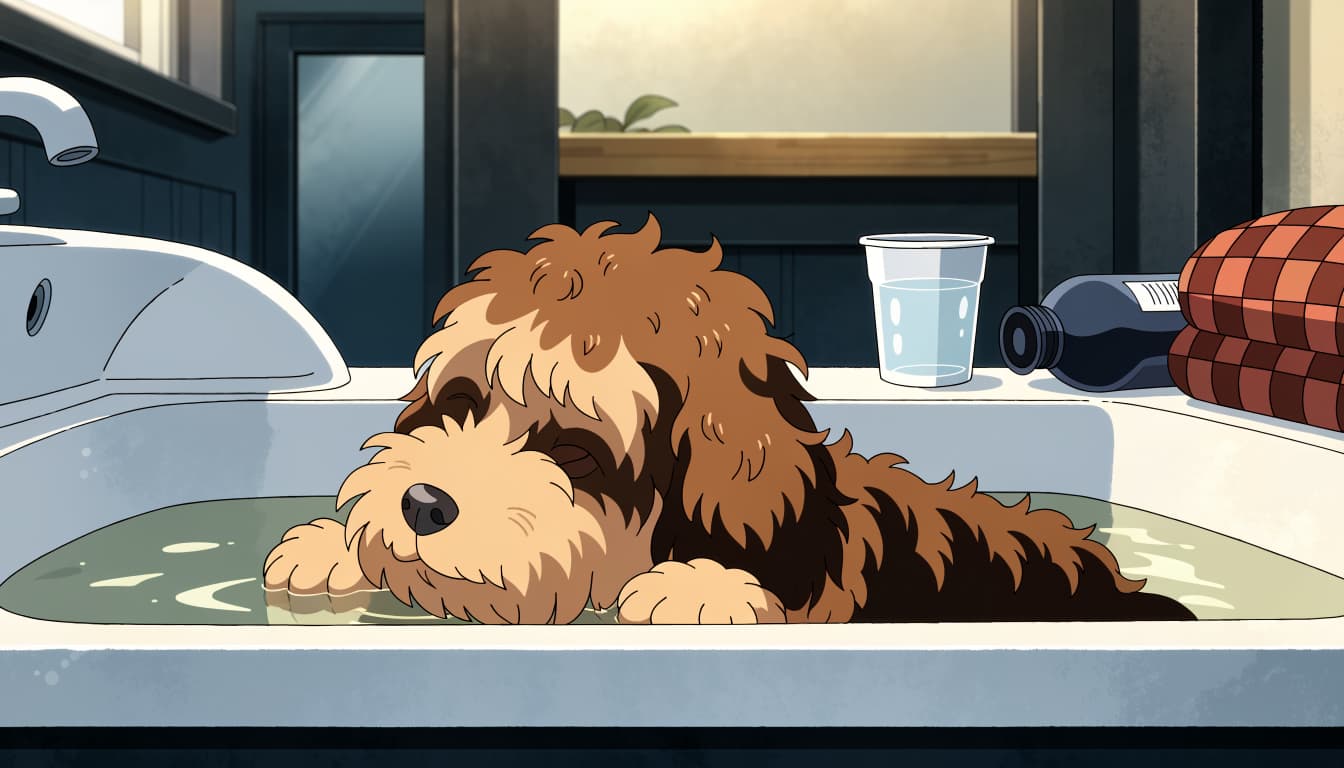
Use lukewarm water and shampoo made for dogs
Set up a sink or tub with a shallow amount of lukewarm water. Have your towels and dog shampoo within reach before your puppy gets wet. A non-slip surface can help your puppy feel steadier.
Wet the coat carefully, then apply shampoo according to its directions. Keep water and shampoo away from your puppy's eyes, nose, and ear canals.
Human shampoo isn't a substitute. Dogs and people have different skin pH, and products made for humans can irritate canine skin. If your puppy has irritated skin or needs a medicated product, ask your veterinarian what to use.
Rinse well and dry the coat fully
Rinse thoroughly so shampoo doesn't linger in the coat. Leftover product can make skin uncomfortable, and a dense coat left damp can be uncomfortable, too.
Gently blot with towels instead of rubbing the hair into tangles. Dry the coat fully, working patiently through thick areas. Introduce a dryer and its sound gradually if you use one, and be especially careful around the face and ears.
If the sound or airflow worries your puppy, stop and give it a break. Ask a groomer for a demonstration if drying the coat safely feels difficult.
Keep Nails, Ears, and Teeth Clean With Gentle Care
Coat care gets the spotlight, but your puppy's paws, ears, and teeth need attention, too. Introduce each task separately, with treats and breaks.
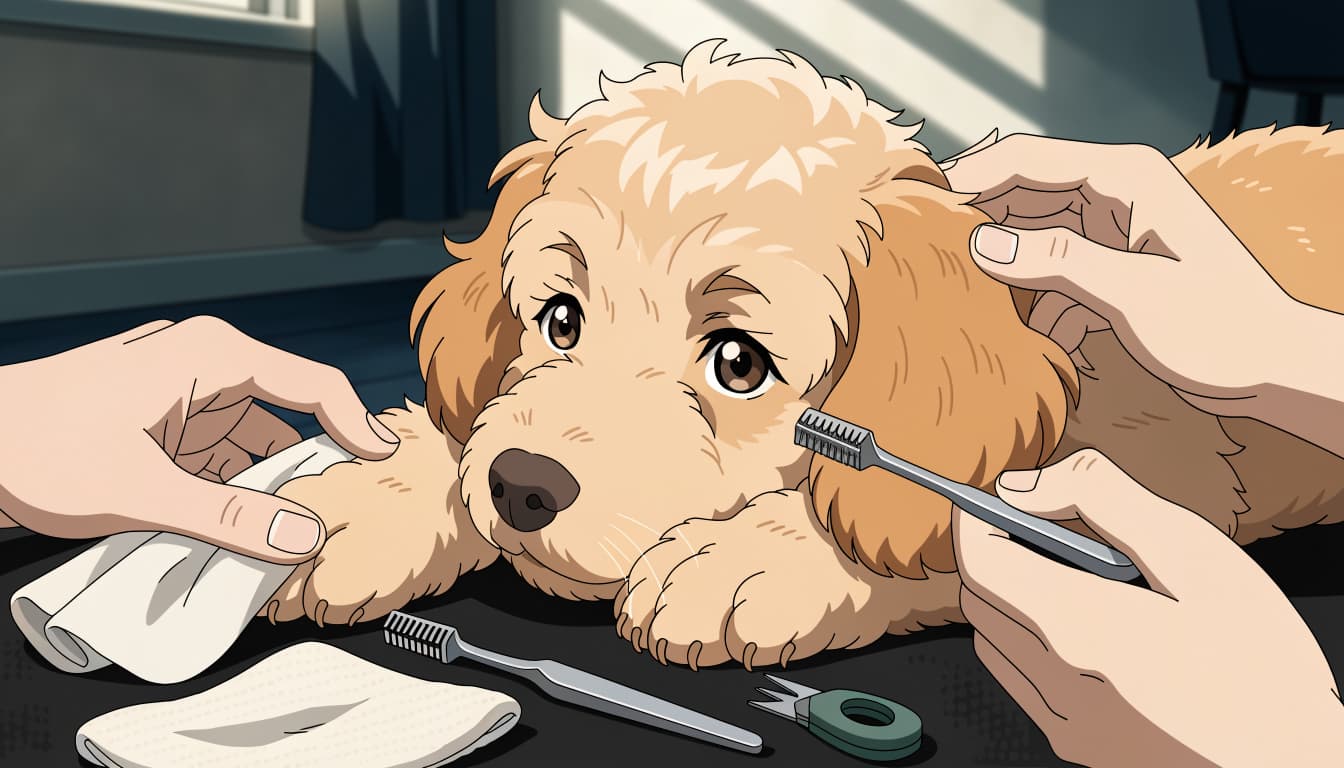
Trim nails a little at a time
Practice holding a paw gently before introducing a trimmer. Let your puppy inspect the tool, reward calm behavior, and build up slowly. One or two nails can be a complete session.
Nails shouldn't click or press against the floor during normal walking. Trim only small amounts because the quick contains nerves and blood vessels. Cutting it hurts and can cause bleeding.
Keep styptic powder nearby, and ask a veterinarian or groomer to demonstrate if you can't judge the quick or the trimmer's position. Dark nails can make the quick harder to see. You don't have to turn nail care into a guessing game.
Check ears and brush teeth regularly
Look inside the ear flap for redness, swelling, debris, discharge, or a bad odor. Wipe only the visible inner area with a soft, damp cloth. Don't insert tools into the ear canal, and contact your veterinarian if you notice concerning changes.
For teeth, introduce gentle muzzle handling and lip lifting before adding a toothbrush. Use toothpaste made for dogs. Daily brushing is the goal, while a few times a week is a practical minimum as you build the habit.
The AKC's home grooming guidance covers these routines alongside coat care. A dental chew doesn't replace brushing, even if your puppy considers it a more appealing offer.
Plan Your Puppy's First Professional Groom Around Comfort
There's no single first-haircut age that fits every Goldendoodle puppy. Call a groomer about puppy policies and vaccination requirements, then choose a visit that suits your puppy's experience and comfort.
Start with a low-stress introduction
A first visit can focus on gentle handling, bathing, drying, nail care, or a light tidy. Your puppy gets a chance to meet the groomer and experience the space without taking on every possible service at once.
Tell the groomer which handling your puppy already tolerates and what makes it nervous. A short introduction can give you useful information about what to practice at home before the next appointment.
Ask the groomer about coat care
Ask what your puppy should experience at the first visit and how to maintain its particular coat between appointments. Discuss a grooming method that suits its coat, skin, and comfort.
Show-style trimming isn't a universal home-care requirement. Clipping near the face, paws, and other sensitive areas also carries risks without proper training. If you want to learn a touch-up technique, ask a qualified groomer to demonstrate it first.
Streetwear & Casual Styling
Your brushing session doesn't need a dress code. Comfortable clothes make it easier to sit on the floor, move around, and accept that puppy hair may become part of the outfit.
For a walk or casual day out, pair our Cyber-Brutalist Anime Graphic Tees with relaxed jeans and sneakers. The If They Could Use the Internet We'd Be in Trouble Tee brings dog-parent internet humor. The Scream at the Void My Human Understands Tee brings a slightly louder mood. Your tee handles the aesthetic. Your grooming tools handle the puppy.
Frequently Asked Questions
Will my Goldendoodle puppy's coat change as it grows?
Your puppy's coat can change in texture as its adult coat comes in. Keep checking for tangles during that transition and adjust your brushing routine to the hair you see.
If the coat becomes difficult to maintain, a groomer can help you choose suitable tools and a manageable length.
What if my puppy keeps biting the brush?
Pause the brushing and give your puppy a chance to settle. Start again with the brush at a comfortable distance, rewarding calm behavior before trying a brief stroke.
Keep sessions short and put the tool away before your puppy gets overwhelmed. Persistent fear or distress is a good reason to ask your veterinarian or a qualified reward-based trainer for help.
What should I do if shampoo gets in my puppy's eyes?
Gently flush the eye with clean, lukewarm water. If your puppy keeps squinting or the eye appears irritated, contact your veterinarian for advice.
Can grooming help me spot skin problems?
Yes. Parting the coat gives you a chance to notice redness, bald patches, or other changes that may be hidden under the fluff.
Contact your veterinarian if you see irritation, unusual itching, or a sudden change in shedding. A different brush won't fix an underlying skin problem.
Build a Routine Your Puppy Can Trust
Grooming gets easier to manage when you match the routine to your puppy's coat and keep handling calm and consistent. Small sessions count, even when all you accomplish is one paw and a few brush strokes.
Watch for changes in your puppy's skin or behavior, and ask a veterinarian or qualified groomer for help when a task feels unsafe. Your puppy doesn't need a perfect makeover. It needs care that feels safe enough to practice again.