

How to Tell Your Goldendoodle Puppy's Coat Type
TrendReactTees.STORE TeamYou can estimate your Goldendoodle puppy's coat type by looking at its texture and facial hair, then considering the parents' coats and available genetic tests. The result is an informed guess, not a complete preview of the adult dog.
Coat labels, shedding, and allergy reactions are separate questions. And if your dog-lover wardrobe needs attention too, our Golden Retriever Luck Tee and Puppin Irish Luck Tee bring some canine energy to your casual rotation.
Start with the clues your puppy is already showing you.
This post may contain affiliate links. If you make a purchase through these links, I may earn a small commission at no extra cost to you.
Key Takeaways
- Straight, wavy, and curly describe coat texture, while facial furnishings are a separate trait.
- Longer hair around the muzzle and eyebrows can suggest furnishings, but it won't reveal every detail of the adult coat.
- Your puppy's appearance, parent coats, and relevant genetic results give you a better estimate together.
- Coat texture can change as your puppy grows, so adjust grooming to the dog you see.
- Shedding and allergy reactions can't be guaranteed by a coat label.
How to tell Goldendoodle puppy coat type from early clues
Your first clue is the shape and texture of the hair you can see. Look at the whole puppy before assigning a coat category. One curly ear doesn't get to make the final decision for the rest of the dog.
For a visual look at puppy-coat clues, this video walks through the differences:
Straight, wavy, and curly coats look different
A straight or hair coat tends to lie closer to the body. A wavy coat has loose bends and a shaggier outline, while a curly coat shows tighter curls that may remind you of a Poodle's coat.
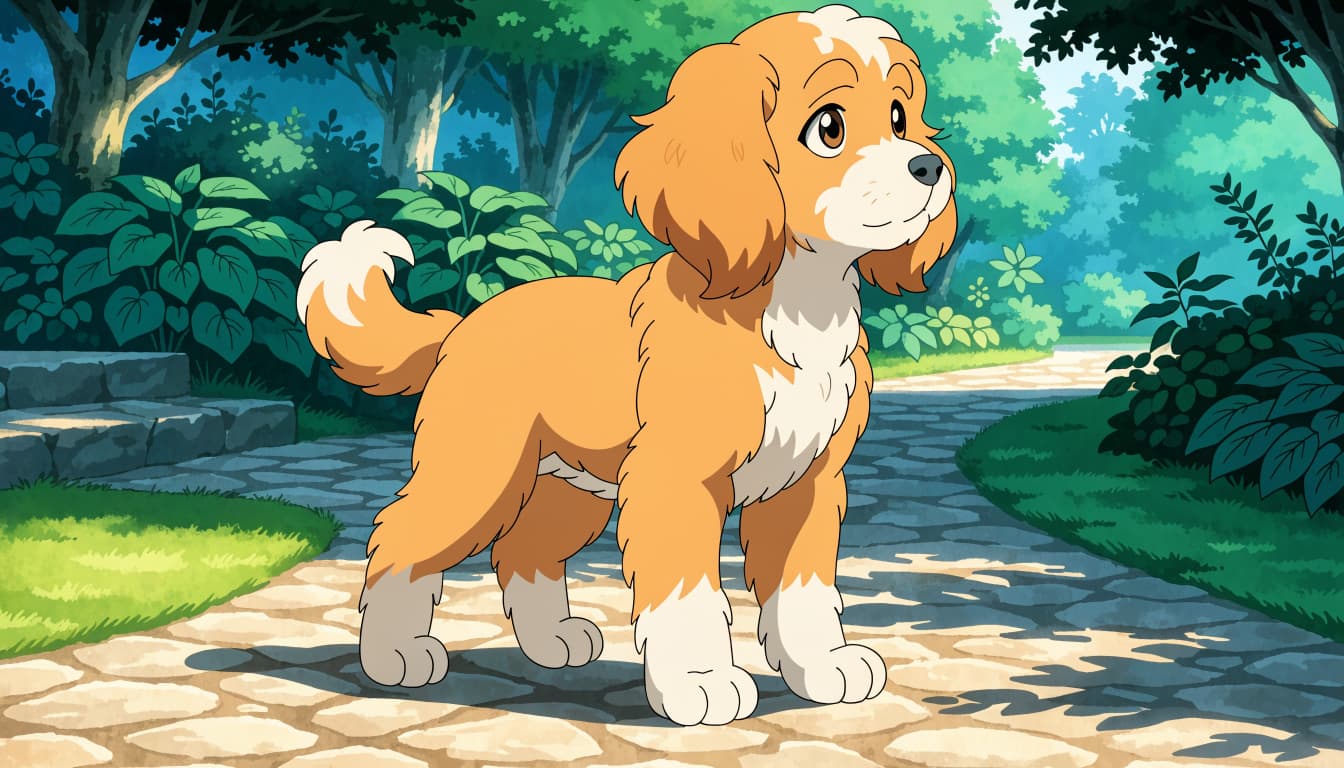
You may also hear a wavy coat called "fleece." That's breeder language, not a strict genetic category, and different breeders can use it differently. Ask what the description means for the puppy in front of you.
These categories help you describe what you see today. They don't guarantee that the adult coat will look uniform across every part of your dog.
Look for furnishings, not just curls
Furnishings are longer hairs around the muzzle and eyebrows. They can create the beard, mustache, and expressive brows associated with many Goldendoodles.
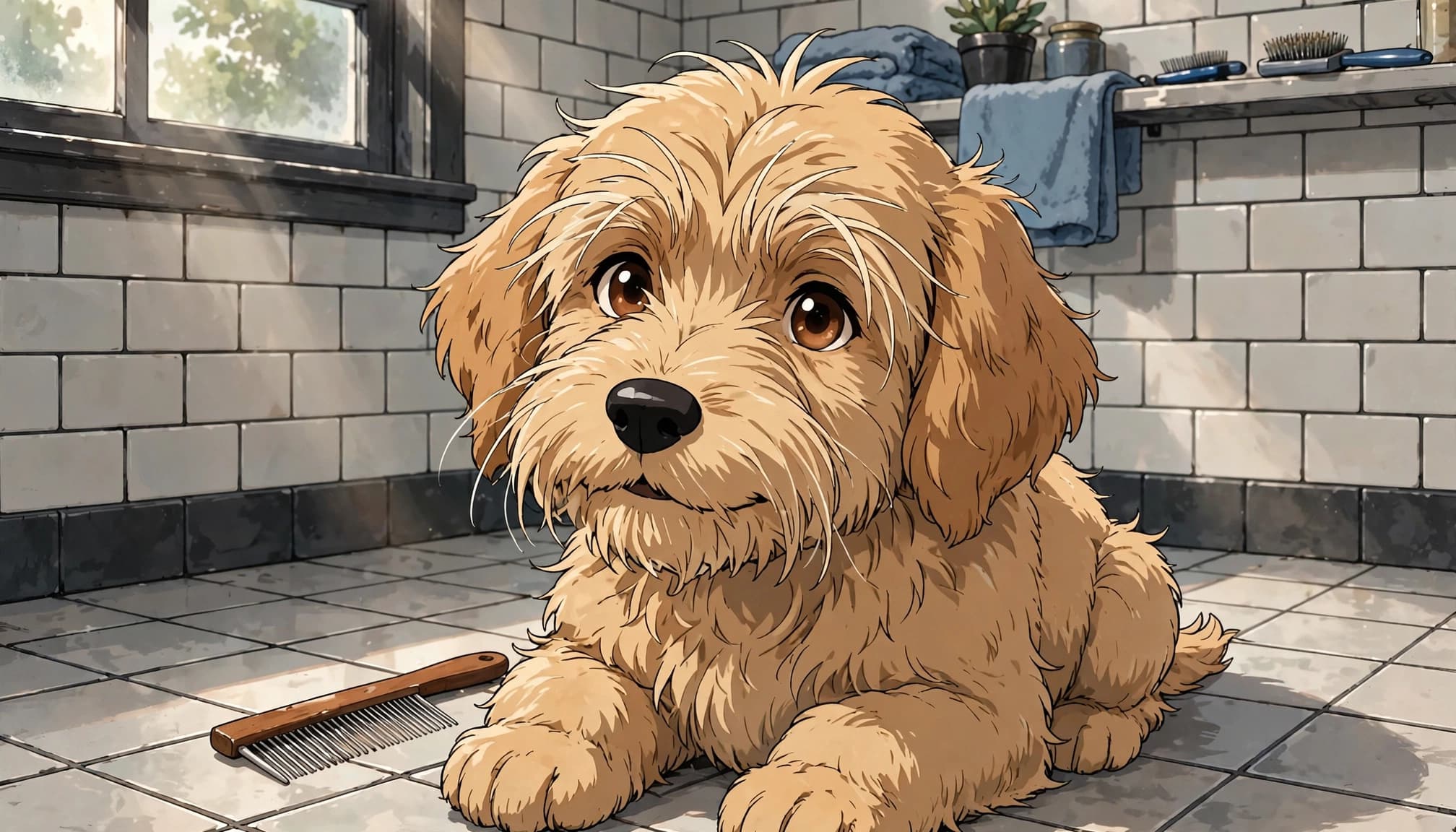
A puppy can have a straight coat and furnishings. That's different from a smooth-faced, unfurnished coat, sometimes called a flat or improper coat by breeders.
Check the hair around the face alongside the body texture. A tiny mustache is useful evidence, but it doesn't come with a complete adult-coat character sheet.
Use your puppy's age and parent coats to refine your guess
Your puppy's current look is one clue in a bigger picture. The appearance of both parents can add context, especially when you compare their facial furnishings and body coats with your puppy's.

Check the coat in more than one spot
Look at the body, ears, muzzle, and tail. You might find a loose wave on the body, tighter bends around the ears, and longer hair developing around the face.
Run your hand gently over the coat to notice texture as well as appearance. Hair that looks fluffy in a photo may lie differently when dry, and a recent trim can change the outline you see.
Take photos in similar lighting as your puppy grows. Comparing the same areas over time gives you a better record than trying to decode one patch of fur after one grooming appointment.
Parent coats help, too, but siblings can inherit different combinations. Ask what the parents look like without a fresh styling session and whether their coats changed as they matured. Those details provide context without promising a matching mini-me.
Expect changes as the adult coat develops
Puppy coats can change in texture and density as adult hair develops. A coat that starts soft and open may become thicker or show a different wave pattern.
The transition is often described as beginning around 6 to 12 months, though some dogs change later. Treat that range as a broad estimate, not a deadline your puppy needs to meet.
Keep an eye on how the coat feels during the transition. If brushing starts catching more often or tangles appear in new places, your grooming routine may need an update. Your puppy's coat didn't read the internet timetable.
Ask about coat genetics before trusting a prediction
Appearance is useful, and genetic testing can add another layer of information. The strongest prediction combines both instead of treating one test result like a spoiler for the entire adult coat.
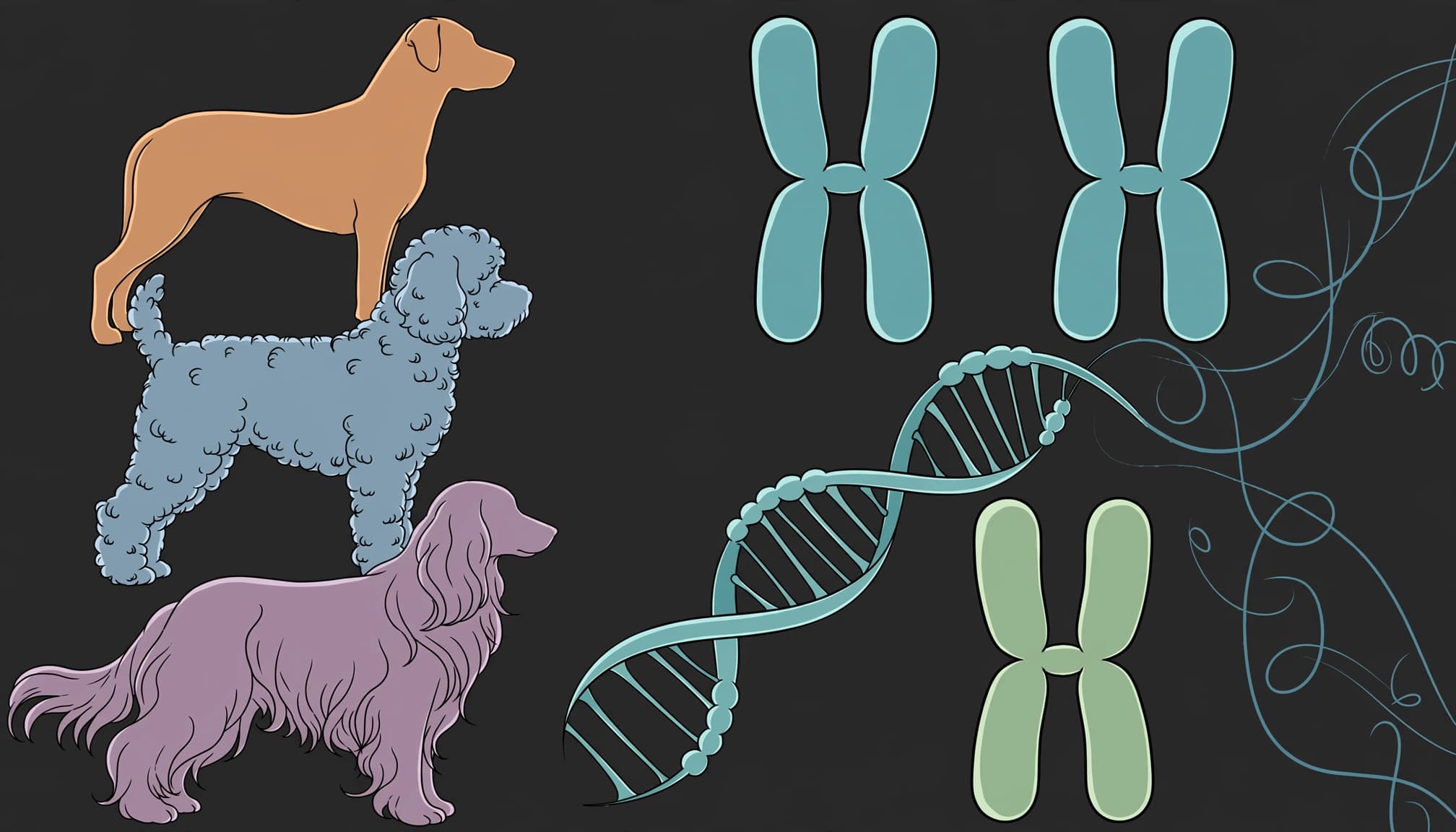
What RSPO2, KRT71, and FGF5 can tell you
Three genes often come up in coat discussions: RSPO2 is associated with furnishings, KRT71 with curl, and FGF5 with hair length. Each gives information about a particular trait, rather than a full description of your future adult dog.
UC Davis Veterinary Genetics Laboratory explains the RSPO2 furnishings variant and its connection to longer facial hair. Testing both parents can help a breeder estimate whether unfurnished puppies are possible.
For example, a dog can have furnishings while carrying an unfurnished variant. If both parents carry that variant, an unfurnished puppy is possible even when both parents have beards.
Ask to see the actual results and hear how they apply to the pairing. A test for furnishings doesn't settle curl, coat density, grooming needs, or the amount of loose hair you'll find on your clothes.
Why generation labels are not a coat guarantee
Labels such as F1 and F2 describe a breeding cross. They don't function as a preset for your puppy's appearance.
The Goldendoodle Association of North America notes that two wavy-coated dogs can produce straight, wavy, or curly puppies. So even matching parent textures leave room for different outcomes.
When you talk with a breeder, ask about both parent coats, their test results, and which traits the prediction covers. A clear answer should separate what the results suggest from what remains uncertain.
That distinction matters more than a confident label attached to a cute puppy photo.
Plan for grooming, shedding, and allergy questions separately
A coat prediction can help you prepare for care. It can't tell you exactly how much maintenance your individual dog will need or how a person with allergies will respond.
Match brushing and grooming to the coat you see
Wavy and curly coats can develop mats, including in places that are easy to miss. Check behind the ears and where a harness rubs, along with the rest of the body.
After muddy walks or trips through vegetation, look for debris, tangles, and changes in the skin beneath the hair. Brush as needed to remove loose hair and dirt, and bathe your dog when dirty with a dog-appropriate product.
Your schedule should fit the coat in front of you. As the adult coat develops, you may need to change your tools or spend more time on areas that tangle. A qualified groomer can help you choose an approach that suits your puppy's texture and comfort.
If you find a tight mat, don't pull at it or cut close to the skin with scissors. Ask a groomer for help. For irritated skin or changes in what your dog tolerates, speak with your veterinarian.
Low shedding does not mean allergy-proof
Visible coat type, relative shedding, and allergic response are three different things. Furnishings and genetic results may inform a shedding estimate, but they can't promise zero loose hair.
A person's reaction also involves more than the hair on your sofa. The American Academy of Allergy, Asthma & Immunology notes that dog allergens include proteins in skin flakes and saliva.
If allergies are part of your decision, discuss your situation with an allergist before bringing a dog home. Your lint roller may remain employed, and a coat label isn't medical clearance.
Streetwear & Casual Styling
Your puppy's coat gets its own care plan. Your outfit can handle the personality department.
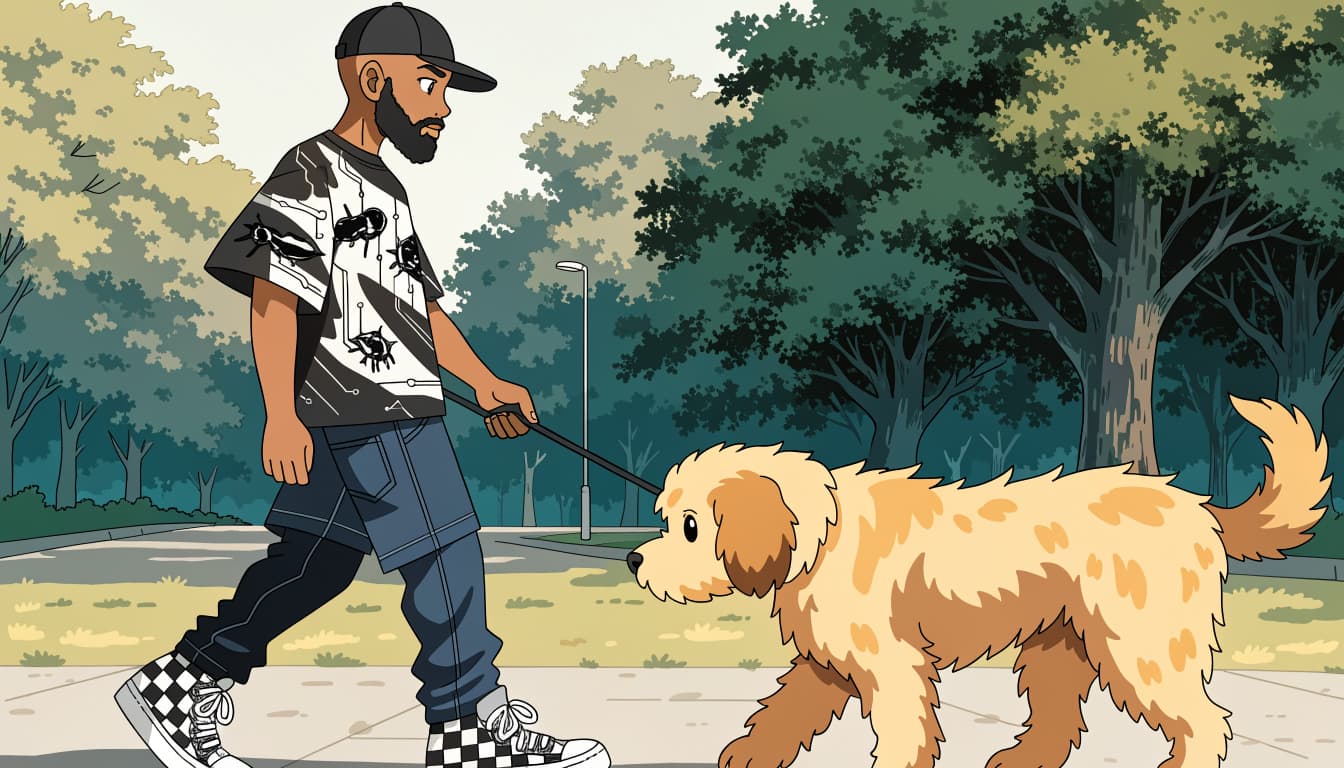
Build a casual look around our Cyber-Brutalist Anime Graphic Tees with straight-leg jeans and comfortable sneakers. Let the graphic do the talking, then add a dark overshirt or lightweight jacket when you want another layer.
The My Therapist Is A Dog Tee brings the dog-person humor. For an oddly specific pet-parent budget joke, try the Dog Eats Custom Kibble Tee.
Keep the outfit comfortable for walking and moving around. Your tee can handle the visual noise while your dog's leash and properly fitted harness handle their separate jobs.
Frequently Asked Questions
Can you tell a Goldendoodle's adult coat from a puppy photo?
A photo can show your puppy's current texture and facial furnishings. It can't confirm how the mature coat will look, especially if the image doesn't show the body, face, and ears clearly.
Does a curly coat mean your puppy will shed less?
Curl alone isn't a reliable promise about an individual dog's shedding. Other inherited traits matter, and you may still find loose hair around your home. Ask about the parents' coat history if you want more context.
Is a fleece coat easier to care for than a curly coat?
A loose wave may be easier for some owners to manage than a tight curl, but both can mat. Your dog's coat density, activity, and tolerance for grooming also affect the work involved.
When should you ask a groomer to assess your puppy's coat?
Ask for guidance as the coat begins to change or sooner if tangles are forming. A qualified groomer can help you plan comfortable handling and choose tools suited to your puppy's coat.
Choose a Routine for Your Puppy
Your best estimate comes from putting the clues together: visible texture, facial furnishings, parent coats, and relevant genetic results. Leave room for your puppy's appearance to change as the adult coat develops.
Then build a grooming routine around the dog in front of you. A useful coat label can help you prepare, but your puppy's comfort and actual care needs get the final vote.