

How to Tell What Coat a Labradoodle Puppy Will Have
TrendReactTees.STORE TeamYou can make an informed guess about a Labradoodle puppy's adult coat by looking at its texture, parent coats, and available genetic test results. The catch: no single clue guarantees the outcome. Curl, facial furnishings, shedding, and grooming needs are separate traits, even if that puppy looks like it came with a perfectly styled character design.
While you're planning life with your future sidekick, our Dog Eats Custom Kibble Living On Ramen Tee and My Therapist Is A Dog Tee bring the dog-parent energy. First, let's sort through the coat clues.
This post may contain affiliate links. If you make a purchase through these links, I may earn a small commission at no extra cost to you.
Key Takeaways
- Hair, fleece, and wool describe coat appearance and feel. They aren't precise predictions.
- Look at length, curl, and facial furnishings separately when you meet a puppy.
- Parent coats and genetic reports offer useful background, but neither guarantees a complete adult look.
- Coat changes often begin around 6 to 12 months, with plenty of individual variation.
- Every dog needs coat care, and no coat is guaranteed allergy-safe or entirely shed-free.
How to tell what coat a labradoodle puppy will have
Start with what you can see and feel: hair length, texture, and the shape of any waves or curls. Keep your prediction flexible. Puppy fluff has a talent for looking like a finished design when it's still loading.
For a visual look at the three commonly described coat types and their grooming needs:
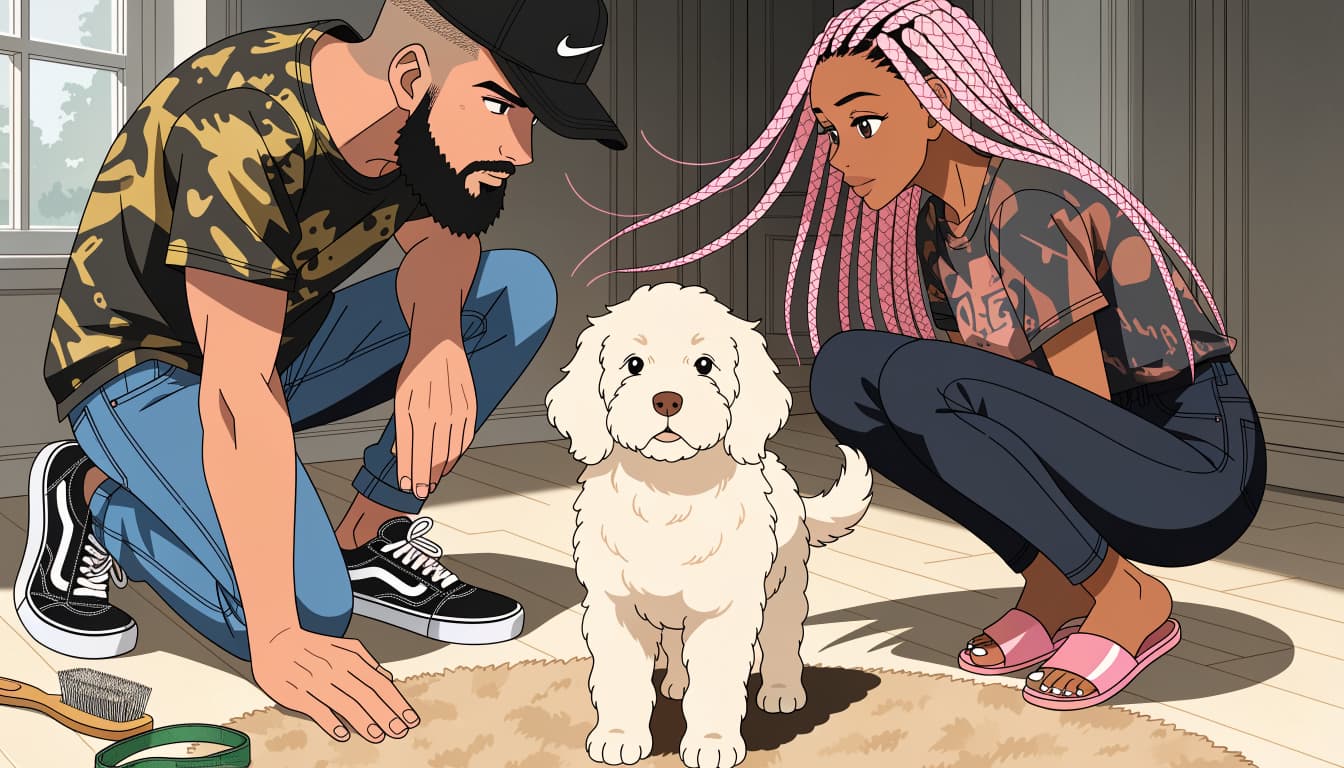
The three coat labels you'll hear
A hair coat tends to look straighter or flatter and may have a more Labrador-like appearance. It can feel coarser than the soft puppy coat you expected from a doodle photo.
A fleece coat is often described as soft and wavy, sometimes with loose curls. Think gentle waves or relaxed spirals rather than a tight, uniform curl.
A wool coat is usually denser, with tighter curls and a more Poodle-like appearance. These are common descriptive labels, not a precise classification system. A dog's coat can sit between descriptions, and none of the labels guarantees a particular shedding level or allergy response.
Look at texture, curl, and facial furnishings separately
Look along the puppy's back and sides. Notice whether the hair lies close to the body, forms waves, or makes visible curls. You can also look at its legs and ears, where longer hair may show up differently.
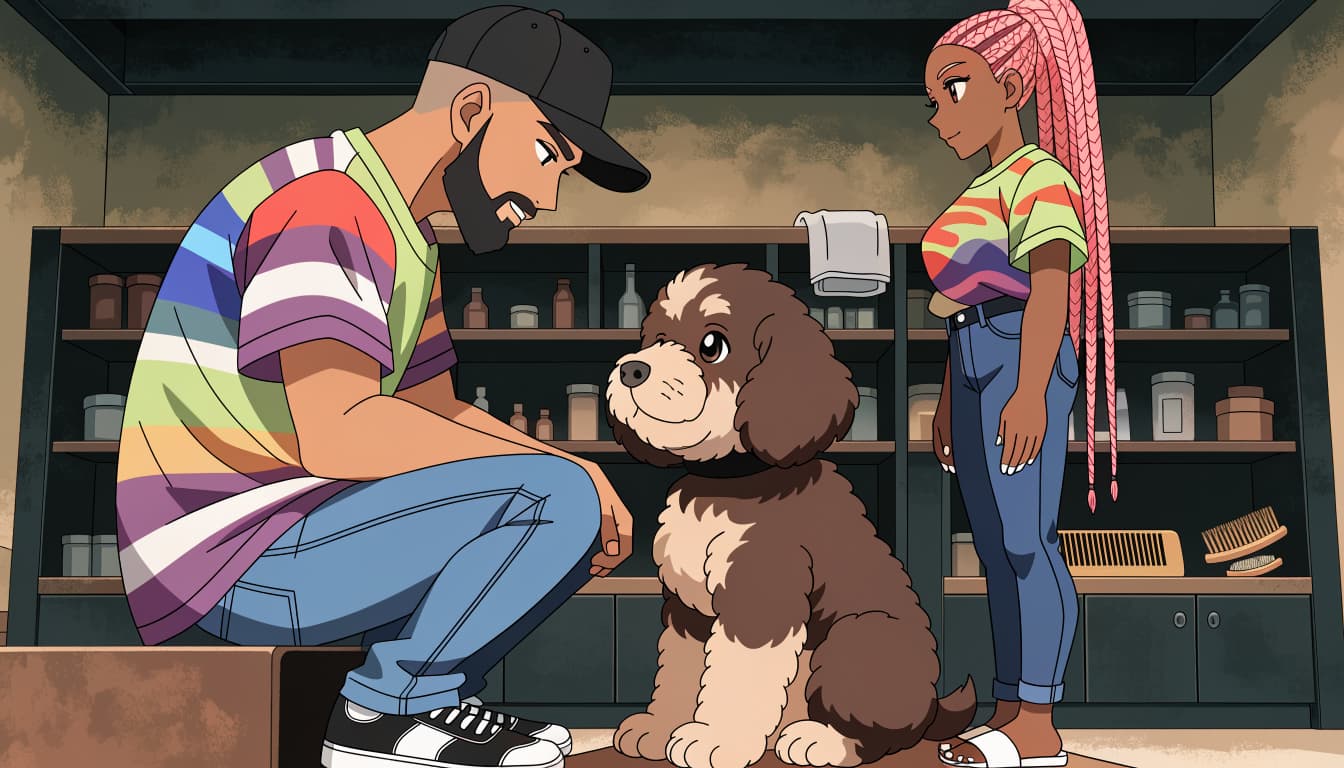
Then look at the face. Longer hair around the muzzle and eyebrows is called furnishings. That miniature mustache is useful appearance information, but it doesn't prove the puppy will have tight curls, a fleece coat, or minimal shedding.
Use the parents and litter as clues, not promises
Parent coats give you context for the family you're considering. Ask for clear photos of both parents as adults, plus photos of previous litters when available. If you can meet a parent, you can see how its coat looks outside a perfectly lit puppy listing.
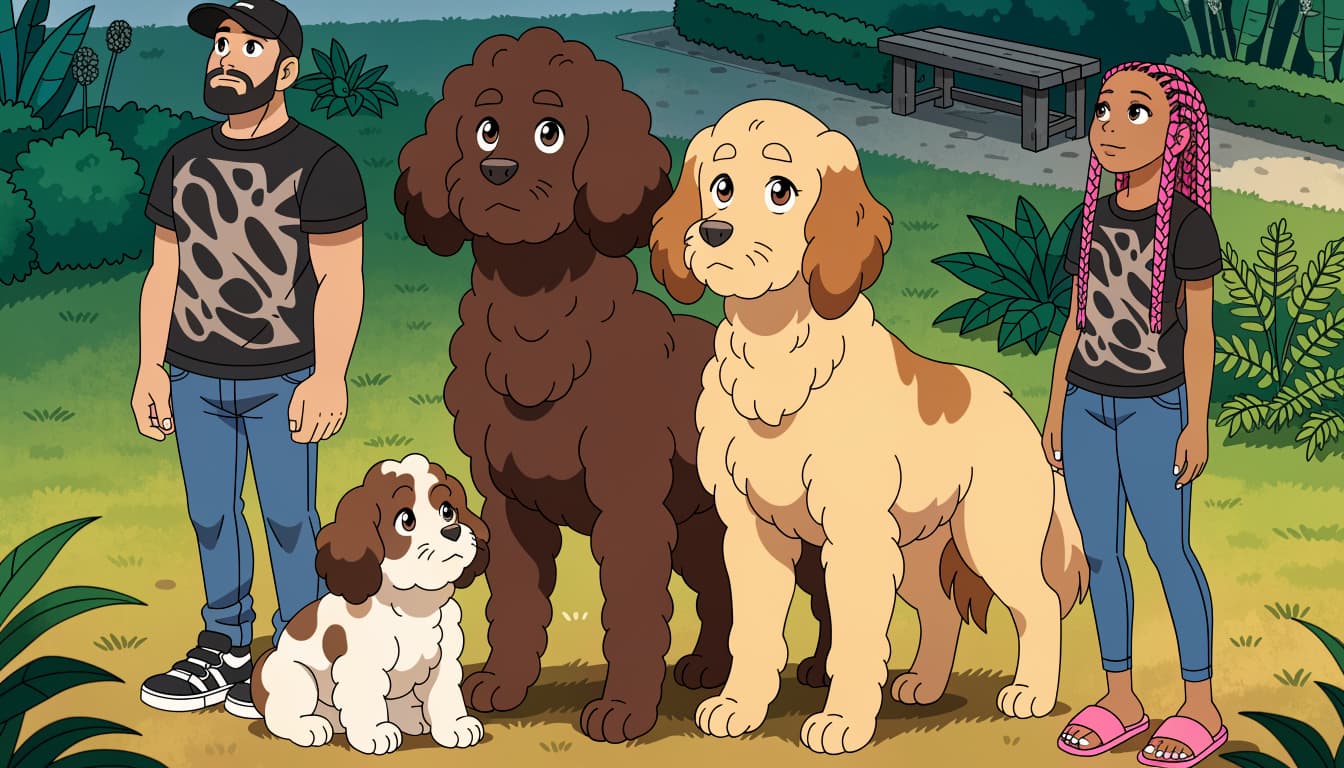
Read family history with room for variation
Ask what the parents' coats feel like, how much hair their caregivers notice around the home, and what grooming each dog needs. Photos can show curl and length, but they won't tell you how much brushing happens between pictures.
Puppies in the same litter can inherit different traits. An F1 or F1B label describes generational background, not an individual puppy's complete coat profile. It also doesn't replace information about the particular dogs involved.
Ask for the actual genetic test reports
Genetic tests can offer information about separate coat traits. Variants in FGF5 are associated with hair length, while KRT71 variants are associated with curl. Some breeders also discuss RSPO2-related testing for furnishings or coat markers.
The UC Davis coat-length test looks at FGF5 variants associated with long hair. That result addresses one part of the picture. It doesn't assign a guaranteed fleece, wool, or hair label, or settle your future grooming schedule.
Ask which laboratory ran each test and request the actual reports. A screenshot saying "coat tested" has less useful detail than a report naming the test and explaining its results.
Expect the puppy coat to change as your dog grows
Your puppy's coat won't switch modes overnight. Many dogs begin changing coats around 6 to 12 months, though timing varies. The mature texture may become clearer gradually as new hair grows in.
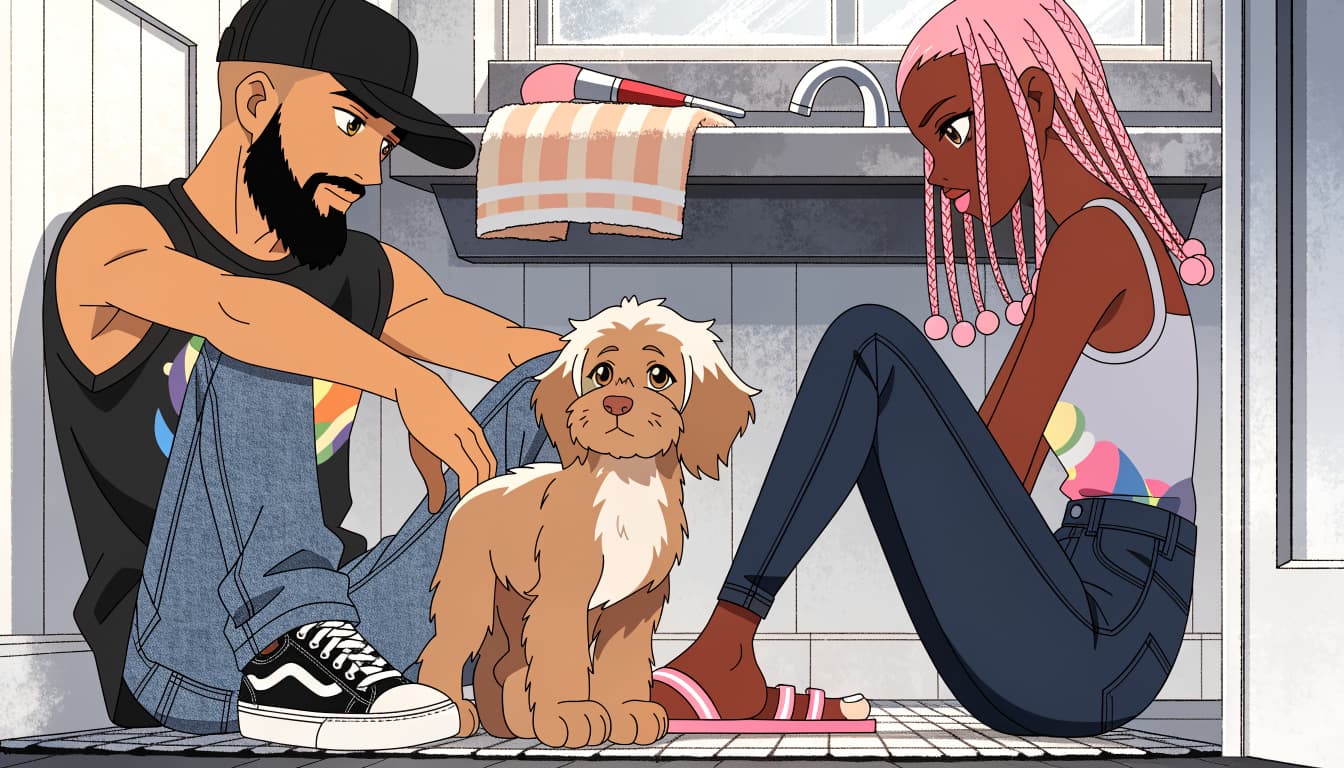
Watch the coat, not the calendar
A fine, soft puppy coat may become denser or develop more defined waves and curls. Some areas can look different before others do, so an uneven phase doesn't automatically mean something is wrong.
Take occasional photos in similar lighting and notice how the coat feels during routine handling. That gives you a record of your own dog rather than a comparison with a stranger's perfectly groomed Labradoodle online. The age range is a rough guide, not a deadline for a complete makeover.
Plan for grooming while the adult coat comes in
Loose puppy hair can become caught in the incoming coat, creating tangles or mats. Longer and curlier hair deserves particular attention around the ears, legs, and places where a harness rubs.
Make gentle coat checks part of your routine, especially after muddy walks or trips through vegetation. Remove caught debris, brush as needed, and bathe your dog when dirty using a dog-appropriate product.
Keep sessions short and reward calm handling. If you find tight mats, skin irritation, or signs that grooming hurts, ask a veterinarian or qualified groomer for help. You don't need to win a boss fight against a mat with a brush.
Choose your puppy with realistic coat expectations
The useful question isn't which label sounds best on a listing. It's whether you can care for the individual dog's coat, along with the rest of its needs.
Ask about the dog's current routine
Talk to the breeder, rescue, or caregiver about what the puppy already tolerates. Can you touch its paws and ears? Has it been introduced to brushing or a groomer? Ask what happens when it gets muddy and which tools are used.
You can also ask whether either parent sheds noticeably, what changes appeared in past litters, and whether genetic test reports are available. Those details help you picture daily care without treating a family resemblance as a promise.
Plan for brushing, professional grooming when needed, and some cleanup at home. A longer coat may collect debris, while shorter hair can still land on your clothes. Your lint roller has job security.
Make an allergy plan before you commit
No dog is guaranteed allergy-safe. Dogs produce allergens in skin flakes, saliva, and other materials, and a dog that sheds less can still trigger symptoms. Low shedding also doesn't mean zero shedding.
If you have allergies, talk with an allergist about your situation before bringing a puppy home. Time with an individual dog may help you understand your response, but one brief visit can't promise what living together will be like.
The same individual-care principle applies to other breeds, too. Our guide to Jack Russell coat care explains why a rough or smooth label isn't a shortcut to a shedding guarantee.
Streetwear & Casual Styling
Once your puppy's care plan is sorted, your dog-walk outfit can be the easy part. A Cyber-Brutalist Anime Graphic Tee gives you the personality; comfortable layers handle the weather.
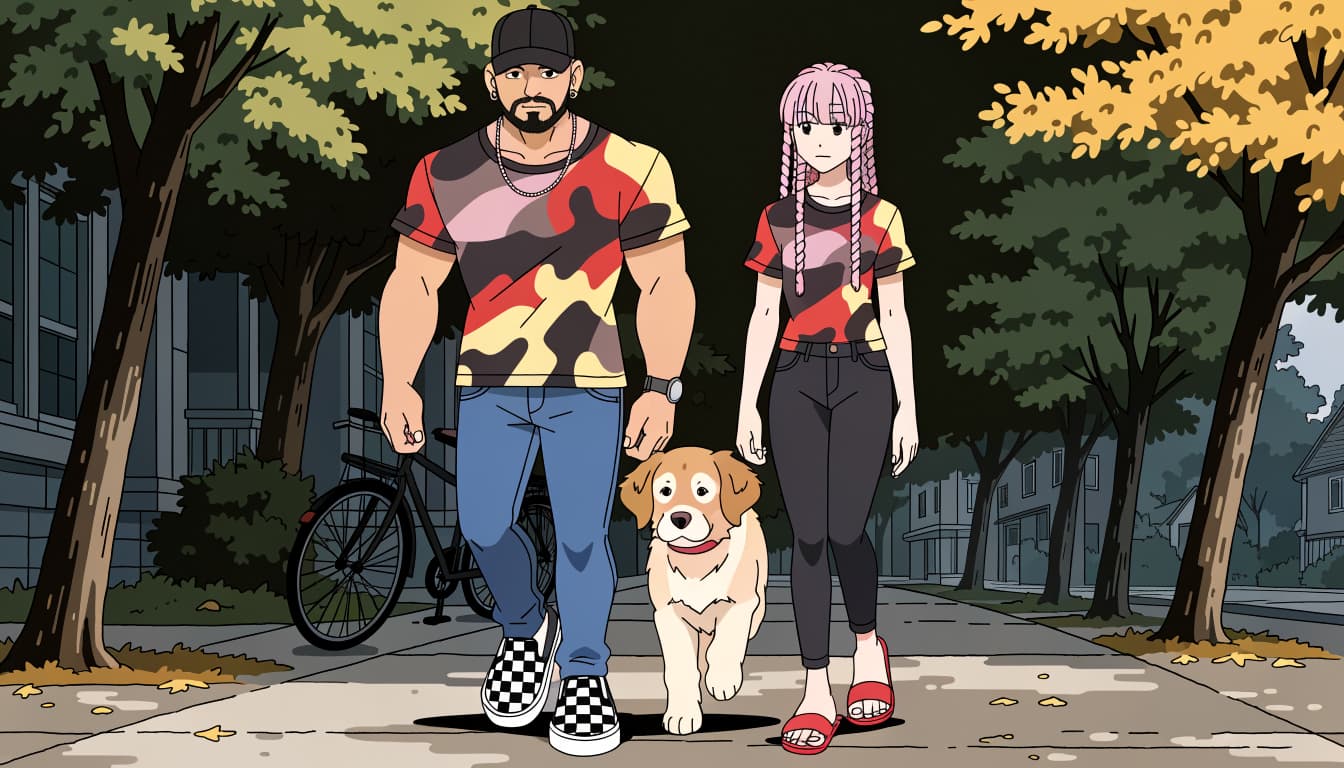
Pair our If They Could Use Internet We'd Be In Trouble Tee with relaxed cargos and supportive sneakers for a casual walk. If your dog's opinions arrive at full volume, the Scream At Void My Human Understands Tee fits the mood with dark jeans and a light jacket.
Choose footwear you can walk in comfortably, and keep your dog's leash and weather gear separate from your outfit choices. Your tee can handle the fandom signaling. Your puppy still needs equipment that fits and lets it move comfortably.
Frequently Asked Questions
Can a haircut change my Labradoodle's natural curl?
A haircut changes the length and appearance of the hair, so curls may look different afterward. It doesn't change the genes associated with coat texture. If you prefer a particular look, discuss it with a groomer who can assess your dog's actual coat.
Will my puppy's coat color stay the same?
Color can change as a dog matures, so the shade you see in puppy photos isn't a guaranteed adult color. Color and curl are separate characteristics. A cream puppy doesn't come with a built-in fleece-coat promise.
Should you cut out a tight mat at home?
Avoid cutting close to the skin, which can be pulled into a mat and injured by scissors. A qualified groomer or veterinarian can assess a tight mat and remove it more safely. Seek veterinary advice if the skin underneath appears irritated or painful.
Is an adult Labradoodle easier to assess for coat care?
An adult dog's established coat gives you more to observe than a young puppy's changing coat. Ask the rescue or caregiver about its grooming routine, shedding, and comfort with handling. Those details can help you plan for the dog in front of you.
Choose the Dog, Not the Coat Promise
Your puppy's visible texture, parent coats, genetic reports, and changes over time each add context. Together, they can help you form an estimate, while leaving room for the dog's individual coat to develop.
Build a care routine around the coat your dog has, not the label you hoped for. Choose your puppy for the whole companion, including its behavior, needs, and place in your life. The hairstyle can be part of the fun.