

Hyde Vape Ingredients: What’s Inside, How to Check the Label, and What to Know
Key Takeaways
Hyde vape ingredients can vary by model, strength, region, and production run, so the package in your hand matters more than a generic online description.
- Nicotine strength and type should be checked before use.
- Propylene glycol, vegetable glycerin, flavorings, and cooling agents are common e-liquid components.
- Disposable and rechargeable designs may have different hardware and labeling.
- A label should show strength, manufacturer details, batch information, and relevant warnings.
- Nicotine exposure, aerosol irritation, and accidental ingestion remain serious safety concerns.
- What Hyde vape ingredients typically include
When you look into Hyde vape ingredients, you will usually find a short list of e-liquid components rather than a recipe that explains every flavor molecule. The exact wording can differ between packages and product versions. Treat broad online summaries as a starting point, then check the label on your specific device. For a general product overview, you can also review Hyde Disposables, while keeping in mind that product details and regulations can change.
Nicotine and its concentration
Nicotine is the active drug in many e-cigarette liquids, and the package may identify it as nicotine salt, freebase nicotine, or simply nicotine. The strength may appear as a percentage, milligrams per milliliter, or total milligrams in the device. You should read both the concentration and the stated volume, since a high-strength liquid in a small device still affects your total potential exposure.
A label that says “nicotine-free” should not be assumed to describe every product in a wider line. Check the individual package, especially when flavors or device sizes look similar.
Propylene glycol and vegetable glycerin
Propylene glycol, often shortened to PG, is a liquid carrier commonly used in e-liquids. Vegetable glycerin, or VG, is another carrier and tends to be thicker. Both can be listed alongside nicotine and flavorings, though the package may not always provide their exact ratio.
PG and VG influence how an aerosol feels and how much visible vapor a device produces. Neither term tells you the complete chemical profile of the finished aerosol, because heating and device conditions also matter.
Flavorings and cooling agents
Flavorings give an e-liquid its fruit, dessert, tobacco, mint, or other sensory character. Cooling agents may create a cold or fresh sensation without being the same thing as menthol. A flavor name on the front of a package is not the same as a complete ingredient disclosure, so avoid treating the name as a full list.
If you are sensitive to particular flavor compounds, ask the manufacturer for current information rather than guessing from the flavor title. The same caution applies to products whose packaging uses colorful, cyber-inspired artwork, such as the Vaporwave E-Girl Glitch Self Love Shirt: visual style can tell you about a design, but not about an inhaled formulation.
Device hardware and e-liquid components
A vape includes more than liquid. The hardware may contain a battery, heating element, reservoir, mouthpiece, airflow path, and outer casing. Those parts generally will not appear in the ingredient list, but they affect how the liquid is heated and delivered.
The phrase “disposable” describes a device format, not a guarantee that every model has identical ingredients or performance. Read the package for the specific model and strength instead of assuming that a familiar shape means a familiar formulation.
How Hyde products can differ by model
Different Hyde models may use different battery capacities, liquid volumes, heating systems, or charging arrangements. Some are designed to be used until the liquid or battery is depleted, while others include a rechargeable battery. That difference changes how you handle the device, but it does not remove the need to inspect the liquid information.
Model names can also be reused across markets or updated over time. A careful comparison of the package, product page, and physical device helps you avoid treating an older description as current.
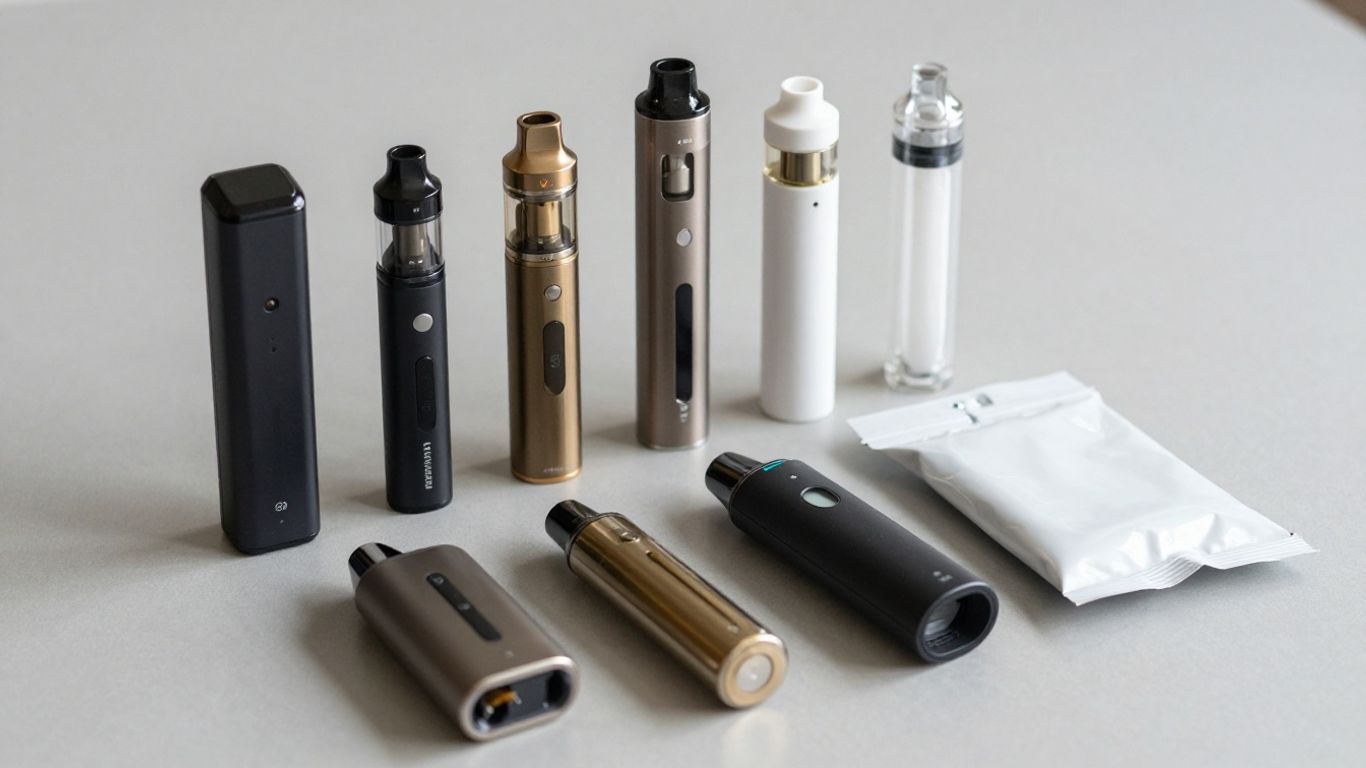
Disposable versus rechargeable designs
A disposable design is generally prefilled and intended to be discarded after use, while a rechargeable design may let you recharge the battery during the device’s usable life. Rechargeability does not necessarily mean that the e-liquid can be refilled. Look for clear instructions rather than relying on the charging port alone.
The battery, coil, and liquid reservoir may also be integrated differently. Never open, puncture, or modify a sealed device to inspect what is inside.
Differences among product lines and versions
A product line can include multiple sizes, flavor ranges, nicotine strengths, and hardware formats. Even when two packages share a similar name, their stated liquid volume or nicotine concentration may differ. Compare the complete model name, not just the brand mark or flavor.
Online overviews can be useful for locating possibilities, but they are not a substitute for the package. If a listing and the device disagree, pause before using it and seek clarification.
Why ingredient lists may change over time
Manufacturers can revise formulations, packaging, nicotine sources, or flavor systems. Regulatory decisions, supplier changes, and market requirements may also lead to updated labels. An older review can therefore describe a version that is no longer sold.
Keep the package or photograph its details before discarding it. That record gives you a better reference if you later need to ask about a batch or report a reaction.
Regional labeling and formulation differences
Labels may use different units, warnings, languages, or disclosure conventions depending on where a product is sold. A product page intended for one country may not match the packaging required in another. You should treat the local package as the most relevant source for your purchase.
Regulatory status can also vary by jurisdiction. For a separate visual reference, the Why Is There An Apple? Cyber Anime Graphic Top illustrates how a product name and visual presentation can be distinctive; with vapes, however, the technical label carries the information you need.
How to read a Hyde ingredient label
Start with the side or back panel rather than the large flavor name on the front. Look for nicotine strength, liquid volume, ingredient wording, manufacturer details, warnings, and batch information. If the print is damaged, incomplete, or inconsistent with the device, do not fill in the gaps from memory.
A label can answer practical questions quickly when you know which numbers matter. It can also reveal when an online listing is describing a different version.
Identifying the nicotine type and strength
Look for terms such as nicotine salt, nicotine, or a stated nicotine-free claim. Strength may be written as a percentage or in milligrams per milliliter. Some packages also state total nicotine content, which is a different figure from concentration.
Do not compare two products by percentage alone if their liquid volumes differ. A stronger concentration and a larger reservoir can both increase the total amount of nicotine present.
Understanding nicotine percentage and milligrams
A percentage describes concentration, while milligrams per milliliter gives the amount of nicotine in a specific volume. For example, a label that states 5% may also use a milligrams-per-milliliter equivalent, but you should follow the units printed on the actual package. Total content depends on both concentration and liquid volume.
The following comparison shows why the fields should be read together rather than in isolation:
|
Label detail |
What it tells you |
What it does not tell you |
|---|---|---|
|
Nicotine percentage |
The stated concentration |
Your personal absorbed dose |
|
Milligrams per milliliter |
Nicotine amount in each milliliter |
How quickly you will use the device |
|
Liquid volume |
Approximate amount of e-liquid present |
How much aerosol you will inhale |
|
Total nicotine content |
Stated nicotine across the liquid |
How much your body will absorb |
Those distinctions make the label easier to interpret without turning the numbers into a promise about how the product will feel. Your intake can vary with puff duration, frequency, device condition, and individual physiology.
Checking for flavoring and allergen information
Flavor names are useful identifiers, but they may not list each compound used to create the taste or cooling sensation. If you have asthma, allergies, or a history of irritation from inhaled products, ask for more specific information before use. A manufacturer may be able to clarify ingredients that do not fit neatly on a small package.
You should also avoid assuming that a familiar food flavor is harmless to inhale. Safety in food and safety in heated aerosols are separate questions.
Recognizing batch, manufacturer, and packaging details
A batch or lot code can help connect a device to a production run. Record the manufacturer name, contact information, model, strength, liquid volume, and purchase location. Look for legible printing, consistent spelling, intact packaging, and warnings that have not been covered or altered.
A quick record is especially useful if you experience a problem. It gives a retailer, manufacturer, or clinician more specific information than a photograph of the front of the package alone.
What the main ingredients do
The ingredients in an e-liquid do not act independently. Nicotine affects the body, PG and VG influence the aerosol, and flavor compounds may change when heated. The device’s coil temperature, power, airflow, and condition also shape what reaches your mouth and lungs.
That is why a short ingredient list should not be read as a complete prediction of exposure. It tells you what the package discloses, not every substance that may be present after heating.
How nicotine affects the body
Nicotine can increase alertness and heart rate, and it can produce dependence. Some people experience headache, nausea, dizziness, or a racing heartbeat when they receive more nicotine than they tolerate. Repeated use can lead to cravings and withdrawal symptoms when use stops.
Your age, health, tolerance, and prior nicotine exposure all affect how you respond. If symptoms are severe or persistent, stop using the product and seek medical advice.
The role of propylene glycol in vapor and flavor
PG is commonly used as a carrier for nicotine and flavorings. It is thinner than VG and can contribute to a more noticeable throat sensation. Some people report dryness or irritation when exposed to PG-containing aerosols, although reactions vary.
A stronger throat sensation does not prove that a product contains more nicotine. You still need to use the printed strength and volume to understand the formulation.
The role of vegetable glycerin in vapor production
VG is a thicker liquid that commonly contributes to visible aerosol production. Higher-VG formulas may feel smoother to some users, but smoothness is not a measure of safety or nicotine content. The device must also be designed to handle the liquid’s thickness.
If a device tastes burnt, becomes unusually hot, or behaves differently from normal, stop using it. A change in flavor can indicate a hardware or liquid-delivery problem rather than a simple preference issue.
How flavor compounds behave when heated
Flavor compounds are formulated for a sensory result, but heating can alter chemicals and create additional substances in the aerosol. The outcome depends on temperature, coil condition, liquid composition, and puffing behavior. A flavor that is safe to eat is not automatically safe to inhale after heating.
A practical rule is to treat flavor as one part of the formulation, not as evidence that the aerosol is benign. When the label does not answer a question, seek current information instead of relying on the flavor description.
Safety considerations for Hyde vape ingredients
Nicotine products require care even when the device is small, sealed, and easy to use. Aerosol exposure can involve nicotine, carriers, flavor compounds, and substances formed during heating. You should also consider people nearby, particularly children, pregnant individuals, and anyone with respiratory sensitivity.
Safety starts with recognizing uncertainty. If the package is missing, counterfeit, leaking, or damaged, the sensible choice is not to use it while trying to identify the contents.
Nicotine exposure and dependence risks
Nicotine can create or reinforce dependence, and frequent use may make cravings feel routine. Accidental exposure to e-liquid can be especially dangerous for children and pets. Skin contact should be washed promptly, and swallowed liquid requires urgent poison-control or medical guidance.
If you are trying to reduce or stop nicotine, a healthcare professional can help you choose an approach suited to your circumstances. Do not assume that changing flavors alone reduces dependence.
Potential irritation from inhaled aerosols
Some users experience dry mouth, throat irritation, coughing, headache, or chest discomfort. These effects can have several possible causes, including nicotine strength, flavor compounds, PG sensitivity, device overheating, or an unrelated health issue.
Stop using the device and seek medical advice if you have breathing difficulty, chest pain, severe vomiting, confusion, or symptoms that worsen. Do not continue testing a product that makes you feel unwell.
Why heating does not make vaping risk-free
Heating creates an aerosol; it does not turn the liquid into harmless water vapor. The composition of that aerosol can change with temperature and coil condition, and the long-term effects of inhaling many ingredients remain an active area of health research.
The absence of smoke from combustion does not eliminate nicotine dependence or inhalation concerns. Less visible smoke is not the same as no risk, so the product should be treated with appropriate caution.
Safe storage around children and pets
Keep devices and e-liquids in their original packaging, away from food, heat, direct sunlight, children, and animals. Do not leave a device loose in a bag where it can be crushed or activated. Store rechargeable models so that their charging equipment and battery contacts are protected.
If a device leaks, avoid touching the liquid with bare hands and follow local guidance for disposal. Never place a leaking or damaged battery in household trash without checking the disposal rules in your area.
How to verify product information before use
Verification is worthwhile when a package is unfamiliar, unusually cheap, poorly printed, or inconsistent with the product description. Compare several details at once: model, flavor, nicotine strength, liquid volume, warnings, packaging, and batch code. One matching logo is not enough to establish authenticity.
You may also find useful background in a graphic tee quality guide, not because apparel and vape hardware share safety standards, but because the general habit of checking construction details rather than judging appearance alone is a useful one. With a vape, apply that habit to technical labeling and physical condition.
Comparing the package with official product details
Use the manufacturer’s current product information where available, then compare it with the package you received. Check spelling, model names, stated strength, liquid volume, charging instructions, and warnings. Save a screenshot or photograph if the online page later changes.
If the official information does not mention the exact version you have, treat that gap as a reason to ask questions rather than as confirmation that the product is genuine.
Checking seals, codes, and signs of counterfeiting
Inspect seals, scratch-off or verification codes, print quality, and packaging alignment. A code that fails repeatedly, redirects to an unrelated page, or appears on several unrelated products deserves caution. Counterfeit packaging can imitate logos while providing inaccurate or incomplete ingredient information.
Do not rely on a verification page alone. The code, package, device, seller, and product details should make sense together.
Reviewing current regulatory information
Rules for nicotine products can change, and they may differ by country, state, or local authority. A product appearing in a search result does not prove that it is authorized for sale where you live. Review current information from relevant regulators and be cautious with older articles.
Regulatory status is separate from ingredient safety. Even if a product is legally sold in a location, you still need to consider nicotine exposure, labeling quality, and your own health.
When to contact the manufacturer or a health professional
Contact the manufacturer when you need clarification about a batch, ingredient, strength, authenticity code, or changed packaging. Contact a healthcare professional when you have symptoms, concerns about dependence, a known sensitivity, or questions about nicotine use during pregnancy or a medical condition.
Keep the device, package, receipt, and photographs if you need to report a problem. Clear records make it easier for others to identify what you used and when.
Conclusion
Understanding Hyde vape ingredients means reading the specific package, separating concentration from total content, and treating flavor and device design as only part of the picture. If the label is incomplete or the product seems altered, pause before use and seek current information from the manufacturer, regulator, or a qualified health professional.
Frequently Asked Questions
What ingredients are commonly found in vape liquid?
Common disclosures include nicotine, propylene glycol, vegetable glycerin, and flavorings. Some products may also identify cooling agents or other formulation details.
Does a flavor name reveal every ingredient?
No. A flavor name identifies the intended taste, but it usually does not provide a complete list of every flavor compound used.
Is nicotine percentage the same as total nicotine?
No. Percentage describes concentration, while total nicotine depends on concentration and the amount of liquid in the device.
Can a rechargeable vape be refilled?
Not necessarily. Rechargeable usually describes the battery, while refillability depends on the device’s design and instructions.
Why can a vape cause throat irritation?
Possible causes include nicotine strength, propylene glycol, flavor compounds, overheating, a damaged coil, or individual sensitivity. Persistent or severe symptoms warrant medical advice.
How should you store a nicotine vape?
Keep it sealed and away from children, pets, heat, and direct sunlight. Do not store leaking or damaged devices where they can be touched or activated accidentally.
What should you do if the label seems suspicious?
Do not use the product until you can verify its identity and contents. Contact the manufacturer or seller, and consider reporting suspected counterfeit or unsafe products to the relevant authority.