

Hydroponic pH Tester: Choose, Calibrate, and Use It
When your nutrient solution's pH drifts out of range, your plants can struggle to use nutrients you've already supplied. A reliable hydroponic pH tester helps you check the solution and make measured adjustments, instead of treating every unhappy leaf like a fertilizer emergency.
Your setup doesn't need laboratory cosplay, but it does need readings you can trust and a probe you can maintain. Handheld pens, combination meters, and continuous monitors offer different levels of convenience, calibration, and upkeep.
Start with your crop's needs, then build a testing routine that keeps reservoir management predictable rather than chaotic.
Key Takeaways
- Use pH to check acidity or alkalinity, and EC to track nutrient concentration; you need separate readings.
- Treat pH 5.5 to 6.5 as a common starting range, then check guidance for your crop.
- Choose a meter with clear calibration instructions, durable construction, and a replaceable probe when possible.
- Calibrate with fresh buffers, wait for stable readings, and store glass probes in the recommended solution.
- Retest unexpected results before adding small amounts of pH adjuster.
How a Hydroponic pH Tester Helps Your Nutrient Solution
Your tester measures how acidic or alkaline the nutrient solution is. That reading helps you judge whether conditions support nutrient availability at the roots.
You can supply fertilizer and still have an availability problem when pH moves outside your crop's preferred range. Adding more fertilizer without checking the solution can create another problem.
Know the Useful pH Range for Your Plants
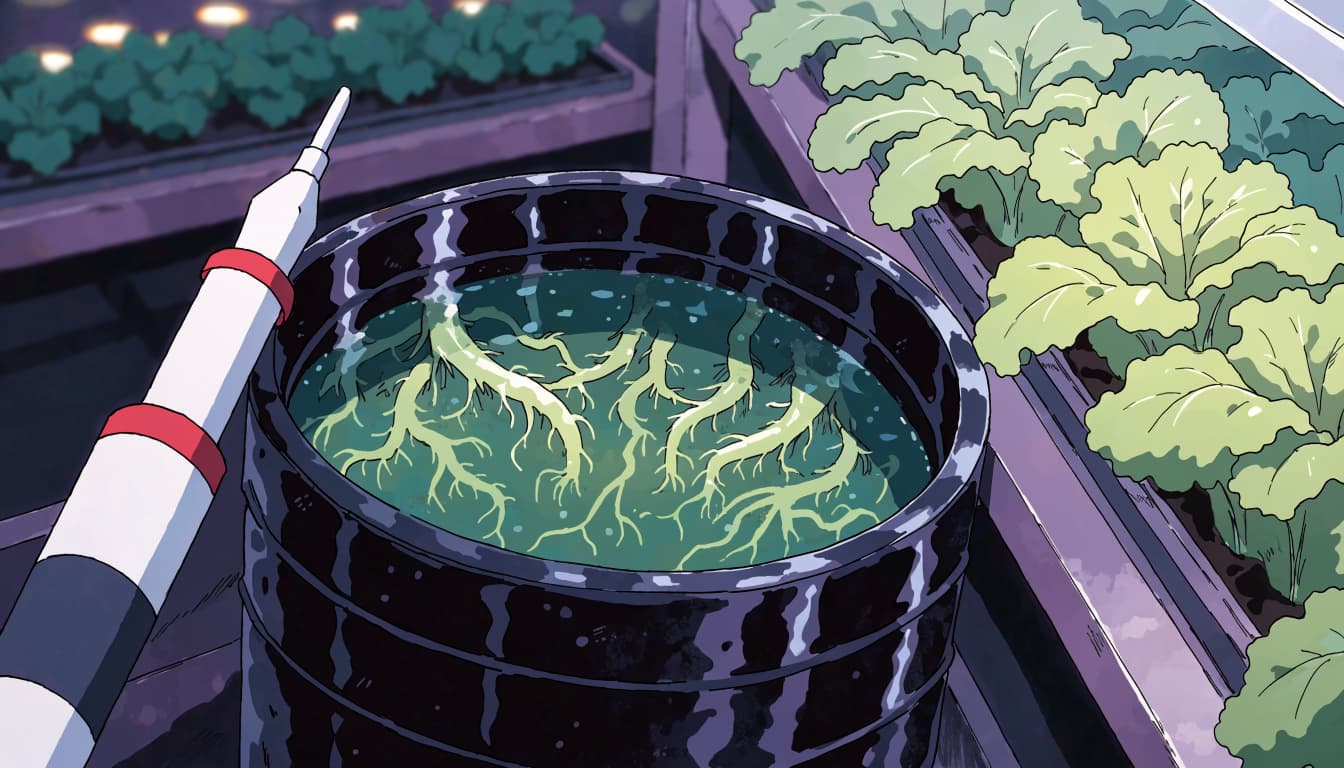
For many hydroponic crops, pH 5.5 to 6.5 is a common starting range. Missouri Extension gives that range as a general rule, with exceptions.
Oklahoma State University Extension offers narrower guidance in some publications, including nutrient-solution pH near 5.5. Its crop tables also distinguish basil, cucumber, tomato, and other crops.
Check guidance for what you're growing and how you're growing it. Your reservoir reading also doesn't describe every condition immediately around the roots, especially when growing media affect that environment.
Read pH and EC as Separate Stats
Electrical conductivity, or EC, indicates dissolved ionic content and helps you assess nutrient-solution concentration. It doesn't tell you whether the solution's acidity is suitable.
Likewise, a perfect-looking pH reading doesn't confirm that you've supplied the right nutrient concentration or balance. Your plants have multiple stats. Checking one doesn't reveal the entire character sheet.
Record both measurements when possible. Together, they give you more useful information than either number alone.
Choose a pH Meter That Fits Your Grow Setup
Buy for your routine, not the most dramatic product photo. A tester that you can calibrate and maintain beats one that spends its life abandoned beside the reservoir.
Match the Device to Your Reservoir Routine
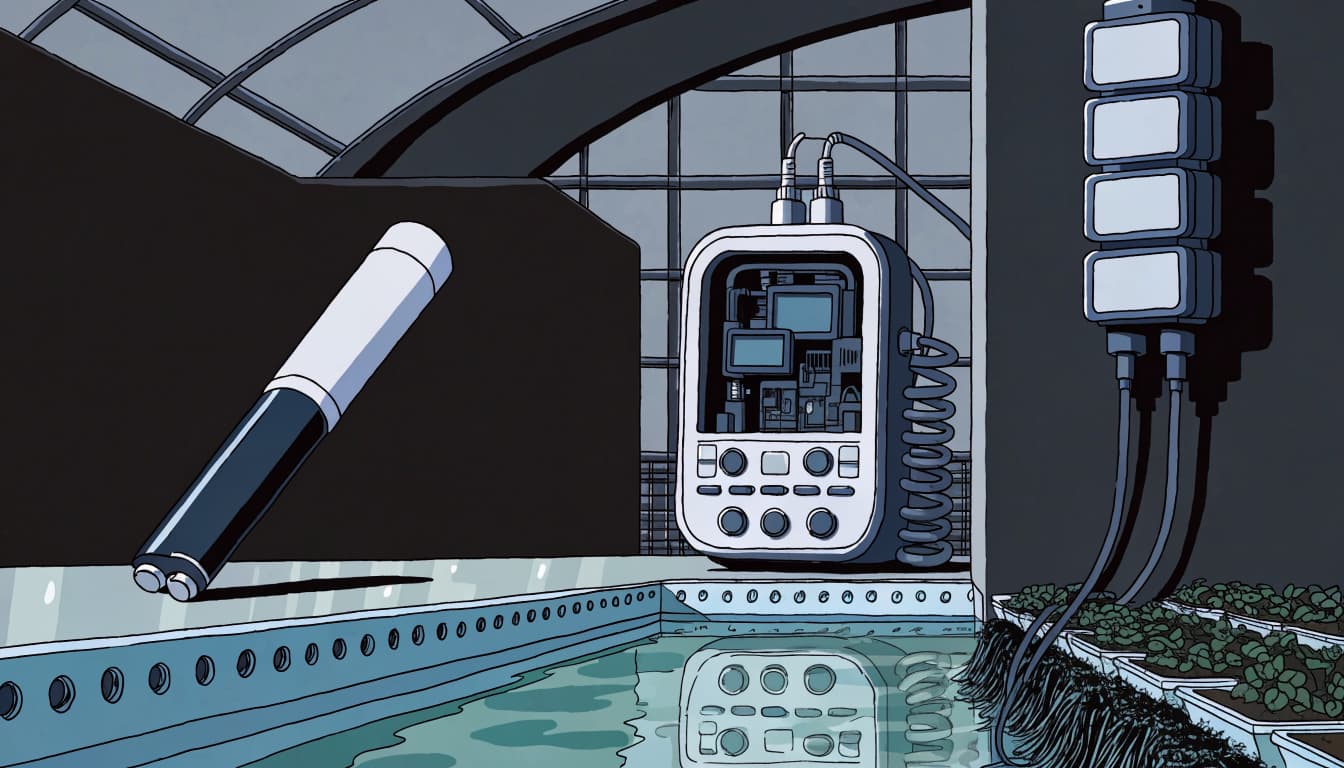
A digital handheld pen suits small setups and occasional samples. It's portable and straightforward, but you still need to rinse, calibrate, and store its probe correctly.
A combination pH and EC meter puts both measurements in one instrument. Some also measure temperature. That convenience can cost more, and each sensor still needs the care specified by its manufacturer.
Continuous monitors keep readings visible throughout the day. Controllers can also operate dosing equipment, but automation adds expense and maintenance. You still need calibration checks and safe dosing settings.
Think about reservoir access, how often you'll test, and whether you'll move between several tanks. Continuous monitoring makes less sense if a quick daily sample already fits your setup.
Check Calibration, Probe Replacement, and Real-World Accuracy
Missouri Extension's hydroponic nutrient solution guidance recommends waterproof, shockproof meters with replaceable probes. Look for understandable calibration steps and explicit storage instructions, too.
Check replacement-probe availability before buying. A low purchase price becomes less appealing if a worn sensor means replacing the entire instrument.
Extra decimal places don't prove extra accuracy. Hanna Instruments specifies ±0.1 pH accuracy for its HI98107, for example; that specification doesn't apply automatically to other models.
Compare published accuracy, calibration support, and ongoing supplies. Your budget needs room for buffers and storage solution, not just the meter.
Calibrate, Test, and Store Your Meter the Right Way
Repeatable readings depend on a repeatable routine. Follow your meter's instructions for calibration order, immersion depth, cleaning, and storage.
Calibrate With Fresh pH Buffer Solutions
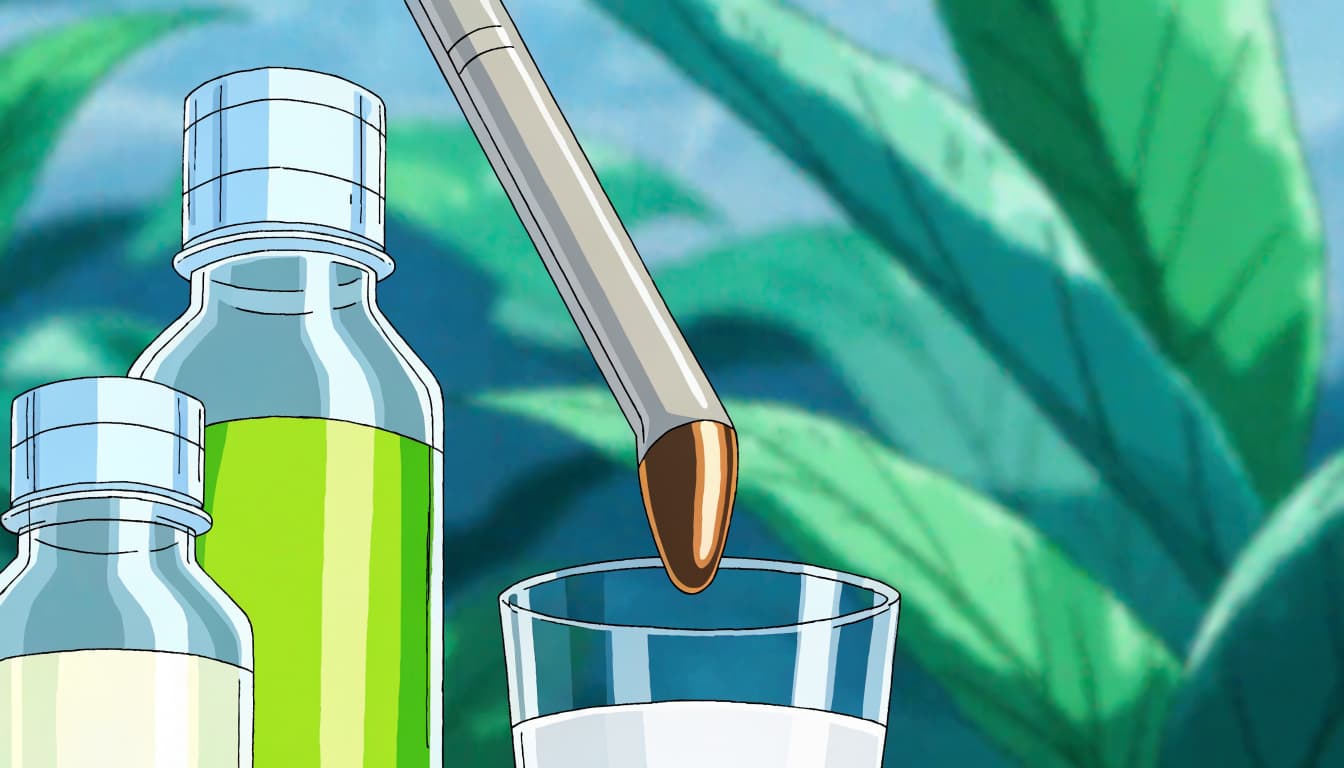
For the usual hydroponic working range, pH 7 and pH 4 buffers are common choices for two-point calibration. Use the values your meter supports.
Missouri Extension recommends weekly calibration at those two points. Your manufacturer's schedule may differ with use, so follow its directions and check sooner if readings drift.
Pour fresh buffer into clean containers. Rinse the probe between solutions, and never return used buffer to its bottle. Contaminated calibration liquid can make a faulty reading look official.
Keep buffer bottles closed and check their expiration dates. Don't expect neglected supplies to restore confidence in a questionable meter.
For a visual walkthrough, Everest Fernandez demonstrates two-point calibration:
Take a Steady Reading and Protect the Glass Probe
Mix the nutrient solution thoroughly before sampling. Rinse the probe, place it in the solution at the specified depth, and wait for the reading to stabilize.
That wait may take a couple of minutes. Don't record the first number that flashes onto the screen. Write down the stable result, along with the time and any recent additions.
Rinse after testing. For a conventional glass probe, use suitable probe-storage solution, or pH 4 buffer if the manufacturer permits it. Never store it in plain water.
Rinsing and storage are different jobs. Plain water can be appropriate for a brief rinse under manufacturer guidance, but it isn't a substitute for storage solution. Avoid scratching the bulb or rubbing it with a cloth.
Adjust pH Carefully and Avoid Common Testing Mistakes
An unexpected reading is your cue to verify, not panic-dose. Check calibration, inspect the probe, mix the reservoir, and test again before changing the solution.

Once you've confirmed that pH is outside your crop's target, use an appropriate hydroponic pH-up or pH-down product. Follow its label, including handling precautions.
Add small amounts and mix thoroughly. General Hydroponics advises gradual additions and retesting; its guidance gives a 15- to 30-minute wait after adjustment. Follow the directions for the product and system you're using.
There's no universal dosing recipe. Reservoir volume, water chemistry, nutrient concentration, and product strength all affect how much adjustment you'll need.
A tiny correction in one reservoir can overshoot another. Copying someone else's dose is a poor substitute for testing your own solution.
Don't mix concentrated pH-up and pH-down products together. Use the protective equipment stated on the label, and keep adjustment products away from children and pets.
Check after nutrient additions or water top-ups, once everything has mixed. Those changes can affect your readings, so yesterday's result doesn't clear today's reservoir.
Keep pH and EC in separate columns in your log. A pH adjuster isn't a replacement for correcting nutrient concentration.
Also, resist chasing every small fluctuation within your crop's acceptable range. You're managing workable growing conditions, not trying to win a screenshot contest with a permanently frozen number.
Streetwear & Casual Styling
Your plant-care routine can stay practical while your outfit carries the cyber aesthetic. Build your casual look around a Cyber-Brutalist Anime Graphic Tee, then let the artwork do the talking.

Pair it with relaxed cargos for an easy streetwear silhouette, or dark-wash denim for a cleaner everyday fit. An open overshirt adds a layer without competing with bold anime artwork.
Keep sleeves and loose layers clear of equipment. Follow chemical-handling precautions regardless of what you're wearing.
Your tee can announce your fandom. Your calibration log should handle the reservoir. Clothing doesn't affect plant care, and your lettuce remains impressively indifferent to your outfit.
Frequently Asked Questions
Can You Use pH Test Strips Instead of a Digital Meter?
You can use suitable-range strips for a rough check, but matching colors is less precise than reading a maintained meter. Colored nutrient solutions can also complicate interpretation. If you need repeatable measurements for small adjustments, a calibrated digital meter is usually more practical.
Will a Soil pH Tester Work in a Hydroponic Reservoir?
Don't assume a soil tester is suitable for nutrient solution. Many inexpensive soil probes are designed for insertion into growing media rather than accurate liquid measurement. Check that the manufacturer supports testing aqueous solutions before using one in your reservoir.
Why Does Your Tap Water Resist pH Adjustment?
Your water's alkalinity can buffer against pH changes, even when its starting pH doesn't look unusual. Bicarbonates are a common contributor. If you repeatedly need large corrections, a water-quality test can help you understand the source water instead of endlessly guessing.
Does Automatic Temperature Compensation Solve Every Temperature Issue?
Automatic temperature compensation accounts for temperature's effect on the electrode response. It doesn't make the solution's chemistry independent of temperature. Let the probe and sample reach comparable temperatures, and follow the meter's instructions before recording results.
Can Correct pH Fix Every Yellow Leaf?
A suitable pH supports nutrient availability, but yellowing can also involve nutrient balance, root health, lighting, or other growing conditions. Check EC, inspect roots, and compare symptoms with crop-specific guidance. Don't keep adding acid or fertilizer because one leaf looks offended.
Keep Your Checks Consistent
Choose a hydroponic pH tester you can maintain, then give calibration and storage the same attention as the reading itself. A stable number means more when you know the probe is working properly.
Use a crop-appropriate target, verify unusual results, and make measured adjustments after thorough mixing. Keep your checks consistent enough to notice changes before you start guessing.
Your meter won't guarantee healthy plants. It gives you one dependable measurement in a routine that also includes nutrient strength, root conditions, and the needs of what you're growing.