

Indian Wedding Outfits for Men: Classy White Looks for Every Celebration
Key Takeaways
A classy white outfit can feel ceremonial, modern, and distinctly yours when the fabric, fit, and accessories work together.
- Choose ivory, cream, or white according to the ceremony, venue, and dress code.
- Use texture, embroidery, and refined accessories to keep white outfits festive.
- Match lightweight fabrics to daytime events and richer fabrics to evening celebrations.
- Add color through stoles, safas, footwear, or jewelry rather than overwhelming the outfit.
- Check transparency, tailoring, cleanliness, and cultural expectations before you leave.
Why classy white works for Indian weddings
White and ivory give you a calm foundation for an occasion that may already be full of color, music, and movement. The look can be traditional or contemporary depending on the silhouette, fabric, and finishing details you choose. For Indian wedding outfits for men classy white is less about wearing something plain and more about creating balance. A carefully styled white outfit can look polished without competing with the couple or the ceremony.
The symbolism and versatility of white attire
White has long been associated with simplicity, freshness, and formality, although its meaning varies across families, regions, and traditions. Ivory and warm white can feel softer and more festive than a stark optic white, especially when paired with gold embroidery or natural fabrics. You can also shift the mood easily: a textured kurta feels relaxed, while a structured sherwani looks distinctly ceremonial.
The versatility comes from the color’s ability to support different details. Pearl buttons, tonal embroidery, a printed stole, or antique-gold footwear can each change the character of the same base garment. If you prefer a quieter look, let the fabric do the visual work instead of adding multiple decorative elements.
When white is appropriate for the ceremony
Before choosing your outfit, read the invitation and ask the couple or a close family member if you are uncertain. Some ceremonies may call for traditional dress, while others may have a specific color theme or request guests avoid particular shades. White, ivory, and cream are often adaptable, but the safest choice is always the one that respects the family’s stated preferences.
For a main ceremony, a sherwani, kurta set with a jacket, or formal bandhgala usually feels more suitable than a simple shirt and trousers. If you are attending a relaxed daytime function, a crisp kurta pajama can be enough, provided the tailoring and accessories make it feel intentional.
Balancing simplicity with festive detail
A white outfit needs contrast in texture or shape so it does not disappear in photographs. You might choose a matte kurta beneath a lightly patterned jacket, or pair a smooth sherwani with textured footwear. Texture keeps white interesting while allowing the overall look to remain clean.
Aim for one main decorative feature and a few supporting details. For example, subtle embroidery on the collar can work with a jeweled brooch and simple loafers, while a heavily embroidered jacket may need almost no additional ornament. The goal is a finished outfit, not a competition between every item you own.
Avoiding outfits that look too casual
A plain white T-shirt, distressed denim, or athletic sneakers usually reads as everyday clothing rather than wedding attire. Even if you want a relaxed look, upgrade the silhouette with a well-pressed kurta, tailored trousers, leather sandals, or a structured Nehru jacket. The distinction is mostly in proportion, fabric, and finishing.
TrendReactTees.STORE focuses on graphic apparel, including white graphic tees with bold designs and identity-driven styling. That kind of piece can be fun for ordinary casual wear, but it is generally not the right foundation for a formal Indian wedding unless the invitation specifically invites contemporary streetwear.
Choose the right white Indian wedding outfit
Your outfit should reflect both your role and the energy of the event. A groom, close family member, and guest may all wear white, but the appropriate level of ornament and formality will differ. Think about movement, photographs, weather, and how long you will be wearing the clothes. The broader range of Indian wedding dresses can help you compare silhouettes such as sherwanis, bandhgalas, kurta pajama sets, and layered looks before you commit.
White sherwanis for formal ceremonies
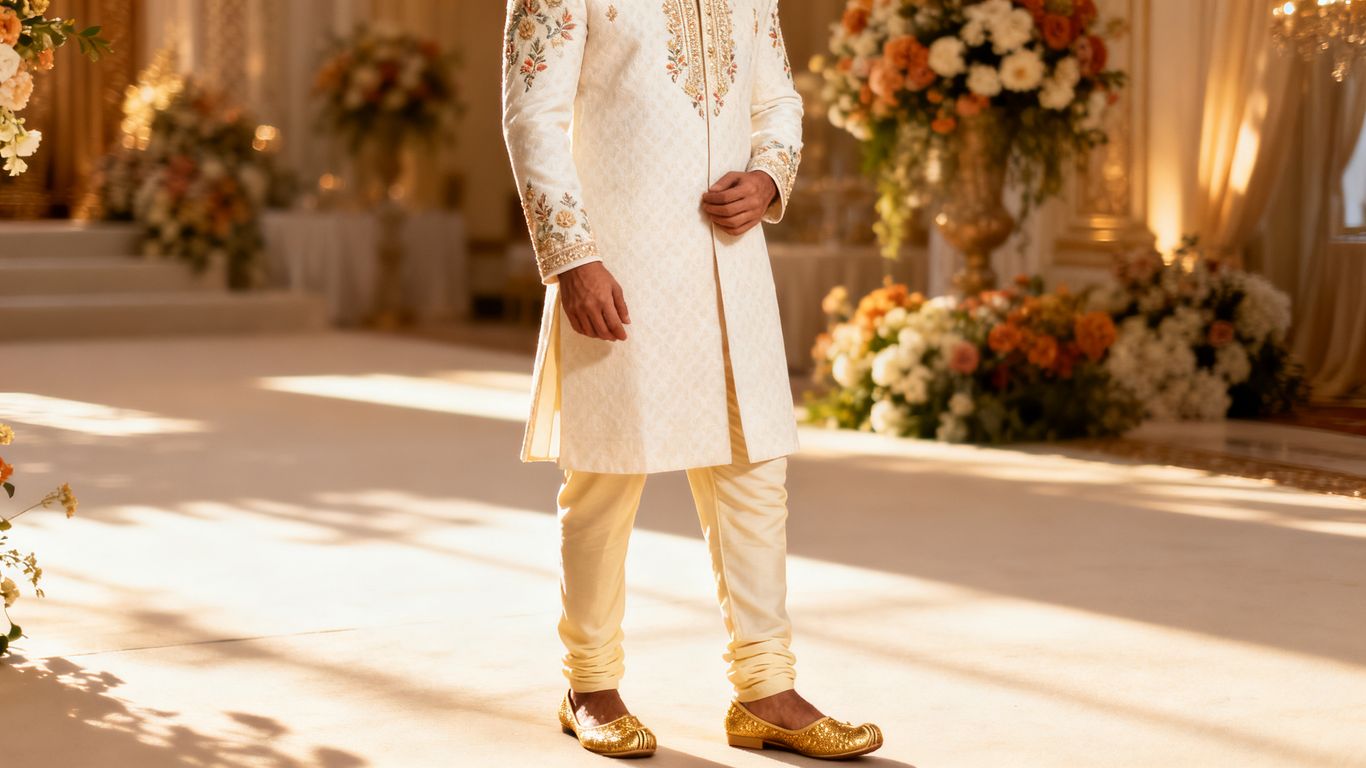
A white or ivory sherwani is a strong choice when you need a traditional, formal silhouette. Look for a length and shoulder fit that allow you to sit, walk, and greet people comfortably. Tonal embroidery, antique-gold thread, or a narrow border can add richness without turning the garment into a costume.
If you are a guest, keep the decoration more restrained than the groom’s outfit unless the family has requested otherwise. Cream churidar trousers, embroidered juttis, and a single brooch can complete the look without making it excessively grand.
Ivory kurta pajama sets for timeless style
An ivory kurta pajama set offers a softer, more approachable version of the white wedding look. It works particularly well for daytime ceremonies, intimate gatherings, and events where you expect to move between indoor and outdoor spaces. Choose a kurta with a clean placket, a comfortable sleeve, and enough length to maintain its shape while seated.
You can make the set more festive with a silk stole, a printed Nehru jacket, or polished mojari shoes. If the kurta is very simple, select fabric with a visible weave or a lightly raised pattern so the outfit does not look like sleepwear.
White bandhgala suits for a modern look
A white bandhgala gives you a sharper, more tailored direction while retaining an Indian formal sensibility. It is especially effective for receptions, cocktail-style celebrations, and evening events where a conventional suit might feel too Western. Keep the jacket fitted through the shoulders but leave enough room to button it without pulling.
You can wear it with matching trousers for a streamlined appearance or introduce a darker trouser when the dress code allows contrast. A high collar, covered buttons, and subtle texture usually provide enough visual interest, so elaborate accessories are rarely necessary.
Nehru jackets for polished layering
A Nehru jacket is useful when you want the comfort of a kurta but need a more finished outfit. Over a white kurta, try ivory-on-ivory for a refined monochrome effect, or choose muted sage, blush, powder blue, or champagne for gentle contrast. The jacket should sit cleanly at the shoulder and close without buckling.
For a guest look, a patterned jacket can be the focal point while the base layers remain simple. This also gives you flexibility: remove the jacket during a warm outdoor event and still look appropriately dressed underneath.
Build a complete outfit with the right fabrics
Fabric determines how white looks in natural light, how it photographs, and how comfortable you remain through several hours of celebration. Lightweight materials can feel elegant rather than informal when the cut is good. Heavier fabrics can look luxurious, but they may become uncomfortable at a crowded outdoor event. Choose the material alongside the venue and time of day, not as an isolated style decision.
Cotton and linen for daytime weddings
Cotton and linen are practical for daytime celebrations, especially in warm or humid weather. Their natural texture gives a white kurta visual depth, while their breathability helps you stay comfortable through arrivals, photographs, and long meals. A linen blend may wrinkle less than pure linen while preserving a relaxed finish.
Choose pieces that are pressed but not unnaturally stiff. Slight texture looks intentional; deep creases across the chest or sleeves do not. Lined or partially lined garments can also help the fabric hang more neatly without making the outfit too warm.
Silk and brocade for evening celebrations
Silk catches evening light beautifully and gives a white outfit a more formal presence. Brocade, jacquard, and woven patterns can add depth without requiring bright color, making them useful for receptions and late-night ceremonies. If the fabric has a strong sheen, keep the rest of the outfit relatively quiet.
A silk kurta with a matte jacket, or a brocade sherwani with understated footwear, creates a controlled contrast. Avoid combining a shiny garment with highly reflective shoes, a glittering stole, and multiple jeweled accessories unless the dress code clearly calls for maximal dressing.
Chikankari and embroidery for subtle texture
Chikankari and tonal embroidery can make white feel intricate while preserving its softness. Look for patterns that are visible at close range but not so dense that the garment becomes heavy. Embroidery along the neckline, cuffs, front placket, or jacket edges is often enough to signal occasion dressing.
The placement matters as much as the amount. Vertical details can lengthen the appearance of the torso, while embroidery around the collar draws attention toward your face. Pair detailed work with clean trousers and simple shoes so the texture remains the star.
Blended fabrics for comfort and structure
Blended fabrics can offer a useful middle ground when you want structure without excessive weight. A cotton-silk or linen-viscose blend may drape more smoothly than a very casual natural fabric, while a wool blend can give a bandhgala a clean evening shape. Always check the garment’s care instructions before the event.
Use this quick guide when comparing options:
|
Event setting |
Useful fabric direction |
Styling effect |
|---|---|---|
|
Hot daytime ceremony |
Cotton, linen, or a breathable blend |
Relaxed texture and lighter feel |
|
Formal evening reception |
Silk, brocade, or jacquard |
Richer surface and more ceremony |
|
Long mixed-weather event |
Structured blended fabric |
Better shape with practical comfort |
|
Detailed traditional look |
Chikankari or tonal embroidery |
Subtle texture without loud color |
The table is a starting point rather than a strict rule. A lined linen jacket may work at night, and a lightweight silk kurta can suit a daytime celebration if the venue is cool. Let the actual weather and dress code have the final say.
Add color without losing the classy white look
White becomes more personal when you introduce color with restraint. Instead of replacing the entire outfit, use one supporting shade through a stole, safa, pocket square, or footwear. This approach lets you coordinate with the wedding palette while keeping the outfit visually calm. Warm ivory also pairs differently from cool white, so compare the tones in daylight before choosing accessories.
Coordinating with gold and silver accents
Gold accents warm up ivory and cream, while silver and platinum tones suit cooler whites. You can use the metal in buttons, cufflinks, a brooch, embroidery, or footwear detailing. Try to keep the finish consistent: antique gold feels more traditional, while polished gold feels more formal and modern.
A small amount of metallic detail often photographs better than a heavily reflective outfit. If your sherwani already includes gold thread, repeat that tone in one accessory rather than adding silver, rose gold, and bright brass at the same time.
Using pastel dupattas and stoles
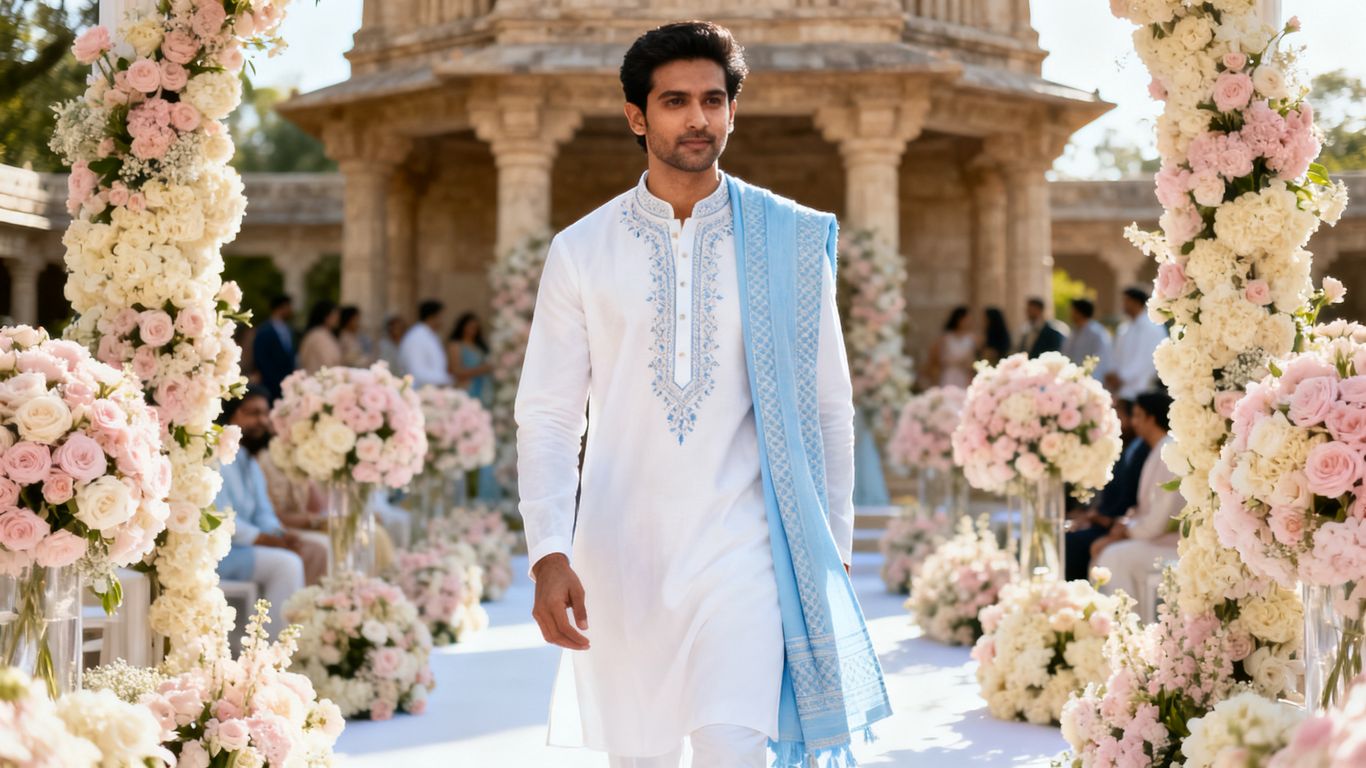
Pastel stoles are an easy way to add color while preserving the lightness of a white base. Powder blue, dusty rose, mint, peach, lavender, and pale sage all work well when the fabric has enough body to drape cleanly. A narrow border can connect the stole to your shoes or jacket without making the combination feel overly matched.
Drape it over one shoulder for a relaxed formal look, or secure it more carefully if you expect to dance or move through a busy venue. Keep the kurta and trousers simple when the stole has a print or decorative edge.
Choosing jewel-tone accessories
Jewel tones create stronger contrast and are useful for evening events. Deep emerald, sapphire, burgundy, plum, and ruby can appear through a safa, pocket square, loafers, or a single stone-set brooch. With a white outfit, one jewel tone usually has more impact than several competing colors.
If you wear a deep green stole, for example, you might repeat that shade in a small pocket square and leave the footwear neutral. This creates a visual connection without making every accessory look like part of a uniform.
Matching the wedding dress code and venue
Your color choices should support the setting rather than ignore it. A soft pastel may feel right at a garden mehndi, while a darker jewel tone can suit an indoor reception with evening lighting. The invitation, venue photographs, and conversations with the hosts can help you judge the expected level of formality.
When in doubt, ask a direct question instead of guessing. A short message about whether guests should wear traditional attire, avoid a particular color, or dress for a specific ritual can prevent an awkward mismatch.
Select accessories that elevate white outfits
Accessories give a white outfit its sense of occasion, but they should support the clothing rather than bury it. Start with one anchor item, such as a safa, embroidered shoe, or brooch, and build around it. You will usually look more polished with fewer well-chosen pieces than with every available detail. The right accessory also helps a simple kurta move naturally into wedding territory.
Juttis and mojaris for traditional appeal
Juttis and mojaris bring traditional character to sherwanis, kurtas, and Nehru jacket sets. Tan, camel, champagne, gold, and muted brown are versatile with ivory, while burgundy or deep green can add a controlled accent. Look for a shape that allows your toes to move comfortably, since wedding events often involve long periods of standing.
Embellished footwear works best when the clothing is relatively quiet. If your jacket already has dense embroidery, choose simpler shoes with a clean finish.
Safas and turbans for ceremonial events
A safa or turban can be appropriate for a baraat, wedding ceremony, or other event where ceremonial dress is expected. The color and tying style may carry family or regional significance, so do not assume that any style is acceptable. Ask the hosts if you are unsure, particularly if you are a guest rather than part of the wedding party.
A pastel safa softens an ivory sherwani, while saffron, rust, burgundy, or emerald creates more drama. Keep the rest of the accessories modest so the headwear remains balanced with the outfit.
Pocket squares, brooches, and cufflinks
Small details can make a bandhgala or jacket feel complete. A pocket square should complement the outfit without exactly copying the stole, and a brooch can sit near the lapel or chest without pulling the fabric. Cufflinks are most useful with a formal shirt or tailored jacket rather than a heavily traditional kurta.
For a simple white outfit, choose one or two of these accents. A silver brooch and white pocket square may be enough; adding a large necklace, ornate belt, stacked rings, and a jeweled watch could quickly disrupt the clean line.
Watches, sunglasses, and understated jewelry
A slim watch, discreet ring, or simple chain can add personality without changing the traditional character of the outfit. Sunglasses are practical at outdoor events, but remove them for greetings, rituals, photographs, and conversations with elders. Choose frames that suit your face and avoid wearing them as a permanent part of the ceremony look.
Before leaving, use this short accessory check:
- Choose one focal accessory and let the rest remain quiet.
- Match metal finishes where possible.
- Test shoes indoors so you know they will not cause discomfort.
- Carry sunglasses only when the venue and daylight call for them.
This keeps the styling deliberate and prevents small finishing pieces from becoming visual clutter. Your clothes should still be the first thing people notice.
Dress for the wedding event and setting
Indian weddings often unfold across several events, and the best outfit for one may feel wrong at another. Mehndi and haldi celebrations can be active and colorful, while a reception may invite richer fabrics and sharper tailoring. You do not need a completely different wardrobe for every function, but you should adjust the level of structure, ornament, and practicality. Think of each event as a different version of the same personal style.
White outfits for the mehndi and haldi
For mehndi and haldi events, choose washable or easy-care pieces and avoid anything so precious that you will be afraid to move. A cotton kurta, relaxed ivory set, or light jacket can work well, especially when paired with comfortable footwear. Ask whether guests are expected to participate in color-based rituals before wearing a spotless, delicate white garment.
You might also select cream rather than bright white, since it can feel softer in an outdoor setting and may be less stressful if the celebration becomes messy. Keep expensive jewelry and fragile accessories to a minimum.
Styling for the sangeet and reception
The sangeet and reception usually give you more room for polish and personality. A white bandhgala, silk kurta with a Nehru jacket, or embroidered sherwani can look appropriate under evening lights. Choose shoes that allow you to stand and dance comfortably, because a beautiful outfit loses its appeal when you spend the night avoiding movement.
A darker stole, jewel-tone pocket square, or metallic brooch can add the right amount of contrast. If the venue is glamorous, let the fabric or tailoring provide the sophistication rather than piling on sparkle.
Dressing appropriately for the wedding ceremony
The main ceremony calls for extra care with modesty, movement, and cultural expectations. Follow the invitation’s instructions about head coverings, footwear, and colors, and observe what the family is wearing before assuming that a particular style is suitable. A traditional kurta set, sherwani, or formal layered look is generally safer than an experimental fashion piece.
If you are not sure what to wear, ask someone close to the couple. A respectful question is better than treating a meaningful ritual as a styling opportunity. This is also where a restrained white-and-ivory palette can be especially effective.
Adapting the look for indoor and outdoor venues
Outdoor venues call for breathable fabrics, secure footwear, and accessories that can handle wind and sun. Indoor halls may allow heavier silk, brocade, or layered jackets, though you should still consider how warm the space will become once it fills with guests. Check the forecast and plan an extra layer or garment bag when needed.
TrendReactTees.STORE publishes graphic apparel for casual, identity-led dressing, but its white tee styling ideas belong to everyday outfits rather than ceremony attire. For a wedding, keep the same principle of expressing personality, then translate it into a kurta, jacket, stole, or accessory that fits the event.
Common mistakes to avoid with white wedding outfits
White can look exceptionally polished, but it also reveals problems that darker clothing may disguise. Wrinkles, poor fit, transparency, stains, and mismatched shades become more visible in photographs. A little preparation prevents most of these issues. Try the entire outfit together before the event, including shoes and accessories, rather than evaluating each item separately.
Preventing transparent or poorly fitted clothing
Check white and ivory garments in natural light before buying or wearing them. Sit, bend, and raise your arms to see whether the fabric becomes transparent or pulls across the body. Skin-toned undershirts and properly fitted base layers can help, but they should not create visible lines beneath a formal garment.
Tailoring is worth considering if the shoulders, sleeves, or trouser break feel wrong. A clean fit does not mean tight clothing; it means the garment follows your shape while leaving enough room for movement.
Avoiding excessive embroidery and accessories
White already creates a strong visual statement, so excessive decoration can make the outfit look busy. If your sherwani has elaborate work, keep the stole, shoes, jewelry, and brooch controlled. If the base is plain, you can let one accessory or textured layer provide the festive detail.
The same principle applies to casual graphic clothing. TrendReactTees.STORE builds its catalog around bold, high-contrast designs and niche visual themes, which can be effective for personality-led casual wear but are usually too visually assertive for a traditional wedding ceremony. Context matters more than novelty.
Keeping the outfit clean throughout the event
Carry a small stain-removal pen, use a garment bag during travel, and avoid sitting on dusty steps or damp grass when possible. Eat carefully around long sleeves and draped stoles, and check the hem after outdoor photographs. If you are traveling, steam the outfit at the destination rather than packing it tightly until the last minute.
Do not scrub a delicate embroidered fabric aggressively. Blot spills, follow the care label, and ask the venue staff for help if something serious happens. A little patience protects the garment better than a rushed repair.
Respecting cultural expectations as a guest
The safest approach is to treat the invitation and the family’s guidance as more authoritative than general fashion advice. Customs differ by region, religion, family, and event, so avoid assuming that one wedding’s rules apply to every celebration. Dress modestly where appropriate, follow instructions about shoes or headwear, and do not imitate ceremonial roles without being invited.
You can still express your personality through fit, fabric, color accents, and tasteful accessories. Respect does not require you to dress without character; it asks you to make sure your character does not overpower the meaning of the occasion.
Conclusion
A classy white wedding outfit works when every decision feels connected: the silhouette suits the event, the fabric suits the weather, and the accessories add celebration without clutter. Start with the invitation and setting, then build your look through ivory or white layers, considered texture, and one memorable accent. With that approach, you can feel comfortable, respectful, and genuinely well-dressed from the first ceremony to the final photograph.
Frequently Asked Questions
Is white appropriate for an Indian wedding guest?
White can be appropriate for many Indian wedding events, but expectations vary by family, region, religion, and ceremony. Check the invitation and ask the hosts whether white, ivory, or a particular color should be avoided.
What is the best white outfit for a formal Indian wedding?
A white or ivory sherwani, a formal kurta with a Nehru jacket, or a tailored bandhgala can work well. Choose the option that matches your role, the ceremony’s formality, and the family’s dress expectations.
Can men wear ivory instead of bright white?
Yes, ivory, cream, and warm white are often elegant alternatives to stark white. They can look softer in photographs and pair easily with gold, tan, brown, pastel, and jewel-tone accessories.
Which fabrics work best for a daytime wedding?
Cotton, linen, breathable blends, and lightweight embroidered fabrics are useful for daytime events, particularly in warm weather. Choose a fabric with enough structure to remain polished and avoid excessive wrinkling.
How can you make a white kurta look festive?
Add texture through embroidery, a Nehru jacket, a silk stole, polished juttis, or a carefully chosen brooch. One or two strong details usually look more refined than many competing accessories.
What colors pair well with a white wedding outfit?
Pastels such as sage, blush, powder blue, peach, and lavender create a soft effect. Emerald, burgundy, sapphire, plum, and rust provide stronger evening contrast, while gold and silver offer classic metallic accents.
How do you keep a white outfit clean at a wedding?
Steam it before wearing, travel with it in a garment bag, avoid placing it on dirty surfaces, and carry a stain-removal pen. Blot spills rather than rubbing delicate fabric, and follow the garment’s care instructions after the event.