

Best LED Diodes for Growing: Choose the Right Fixture
The diode inside your grow light affects efficiency, spectrum, heat, and canopy coverage. It still doesn't determine the final result by itself. Your hunt for the best led diodes for growing should compare Samsung LM301H EVO, Samsung LM281B+, ams OSRAM OSLON, Seoul SunLike, Bridgelux, and Cree options without falling for chip-name hype.
A premium diode in a weak fixture is still a weak buy. Check wall-level PPE, PPFD maps, driver quality, cooling, dimming, repair options, warranty, and price before your money enters the grow room.
Key Takeaways
- Samsung LM301H EVO is a strong premium white-light option, but fixture-level measurements matter more than the diode label.
- ams OSRAM OSLON offers documented horticultural wavelengths for targeted spectrum builds.
- LM281B+, SunLike, Bridgelux, and Cree products require exact model and fixture verification.
- Compare wall-level PPE and PPFD uniformity, not component claims alone.
- Cooling, driver quality, dimming, warranty, and canopy size decide long-term value.
Best LED diodes for growing: the leading options compared
There is no universal winner. The best led diodes for growing depend on your crop, canopy size, fixture design, electrical cost, and how much control you need over the spectrum.
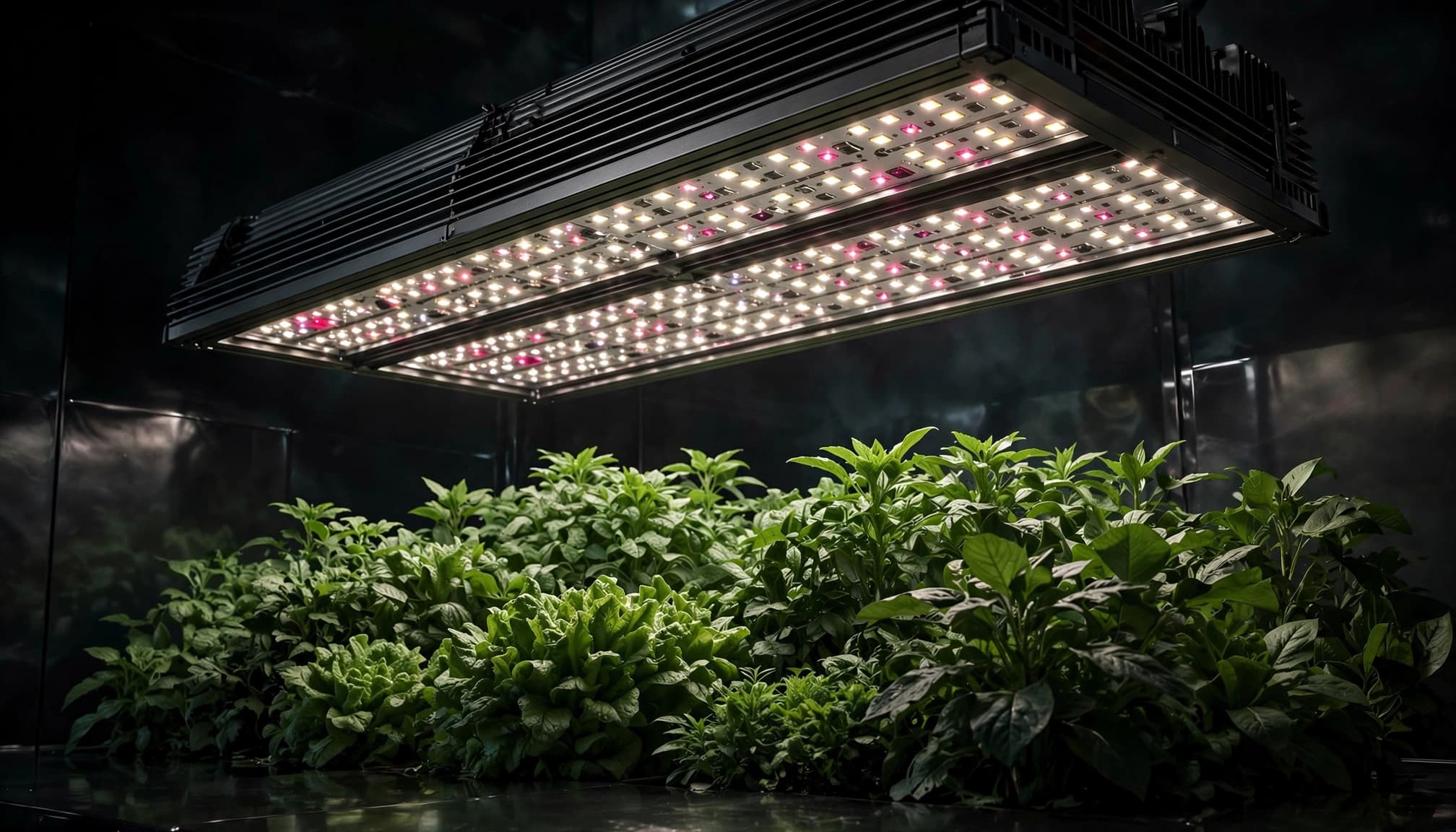
Samsung LM301H EVO and LM301H
Samsung's LM301H EVO is a premium white diode built for efficient horticultural fixtures, especially broad-spectrum bar lights. It uses a 3030 package and is designed for higher-temperature operation. Samsung also positions the EVO spectrum for leafy greens.
Do not confuse the EVO name with a complete fixture rating. Samsung's LM301H has published component performance of 3.10 umol/J at 65 mA and 25 C. That is a diode test condition, not the PPE you will get at the wall. An older LM301H versus LM301B comparison is useful background, but it is not a substitute for current fixture data.
Samsung LM281B+ and Seoul SunLike
Samsung LM281B+ can appear in lower-cost and mid-tier boards. That does not make it a bad diode. It means you must inspect the exact model, diode bin, drive current, fixture PPE, and PPFD map before you buy.
Seoul SunLike products are often discussed for fuller-spectrum white light. Bridgelux and Cree also have credible LED families used in horticultural lighting. None earns an automatic win based on the logo alone. A serious product page gives the diode model, not vague language like "Samsung style" or "full-spectrum elite chips."
ams OSRAM OSLON for targeted spectrum
ams OSRAM OSLON is a serious option when you want documented narrow-band wavelengths. The family includes Hyper Red at 660 nm, Far Red at 730 nm, Deep Blue at 450 nm, and Horti White options.
One OSLON Hyper Red example lists 4.32 umol/J and 5.96 umol/s at 700 mA, with 78.8% wall-plug efficiency. Those are component figures under stated conditions. They do not mean every OSLON fixture beats every white-light fixture. Use them when the spectrum recipe and professional build quality support your grow plan.
A diode datasheet measures a component under controlled conditions. Your plants live under the complete fixture, with its driver losses, heat, spacing, and hanging height.
How to compare LED grow light performance beyond the chip name
The diode name gets attention because it is easy to print on a product page. Your plants care about photon delivery across the full canopy. That is where the real comparison begins.
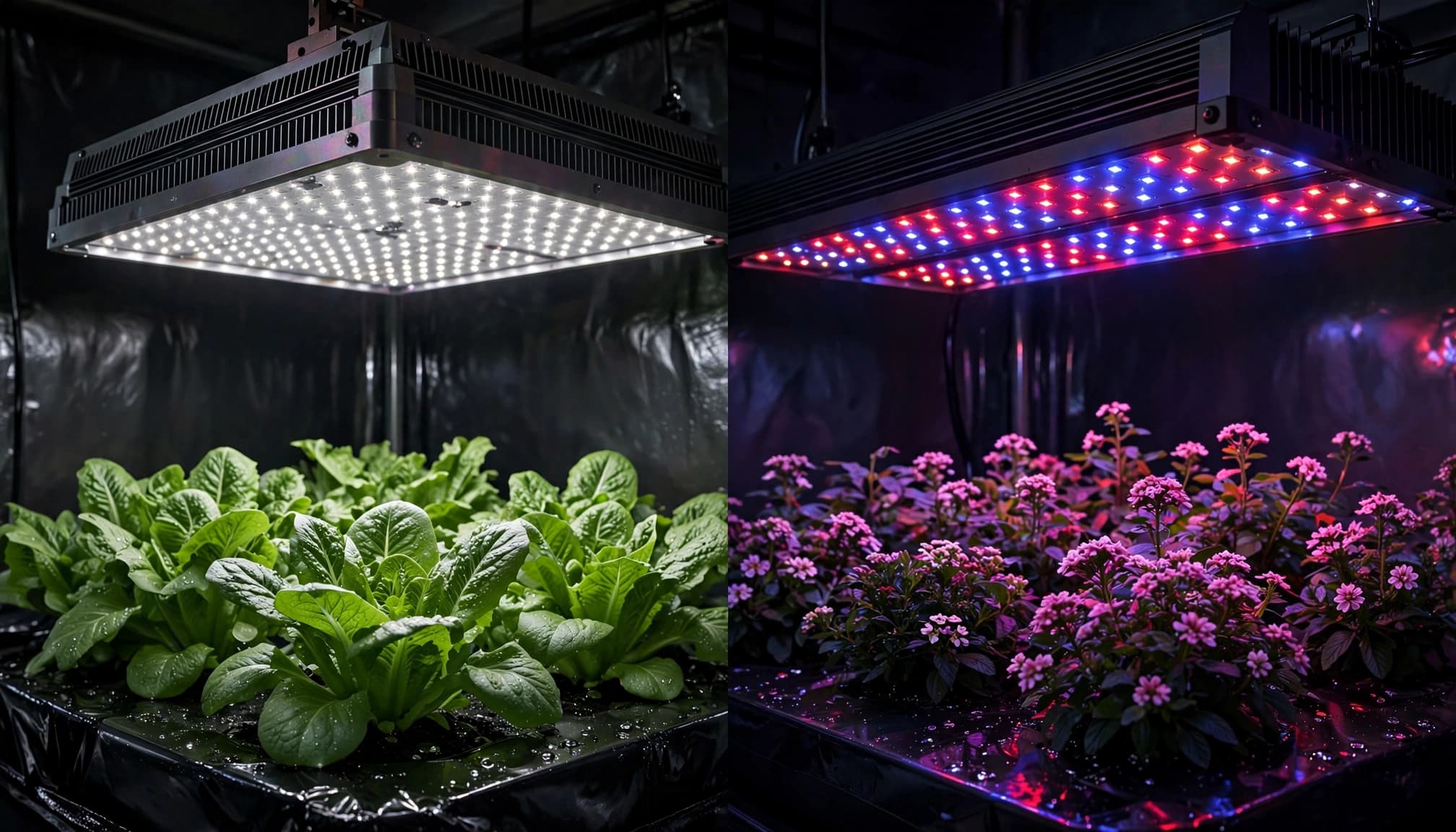
Read PPE and PPFD as a pair
PPE tells you how efficiently the entire fixture turns wall power into photosynthetic photons. It should be listed in umol/J. Higher is generally better when the measurement method is clear, but a single number cannot show coverage.
PPFD measures photon density at the canopy in umol/m2/s. Demand a PPFD map with hanging height, test area, dimmer setting, and fixture wattage. A huge center hotspot can look impressive while the edges of your tent get starved.
For a practical overview of how Samsung chips appear across fixtures, see this LM301 diode comparison guide. Still, verify the actual light you plan to buy.
Check the spectrum and thermal build
A readable spectrum chart should show output across the plant-useful range. White diodes can make plant inspection easier. Added red, far-red, or blue diodes may support a more targeted recipe, but the product must state what it uses.
Then inspect heat management. Aluminum bars, open spacing, quality thermal interfaces, and sensible diode drive current protect output over time. A fixture that runs hot may dim its own promise. If the driver is removable, it can also stay outside a small tent where heat has fewer places to hide.
Treat the driver as part of the light
The driver controls current, dimming behavior, efficiency, and long-term reliability. A premium diode array paired with a questionable driver is not a premium fixture.
Look for a named driver, clear dimming range, electrical safety information, and a warranty that covers the whole product. A current overview of Samsung alternatives makes the core point clear: the market has more than one capable diode route.
Choose the right LED grow light for your space and budget
Start with your canopy, not the most aggressive PPFD figure on a box. Measure the usable plant area in your tent, shelf, closet, or room. A light built for a 4-by-4 footprint can be wasteful over a single tray. A small board can be overwhelmed in a wide canopy.
Match coverage before maximum wattage
Use the manufacturer's PPFD map at the height you can actually maintain. A short grow tent may force the fixture close to plants. In that case, broad bar spacing and dimming control can beat raw power.
Choose even coverage for a flat canopy. If you grow tall plants, leave enough adjustment range for early growth, late growth, and heat management. You should be able to raise, lower, and dim the fixture without turning every adjustment into a chaos event.
Buy for service life, not launch-day hype
Set a total budget that includes the fixture, timers, hanging hardware, ventilation, and electricity. A bargain fixture can cost more if it has no usable warranty, no replacement parts, or no reliable PPFD data.
Ask whether the driver can be replaced. Ask if the brand publishes a real warranty process. Ask whether the seller can identify the diode model and driver. A Samsung LM301H EVO product overview can help you recognize the marketing language, but verified fixture documentation is your final filter.
Common mistakes that lead to weak plants or wasted energy
Buying by diode count alone is a classic miss. Hundreds of low-driven diodes can work well, but the count says nothing about spectrum, current, cooling, or canopy uniformity. Check fixture PPE and a real PPFD map instead.
Trusting peak PPFD is another bad shortcut. The center reading may be taken at an unrealistic height. Review the full grid, then use the average coverage area to judge the fixture.
Ignoring heat can cost you twice. Hot drivers and packed diode boards add stress to both the fixture and your tent environment. Keep airflow moving, and move removable drivers outside the tent when the manufacturer allows it.
Hanging a new light too close can bleach leaves, curl edges, and dry the medium faster than expected. Start higher, use a lower dimmer setting, and adjust gradually while watching plant response, leaf temperature, and moisture.
Avoid unverified "full-spectrum" claims. A spectrum chart, model number, and warranty beat a neon product graphic every time. The LM301B and LM301H component guide also shows why package names alone are not a full fixture specification.
Frequently Asked Questions
Are white LEDs enough for an indoor grow?
A quality white-light fixture can grow many crops successfully, especially when it has sufficient intensity and even coverage. Added red, blue, or far-red diodes are not mandatory for every setup. Choose them when the fixture provides a documented spectrum and your crop plan calls for it.
Does a higher diode efficacy always mean lower electricity costs?
Not by itself. Component efficacy can drop after driver losses, thermal derating, optics, and diode mixing. Compare the finished fixture's wall-level PPE and the PPFD it delivers over your actual canopy.
Is far-red necessary in a grow light?
Far-red is a spectrum tool, not an automatic upgrade. It can affect plant responses, but the right amount depends on crop type, photoperiod, and your goals. Don't pay extra for it if the manufacturer cannot document the wavelength and output.
Can you replace failed diodes in a grow light?
Some experienced users can repair boards, but many fixtures are not built for easy diode replacement. The work can require soldering skill, correct replacement bins, and safe electrical handling. A replaceable driver and clear warranty are often more useful for most home growers.
How often should you change light height or dimming?
Make small changes, then give plants time to respond. Watch leaf posture, bleaching, leaf-edge curl, canopy temperature, and watering frequency. Sudden jumps in intensity create problems that look like nutrient issues.
Choose Verified Light, Not a Chip Badge
Samsung LM301H EVO is a strong premium choice for efficient white-light fixtures. ams OSRAM OSLON is a strong route for documented horticultural wavelengths and professional spectrum builds.
The diode is only one part of the machine. Fixture-level proof is the standard: PPE, PPFD uniformity, spectrum, cooling, driver quality, dimming, warranty, and price must work together.
Measure your canopy, set your budget, and choose the fixture with verified data for your space.