

Couple Drawing Bases That Make Two Characters Click
Drawing two characters who look connected is weirdly harder than drawing either one alone. Search poses drawing bases couple and you'll find plenty of references, but a lot of them leave you with two cardboard cutouts waiting for the cutscene to start.
A good base gives you the skeleton of the moment before hair, outfits, blush marks, and anime protagonist levels of emotional damage show up. You can use it for romance, best-friend chaos, fan art, or original characters who have finally stopped standing three feet apart like strangers at a bus stop.
Start loose, make the pose believable, then let the tiny body-language choices do the heavy lifting.
Key Takeaways
- Start with simple couple bases to learn spacing, height differences, and contact points.
- Draw the shared gesture before you obsess over faces, clothes, or perfect anatomy.
- Weight-bearing feet, hips, and hands stop hugs and lifts from looking cursed.
- Change distance, eye direction, and posture to fit each characters' relationship.
- Test the silhouette before rendering, because tangled limbs can ruin a great idea fast.
How to Use Poses Drawing Bases Couple Artists Can Actually Draw
A couple drawing base is a rough structure for two figures. It might be stick figures, mannequin forms, loose gesture lines, or a cleaned-up template. Its job is to solve placement first, before you sink an hour into a jacket fold that belongs on a body with zero balance.
A poses drawing bases couple search is a starting point, not a command from the art gods. Pick a base that fits your skill level, the camera angle, the mood, and what these characters mean to each other. A relaxed friendship pose needs different energy than a reunion hug or an "I caught you mid-fall" scene.
When you download templates or pose packs, check the creator's usage rules before posting, selling, or redistributing your work. A general body position isn't the same as copying a fixed illustration or photograph. The U.S. Copyright Office's guidance for visual artists is a useful reminder that finished visual work has protection once it's fixed in a tangible form.

Start With Easy Couple Poses Before Trying Complex Angles
Begin with standing side by side, holding hands, sitting together, a shoulder lean, or a front-facing hug. These bases teach the stuff that causes most beginner pain: where bodies meet, how much space sits between them, and how one figure overlaps another.
Try three to five thumbnail sketches before picking one. Make one character taller, then reverse the height difference. Move the hands. Tilt the heads. You will spot the version with actual chemistry before you have spent forty minutes rendering eyelashes.
Match the Base to Your Characters' Relationship
A pose can tell the story before either character opens their mouth. Relaxed friends might sit shoulder to shoulder with their attention on a phone. Shy partners may keep a little space between their bodies while their hands nearly touch. Playful characters can tug sleeves, bump hips, or invade personal space with zero fear.
For a protective relationship, angle one figure slightly in front of the other. For tension, make their shoulders turn away even if their faces look back. Hand placement, eye direction, posture, and facial reactions are small switches with huge plot energy.
Build Natural Couple Drawing Poses With Gesture and Balance
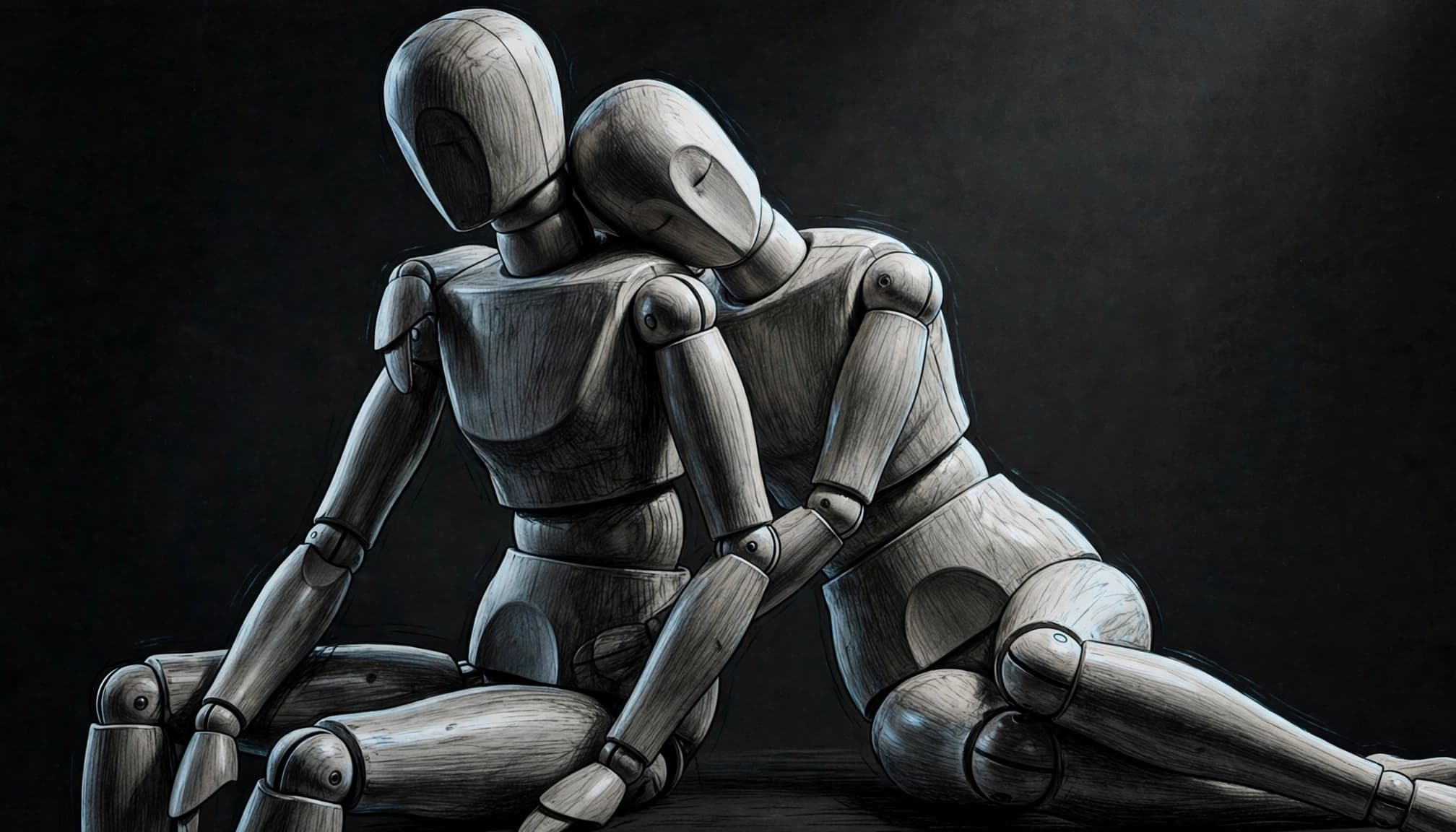
Treat the pair as one moving shape before you draw them as two separate anatomy homework assignments. Sketch the big motion, place the heads, block in rib cages and hips, then test whether both people could physically hold that position.
Start with the line of action. Add simple forms. Adjust proportions before details arrive and begin demanding rent.
Use Lines of Action to Show Movement and Emotion
Draw one loose gesture line through the pair, then give each person their own gesture. A soft curve can make a hug feel safe. Two angled lines can turn a dance into motion. A sharp lean and pulled-back shoulder can make a scene feel tense without any dialogue bubble screaming about betrayal.
Keep these lines fast and ugly. They are supposed to look like a map, not finished art. If the gesture has no energy, cleaner anatomy won't resurrect it.
Check Weight, Contact, and Overlapping Forms
Hands, shoulders, hips, backs, and feet tell viewers where the figures connect. In a lift, piggyback, or carry pose, draw the supporting character's feet and hips first. That figure is doing the physics job. Build the second figure around those support points.
Check every contact point. Is the hand pressing against a shoulder, or hovering nearby like a haunted claw? Is the leaning person shifting weight into the other body? Overlap creates depth, but too much can fuse both characters into one confusing creature with bonus elbows.
If you can't point to the feet or hips carrying the weight, the pose has probably entered anti-gravity mode.
Different body types need different spacing. A broad coat adds volume. Long hair can hide a shoulder. A high camera angle shortens legs, while a low angle makes lower forms feel larger. Block those changes in early instead of trying to patch them after line art.
Keep the Silhouette Clear From Every Angle
Zoom out, flip the canvas, or fill both figures as a solid shadow. If you cannot tell who is doing what, separate the shapes. Pull an elbow away from the torso. Let a knee peek past a coat. Leave a tiny gap between arms when the pose is close.
A strong outer contour matters in anime, comic, and character art, where hair, sleeves, and giant hoodie shapes can cause instant visual spaghetti. The Copyright Office's explanation of protected expression also makes the useful distinction here: borrow an idea like a shoulder rest, but don't reproduce another artist's finished pose drawing line for line.

Romantic, Cute, and Dynamic Couple Pose Ideas to Try
Save references by mood and difficulty. Your poses drawing bases couple folder should not be one massive doom-scroll of dramatic kisses and impossible aerial spins. Give yourself options for quiet scenes, close moments, and full anime opening chaos.
Soft and Easy Poses for Everyday Connection
Side-by-side walking, linked arms, hand-holding, sitting close, and a head on a shoulder are excellent practice. The emotion lives in tiny adjustments: a thumb hooked around another hand, one character leaning in, or a hand resting on the other's back.
Props make the moment feel lived in. Add a shared umbrella, a drink, a backpack, or one phone between them. Those objects create natural hand placement, which is a blessed escape from drawing floating fingers for the fifteenth time.
If your characters wear graphic tees, keep the clothing shapes readable before you add designs. These anime-inspired graphic tee outfit ideas can help when you want outfits with bold silhouettes instead of generic blank-shirt energy.
Close Romantic Poses That Show Facial Reactions
Gentle embraces, forehead touches, cheek kisses, face-to-face pauses, and kissing poses all need readable reactions. Plan the eye line first. Then use brow angles, head tilts, mouths, and shoulders to show whether the moment is nervous, soft, funny, or fully devastating.
Don't hide both faces unless the silhouette alone tells the story. If one character has a fringe, hood, mask, or galaxy-sized hair mass, shift the heads until viewers can still read the emotional beat. You are drawing people, not two wigs conducting a merger.
Dynamic Bases for Dancing, Carrying, and Playful Scenes
Dance turns, dips, lifts, piggybacks, spins, and one character pulling the other forward need stronger action lines. Sketch the grounded feet first. Mark the main weight-bearing hip. Then add the airborne or leaning character around that structure.
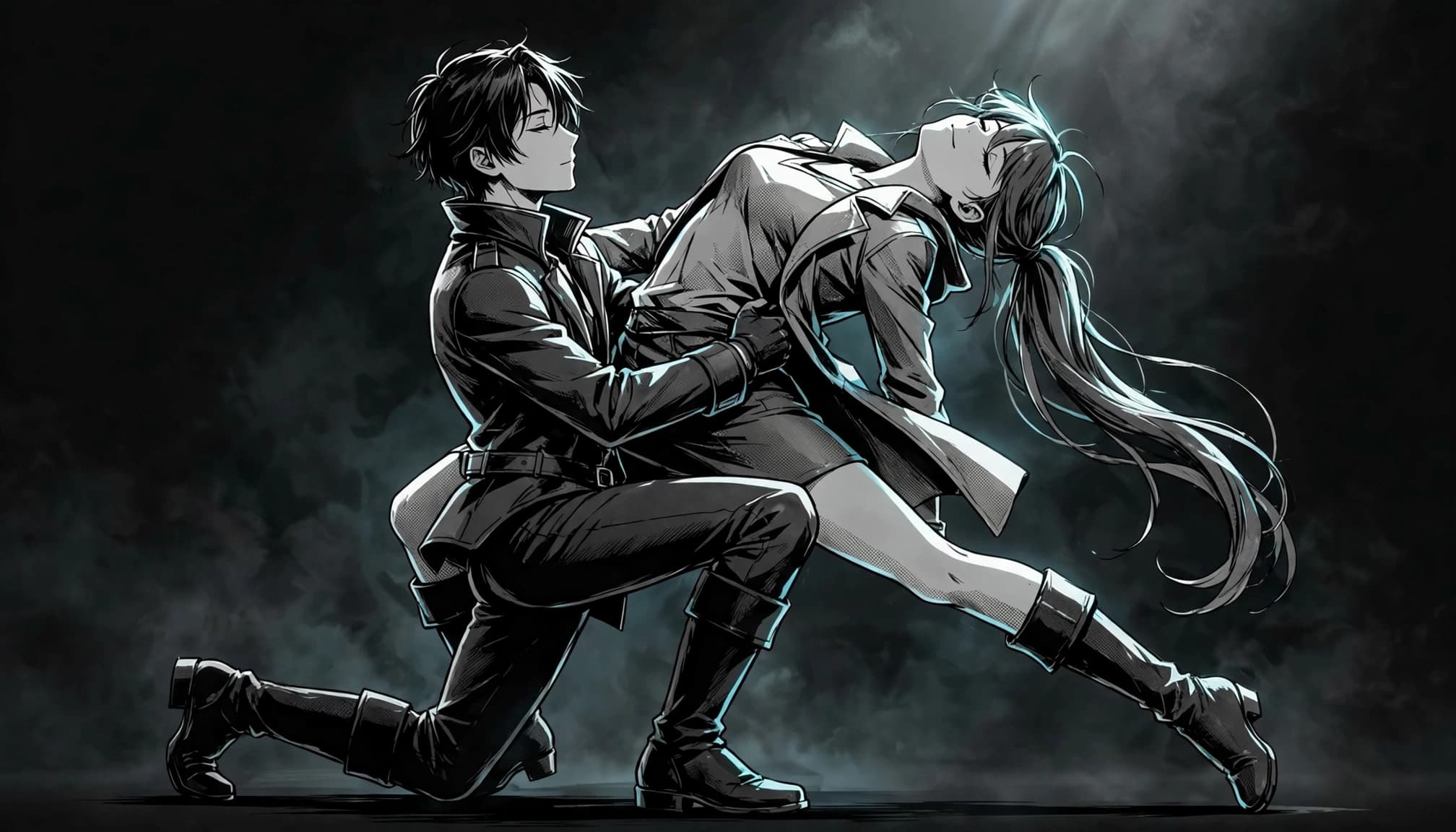
Use a low or high camera angle only after the basic pose feels stable. A dramatic perspective can't save a bad center of gravity. It can, however, make a bad center of gravity look louder.
Fix Common Problems in Two-Figure Sketches Before You Render
Do a quick audit before line art, color, or clothing details lock everything in. Flip the canvas, shrink it down, and check these danger zones:
- Can you see where each figure's weight lands?
- Do hands touch a surface or body part with a clear purpose?
- Are limbs overlapping in a readable way?
- Do the faces react to each other?
- Would the pose still work as a dark silhouette?
Make the Figures Feel Like They Share the Same Space
Use one horizon line and one camera angle. Add a floor line, shared shadow, or overlapping feet so the characters don't look pasted together by a sleep-deprived editor at 2 a.m.
This matters even more when one character is seated, taller, or leaning. Their perspective has to agree. If the room says one person is viewed from above and the other says eye-level selfie cam, the scene will feel wrong before viewers know why.
Give Each Person a Clear Role in the Pose
One character can lead, support, react, hide, reach, pull away, or get dragged into nonsense. Don't default to mirrored postures unless symmetry is the point. Different gestures create a readable story.
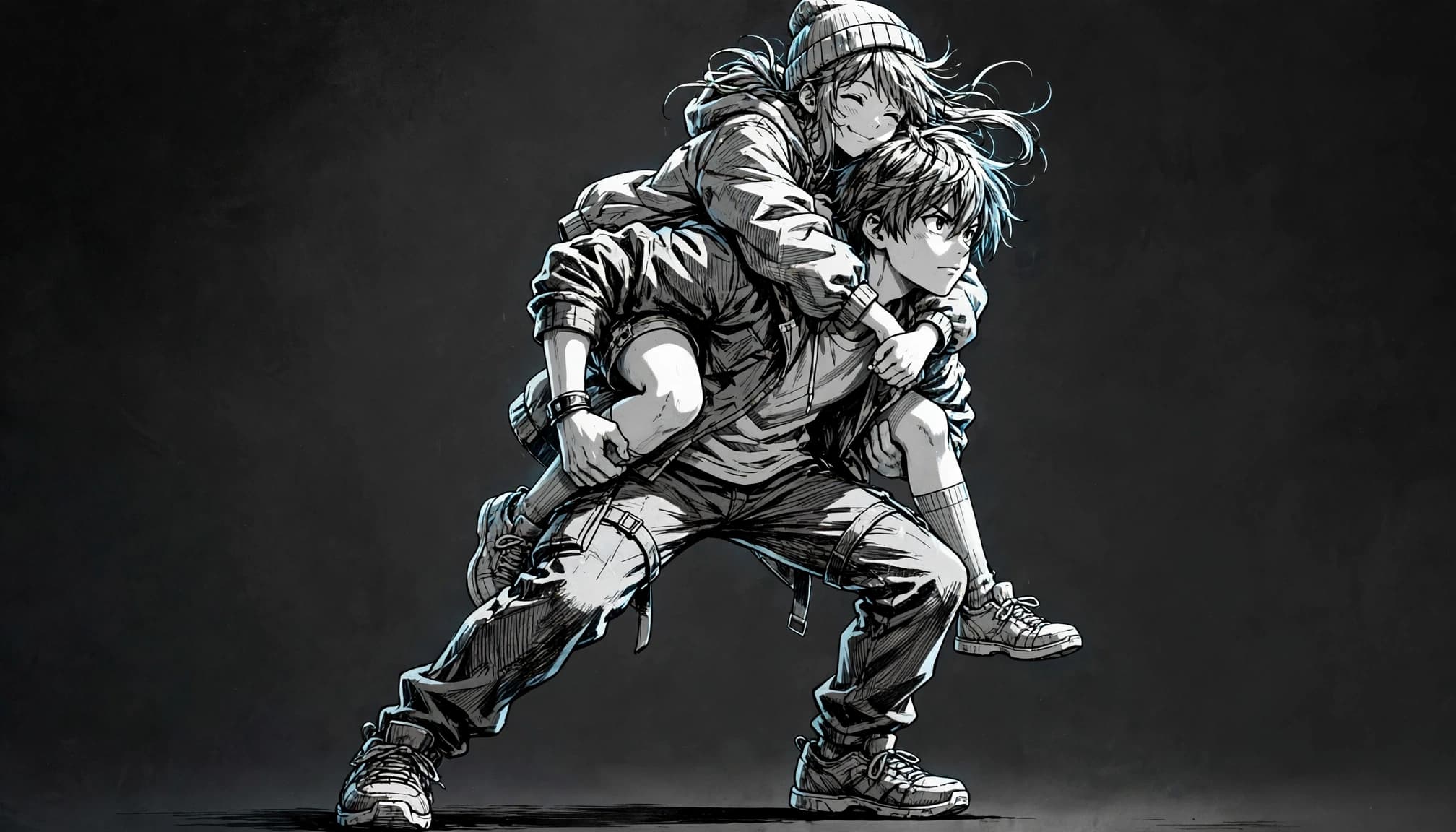
A piggyback works because one figure supports while the other clings or celebrates. A hand-holding pose works because one person reaches and the other responds. Give both characters something to do, even if that thing is "trying not to combust from eye contact."
Frequently Asked Questions
Can you trace a couple drawing base?
Tracing can help you study proportions and placement privately. Posting, selling, or sharing traced work depends on the creator's terms and the source material. Changing a few lines doesn't automatically make copied work okay, and fair use has no fixed percentage rule.
How do you draw a big height difference without making it awkward?
Line up the figures around a shared action, not their head height. Let the taller character bend a knee, lean down, sit, or shift a shoulder. Let the shorter character reach naturally rather than stretching like they are trying to grab the last box of cereal.
Should you use your own photo references?
Yes, if you can. Set a timer, take a few photos, and use them for weight, hand placement, and clothing folds. You can also use permitted reference packs, but read their terms before commercial use or reposting.
Why do my couple poses look stiff even when the anatomy is fine?
Your figures may have matching upright spines, even shoulders, and no change in balance. Redraw the gesture with one person initiating movement and the other reacting. A slight head tilt or hip shift can do more than twenty extra muscle lines.
Keep the Connection, Lose the Stiffness
A strong couple drawing starts with clear movement, believable balance, and a few small signs that the characters know each other. Begin with an easy base, test the silhouette, fix the gesture, then add the hair, clothes, and personality glitches that make the pair yours.
Perfect anatomy can wait. A pose that makes the relationship easy to feel will hit harder than a technically flawless drawing where both characters look like they were spawned in separately.
Save references by mood and difficulty. Your next sketch session will start with a pose, not a blank canvas boss battle.