

Rat Terrier Chihuahua Mix: Size, Care, and Temperament
TrendReactTees.STORE TeamA Rat Terrier Chihuahua mix, often called a Rat-Cha or Rat-Chi, can inherit very different traits. There's no fixed breed standard for this cross, so the parents and the dog in front of you offer better clues than the mix label.
If your dog has become your emotional support supervisor, our My Therapist Is A Dog Tee gets the assignment. For the pet-parent budget subplot, there's the Dog Eats Custom Kibble Living On Ramen Tee. Now, back to the dog and the care that actually comes with them.
This post may contain affiliate links. If you make a purchase through these links, I may earn a small commission at no extra cost to you.
Key Takeaways
- A Rat-Cha has no established adult size, appearance, or lifespan.
- Parent measurements help set expectations, but inheritance still varies.
- Energy, barking, sociability, and comfort with handling depend on the individual dog.
- Match grooming, exercise, meals, training, and veterinary care to your dog's needs.
- Meet the dog and review its history before choosing a puppy or adoption.
Rat Terrier Chihuahua Mix Size, Looks, and Lifespan
No reliable population-wide measurements establish this mix's adult size or lifespan. Treat online numbers as guesses, not guarantees, and don't average parent-breed figures as if genetics were a tidy spreadsheet.
The Rat Terrier comes in miniature and standard sizes. The American Kennel Club standard sets miniature height at 10 to 13 inches and standard height at over 13 through 18 inches at the withers. You can read the AKC Rat Terrier standard for those breed measurements. The Chihuahua parent's actual size, along with both parents' measurements, gives you more useful context than a mix label. Even then, puppies from the same litter can grow differently.

Your dog may have a short, smooth coat or inherit longer hair, along with varied coloring, markings, and build. A short coat may need less brushing than a longer one, but it doesn't promise a shed-free home. The lint roller may keep its job.
Lifespan estimates for the parent breeds differ by source. VCA gives Rat Terriers an estimate of 12 to 16 years, while an AKC breed document lists 15 to 18. Those figures describe parent breeds, not a proven Rat-Cha lifespan. Your dog's health, care, and individual history matter more than a fixed number attached to the cross.
What Your Rat-Cha May Be Like at Home
Your Rat-Cha may combine Rat Terrier energy and playfulness with the Chihuahua's confidence and adaptability. Or your dog may lean harder toward one parent, invent a completely personal household policy, and enforce it at the doorbell. Temperament is individual, not guaranteed by the mix.
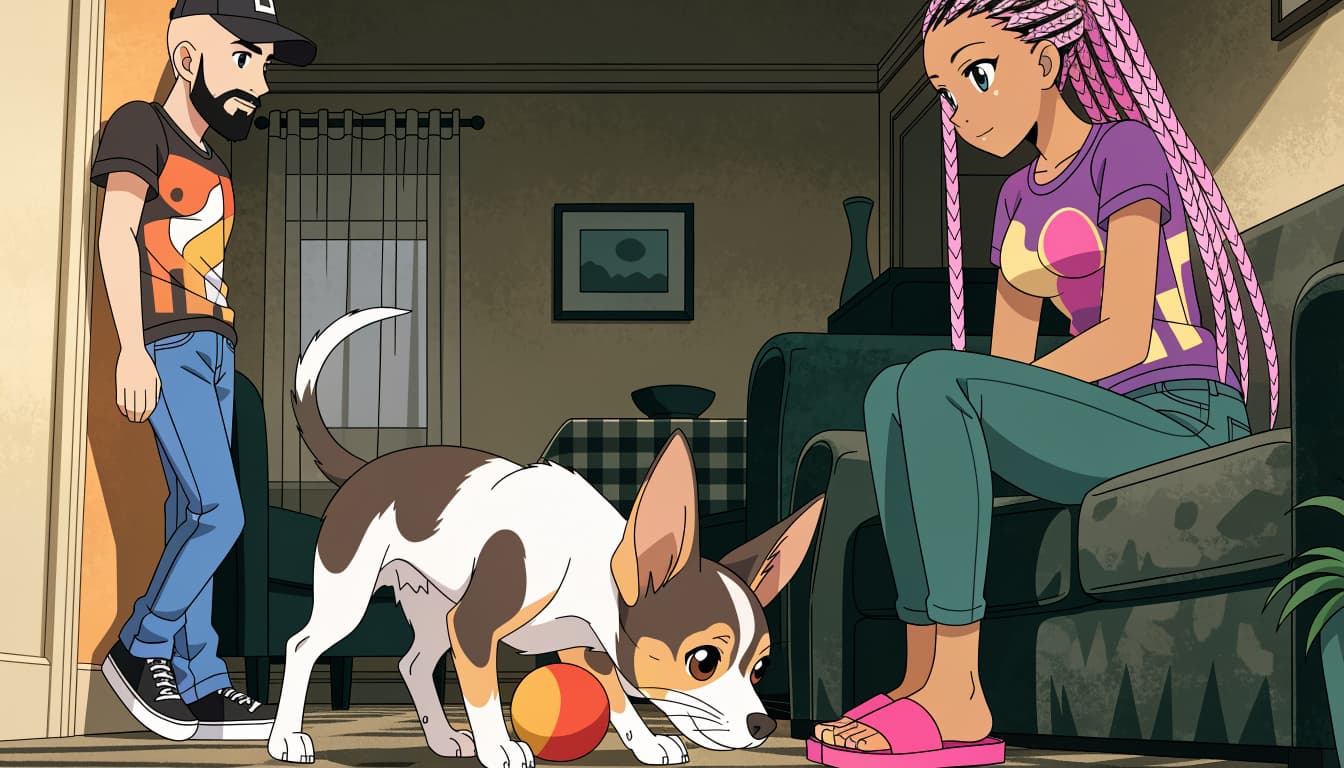
Pay attention to the behavior you'll live with
Listen for how your dog reacts to hallway sounds, visitors, and other everyday noise. Notice whether they show interest in chasing small animals, how comfortable they are with gentle handling, and how they respond to unfamiliar dogs. Ask how the dog manages time alone, too. A small body doesn't arrive with a neighbor-approved mute button or automatic solo-time skills.
Rat Terriers are active and playful, and some may not enjoy dog-park situations. VCA also notes that some can bully other small dogs. These are reasons to observe your dog, not to assume every Rat-Cha will behave the same way.
Give introductions time and space
A small dog isn't automatically easy to train or suited to every child and pet. Teach children to handle the dog gently, leave them alone while they rest, and avoid rough lifting or chasing. Give your dog a quiet place to retreat.
Introduce unfamiliar dogs and people gradually, with supervision. A quick greeting doesn't tell you everything about compatibility. Watch for comfort, fear, or persistent stress, and ask a veterinarian or qualified reward-based behavior professional for help if concerning behavior develops.
Everyday Care, Training, and Health Needs
Build a routine around your dog's actual coat, energy, age, and health. The Rat-Cha label doesn't come with a universal maintenance calendar. For parent-breed context on Rat Terrier activity, grooming, and puppy care, see VCA's Rat Terrier guide.

Keep routine care simple and consistent
Brush as often as your dog's coat requires. A short coat may take less brushing than a long one, but neither guarantees minimal shedding. Check ears regularly, especially after muddy walks or time in tall grass. Look for debris, tangles, skin changes, or irritation beneath the coat.
Measure meals rather than free-pouring, and adjust portions with your veterinarian's advice to support a healthy body condition. Brush your dog's teeth regularly with dog toothpaste; dental chews don't replace brushing. Keep up with veterinary visits and discuss preventive care, changes in appetite or movement, and any health concerns.
Match activity and training to your dog
Daily walks, supervised play, and brief reward-based training games can provide exercise and mental work. Rat Terriers tend to be active, while Chihuahuas may need less exercise. Start with what your dog can manage, then adapt to their age, health, and energy. Watch for fatigue or discomfort, especially in a small dog.
Keep training sessions short and upbeat. Practice everyday skills such as coming when called, settling, and accepting gentle handling. Games and simple tricks can make learning feel less like a formal class and more like a tiny side quest.
Parent-breed health information doesn't establish your mix's individual risks. Hypoglycemia is a serious concern described for tiny Rat Terrier puppies, not a blanket diagnosis for adult Rat-Chas. Ask your veterinarian to review your dog's records and tailor preventive care to their history.
How to Choose a Puppy or Adopted Rat Terrier Chihuahua Mix
A responsible breeder or rescue can tell you what they know, but nobody can guarantee an adult dog's exact size, personality, lifespan, or health. You're looking for useful records and clear answers, not a character-select screen with every stat locked in.

Questions to ask about a puppy
Ask for both parents' adult measurements and health records. Find out what health evaluations were performed and request the results. Meeting the mother, when possible, can give you a chance to observe her behavior and condition, but it still won't predict every trait in her puppies.
Ask how the puppies respond to ordinary handling, household sounds, and new people. A responsible source should welcome practical questions and be candid about what they don't know. Promises of a specific adult size, guaranteed temperament, or a fixed lifespan deserve skepticism.
What to learn about an adopted dog
For a rescue dog, ask for veterinary records, current weight, and any available growth history. Find out about prior diagnoses or injuries, medication, and observations of the dog around people and other animals. Ask how they respond to being handled and left alone, if that information is available.
Meet the dog and observe their reactions in a calm setting. Give them time to approach rather than reaching in immediately. One meeting can't reveal every behavior, but it can help you notice comfort, fear, curiosity, and how the dog responds to everyday interaction. Choose based on the dog you meet and the care you can provide.
Streetwear & Casual Styling
Dog walks call for clothes that let you move, not a full outfit strategy meeting. Build a casual look around our Cyber-Brutalist Anime Graphic Tees, then add comfortable layers and practical walking shoes. For more laid-back dog-parent outfit ideas, see our cozy puppy mom graphic tee outfit ideas.

If your dog treats the neighborhood like an open-world map, try the If They Could Use Internet We'd Be In Trouble Tee. For the canine vocalist with a dedicated human audience, there's the Scream At Void My Human Understands Tee. Keep the rest simple, grab the leash, and let the dog handle the dramatic entrance.
Frequently Asked Questions
Are Rat-Chas good apartment dogs?
They can live in an apartment if their needs fit your routine. Consider hallway noise, time alone, regular walks, and toilet breaks, then plan training and enrichment around what your dog actually does.
Do Rat Terrier Chihuahua mixes shed?
Shedding depends on the coat your dog inherits. Short hair can still end up on furniture and clothes, while a longer coat may need more brushing. Sudden shedding with itching, bald patches, or irritated skin calls for veterinary advice.
Are Rat-Chas good for first-time dog owners?
Some may suit a first-time owner who can provide consistent training, exercise, grooming, and veterinary care. Your best guide is the individual dog's behavior and needs, not the mix name alone.
How much should you feed a Rat-Cha?
There isn't one portion that fits every dog. Follow food guidance for your dog's age and size, measure meals, and ask your veterinarian to adjust portions for health and body condition.
Choose the Dog in Front of You
A Rat-Cha's parents, history, health, and observed behavior tell you more than broad claims about a designer mix. Prepare for exercise, training, grooming, and veterinary care that suit the individual dog.
The label can introduce you to a possibility. Your daily routine, and the dog you meet, make the match.