

Should I Wake My Puppy Up to Pee at Night?
TrendReactTees.STORE TeamYou don't need to wake every sleeping puppy to pee on a strict schedule. Offer a potty trip right before bed, then use your puppy's age, signals, and accident history to decide whether an overnight break is needed.
Puppy parenthood can turn your sleep schedule into a side quest. If you're dressing for the occasion, our Best Dog Mom Tee and Dog Eats Custom Kibble Tee bring the appropriate energy.
Your puppy's own pattern is more useful than a universal alarm. Here's how to find it.
This post may contain affiliate links. If you make a purchase through these links, I may earn a small commission at no extra cost to you.
Key Takeaways
- A puppy who sleeps comfortably and regularly wakes up dry usually doesn't need to be disturbed.
- Young puppies who can't stay dry until morning may need a planned overnight potty break.
- Age-based holding times are rough estimates, not targets your puppy has to meet.
- Keep nighttime trips calm, reward outdoor pottying, and return your puppy to bed.
- Frequent accidents or a sudden change in bathroom habits are reasons to contact your veterinarian.
Should I wake my puppy up to pee at night?
Not always. If your puppy sleeps comfortably and has been waking up dry, you generally don't need to interrupt that sleep. A young puppy who can't yet stay dry until morning may need one planned potty break.
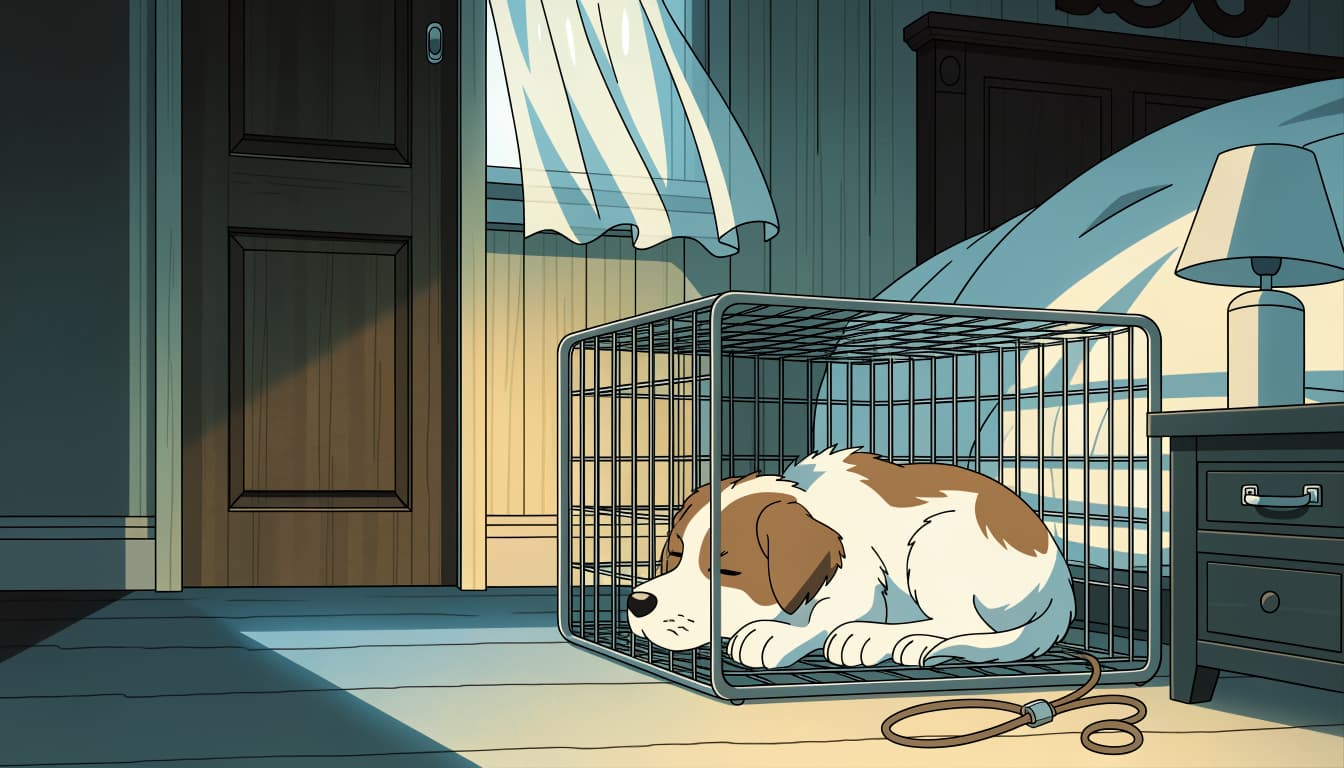
If your puppy wakes and signals that they need to go, take them out calmly. That might mean whining, shifting around, or becoming restless. You don't need to wait for a full-volume performance before responding.
For another perspective on nighttime potty training, this video covers an approach without a scheduled alarm. Your own puppy's accident history may still make a planned break useful.
The goal is to give your puppy enough chances to succeed outside. If you find a wet crate in the morning, the overnight stretch may be too long. Try scheduling a break earlier, while you continue watching for signals.
Age gives you a starting point, but puppies don't all follow the same timeline. Your tiny roommate hasn't read the training charts, and their bladder isn't taking notes.
A dry night is useful information, too. If your puppy settles after their final trip and stays dry until morning, let that pattern guide you instead of adding an alarm solely because a chart suggests one.
How long can your puppy hold pee overnight?
A common estimate is your puppy's age in months, plus one hour. The American Kennel Club uses that calculation as a rough puppy potty-training guideline.

Under that estimate, a 3-month-old puppy might manage about four hours between breaks. A 4-month-old might manage about five. Another rule of thumb uses approximately one hour for each month of age.
Treat either number as a rough maximum, not a promise or a training goal. Your puppy may need to go sooner, particularly if they're very young or a toy breed. Some puppies also need more frequent opportunities while they're awake.
For example, if a 3-month-old goes out at 11 p.m., the estimate doesn't guarantee a dry crate until 3 a.m. If accidents or restlessness happen at 2 a.m., that earlier time is the information to use.
Daytime habits can give you clues, although sleeping and waking patterns aren't identical. Offer opportunities after naps, meals, play, and drinking, as well as during your regular routine. Consistency helps your puppy learn where to go and helps you spot their signals.
As dry nights become more consistent, you can gradually adjust the overnight schedule. There's no achievement badge for making your puppy wait longer than they comfortably can.
Build a calm, reliable bedtime potty routine
A predictable routine gives your puppy a chance to empty their bladder before sleep. It also makes an overnight outing feel like a bathroom break instead of the launch of a bonus episode.
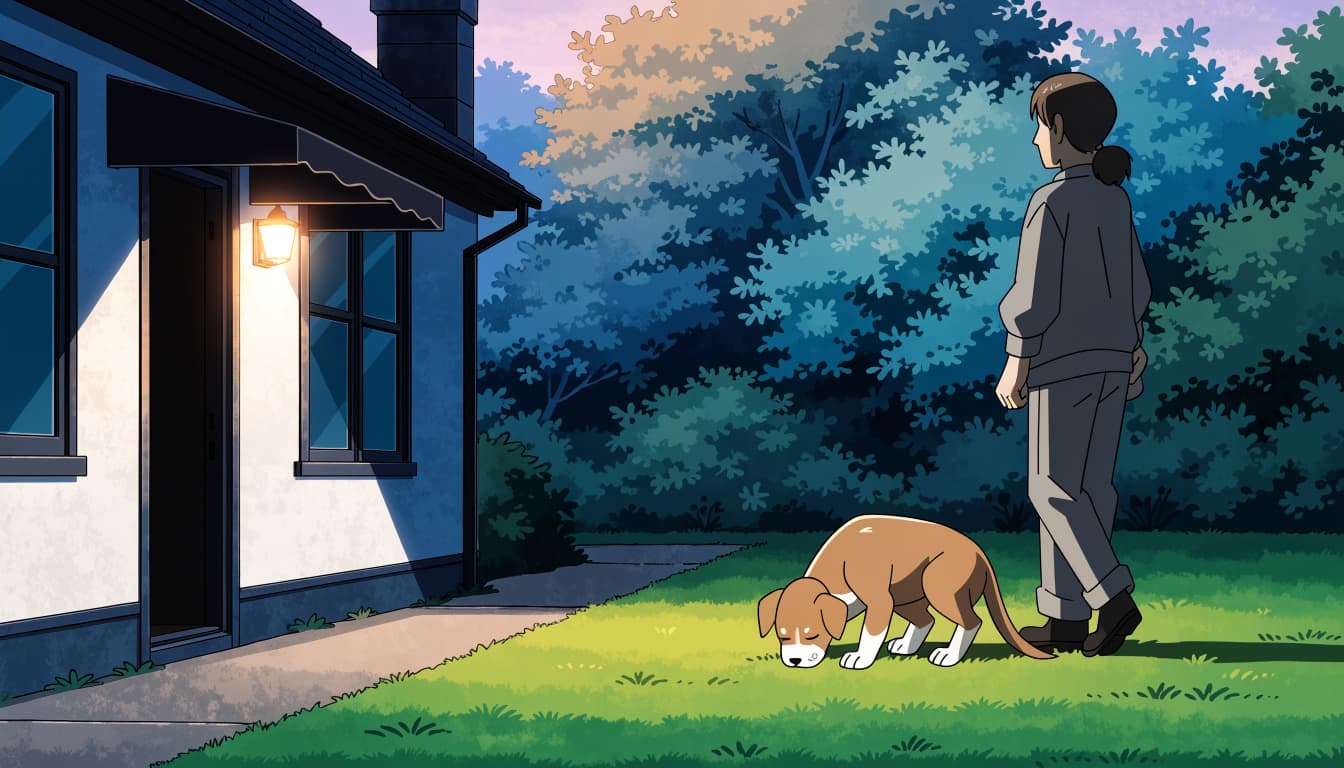
Take your puppy out right before bed
Make the final potty trip the last stop before your puppy settles in. Give them enough time to pee rather than rushing them outside and back in immediately.
Use a consistent bedtime when you can. A predictable final trip makes it easier to notice how long your puppy usually stays comfortable and whether their pattern changes.
When your puppy goes outside, offer calm praise or a small reward promptly. The AKC's potty-training advice also emphasizes building consistent habits around your puppy's needs.
Keep overnight potty breaks brief and boring
If your puppy needs a scheduled break, set an alarm slightly before their usual wake-up or accident time. That gives you a chance to get outside before the situation becomes urgent.
Keep lights and conversation low-key. Take your puppy to their potty spot, praise them calmly when they go, and head straight back to bed.
Save the toys and excited greetings for daytime. A sleepy bathroom trip doesn't need a plot twist.
Help yourself hear nighttime signals
Keeping the crate in or near your bedroom can make it easier to hear your puppy stir or whine. You'll have a better chance of responding before they become distressed or have an accident.
If your puppy wakes and seems to need a trip, take them out calmly. Don't delay because the alarm hasn't gone off or because you hope they'll be louder about it.
What to do when your puppy has nighttime accidents
An accident is information, not misbehavior. Before assuming your puppy has forgotten their training, look at the overnight interval, any changes in routine, and the crate setup.
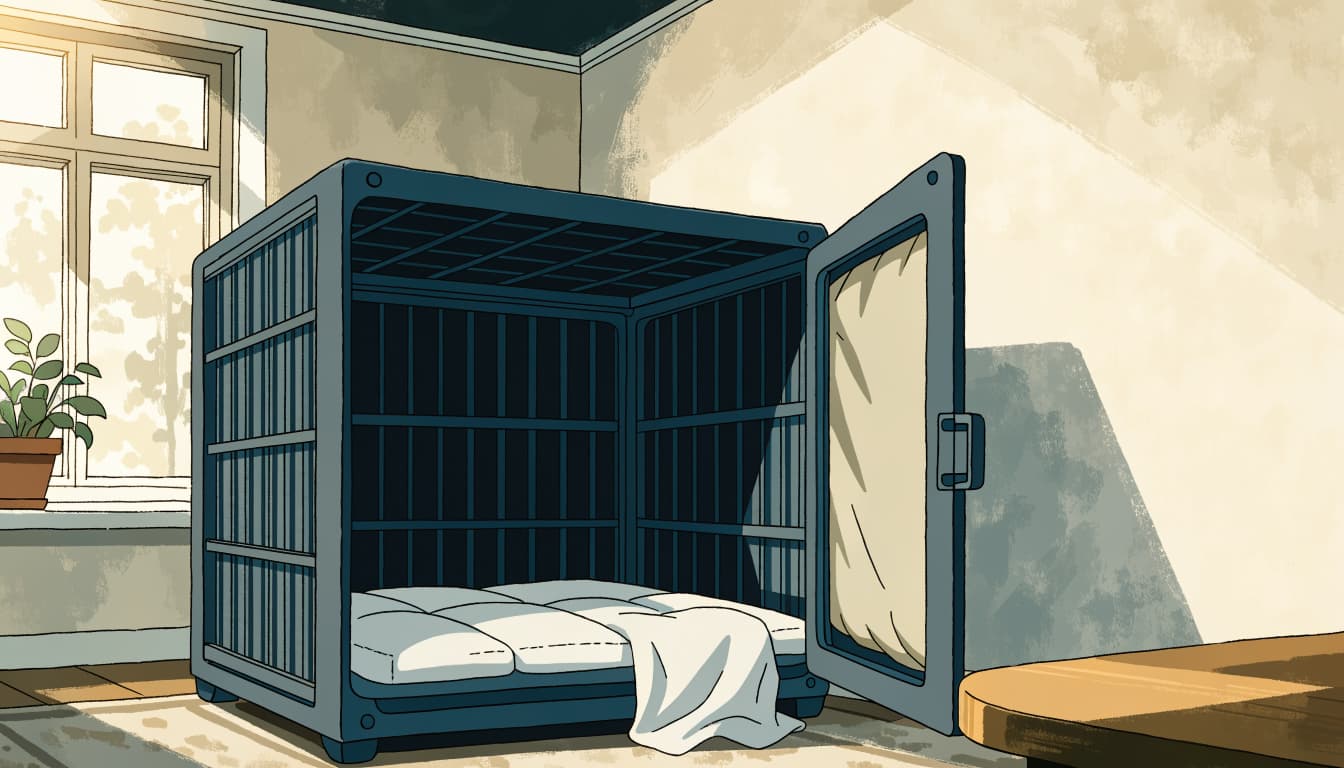
Clean the area promptly with an enzymatic cleaner intended for pet accidents. Avoid punishment. It doesn't teach your puppy where you want them to go, and it can make bathroom training more stressful.
Keep rewarding outdoor pottying as soon as it happens. Your puppy gets a clear connection between the right location and the reward, instead of a confusing reaction after the accident.
Make the crate a safe sleeping space
Your puppy should have enough room to stand, turn around, and lie down comfortably. A crate that's much larger may leave space for a bathroom corner away from the sleeping area.
If you're using a larger crate your puppy can grow into, a divider can help you adjust the available space. The crate should feel like a comfortable place to rest, not a test of bladder endurance.
A smaller sleeping area won't fix an interval that's too long. If your puppy can't comfortably wait until the next break, change the schedule.
Adjust the schedule using your puppy's pattern
For a few nights, note the final potty trip, any overnight signals, accidents, and morning wake-up time. You don't need an elaborate spreadsheet unless that sparks joy.
If an accident happens before the planned break, move the alarm earlier. Once your puppy stays dry consistently, adjust the timing gradually and keep responding to signals.
A new home, a different bedtime, or a change in activity can affect the routine. Your notes can help you see what changed and give your puppy another chance to succeed.
When nighttime peeing needs a vet's attention
A schedule adjustment can help with ordinary training, but repeated accidents deserve a closer look. Contact your veterinarian if crate accidents are frequent, house-training stalls despite a steady routine, or a previously reliable puppy starts having new accidents.

Changes to tell your vet
A urinary tract problem or another health issue can affect potty habits. Age-based estimates can't diagnose the cause, so describe what changed and when you noticed it.
Your notes about accidents, timing, and signals can give your veterinarian useful context. Mention unusual thirst, frequent urination, or signs of discomfort too.
If your puppy is straining and can't pass urine, seek veterinary care promptly. You don't need to wait for another accident to ask for help.
Streetwear & Casual Styling
Once your puppy's care is handled, you can give the late-night potty uniform some personality. Our Scream At Void Tee pairs easily with relaxed cargos and shoes you can slip on for a quick trip outside.
For daytime walks, try our If They Could Use the Internet Tee with dark jeans and a simple jacket. Let the graphic do the talking while you carry the less glamorous essentials: treats and waste bags.
Frequently Asked Questions
Should you wake a sleeping puppy if they haven't had an accident?
Generally, you don't need to wake a puppy who's sleeping comfortably and regularly stays dry. Very young puppies may still need a planned break if their pattern suggests they can't make it until morning.
When can a puppy sleep through the night without peeing?
Many puppies need an overnight break for several months, and some sleep through by around 4 to 5 months. Your puppy may need more time, so treat that age as a general guide rather than a deadline.
Should you take your puppy out if they wake and whine?
Yes. Take your puppy out calmly for a brief potty trip, then return them to bed. Keep the outing low-key so it doesn't become a nighttime play session.
Should you limit your puppy's water before bed?
Keep access to fresh water part of your puppy's normal care, and ask your veterinarian before changing their water intake. That conversation matters especially if your puppy seems unusually thirsty or urinates often.
Give Your Puppy Time to Learn
A final potty trip before bed is a solid place to start. Use your puppy's age and their own pattern to decide whether they need an overnight break, and respond when they signal.
Be patient as their routine develops. If accidents become frequent or their habits change suddenly, contact your vet. A comfortable puppy and a dry morning are worth more than a perfect-looking schedule.