

Ski Size for Kids: Choose for Control, Not Growth
TrendReactTees.STORE TeamThe right ski size for kids depends on height, weight, ability, and the exact model, with control today as your priority. Extra length for a future growth spurt can make learning harder.
For cabin downtime, our My Cabin Is 404 Tee and Wifi Down Send Snacks Cabin Tee bring the Cyber-Brutalist Anime Graphic Tee energy.
Start with the body-landmark rule, adjust for skill and terrain, then give boots and bindings the attention they deserve.
This post may contain affiliate links. If you make a purchase through these links, I may earn a small commission at no extra cost to you.
Key Takeaways
- Start with skis reaching between your child's chest and nose, then use the exact model's sizing guidance.
- Match height with weight and current ability. Age gets a supporting role, not the steering wheel.
- Favor easier turning for beginners; experienced, stronger skiers may benefit from greater length and stability.
- Have boots fitted and youth bindings professionally set and tested, including hand-me-down equipment.
- Choose for this season's control instead of buying extra length for hypothetical future upgrades.
Use This Quick Rule to Estimate Ski Size for Kids
A common first estimate puts downhill skis somewhere between your child's chest and nose. You'll also hear chin-to-nose, which describes a narrower portion of that range.
Use those landmarks to identify a starting length. They don't give you a finished equipment prescription.
Have your child stand straight without leaning or stretching upward. Record their height barefoot for a height-based chart. You can also stand a ski beside them while they're wearing ski boots, but remember that the boots raise their standing height.
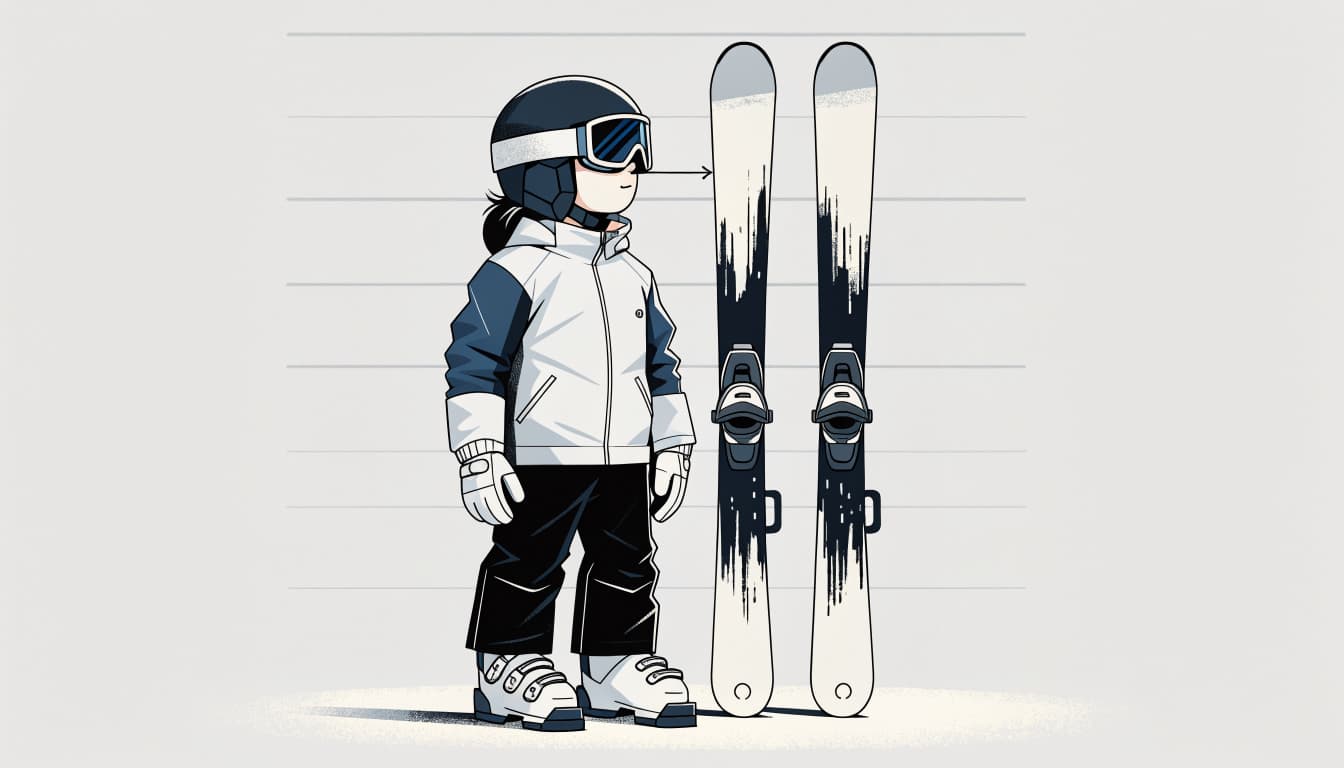
The evo youth ski buyer's guide uses chest-to-nose as a general starting point. The next step is matching that estimate with the particular ski you're considering.
Brand charts can differ because skis differ in shape, construction, and intended use. A length that makes sense for one junior model doesn't automatically transfer to another.
Body landmarks help you narrow the options. The model chart and your child's present ability decide which options belong on the shortlist.
Treat a ski beside your child as a useful visual comparison, not a reason to ignore everything else. Looking approximately right is only the opening checkpoint.
Adjust Ski Length for Your Child's Height, Weight, and Skill
Height narrows the range. Weight, strength, and skiing experience help you choose within it. Age is only a rough cross-check.
Use Height and Weight Together
These examples from evo's kids' ski size chart show how recommendations change across listed weight columns.
| Child's height | Listed weight span | Suggested ski lengths |
|---|---|---|
| 4 ft 6 in (137 cm) | 50 to 90 lb | 132 to 139 cm |
| 5 ft (152 cm) | 60 to 110 lb | 149 to 155 cm |
The takeaway is the range, not a universal answer. Two children of equal height can receive different recommendations.
A lighter, cautious beginner may need less ski than a heavier, stronger child with established turning skills. Those numbers also belong to that chart, not every junior ski available.
What to Do When Your Child Falls Between Two Sizes
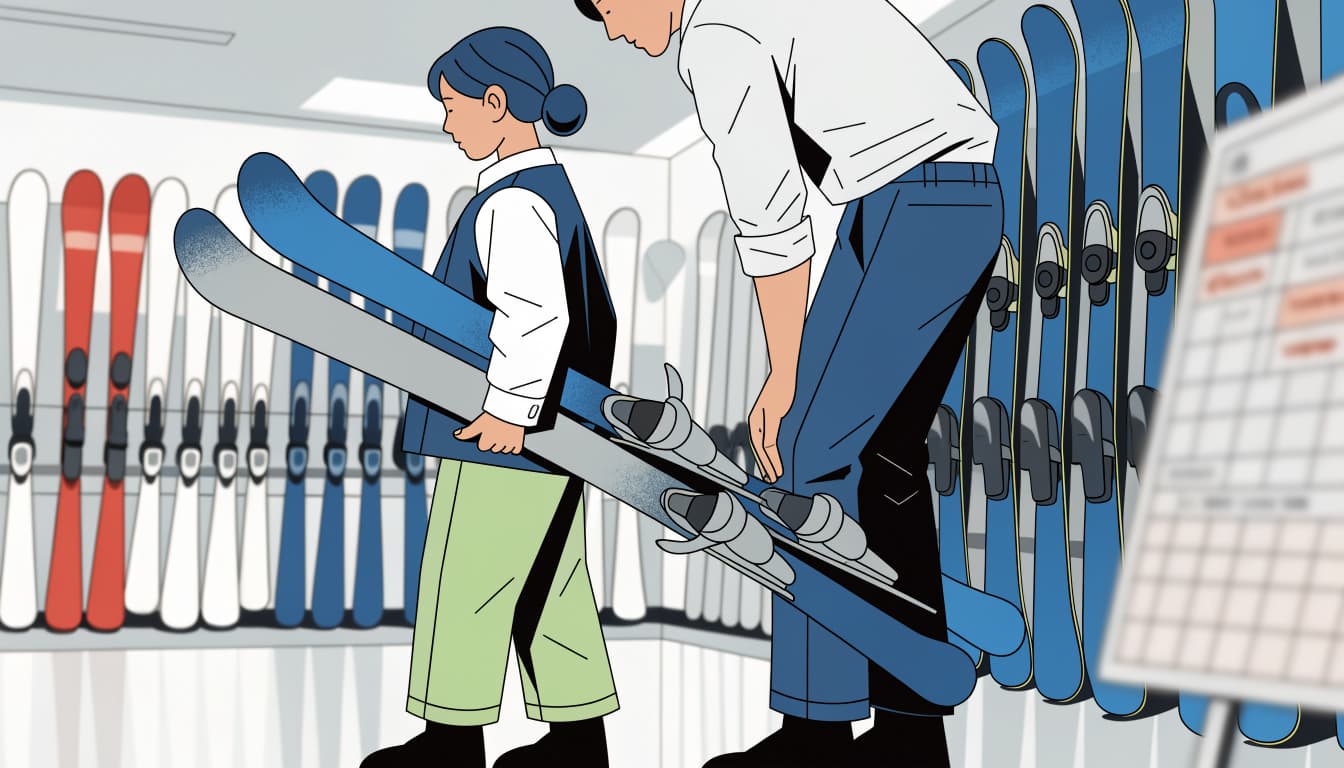
Compare current ability, confidence, strength, and weight against the manufacturer's guidance. Shorter skis are generally easier to turn, which helps newer or hesitant skiers.
A stronger, experienced child may prefer the stability of the longer option. That choice should reflect skiing they can already manage, rather than skills you hope they'll download by February.
If both lengths fit the chart, prioritize the one your child can direct comfortably. Don't add length solely for growth.
Also describe ability honestly. Linking controlled turns on appropriate terrain tells you more than how many seasons your child has owned a lift ticket.
Match the Ski to Your Child's Terrain and Skiing Style
For ordinary family downhill skiing, start with what your child actually does on the mountain. A beginner learning controlled turns on groomed slopes needs a forgiving setup they can steer without a wrestling match.
A confident skier making stronger turns may benefit from a more stable option. Length matters, but ski category and construction matter too. A demanding ski doesn't become beginner-friendly because you choose a shorter version.
Nordica's ski sizing guidance treats height and weight as starting points alongside terrain, snow conditions, ski category, and personal preference.
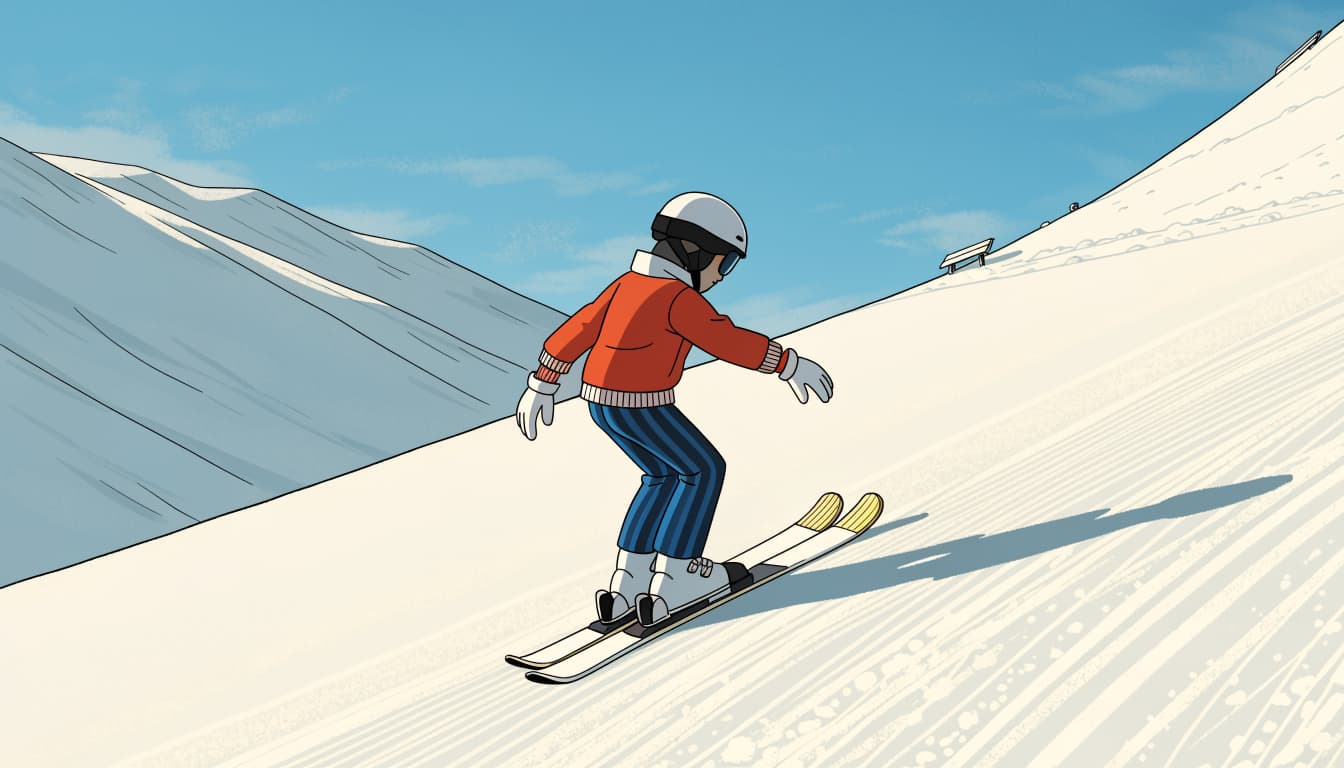
Think about the conditions your child usually encounters, rather than the powder footage you've saved on your phone. Mostly groomed family runs call for a different conversation than specialized racing or park skiing.
You don't need a homemade centimeter adjustment for every snow forecast. Use the model's sizing guidance instead of inventing a separate formula for ice, soft snow, and afternoon slush.
Your child's comfort belongs in that decision, too. Explain whether they enjoy steady, deliberate turns or already ski confidently across varied runs. That gives a fitter useful information beyond a height measurement.
Check Boots and Bindings Along With Ski Length
Correct ski length can't rescue a mismatched setup. Boots and bindings need their own fitting attention, even when the skis look perfect.
Make Sure Your Child Can Flex the Boots
Have your child bend their knees and press forward in the boots. REI's youth guidance says the boot should flex enough to let the knee move forward over the toes.
If your child can't flex it, the boot is too stiff for them. A boot that looks impressively serious can still block the movement they're trying to learn.
Ask about pressure, heel movement, and toe comfort. Watch their movement rather than treating a quick "they're fine" as a complete fitting assessment.
REI's boot-sizing demonstration gives you useful visual context before a youth fitting.
Leave Binding Setup to a Ski Technician
A technician should select an appropriate youth binding, calculate its release setting, and test the setup. Your child's current height, weight, ability, and boot sole length matter.
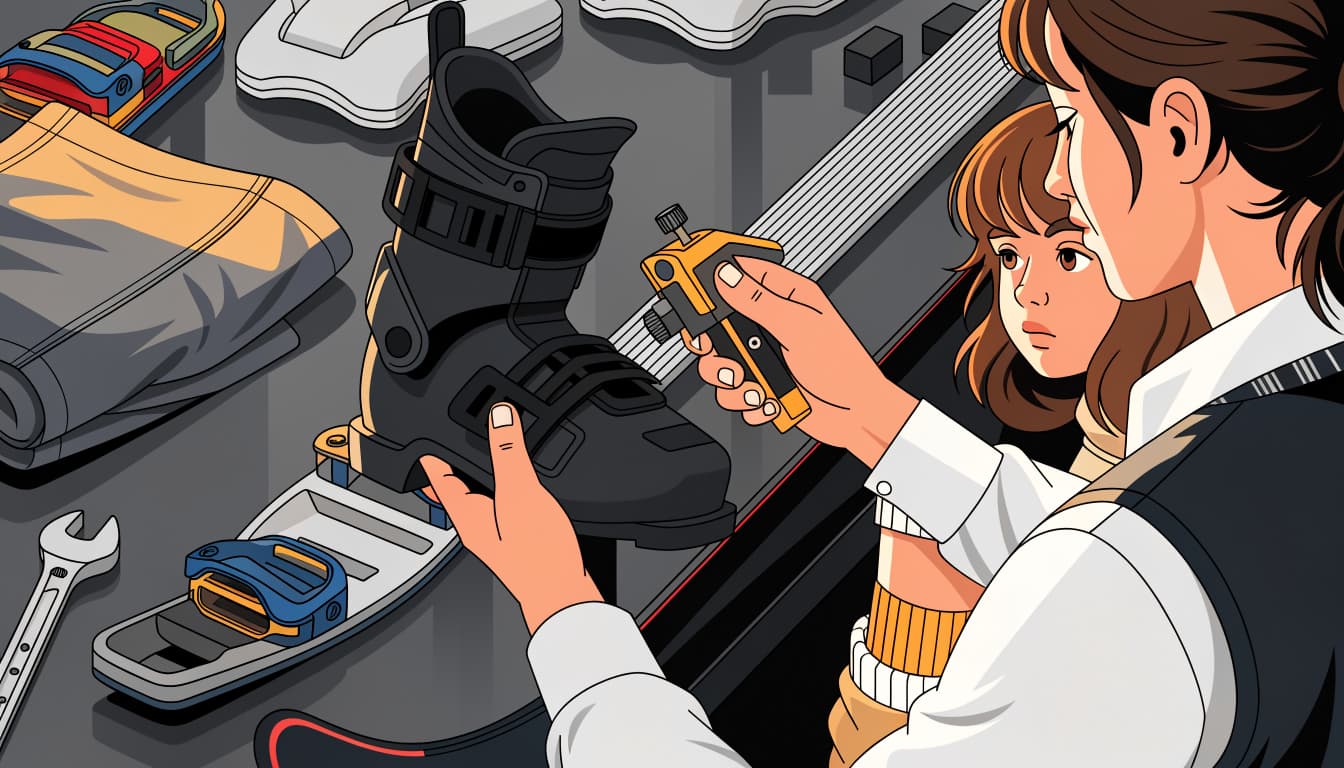
Bring the skis, boots, and bindings together when discussing compatibility. A boot clicking into a binding doesn't establish that the combination is appropriate.
Used and hand-me-down equipment needs a professional function check, too. Don't carry over a sibling's settings or adjust release values yourself. Binding setup is where the DIY tutorial tab stays closed.
Avoid Common Sizing Mistakes When You Buy or Rent
Buying long for growth is tempting. Unfortunately, your child has to turn those skis now, while future height remains theoretical DLC.
Overly long skis can be harder for beginners to control. REI's downhill ski guidance favors equipment suited to a child's present size and advises going shorter when uncertain.
Age-only shopping creates another problem. Sharing a birthday year doesn't mean children share height, weight, strength, or experience. A generic chart is a starting reference, not a fit guarantee.
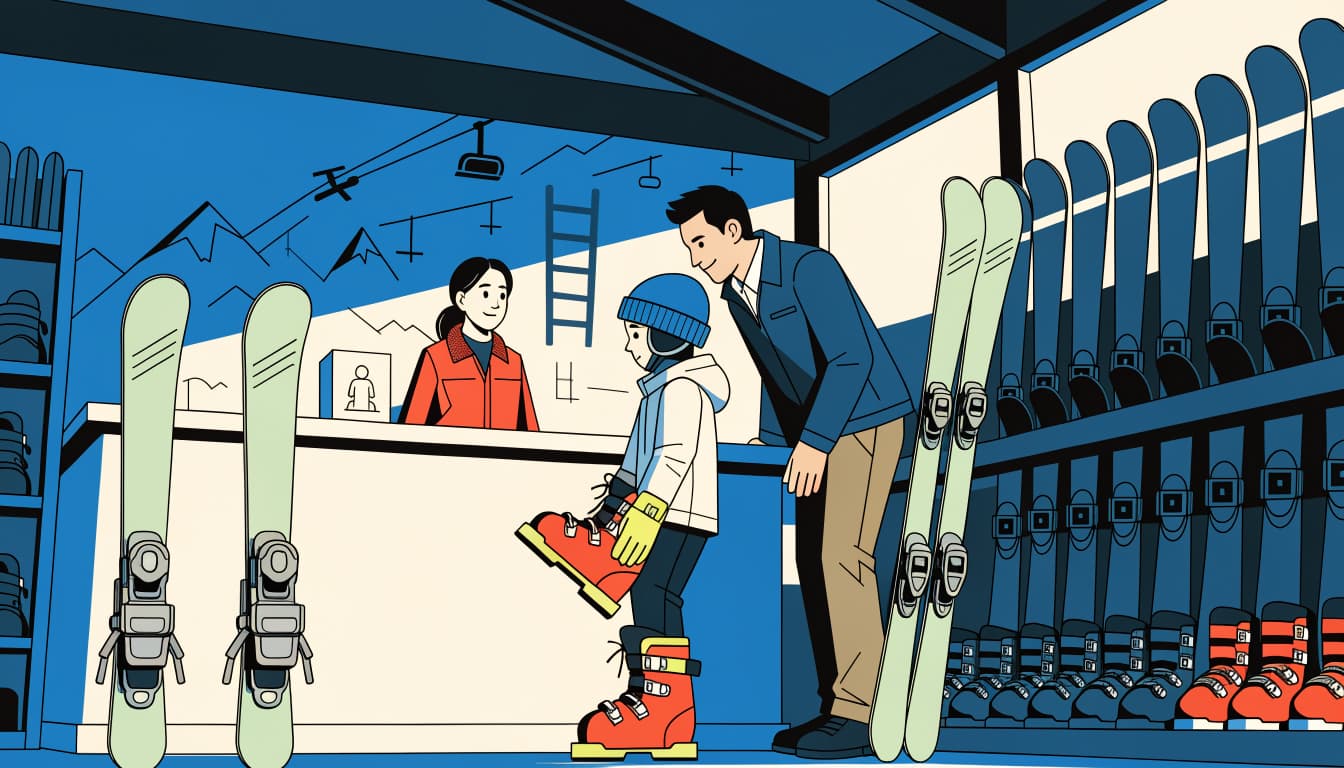
Rent or Buy for This Season
Renting gives you an opportunity to fit equipment to current measurements without committing to ownership. It can suit an occasional trip or a child whose needs change quickly.
Buying gives you a consistent setup, but ownership doesn't eliminate fitting requirements. Compare the exact model chart with your child's current needs, and include professional boot and binding work in your planning.
Streetwear & Casual Styling
Once you're indoors and out of wet layers, build your off-slope look around our signature Cyber-Brutalist Anime Graphic Tees. Keep the surrounding pieces simple so the graphic gets the screen time.
Pair our Vacation Plus Therapy Tee with dark jeans, a zip hoodie, and sneakers for dry indoor downtime. Our Father Mode Off Duty Tee works with relaxed cargos and an overshirt.
Save those outfits for the lodge or cabin. On snow, your child's weather-appropriate ski clothing takes priority over the family fit check.
Frequently Asked Questions
Do These Sizing Rules Apply to Cross-Country Skis?
No. These recommendations concern downhill skis, so don't transfer the chest-to-nose rule to a Nordic setup. You'll need guidance for the particular cross-country ski category, where body weight and intended use can lead to different sizing.
What Units Are Ski Lengths Measured In?
Ski lengths are normally listed in centimeters. Keep that separate from boot sizing and boot sole length, which use different measurements. A number printed on one piece of equipment isn't interchangeable with a number on another.
Should Your Child Bring Poles to a First Lesson?
You may find that a beginner lesson starts without poles so your child can focus on balance and turning. Follow the instructor's approach rather than assuming poles complete every beginner setup. They don't determine the correct ski length.
Can Your Child Use Adult Skis Once the Lengths Match?
Matching length alone doesn't make an adult ski suitable. Your child also needs appropriate flex, construction, and a compatible boot-and-binding setup. A ski technician can assess that transition without treating centimeters as the only requirement.
Choose the Skis Your Child Can Control Today
Start with height and weight, then account for ability and usual terrain. Use the exact model's chart to narrow the choice, and have boots and bindings professionally fitted and tested.
Your child's control and comfort matter more than squeezing another season out of extra length. Choose equipment that supports the skiing they can do today, rather than asking them to struggle through a growth plan with edges attached.