

Tooth Cap Cost: What You'll Pay for a Dental Crown
A tooth cap is another name for a dental crown, a covering that protects or restores a damaged tooth. In the U.S., your tooth cap cost often falls between $800 and $2,500 per tooth without insurance.
Your final bill depends on the crown material, your location, your dental plan, and any extra treatment. Those prices are estimates, not a checkout total, because apparently teeth don't believe in transparent pricing.
Start with a written, itemized quote so you can separate the crown fee from everything else your tooth needs.
Key Takeaways
- You can expect a typical self-pay crown price of $800 to $2,500 per tooth, with some materials costing more.
- Your crown's material, local prices, and treatment needs all affect the final bill.
- Insurance may cover about 50% of an allowed charge, subject to your plan's limits.
- Root canals and core buildups can add separate charges to your treatment.
- Request an itemized estimate and confirm benefits before scheduling, rather than comparing crown prices alone.
Tooth Cap Cost: What You Can Expect to Pay
Your starting budget is about $800 to $2,500 for one crown without insurance. Many estimates sit around $1,000 to $1,800, but there's no single national price tag.
GoodRx's crown cost breakdown gives the broad $800 to $2,500 range. Other estimates use different materials, locations, and billing data, so their averages won't match perfectly.
Your local quote matters more than an average that includes practices hundreds of miles away. Also, check whether the quoted amount covers only the restoration or your complete treatment.
If your dentist quotes several crowns, ask for the price per tooth and the combined estimate. Multiple teeth can mean a larger bill and faster use of your insurance benefits.
Want to see what the appointment involves? This Dental Health Society video shows the crown procedure.
What Changes Your Crown Quote
How crown material changes the price
Your dentist considers appearance, bite forces, tooth location, and the amount of healthy tooth remaining. The most expensive option doesn't automatically win the boss fight.
Use these approximate self-pay ranges as a starting point.
| Crown material | Approximate price per tooth |
|---|---|
| Porcelain-fused-to-metal | $800 to $2,400 |
| All-ceramic or porcelain | $1,000 to $2,500 |
| Zirconia | $1,000 to $2,500 |
| Gold or other metal alloys | Reported ranges include $900 to $2,500 and $1,200 to $3,000 |
Your metal crown price depends partly on the alloy; those overlapping ranges reflect different estimates.
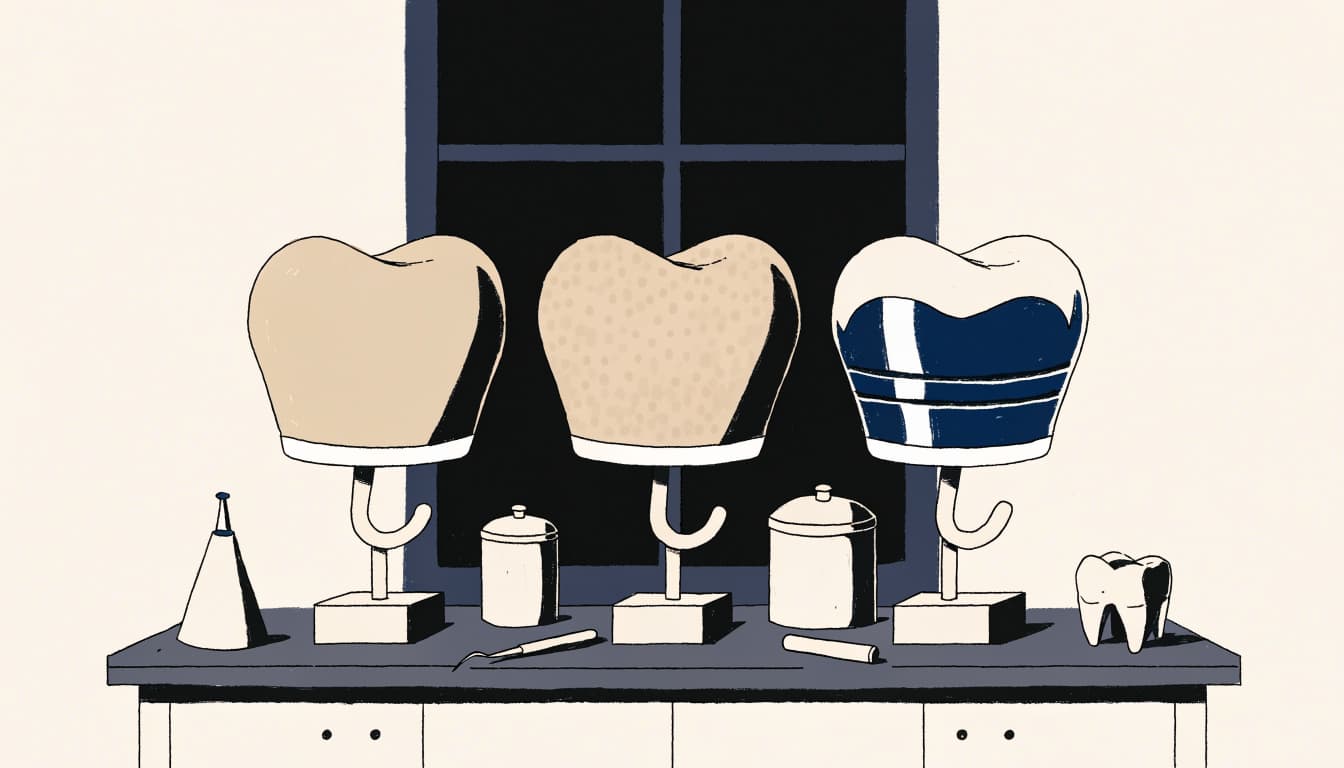
Porcelain and ceramic can suit visible teeth because of their tooth-colored appearance. Zirconia is another tooth-colored ceramic option. Metal crowns can offer durability, though their appearance may matter more when you smile.
Ask why the recommended material suits your tooth. You deserve a clinical reason, not a premium-tier upgrade pitch.
Why the same crown can cost more in one area
Your city, state, dentist, lab fees, and case complexity can change the quote. Specialist care and same-day crown technology may also affect pricing.
Real Dental Costs reports porcelain crown averages of about $1,046 in Alabama and $2,331 in California. Those are reported state averages, not individual quotes.
Even nearby offices can charge differently. In-network insurance rates can also change your share without changing the crown material.
If you're comparing same-day and lab-made crowns, ask about the complete fee and appointment count. Don't assume either approach is always cheaper.
What Your Dental Insurance May Cover, and What It May Not
Many dental plans classify crowns as major services. When covered, a plan may pay about 50% of its allowed charge.
That doesn't promise half off your dentist's full fee. Insurance math has its own difficulty setting.

Your deductible, annual maximum, waiting period, and exclusions all affect payment. An annual maximum limits what the insurer pays, rather than what you might owe.
Humana's crown coverage guidance helps explain how treatment costs and benefits interact. Your own policy controls your coverage.
Before treatment, request a pretreatment estimate and confirm the dentist's network status with your insurer. Ask how much of your annual benefit remains and whether replacement crowns have frequency restrictions.
Original Medicare generally excludes routine dental crowns. Some Medicare Advantage plans include dental benefits, but you need to check their limits.
Medicaid adult dental coverage varies by state. Don't assume crowns are covered or excluded without checking your state's benefits and participating providers.
A pretreatment estimate helps you plan, but it isn't a guarantee of final claim payment.
Calculate Your Full Treatment Bill
Estimate your out-of-pocket crown cost
Start with the plan's allowed amount, rather than the office's advertised price.
For a $1,200 allowed charge, suppose you have a $50 deductible remaining and 50% coverage. Subtract $50, leaving $1,150 eligible for coverage. The insurer's half is $575, and your share is $625.
If only $400 of your annual benefit remains, insurance pays at most $400. Your share becomes $800, assuming the in-network fee is $1,200.
Out-of-network charges above the allowed amount may increase your bill further, depending on the plan and provider.
Real Dental Costs reports insured estimates around $450 to $1,250. Your deductible and available benefits can move you outside that range.
Delta Dental's crown cost guidance also explains why network pricing and coverage affect your total.
Check whether extra dental work is part of the quote
Ask whether the fee includes your exam, X-rays, tooth preparation, scans or impressions, temporary crown, lab work, cementation, and follow-up adjustments.
Temporary crowns are often included, but some offices list a separate charge. Confirm it rather than assuming.
A root canal, core buildup, or post-and-core procedure can add separate fees. An extraction and replacement tooth would involve a different treatment plan entirely.
A lower crown fee can still produce a higher treatment bill if necessary preparation and related procedures are billed separately.
Compare the same scope of treatment before deciding one office costs less.
How to Compare Quotes and Keep Your Crown Affordable
Your tooth cap cost is easier to compare when each office gives you a written, itemized estimate. Keep the material, included services, and insurance assumptions consistent.

Questions to ask before you book
You don't need dental-school vocabulary to ask useful questions. Bring these to your consultation:
- What is my total estimated treatment cost?
- Which crown material do you recommend for this tooth, and why?
- What services are included in the crown fee?
- Are additional procedures likely, and what would they cost?
- What amount will my insurance allow and pay?
- Would choosing an in-network dentist change my estimated share?
Ask the office to explain unfamiliar billing codes and identify charges that could change after treatment begins. Keep a copy of the estimate and your insurer's response.
If two recommendations differ, ask each dentist what condition they're treating. A lower price is only useful when the proposed care fits your tooth.
Compare payment options without skipping needed care
Office payment plans, third-party financing, and dental discount plans may help you spread or reduce costs. Check fees, interest, eligibility, participating dentists, and plan limits.
With financing such as CareCredit or Sunbit, review the actual agreement before accepting. Some promotional offers use deferred interest. Missing the payoff deadline can make borrowing much more expensive.
Dental discount plans aren't insurance. Confirm the crown discount and participating provider before paying a membership fee.
A second opinion can help when the treatment plan or price is unclear. Ask your dentist whether waiting is safe, because untreated damage can increase your eventual bill.
Streetwear & Casual Styling
For your appointment-day outfit, keep things comfortable. A Cyber-Brutalist Anime Graphic Tee works with relaxed cargos or dark-wash denim without requiring an entire character-design committee.
Let bold anime artwork carry the look. A plain overshirt or lightweight zip hoodie adds a layer you can remove if needed.
You can keep the rest simple: comfortable sneakers, minimal accessories, and a bag for your paperwork. Your outfit can announce your fandom while your questions handle the grown-up admin.
If you've received instructions about sedation or appointment preparation, follow those first. The fit can wait; your dentist's directions can't.
Frequently Asked Questions
Is a tooth cap the same as a dental crown?
Yes. "Tooth cap" is the informal term for a dental crown, which covers and protects your tooth. Your dentist may use either term when explaining treatment, but "crown" usually appears on estimates.
How much does a crown cost without insurance?
You can commonly expect about $800 to $2,500 per tooth in the U.S. Material and local pricing affect that amount, and some metal crowns cost more. Separate procedures can raise your total treatment bill.
Does a crown cost include a root canal?
A root canal is generally a separate procedure with its own fee. If your tooth needs both treatments, request an estimate for the combined bill. You don't automatically need a root canal because you're getting a crown.
How long does a dental crown last?
Your crown may last about five to 15 years, sometimes longer. Material, fit, oral care, and habits such as grinding affect its lifespan. Follow your dentist's cleaning guidance and ask whether you need a night guard.
Get the Full Price Before You Schedule
Your typical self-pay tooth cap cost is about $800 to $2,500 per tooth. Material, location, insurance coverage, and extra treatment determine where your bill lands.
The number you need is the complete treatment estimate. A cheaper crown line item won't help much if it leaves necessary work off the page.
Ask your dentist for a written, itemized quote. Confirm benefits with your insurer before scheduling, and ask how soon your tooth needs care. You can make a clear decision without treating your dental bill like mystery loot.