

TV Remote Codes: How to Find and Program the Right Code
Key Takeaways
Finding the right remote code is mostly a matter of matching the remote model, TV brand, and programming method. A little patience helps when the first code controls only some buttons.
- Find the remote model before searching for codes.
- Use the TV brand list supplied for that specific remote.
- Test power, volume, input, menu, and navigation buttons.
- Try automatic code search when direct entry fails.
- Record the working code for the next setup.
Understand how TV remote codes work
TV remote codes are short numeric commands that tell a remote which signal pattern to send. A universal remote stores many of these patterns, while your TV responds only to the ones it recognizes. Once you understand that relationship, programming feels less like guessing and more like matching two compatible devices.
What remote codes control
A code maps buttons on the remote to functions the television understands. Depending on the code, those functions may include power, volume, mute, input selection, channel changes, menus, and navigation. Some codes operate only a few functions, so testing several buttons matters even when the TV turns on successfully.
The first working code is not always the best one. If power works but input or menu does not, another code for the same brand may provide broader control.
Why different TV brands use different codes
Manufacturers design their infrared or wireless command systems independently. That is why a code that works for one brand usually has no useful meaning for another. Even TVs sold under a familiar brand can use different command sets across product lines or generations.
Your remote therefore needs both the TV brand and the correct remote model. A brand name alone is usually not enough to narrow the list reliably.
The difference between universal and original remotes
An original remote is made for one TV family and normally works without code entry. A universal remote is designed to control several device types, so you program it with a code or let it search through stored codes.
Universal remotes are handy when you want fewer controllers on the coffee table. They can also have limits: a code may support basic viewing controls while leaving specialized smart-TV functions unavailable.
Why one brand may have multiple valid codes
A remote can contain several code sets for one TV brand because models change over time and different product families may use different commands. The list is not necessarily a ranking from best to worst. It is a group of possible matches.
When more than one code works, keep the one that handles the largest number of everyday buttons. That small comparison can save you from discovering later that the input key is mysteriously decorative.
Find the correct code for your TV
The safest starting point is the remote itself, not a random code list copied from a different model. Look for the remote model number, identify the TV brand, and then use instructions written for that combination. This approach reduces trial and error before you even point the remote at the screen.
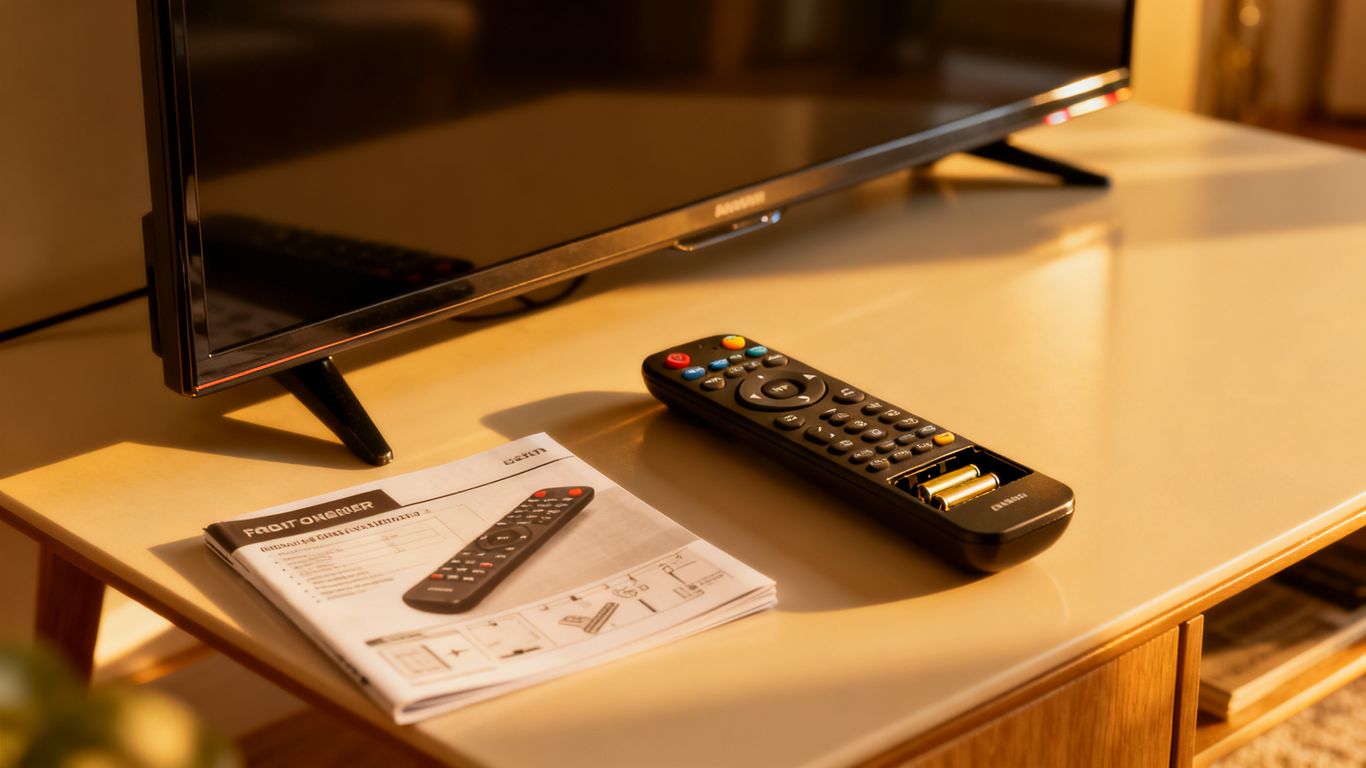
Check the remote’s instruction manual
The manual usually lists supported brands, device types, setup instructions, and one or more codes. Check the front, back, battery compartment, or packaging for the remote model number before using the list.
If the paper guide is gone, search for the manual using the exact model printed on the remote. The same brand can sell several remotes with different code libraries and button layouts.
Search by TV brand and remote model
Search using both pieces of information, such as the remote model followed by the TV manufacturer. Searching only for the television brand can produce codes for a different remote, which is a very efficient way to waste an evening.
A specialized Remote Code Finder can also help you locate codes and programming instructions when the brand list is unclear. Verify the remote revision or model number if the tool asks for it.
Use the manufacturer’s online code finder
Some remote manufacturers provide online lookup tools or downloadable manuals. Enter the device type, TV brand, and remote model exactly as requested, then note every suggested code instead of trying only the first result.
For a direct-entry example, the universal remote code guide describes selecting the device type, entering a four-digit code, and testing the result. The button names may differ on your remote, but the basic sequence is often similar.
Identify your TV’s exact model number
The model number is usually printed on a label at the back of the television, on the original box, or in the TV’s settings menu. You may not need it for a basic universal code search, but it becomes useful when several code families appear or when a model-specific manual is available.
Write down the model before moving the TV if the label is difficult to reach. You can then search calmly instead of balancing a flashlight, a phone, and a remote behind the cabinet.
Program a universal remote with a code
Direct code entry is usually the quickest method when you already have a short list of likely codes. Keep the TV powered on, point the remote toward it, and follow the remote’s own setup sequence rather than assuming every model uses the same buttons. Small differences in setup buttons and indicator lights are normal.
Prepare the TV and remote
Put fresh batteries in the remote and turn the TV on using its physical button if necessary. Clear a direct path between the remote and the TV, then keep the code list nearby.
Before starting, decide which functions matter most to you. Power, volume, input, navigation, and menu controls are a practical minimum for a television remote.
Enter the setup mode
Most universal remotes use a setup button, a device button, or a combination of both. Hold or press the required button until the indicator light changes, then select the TV device mode if your remote asks you to do so.
Do not rush this step. If the light does not behave as the manual describes, release the buttons, wait a few seconds, and begin again with the remote aimed away from other equipment.
Input and test the code
Enter the first code carefully, using the remote’s number keys. Point it at the TV and test power, volume, mute, input, channel, and menu controls rather than stopping after one successful command.
Use a complete button test before deciding that the code works. A partial match may turn the TV on but fail when you need to switch from a game console to a streaming device.
Save the programming successfully
Many remotes save the code automatically when the setup light turns off; others require you to press a confirmation key. Follow the manual’s final step, then test the remote again after leaving setup mode.
If the code did not provide enough control, write it down anyway and try the next candidate. Knowing which code produced a partial match can help you compare results instead of repeating the same cycle.
Use automatic code search when codes fail
Automatic search is useful when the code list is missing, incomplete, or full of possibilities. The remote cycles through stored commands until the TV responds, so you need to watch the screen and stop at the right moment. It is slower than direct entry, but often easier than trying a long list manually.
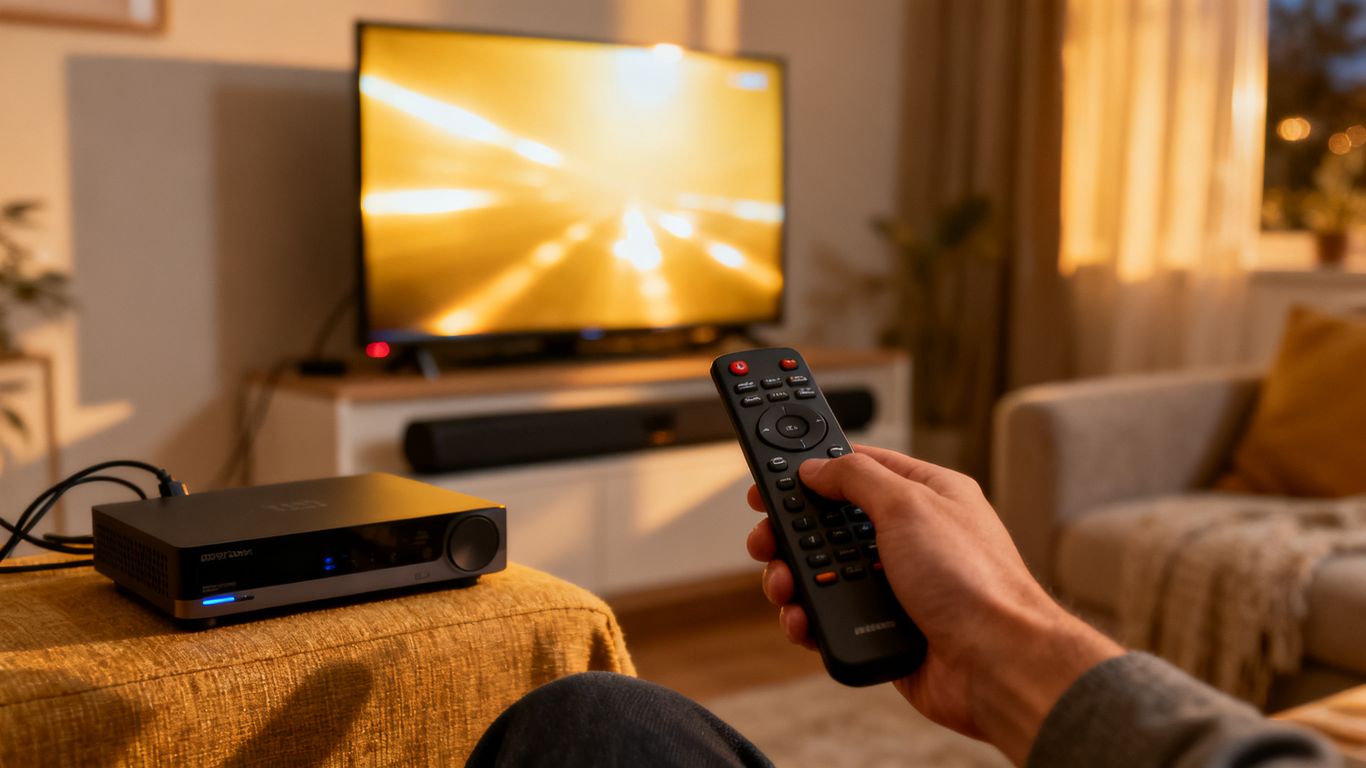
When to choose an automatic search
Choose automatic search when your TV brand is not listed, none of the listed codes work, or the first matches control only one or two buttons. It can also help when you have an older remote with a code list that no longer matches the television’s model range.
Read the remote instructions first. Some searches begin with the TV powered on, while others expect it to be off.
Run the code search step by step
Place the remote in TV mode, enter its search command, and aim it at the television. The remote may send a series of power or volume commands while the indicator flashes. Press the required search or next-code button at the pace specified by the manual.
Keep your hand away from unrelated buttons. Automatic search is easy to interrupt accidentally, especially on remotes with cramped layouts.
Stop the search when the TV responds
When the TV reacts, stop the search immediately using the confirmation button. If you wait for another signal, the remote may move past a usable code and leave you searching again.
After stopping, test several controls before celebrating. A response proves that one command was recognized; it does not prove that every button has been assigned correctly.
Confirm all essential buttons work
Check the controls you use most often, including power, volume, mute, input, channel, home, menu, and directional navigation. If one important function fails, resume the search and look for a stronger match.
A quick checklist keeps the decision consistent:
- Power turns the TV on and off.
- Volume and mute respond normally.
- Input switches between connected devices.
- Menu, home, and navigation buttons work.
Once those controls pass, test the remote from your usual seating position. A code that works only when you stand next to the screen may point to weak batteries or an obstructed sensor rather than a programming problem.
Troubleshoot common remote programming problems
Remote programming failures often come from a small mismatch rather than a broken television. The wrong device mode, weak batteries, a blocked sensor, or an incomplete save can all look like a bad code. Work through the simple physical checks before assuming the remote is incompatible.
What to do when no code works
Confirm that you are using codes for the remote’s exact model, not merely the TV brand. Try every listed code, then use automatic search if the remote supports it. Also make sure the TV is receiving commands from the remote’s position.
If nothing works, check whether the remote is intended to control televisions at all. Some compact remotes are designed for a particular device family and cannot be programmed like a full universal model.
Fix power, volume, or input button issues
A code may control power while failing on volume or input because those commands belong to a different code set. Try another code for the same TV brand and compare the buttons that matter to you.
If volume is routed through a soundbar or receiver, the remote may need a separate audio-device setup. Do not assume a television code will automatically control every component in the room.
Replace batteries and clear interference
Install a matched pair of fresh batteries and check that the contacts are clean. Move lamps, objects, or other equipment that could block the TV’s sensor, and avoid aiming through tinted cabinet glass during testing.
Stand a reasonable distance away and press each button firmly. If the indicator light is dim or inconsistent, the issue may be the remote’s power supply rather than its code.
Reset the remote before trying again
A reset can clear an incomplete setup and return the remote to a known state. Use the reset procedure in the manual, since the button combination varies by model, then remove and replace the batteries if the instructions recommend it.
After resetting, program only the TV first. Once the television works reliably, add a sound system or streaming device one at a time so you know which setup introduced a problem.
Match codes to popular TV brands and devices
Code lists are organized around the remote, not around one universal master list for every television. A code printed for one universal remote may be useless on another, even when both remotes carry the same general device labels. Treat online lists as starting points and verify them against your remote model.
Codes for major TV manufacturers
For a major TV manufacturer, begin with the code list supplied with your remote or a lookup tool made for that remote. Enter each candidate carefully and test the full set of everyday controls before moving on.
If you need a second reference, universal and original remote codes can help you search by remote model and device brand. Keep the source and model number together in your notes so you do not mix code lists later.
Codes for Vizio and onn-powered-by-Vizio TVs
Vizio and onn-powered-by-Vizio televisions may appear under separate labels in a code directory. Search using the exact brand wording shown by your remote, then test the TV’s power, volume, input, and navigation buttons.
For that specific pairing, the VIZIO or onn. remote codes page is a useful reference for universal-remote setup. Compatibility still depends on the remote’s code library and device mode.
Codes for streaming devices and sound systems
Streaming players, soundbars, cable boxes, and receivers use their own device categories and code sets. Program each one separately, selecting the correct device button before entering a code or starting an automatic search.
A television code may not operate an attached sound system, even when the TV remote has volume buttons. If you want one remote to manage everything, confirm that the remote supports those device types before buying or programming it.
Why device compatibility varies by remote
Universal remotes differ in stored code libraries, supported device categories, button layouts, and software revisions. That is why an online code that works perfectly for one model may fail on another.
Compatibility also depends on what the device exposes through its remote commands. Basic controls are more likely to work than specialized smart-TV shortcuts or application-specific actions.
Keep your remote setup working reliably
Once you find a working code, preserve the information. Remote setup becomes frustrating mainly when a successful configuration disappears and you have to reconstruct it from memory. A tiny note can prevent a full evening of button pressing later.
Record the working code
Write down the remote model, TV brand, TV model, working code, and any buttons that did not respond. Keep the note in your phone or with the television’s other manuals.
If several codes work, record the one that gives you the broadest control. Include whether the code was entered directly or found through automatic search.
Store the remote’s programming instructions
Save a digital copy of the manual or photograph the relevant setup page. Include the reset procedure and the automatic-search steps, not just the code table.
If your entertainment area has a bit of personality beside the screen, a Ghost Who Haunts CRT Televisions graphic tee is documented as a retro-anime cyber-art shirt for people who enjoy nostalgic gaming and spooky streetwear. It will not program the remote, obviously, but it can coexist with the same little CRT-themed corner.
Reprogram after replacing the remote
A replacement universal remote may use a different code library even if it has a similar shape. Start over with the new model number, then use the recorded TV brand and model as supporting information.
For a tech-themed gift area, the documented Tech Halloween Gift shirt uses a humorous “Can’t Exit Vim” concept for programmers and tech enthusiasts. Keep the clothing choice separate from the remote setup; the useful part here is remembering that similar-looking tech products can still have different specifications.
Know when to use a replacement remote
Replace the remote when batteries, line of sight, repeated resets, and multiple code methods have all failed. Physical damage, unresponsive keys, or a fading indicator can make programming impossible even when you have the correct code.
If you prefer a quieter, low-key gift for someone who likes understated identity-driven apparel, documented shirts for introverts are a separate option from the technical problem of replacing a remote. Choose a remote based on device compatibility and button access, not on appearance alone.
Conclusion
The reliable path to working TV remote codes is simple: identify the remote model, use the matching code source, program carefully, and test the controls you actually use. If direct entry fails, automatic search and a short troubleshooting pass usually reveal whether the issue is the code, the batteries, or compatibility itself.
Frequently Asked Questions
What are TV remote codes?
TV remote codes are numeric commands that tell a universal remote which signal pattern to send to a television. Different remote models store different code libraries.
Where can you find the code for your TV?
Check the remote’s manual, the manufacturer’s code finder, or a lookup tool that supports your exact remote model. The TV brand alone may not identify the right code.
Why do several codes work for one TV brand?
A brand may use different command sets across product families and model years. Several codes can therefore be valid, while offering different levels of button support.
What should you test after entering a code?
Test power, volume, mute, input, channel, menu, home, and directional navigation. A TV turning on does not guarantee that the rest of the buttons work.
What if none of the listed codes work?
Confirm the remote model, replace the batteries, clear the line of sight, try every listed code, and use automatic code search if available. A reset may help clear an incomplete setup.
Can one universal remote control a TV and soundbar?
Often it can, but each device must be programmed under its own device category. The remote must also support both device types and the required commands.
Should you keep a record of the working code?
Yes. Record the remote model, TV model, working code, and any buttons that failed. Those details make future replacement or reprogramming much faster.