

Welding Outfits: Choose Gear That Fits the Job
Your welding outfit is protective equipment, even when it looks like ordinary workwear. Choosing welding outfits means matching your clothing to the process, sparks, heat, and work setting, because molten metal doesn't care how convincing your main-character energy looks.
You need task-appropriate protection, including clothing, gloves, boots, and coverage that stays in place when you move. Your choices also need to account for overhead work, contamination, and the condition of your gear.
Start with the hazards, then check each piece of your outfit before you strike an arc.
Key Takeaways
- Choose welding clothing through a task-specific hazard assessment, rather than buying one outfit for every job.
- Cover exposed skin with suitable non-melting protection, and use certified flame-resistant clothing when required.
- Match gloves to heat, spatter, and dexterity needs, with trouser legs covering your boot openings.
- Check fit, overlapping coverage, damage, moisture, and contamination before each job.
- Keep anime graphic tees and casual streetwear for off-duty wear, separate from your protective welding gear.
Welding Outfits: Build Protection from Head to Toe
Your basic outfit includes covered arms and legs, suitable gloves, sturdy footwear, and eye and face protection. Added leather coverage may be necessary where sparks and slag land.
OSHA's welding PPE requirements depend on the work's size, nature, and location. OSHA doesn't prescribe one universal outfit.
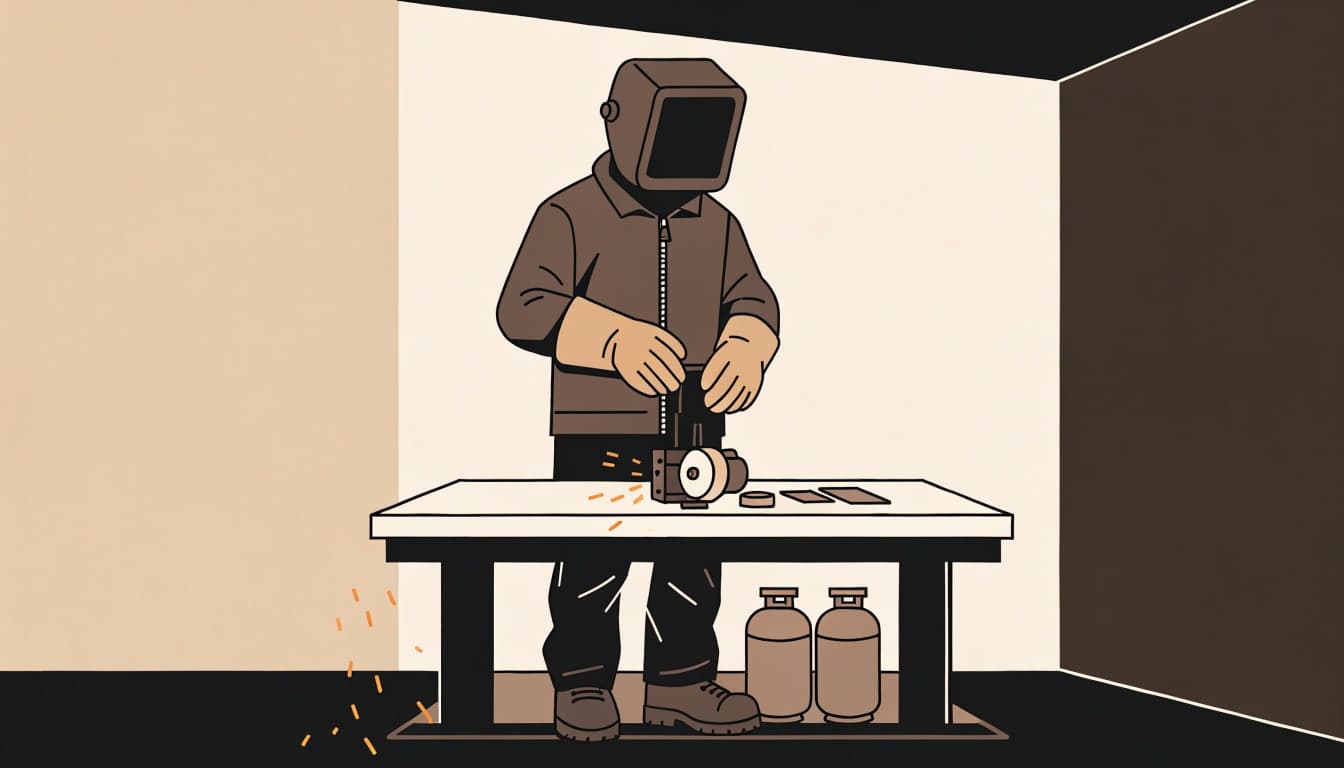
Eastwood's welding safety overview offers a visual refresher before you gear up.
Choose sleeves, pants, and a jacket that shield your skin
Wear long sleeves and full-length pants made from suitable flame-resistant fabric, leather, or heavy cotton, as the hazard assessment permits. Ordinary cotton isn't certified FR clothing and cannot replace that protection when it's required.
Avoid meltable everyday fabrics such as ordinary polyester and nylon. Don't leave skin exposed or create spark-catching openings with loose cuffs, open pockets, or rolled trouser hems.
Choose jacket coverage for your process, amperage, welding position, and heat exposure. A lightweight garment suitable for one task may leave you underprotected during another.
Add gloves, boots, and protection for high-spark work
Use dry, undamaged, flame-resistant, non-melting gloves that cover your wrists and lower forearms. Close-fitting TIG gloves support finger control; heavier insulated leather gloves are commonly used for MIG, stick, and air-carbon-arc work.
Choose sturdy leather footwear that covers your ankles. Keep trouser legs over boot openings, and secure laces or zippers so slag can't drop inside.
For greater exposure, add an apron, cape sleeves, leggings, or a shoulder cover as needed. These pieces supplement your outfit's coverage. They don't excuse exposed skin elsewhere. Sparks are annoyingly good at finding the one gap you ignored.
Match Your Welding Outfit to the Process and Worksite
Choose protection for the job in front of you. Heat, spatter, arc exposure, position, and nearby materials change what you need.
Adjust your gloves and coverage for TIG, MIG, and stick welding
TIG often demands precise torch control and filler-wire handling. Gloves that preserve dexterity can help, provided they still protect against the actual heat exposure.
MIG and stick welding commonly call for heavier hand protection because of heat and spatter. The American Welding Society recommends thick, insulated leather gloves for these processes and air-carbon-arc work.
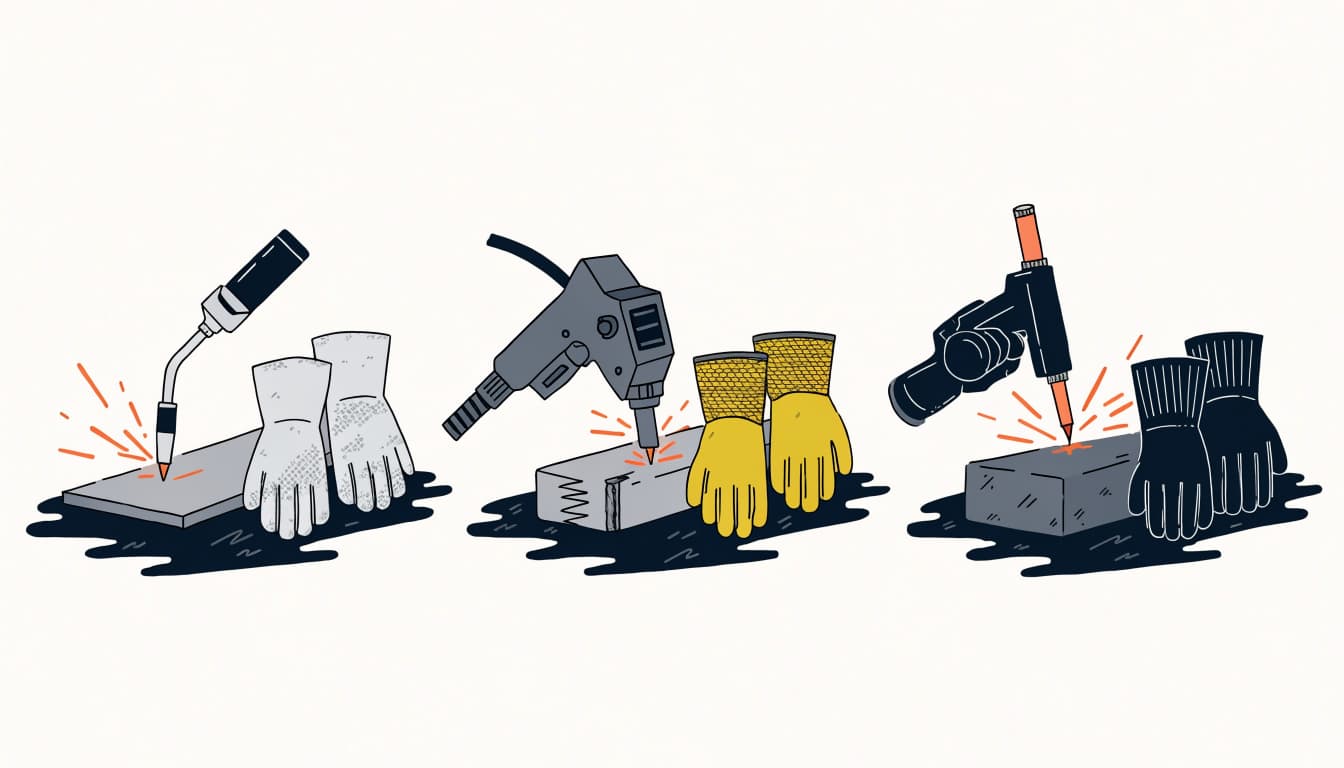
Treat those differences as selection factors, not rigid rules. Higher amperage, sustained welding, or an awkward position can change your glove and jacket needs. Your workplace assessment takes priority over a product's marketing category.
Consider confined spaces, heat, and nearby fire risks
Overhead work puts falling slag above your shoulders, neck, and footwear. A hot environment also adds heat-stress concerns. Work-rest schedules, ventilation, and suitable protection need qualified planning; rolling up your sleeves isn't a safe workaround.
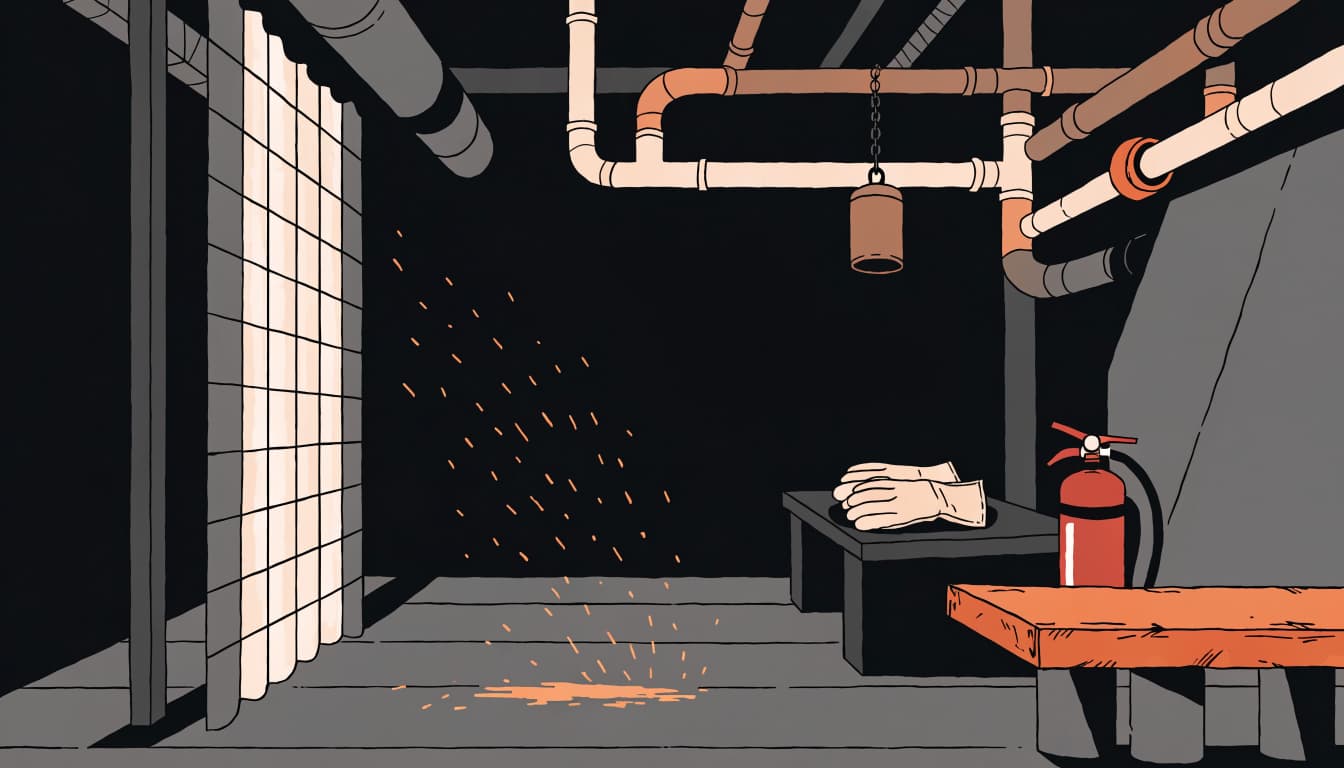
Confined spaces require separate assessment for ventilation, atmospheric hazards, access, and rescue. Nearby combustibles require hot-work controls. Your jacket cannot make an unsafe worksite acceptable.
NFPA 2112 garment requirements address flash-fire protection. NFPA 2113 selection and care requirements address selection, care, use, and maintenance. Neither is a general certification for every welding hazard. Follow site rules and qualified safety guidance.
Protect Your Eyes, Head, and Breathing Zone
Clothing is only part of your protection. Arc radiation, flying particles, fumes, and head hazards need their own controls.
Choose eye and face protection for the operation
Use a welding helmet or shield with a filter appropriate for the process and current. Don't choose a lens shade because the weld looks more dramatic through it. Follow the applicable shade guidance and your equipment instructions.
Wear required safety glasses or goggles beneath your welding helmet. The helmet doesn't cover every exposure when it's lifted, and grinding introduces different flying-particle hazards.
For gas welding or oxygen cutting, use suitable eye protection for that operation. Check lenses, headgear, and coverage before starting. A cracked lens or unreliable helmet mechanism needs attention before the next arc.
Address fumes and overhead hazards separately
You need ventilation and fume controls appropriate to the process, consumables, base metal, and coatings. A welding helmet doesn't filter your breathing air.
Where respiratory protection is required, use it through your workplace respiratory-protection program. Tight-fitting respirators require fit testing, along with the other applicable program requirements.
The University of Tennessee's welding safety policy places PPE within broader hot-work safety requirements. Apply the same principle: assess the whole operation, rather than expecting clothing to handle every hazard.
Where head protection is required, check that your helmet and other PPE are compatible.
Get the Fit Right and Keep Welding Clothes in Good Shape
Protection needs to stay in position throughout the job. Your outfit should let you work without opening gaps or snagging equipment.
Check fit, closures, and overlap before you start
Try your usual working movements before welding. Reach forward, bend, and crouch without exposing your wrists, waist, or ankles. Clothing should allow movement without hanging loosely near the work.
Keep sleeves and glove cuffs overlapping. Trouser legs should cover boot openings without a rolled cuff that collects sparks. Check those overlaps in your working position, not only while standing straight.
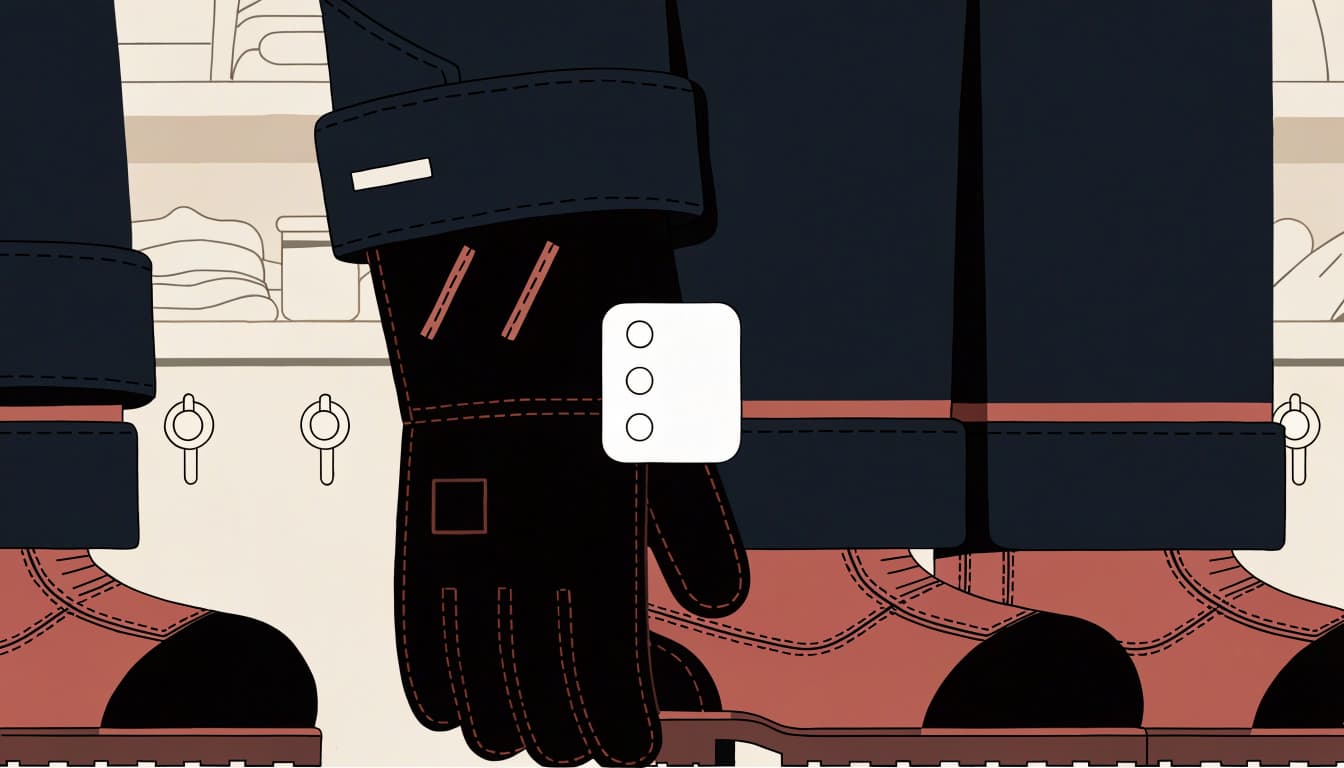
Secure closures and cover or close pockets. Empty exposed pockets before work. A pocket full of debris is already inconvenient; adding hot slag gives you a problem you didn't need.
Inspect, clean, and replace damaged gear
Before each job, check for holes, worn seams, damaged closures, contamination, and dampness. Inspect glove fingertips and seams as well as the larger garment panels.
Change clothing contaminated with oil, grease, solvents, or other flammable substances. Dry, clean gear matters, and moisture can make clothing or gloves unsafe.
Follow the manufacturer's washing and care directions, especially for certified FR items. Don't improvise bleach, fabric-softener, or repair treatments without checking whether they're permitted.
Replace gear that can no longer provide reliable coverage. A familiar jacket with a hole near your elbow has earned retirement, not another shift because you're emotionally attached.
Streetwear & Casual Styling
Your off-duty wardrobe gets a different assignment: show personality. Anime graphic tees and casual streetwear provide no welding protection.
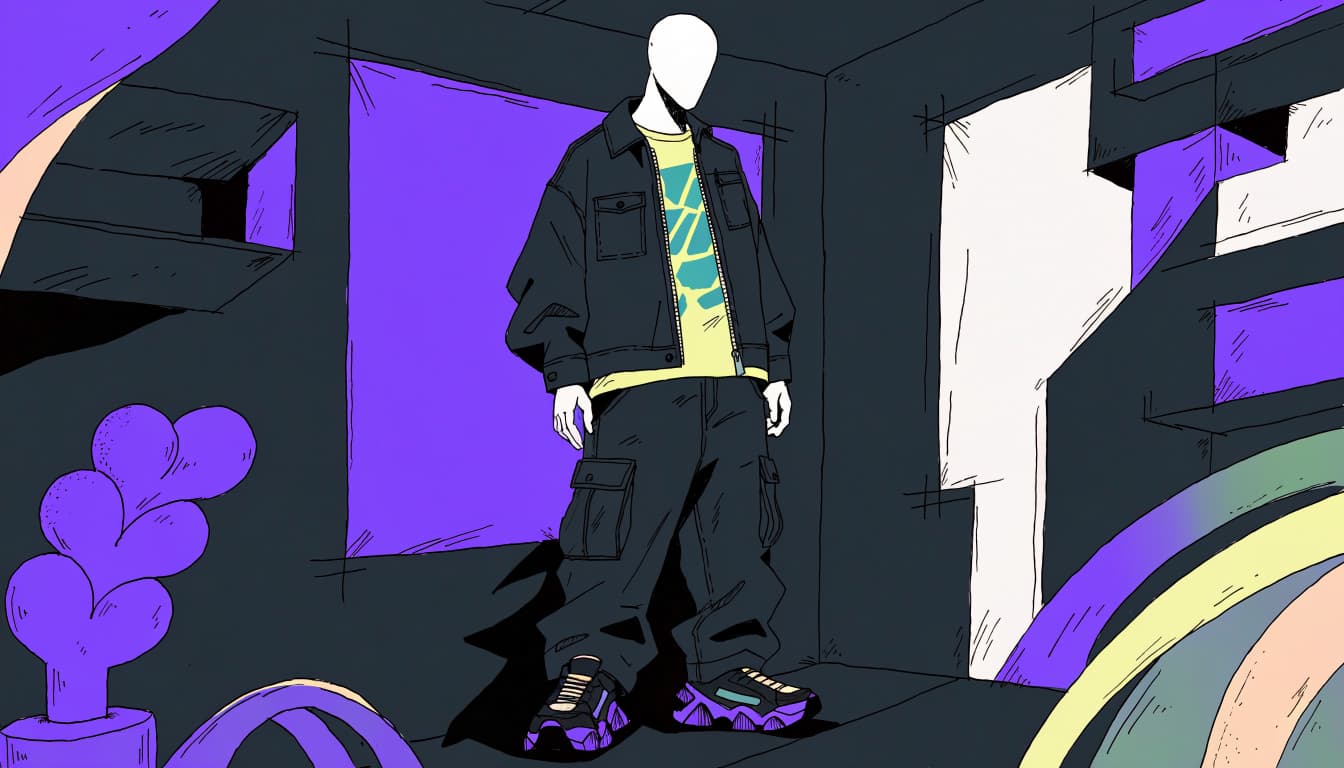
Bring your personal style into your off-duty fit
Build your casual look around TrendReactTees.STORE's signature Cyber-Brutalist Anime Graphic Tees. Pair bold artwork with relaxed cargos, dark-wash denim, or an open overshirt.
Let the tee carry the visual chaos. Your pants don't also need to look like a corrupted loading screen. The brand's cyber-brutalist graphic tee style combines anime energy with glitch-heavy, high-contrast design.
Keep surrounding pieces simpler so the artwork stays visible.
Change clothes before the casual outfit goes on
Remove contaminated workwear before wearing casual apparel, and keep it separate from clean clothing. Don't bring shop residue into your fresh layers.
For more anime streetwear outfit ideas, use the graphic as your focal point and repeat one color elsewhere. You can look like the final boss after work without dressing for a boss fight at the welding table.
Frequently Asked Questions
Who pays for welding PPE at work?
Your employer generally must provide required workplace PPE at no cost under OSHA's payment rules. Some exceptions apply, including certain non-specialty safety-toe footwear that you can wear off-site. Confirm your site's purchasing policy before spending your own money on required gear.
Can you wear contact lenses while welding?
You can generally wear contact lenses unless workplace restrictions or medical advice say otherwise. They don't replace required eye protection. Tell your supervisor about any vision needs so your protective eyewear fits correctly and lets you see the work clearly.
Do you need different PPE for plasma cutting?
You need protection selected for plasma cutting's hazards, including radiation, hot metal, and flying particles. Don't assume your welding setup automatically covers every cutting operation. Check eye-filter requirements, clothing coverage, and the equipment manufacturer's instructions before using the cutter.
How should you store welding gear between shifts?
Store your gear clean and dry, away from oil, solvents, and other contamination. Let damp items dry according to their care instructions rather than sealing them in a bag. Keep protective lenses and equipment where they won't get scratched, crushed, or otherwise damaged.
Choose Protection Before You Choose the Look
Reliable welding outfits start with the actual hazards and stay effective through proper fit, inspection, and care. Your strongest choice is task-matched PPE, supported by a safe worksite.
Check your coverage before the arc starts. Save the graphic tee, glitch art, and anime-level personality for after you've changed out of your work gear. Your casual outfit can have lore; your welding protection needs to do its job.