

What Color Will My Poodle Puppies Be?
TrendReactTees.STORE TeamYour Poodle puppies' adult colors depend on inherited traits from both parents, and some coats lighten as the puppies mature. Parent colors offer useful clues, but they don't guarantee a litter of matching miniatures.
Puppy photos can make you feel like you've picked a finished character design. Genetics may have another update planned.
This post may contain affiliate links. If you make a purchase through these links, I may earn a small commission at no extra cost to you.
For your own dog-parent uniform, our My Therapist Is a Dog Tee and Dog Eats Custom Kibble Tee keep the humor appropriately canine. First, let's look at the clues your puppies' coats can give you.
Key Takeaways
- Puppies inherit coat-color traits from both parents, including variants that may not be visible in either adult coat.
- Some Poodles experience progressive graying, often called clearing, so a dark puppy coat can become lighter.
- Family photos, previous litters, and targeted DNA tests can improve your estimate, but they can't guarantee an exact adult shade.
- Color changes alone don't diagnose a health condition. Hair loss, itching, bumps, or irritated skin deserve a veterinary check.
- Breed standards describe show rules, while pet Poodles can have colors and patterns beyond those rules.
What color will my poodle puppies be? Start with the likely shades
Your puppies could have coats in shades such as black, brown, cream, apricot, red, silver, or white. The range depends on what both parents pass along and whether a puppy's coat changes as it grows.
The UKC Poodle standard names 11 solid colors: apricot, black, blue, brown, café au lait, cream, gray, red, silver, silver beige, and white. These names give you a useful starting palette, not a prediction for your particular litter.
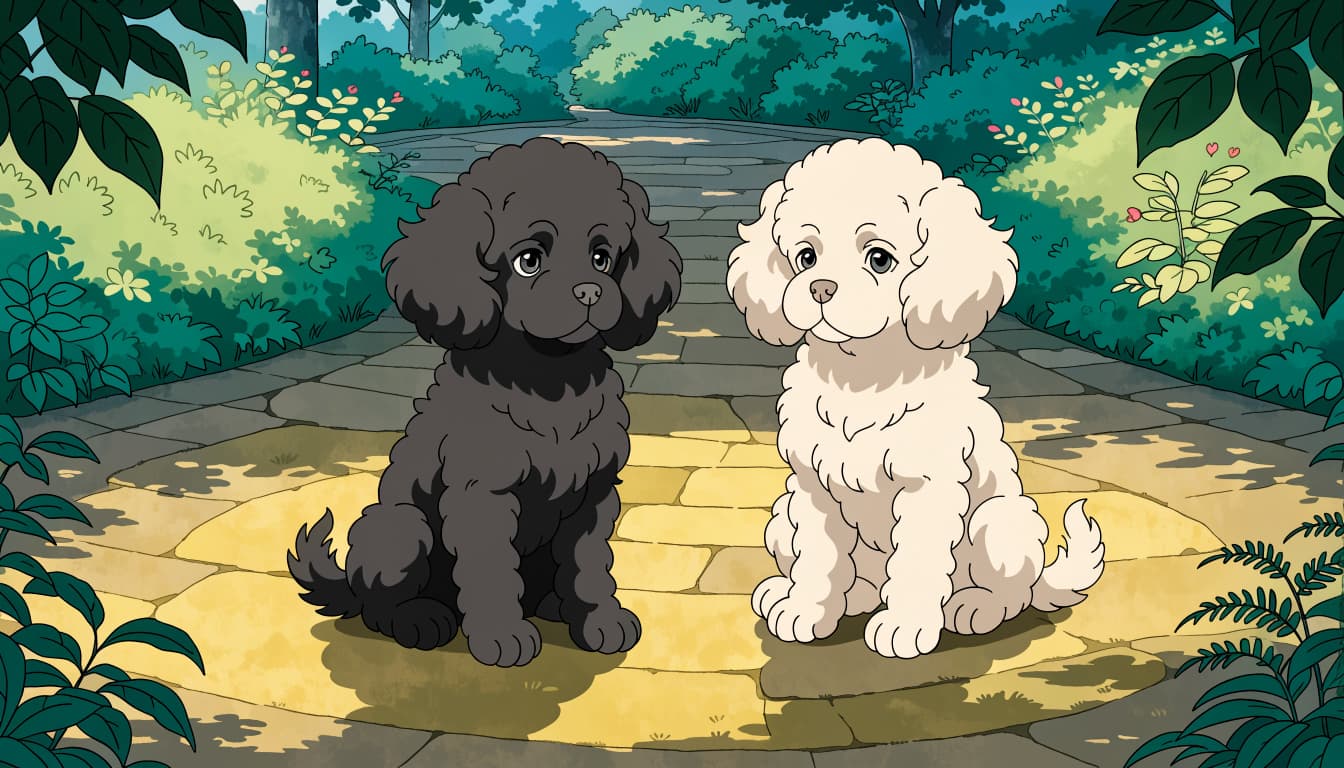
For a visual look at how a dog's coat can change over time:
How each parent can shape your puppies' color
Each parent contributes inherited variants that affect pigment production and distribution. Some variants can be carried without being obvious in the parent's visible coat.
That means two puppies in the same litter can look different, and a parent may pass along a color trait you can't identify by looking. Earlier litters and relatives can help narrow the possibilities, although they don't reveal every variant either parent carries.
Think of the parents as clues to the available options. They aren't a screenshot of every puppy's future coat.
Why color names and patterns are not the whole story
A solid coat has one overall color, though some shades can vary across the body. Patterned Poodles include parti-colored dogs, with two or more colors, and phantom dogs, with distinct markings in particular areas.
The AKC Poodle standard calls for an even, solid coat at the skin and disqualifies parti-colored dogs from conformation. That's an AKC show rule, not a description of every pet Poodle. Registry standards differ, so a coat can be outside one show's rules and still belong to a perfectly good companion.
Why your Poodle puppy's coat may lighten with age
Some Poodles go through progressive graying, often called clearing. Their darker puppy coat gradually gives way to a lighter adult shade.
The exact genetics and inheritance of this change aren't settled. You can't calculate a puppy's final color or clearing schedule with certainty from a parent photo.
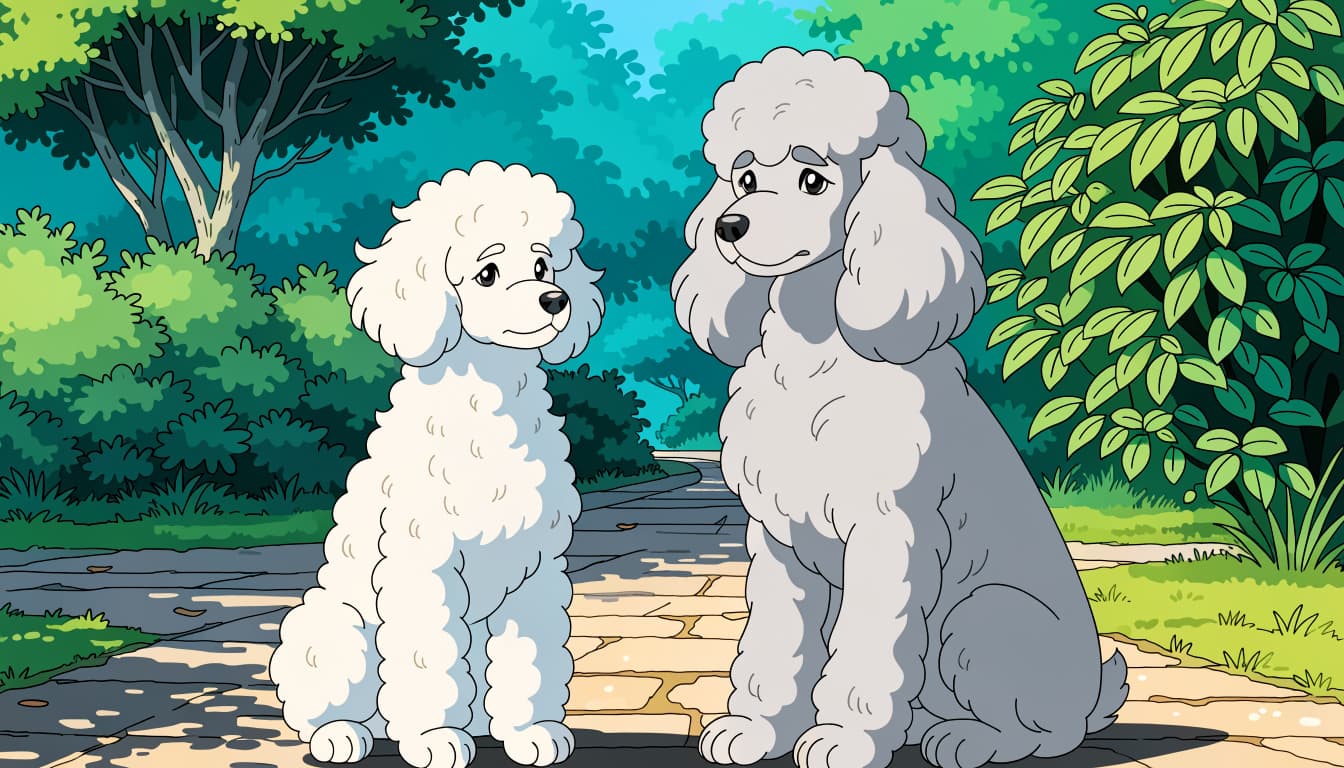
Approximate color changes you may notice
A silver Poodle puppy may look black at birth, with lighter color showing on the face at around six weeks. The rest of the coat can take much longer to reach its adult shade.
Blue or gray coats may take around two years to clear, and some blue coats may not start changing until around that age. Café au lait and silver beige can also take time to develop their adult appearance.
A puppy that grows into a white coat may begin white or light cream. These are guide-level examples from the United Poodle Association, not a countdown clock for your dog. Individual timing and final shades vary.
Clearing is different from a coat or skin problem
A gradual shift in color is different from color dilution alopecia, an inherited condition associated with dilute coat colors. Ordinary clearing alone doesn't tell you that a dog has this condition.
Look beyond the shade itself. Thinning or missing hair, scaling, itchiness, and bumps are reasons to talk with your veterinarian. VCA Animal Hospitals notes that a puppy with color dilution alopecia can initially have a normal-looking coat, with signs appearing later.
During routine grooming, check beneath the curls for tangles, debris, and changes in the skin. If your puppy seems uncomfortable during brushing or bathing, mention that to your vet too.
How to make a better guess about your puppies' adult color
Your best estimate combines family history, what you can see now, and any relevant testing. Even then, the final shade stays an estimate.
A DNA result can answer questions about the variants included in that test. It doesn't provide a complete, validated chart for predicting every Poodle's adult color or clearing timeline.
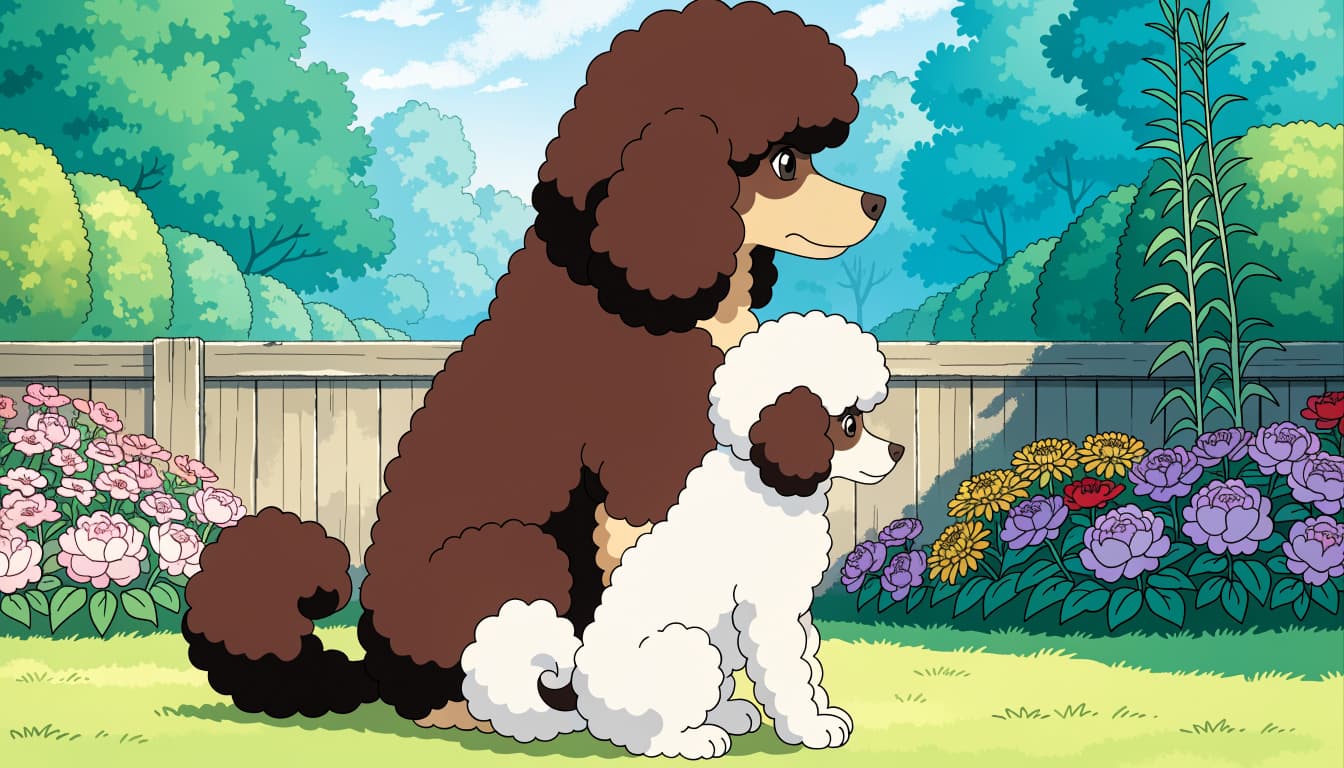
What to ask the breeder or rescue
Ask for clear photos of both parents as puppies and as adults. A dark puppy photo beside a lighter adult photo can show you that a parent's coat changed, even if it can't tell you what your puppy will do.
Previous litters can add context. Ask which colors appeared, whether those puppies lightened, and when relatives' coats changed. If genetic testing was performed, ask which color traits were tested and what the results showed.
For a rescue puppy, use its current coat and any documented history as clues. If parent information is missing, you can still watch how the coat develops without assigning it a guaranteed color label.
Take photos and track the coat over time
Take occasional photos in similar lighting and compare them over several months. Look at the face, ears, body, and roots of the hair rather than relying on one spot.
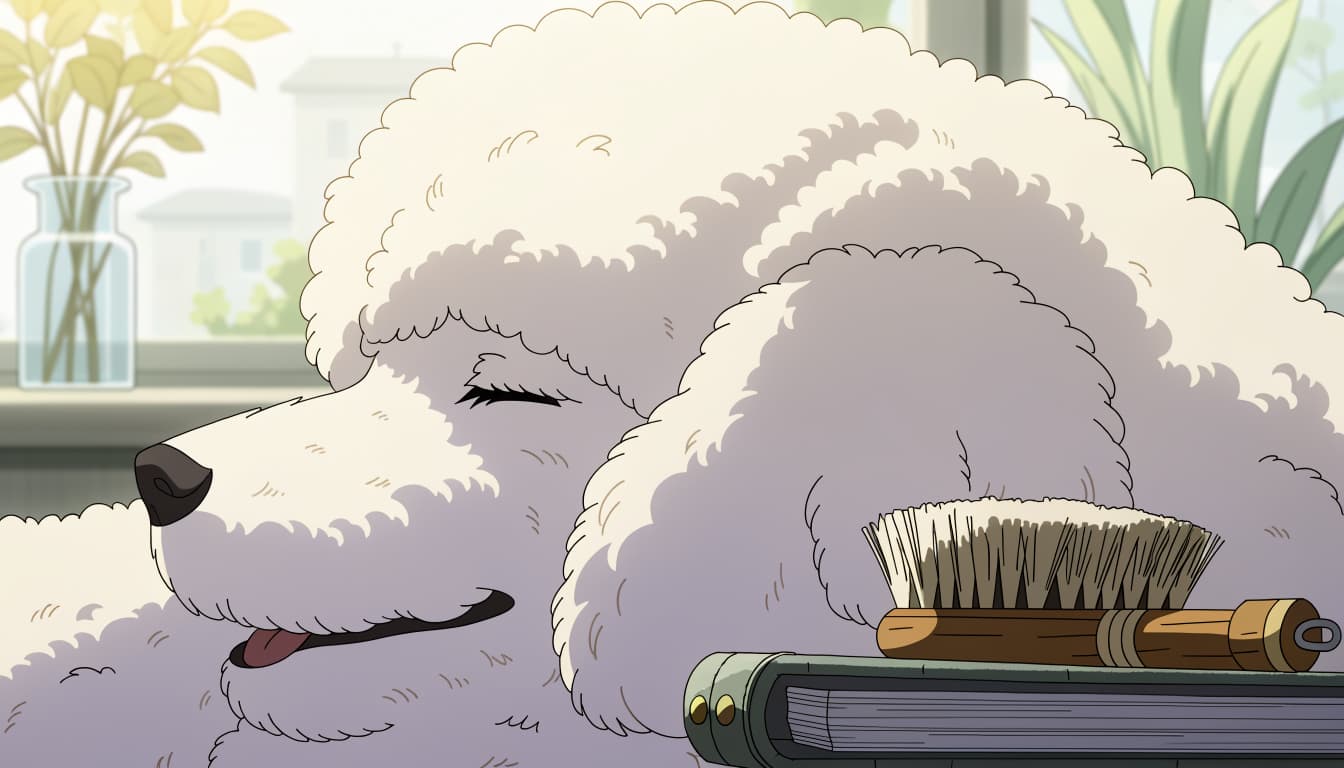
Grooming can change how the coat looks, and indoor light may make a shade appear warmer or darker than daylight does. A single photo isn't enough to prove that clearing has started.
You can also make coat checks part of your regular care routine. Remove caught debris after walks, brush as needed, and use a dog-appropriate product when bathing is needed. Your veterinarian can help if irritated skin changes what your puppy tolerates.
Streetwear & Casual Styling
Your puppy may be running an unpredictable color update, but your outfit can stay low effort. Our Cyber-Brutalist Anime Graphic Tees pair easily with jeans, relaxed pants, or shorts for a casual dog-parent look.
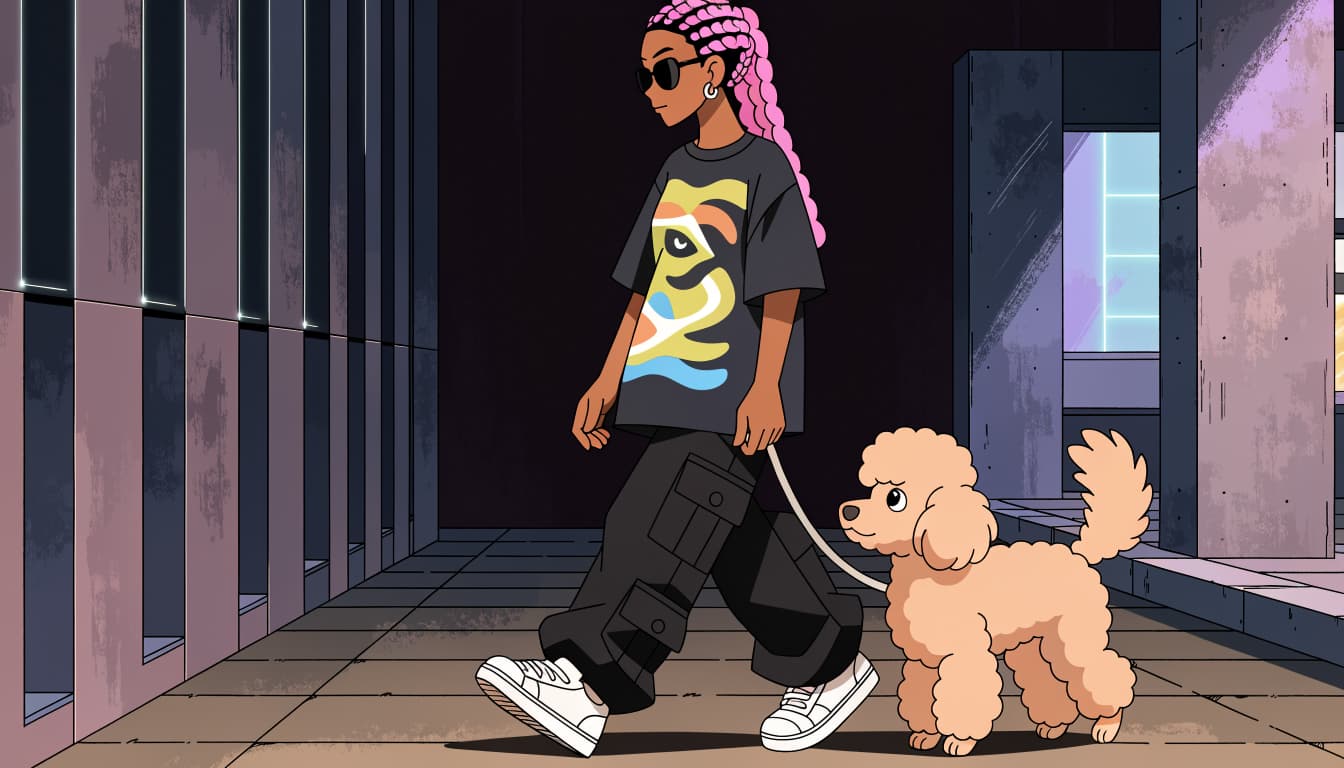
Try the If They Could Use Internet We'd Be in Trouble Tee with dark jeans and sneakers when you want the graphic to do the talking. The Best Dog Mom Tee works with a light overshirt and comfortable shoes for an easy daytime outfit.
Keep the practical gear separate: a suitable leash and attention to your puppy matter more than matching your dog's coat. Your tee can handle the personality statement while you handle the walk.
Frequently Asked Questions
Can two black Poodles have puppies of another color?
Yes, it's possible for two black Poodles to have puppies of another color if they carry and pass on relevant hidden variants. Their visible coats alone don't tell you which variants they carry.
You also can't use their appearance to calculate every puppy's eventual adult shade. Testing and family history may narrow the possibilities, but the details depend on the individual parents.
When will you know your Poodle puppy's adult color?
You may notice changes early, particularly around the face, but some coats take years to clear. There isn't one age that guarantees every Poodle has reached its final shade.
Compare photos over time instead of treating a single grooming appointment as the final reveal. Your puppy's coat may change gradually enough that you notice the difference most when you look back.
Will a Poodle puppy's coat always get lighter?
No. Some Poodles don't experience noticeable clearing, and the amount of change varies between dogs. A puppy that looks dark may remain dark rather than developing a dramatically lighter coat.
Keep an eye on the condition of the hair and skin as well as the color. Patchiness, itching, or irritation calls for a different response than an even, gradual shade change.
Does a Poodle's color affect its health?
Color alone doesn't diagnose a health problem or tell you whether a puppy will be healthy. Color dilution alopecia is a separate inherited condition associated with dilute coats, not another name for ordinary clearing.
If you notice hair loss, itchy skin, or irritation, discuss it with your veterinarian. Those signs can have different causes, so a color label can't settle the question.
Enjoy the Puppy You Have
Your Poodle puppies' adult colors come with some built-in suspense. Parent colors, family history, and early coat changes help you make an informed estimate, but inheritance and clearing leave room for surprises.
Watch the coats develop, keep up with comfortable grooming, and ask your veterinarian about concerning skin or hair changes. The shade may change. Your puppy is still the same tiny companion underneath all those curls.