

What Is a Brindle French Bulldog? Coat and Health Guide
TrendReactTees.STORE TeamA brindle French Bulldog is a Frenchie with a striped coat pattern, not a separate breed or health type. Dark stripes cross a lighter base, often fawn, and the amount of visible striping varies from dog to dog.
If your dog is already your favorite personality trait, the My Therapist Is A Dog Tee and Dog Eats Custom Kibble Tee get the assignment. For the dog behind the stripes, individual health and temperament matter far more than the coat label.
Here's how to recognize the pattern and make sense of the details that matter when choosing a Frenchie.
This post may contain affiliate links. If you make a purchase through these links, I may earn a small commission at no extra cost to you.
Key Takeaways
- Brindle describes dark stripes on a lighter coat, often fawn. It's a pattern, not a separate kind of French Bulldog.
- Stripe density varies, and a brindle coat can appear alongside white markings.
- The AKC accepts brindle in its French Bulldog standard, but registration papers alone don't establish show eligibility or health.
- Ask for both parents' health evaluations and a written contract before choosing a puppy.
- Your Frenchie's breathing, behavior, and care needs matter more than its coat color.
What Is a Brindle French Bulldog?
A brindle French Bulldog has darker stripes running through a lighter coat. You might see distinct black lines against a warm fawn background, or so much dark striping that the lighter color is harder to spot.

Think of brindle as the pattern on the character's outfit, not a different character class. Your dog is still a French Bulldog, with the same breed identity as a Frenchie wearing another accepted color.
White markings can appear too. A brindle dog might have a small white patch on its chest, while another has much larger white areas around patches of brindle.
The stripes don't hand you a personality profile. If you're looking for a companion, spend time with the individual dog and ask about its behavior in familiar settings. A photo can show you the coat; it can't tell you how that dog handles training, visitors, or a busy household.
For a closer look at coat-color inheritance, this Frenchie DNA explainer covers the basics:
How Brindle Frenchie Coats Can Look Different
Brindle has plenty of visual range. The names you hear usually describe how much lighter color, dark striping, or white you can see.
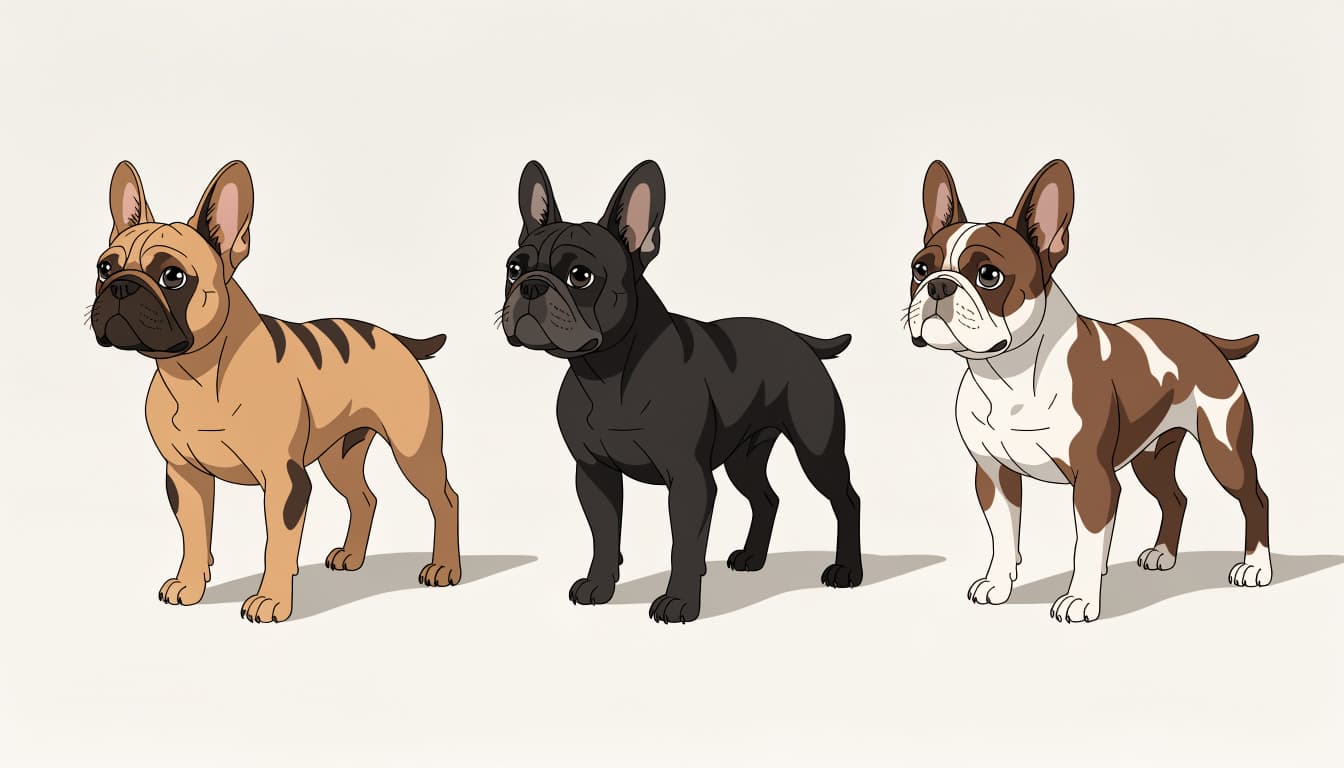
Fawn brindle, dark brindle, and brindle-and-white
A fawn brindle Frenchie has a lighter fawn base with visible dark stripes. When the stripes are densely packed, the coat can look mostly dark. You may hear that appearance called black brindle.
A brindle-and-white dog has both the striped pattern and white markings. With a brindle-pied coat, larger white areas appear alongside patches of brindle.
These descriptions help you picture the coat. They don't sort dogs into separate health groups, and a more dramatic stripe pattern doesn't make one Frenchie a different breed.
Why photos may show different stripe patterns
Stripe width, density, and contrast vary between individual dogs. A bright photo may make fawn areas stand out, while a darker image can make the same coat look nearly black.
Age and coat condition can also affect how markings appear in pictures. If a listing gives you a color label and one heavily filtered image, look at the dog in person or ask for clear photos in natural light. The actual coat gives you more information than a dramatic caption.
Brindle French Bulldog Colors, Genetics, and Breed Standards
Genes influence the coat you see, but the visible pattern doesn't reveal every color allele a dog carries. That matters if you're looking at a puppy or comparing its parents.

What the brindle gene can and cannot tell you
Brindle is associated with the Kbr allele at the canine K locus. A dog can show brindle with one copy, depending on its other coat-color genes. Those other genes also affect the base color and how the pattern appears.
Dogs can carry color alleles that aren't obvious in their own coats and pass them to puppies. You can't reliably predict an entire litter's colors from one parent's appearance or a photo.
The genetics get more detailed, but the practical point is simple: coat inheritance tells you about appearance. It doesn't establish a dog's temperament or overall health.
What the AKC standard says about brindle
The official French Bulldog breed standard accepts brindle. It also specifies a black nose for brindle and brindle-pied dogs.
The standard disqualifies colors including solid black without a trace of brindle, mouse, liver, black and tan, black and white, and white with black. Those are conformation rules, which describe the breed as judged in shows.
AKC registration and conformation eligibility answer different questions. Registration papers alone don't prove that a dog meets the show standard, and they aren't a health certificate.
Does a Brindle Coat Affect Your Frenchie's Health?
Brindle coloring itself isn't evidence that your Frenchie is healthier or less healthy. Give your attention to the dog's breathing, eyes, joints, heart, body structure, and veterinary care instead.

Pay attention to the individual dog
French Bulldogs have short faces, so breathing deserves attention in everyday life. If your dog struggles to breathe, seems distressed, or has a change in its normal breathing, contact a veterinarian promptly.
Ask about the dog's medical history and any treatment it has received. A coat description won't tell you whether a dog has an eye problem or needs help with a joint concern. Neither will an adorable puppy photo, even if those ears have completely hijacked your judgment.
Health checks to discuss with a breeder
The AKC's French Bulldog health information lists patella and hip evaluations, a congenital cardiac exam, and an eye examination by a veterinary ophthalmologist.
An echocardiogram is recommended but not required. Juvenile cataract DNA testing and thyroid evaluation are listed as optional.
Ask for results for both parents, not a vague promise that the puppy comes from "healthy lines." Records give you and your veterinarian something concrete to discuss. Screening helps inform breeding decisions, though it can't guarantee that a dog will never become ill.
How to Choose a Brindle French Bulldog Responsibly
You can love the stripes and still keep your standards higher than "look at that face." Choosing a dog means looking at health information, early experiences, and the support available after you bring it home.
Questions to ask before you bring a puppy home
Find out who bred the puppy and how it has been socialized. Ask what the puppy has experienced around people, ordinary household sounds, and gentle handling.
Request the parents' health results, registration papers, and pedigree records. You should also ask what the written health guarantee covers, what the return policy says, and whether the breeder will take the dog back if your circumstances change.
The French Bull Dog Club of America's breeder-list criteria offer one reference. They include a written contract, health screening, and results available through the Orthopedic Foundation for Animals database. Club membership alone isn't a guarantee of breeder quality.
Look for a fit beyond the puppy photo
Consider your schedule, household, and ability to provide training and veterinary care. Ask how the puppy behaves during ordinary interactions and what routines it already knows.
A responsible breeder should be willing to talk through the dog's needs and your questions. A polished listing is nice; useful answers and clear records deserve more attention. Take time to read the contract before you commit, including any conditions attached to the health guarantee.
Streetwear & Casual Styling
Your dog's coat isn't an outfit plan, but your dog-lover identity can absolutely be one. A Cyber-Brutalist Anime Graphic Tee, straight-leg denim, and simple sneakers make an easy casual look with enough personality to skip the generic pet-parent uniform.

Our If They Could Use the Internet Tee brings the dog humor with a cyberpunk edge. Pair it with dark jeans if you want the graphic to do the talking.
For a louder pet-parent mood, try the Scream At The Void Tee with relaxed denim and your favorite sneakers. Your Frenchie doesn't need to approve the fit, but you can expect an extremely confident opinion anyway.
Frequently Asked Questions
Do brindle French Bulldogs shed?
Yes. Their short coats can shed, so expect some loose hair on clothing and furniture. Regular brushing can help remove loose hair, although your lint roller may still have a full-time job.
Are brindle French Bulldogs hypoallergenic?
No dog is guaranteed to be hypoallergenic, and a brindle coat doesn't change that. If you have allergies, spend time around the individual dog and discuss your situation with an allergy professional before bringing one home.
How big do brindle French Bulldogs get?
The AKC breed standard sets a maximum weight of 28 pounds. Brindle describes the coat pattern, so you shouldn't treat it as a separate size category.
Can a Frenchie exercise in hot weather?
French Bulldogs can struggle with heat, so keep activity appropriate for the conditions and your individual dog. Offer water and a cool place to rest, and ask your veterinarian about an exercise routine that suits your Frenchie's breathing and health.
Can you adopt a brindle French Bulldog?
Yes, you may find one through a rescue or shelter. Ask about the dog's available health history, behavior, and support needs so you can decide whether your home is a good match.
Choose the Dog Behind the Stripes
A brindle French Bulldog has a striped coat, with a look that can range from clearly fawn to densely dark. The pattern gives you plenty to admire, but the individual dog tells you more about personality and daily needs.
Prioritize health information, responsible breeding, and a fit for your household. The stripes are a great detail. The dog wearing them is the commitment.