

IVDD in French Bulldogs: Signs, Treatment, and Recovery
TrendReactTees.STORE TeamWhen your French Bulldog suddenly looks sore, weak, or unsteady, it's hard not to picture the worst. What is IVDD in French Bulldogs? It's a spinal disc problem that can cause pain, weakness, or, in severe cases, paralysis. Breed risk alone can't predict what will happen to your dog.
A veterinary exam is needed to find out what's going on. This guide can help you recognize concerning signs and understand what diagnosis and treatment may involve, but it doesn't replace veterinary advice. Sudden or worsening trouble walking needs prompt care. For an off-duty dog-parent look, we have the Dog Eats Custom Kibble tee and If They Could Use Internet tee.
This post may contain affiliate links. If you make a purchase through these links, I may earn a small commission at no extra cost to you.
Key Takeaways
- IVDD happens when a spinal disc degenerates, bulges, or ruptures and may press on the spinal cord or nerves.
- French Bulldogs have breed-related risk, but that doesn't mean every Frenchie will develop symptoms.
- Back pain, weakness, and wobbly walking need veterinary attention, especially if they worsen.
- Sudden inability to walk, dragging limbs, or new bladder problems call for emergency care.
- Diagnosis and treatment depend on your dog's exam, not breed or appearance alone.
What Is IVDD in French Bulldogs?
Intervertebral disc disease, or IVDD, occurs when a disc between the bones of the spine wears down, bulges, or ruptures. A damaged disc can press on the spinal cord or nearby nerves. The effects range from back pain to weakness, trouble walking, and paralysis.
The term describes a disc problem. It isn't a catch-all label for every spinal difference a French Bulldog might have. A veterinarian needs to assess your dog's symptoms and nerve function to determine whether IVDD is causing them.
How a damaged disc can affect your dog's movement
Think of each disc as a soft cushion between the bones of the spine. When it changes shape or ruptures, it can irritate the surrounding area or put pressure on the spinal cord. That pressure can interfere with the signals between the brain and the legs.
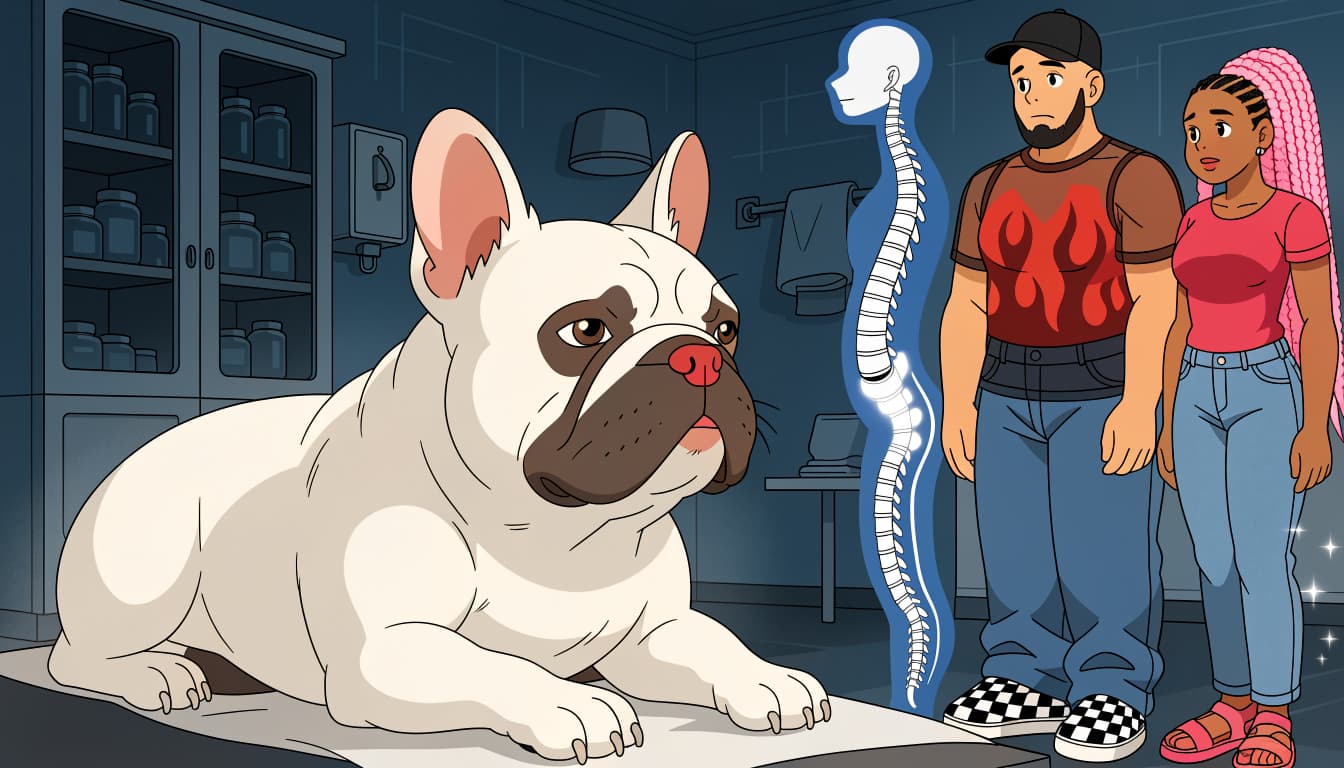
That helps explain why signs can look different from dog to dog. One Frenchie may show pain but still walk normally. Another may become weak or unsteady as nerve function is affected.
Why a breed tendency doesn't predict one dog's future
French Bulldogs have inherited traits associated with early disc changes, but risk isn't a diagnosis. A 2025 US survey found owner-reported lifetime IVDD in 8.4% of its French Bulldog sample. That figure describes the dogs surveyed, not the likelihood that your individual dog will develop the condition. The 2025 JAVMA survey also reported higher adjusted odds for French Bulldogs than mixed-breed dogs, but the finding still doesn't predict one dog's future.
Why French Bulldogs Can Be More Prone to IVDD
Some French Bulldogs inherit traits linked to disc calcification and herniation. These breed-level associations help explain why IVDD is a concern for Frenchie owners, but they can't tell you whether a particular dog will become ill. No coat color, body shape, or single screening result can make that diagnosis.
What inherited disc changes may mean
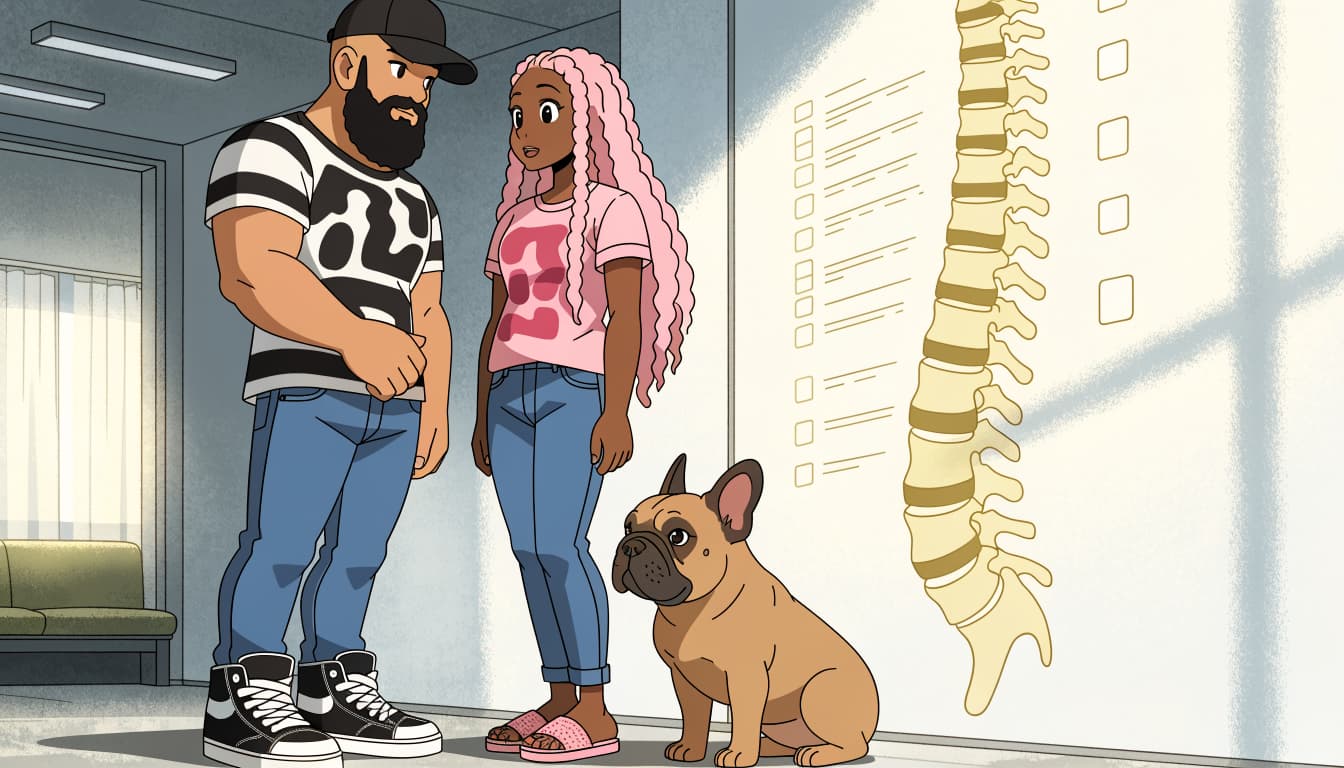
Research has linked the 12-FGF4 retrogene with disc calcification. A 2025 study found an association between this genetic variant and the number of calcified discs visible on radiographs in French Bulldogs and another breed. That is a finding about genetics and calcification, not proof that a dog has active IVDD. The 12-FGF4RG study describes an association, not a personal health forecast.
A calcified disc on a screening image is a clue about disc changes, not proof of a current, symptomatic herniation.
How age and spinal findings fit into the picture
IVDD can affect young adult dogs. An abnormally shaped vertebra, such as a hemivertebra, is a separate spinal finding. It doesn't automatically mean a Frenchie has IVDD, so your veterinarian must interpret each finding alongside the dog's symptoms and exam.
Which IVDD Signs Should Make You Call a Vet?
IVDD signs can begin with discomfort and progress to changes in movement. If your Frenchie seems painful or walks differently, contact a veterinarian and describe what changed and when you first noticed it. Don't wait overnight if walking problems are sudden or getting worse.
Early signs can look like pain or reluctance to move
Watch for back or neck pain, a hunched posture, reluctance to walk or jump, weakness, or unsteady, wobbly steps. Your dog may seem unusually still or have trouble getting comfortable. These signs can have more than one cause, but a vet should assess a suspected spinal problem rather than waiting to see whether it passes.
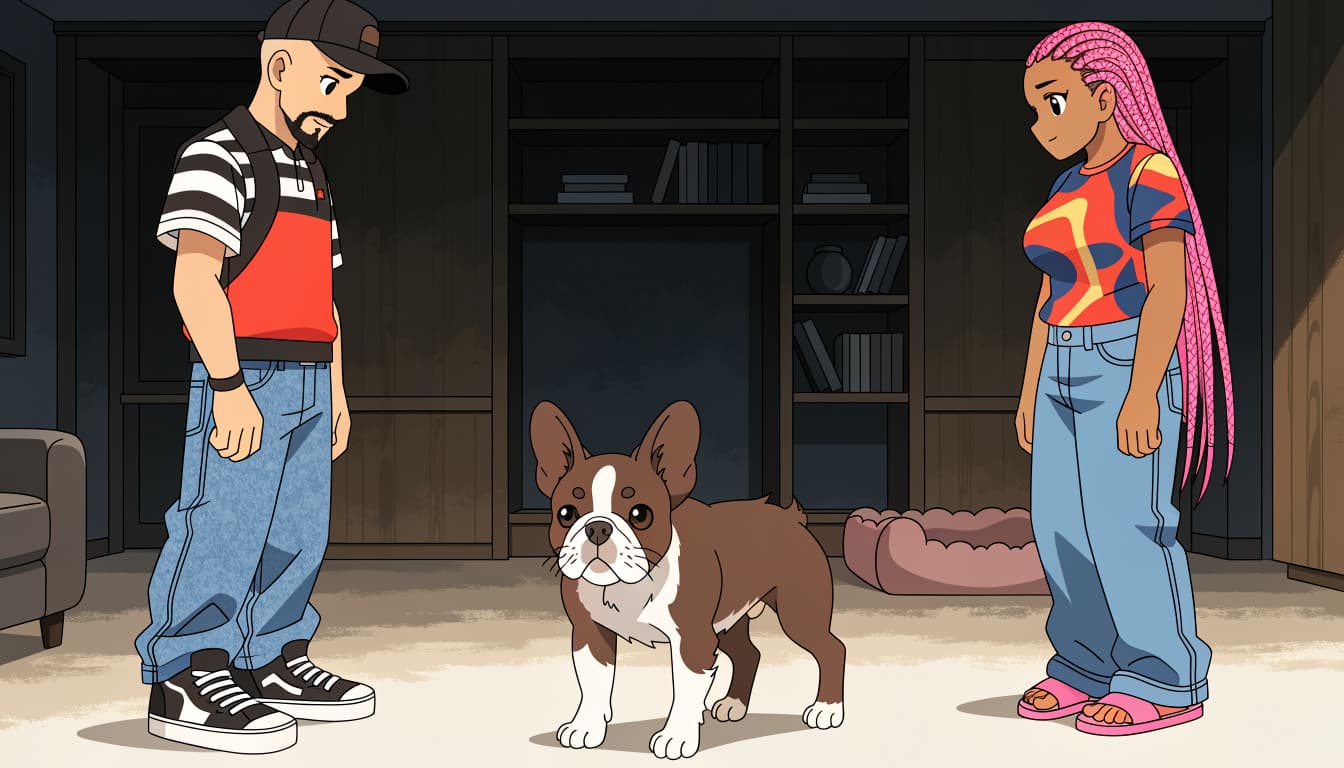
Make a note of when the signs began and whether they changed. That timeline can help the veterinary team understand how quickly the problem is progressing.
When weakness or paralysis is an emergency
Seek emergency veterinary care for sudden inability to stand or walk, rapidly worsening weakness, dragging limbs, or paralysis. New trouble urinating or controlling waste also needs urgent attention.
Don't pinch your dog's toes or try to test pain sensation at home. That isn't a reliable way to assess nerve function. Never give human pain medication unless a veterinarian specifically directs you to do so.
How Vets Diagnose and Treat IVDD
Your veterinarian will ask about the symptoms and examine your dog's pain, walking, strength, and nerve function. The treatment plan depends on those findings and the severity of the problem. A French Bulldog's breed or appearance alone can't determine which treatment is right.
What the exam and imaging can tell your vet
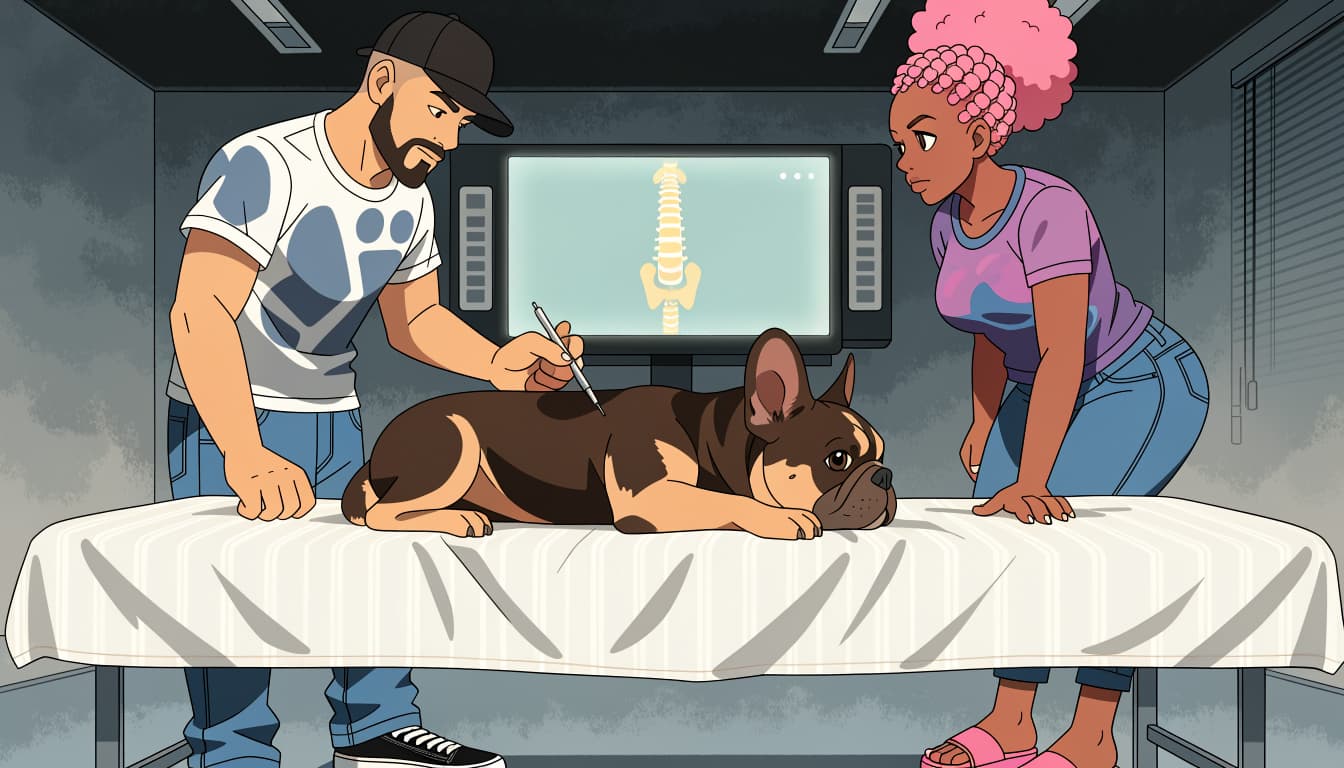
A neurologic exam helps the vet assess how your dog moves and how well the nerves are working. Imaging may help locate the affected area and show whether a disc is pressing on the spinal cord. Your vet may recommend X-rays, CT, or MRI depending on the case.
A calcified disc seen on a screening image or X-ray doesn't by itself prove that your dog has current, symptomatic IVDD. The image needs to be considered alongside the exam and what you're seeing at home.
When strict rest may be considered
For a first episode with mild neurologic signs, a veterinarian may recommend confinement, strict activity limits, and prescribed pain relief. Rest needs to be managed according to veterinary instructions. Unsupervised medication or simply waiting at home isn't a safe substitute for an exam, particularly if weakness is worsening.
When surgery may be recommended
When a ruptured disc causes significant nerve problems, surgery may be recommended to relieve pressure on the spinal cord. The decision depends on your dog's neurologic exam and the location and severity of the problem. Your veterinarian or a specialist can explain the options and help you weigh them.
The Schwarzman Animal Medical Center video, "Intervertebral Disc Disease (IVDD): Diagnosis, Treatment, and Prevention," offers more context on veterinary assessment and care.
What Recovery and Risk Reduction Can Realistically Look Like
Recovery can take weeks to months, and outcomes vary. Your dog's remaining nerve function and the treatment plan both matter. Your veterinarian can explain what the exam suggests for your dog, but no estimate is a promise.
What outcome estimates can and cannot promise
The American College of Veterinary Surgeons provides broad estimates for dogs with IVDD, not French Bulldog-specific guarantees. When deep pain perception is present, about 90% regain limb use after surgery, compared with 60% to 80% with strict medical care. When deep pain perception is absent, estimates are 50% to 60% after surgery and under 10% with medical care. Some dogs that regain limb use may still walk with a wobbly gait.
How you can support your dog while following veterinary advice
For new pain, weakness, or walking changes, contact your veterinarian promptly. Follow the prescribed activity limits and medication instructions carefully, and ask the clinic what to do if symptoms change. No home routine can guarantee IVDD prevention, so don't treat ramps, exercise limits, or any other lifestyle adjustment as a sure shield.
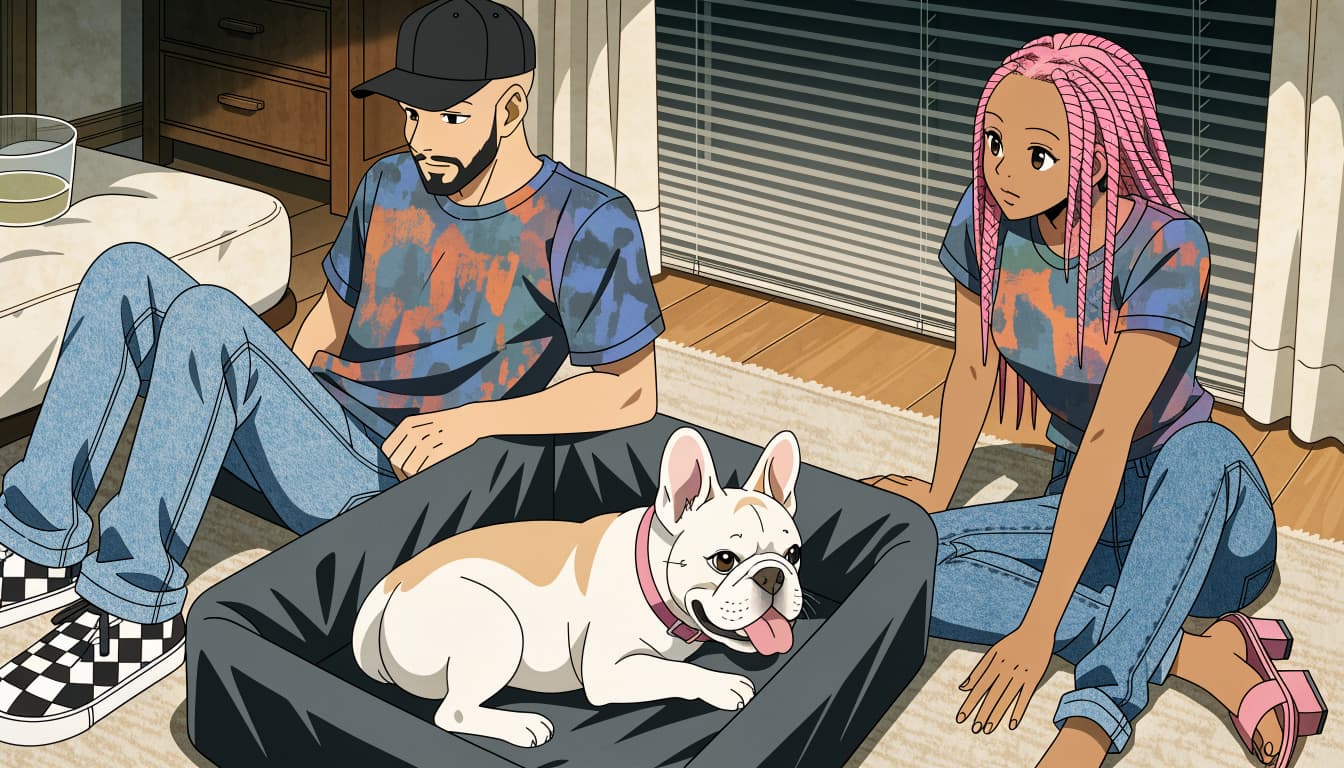
Streetwear & Casual Styling
Once the vet visit is handled, your dog-walk outfit can be the low-stakes part. Build a casual look around our Cyber-Brutalist Anime Graphic Tees with relaxed cargos or dark-wash denim, then add an overshirt if the weather calls for another layer. Keep the rest simple and let the graphic do the talking.
For dog-parent humor with a sharper edge, check out the Scream At Void My Human Understands tee or the My Therapist Is A Dog tee. Your Frenchie's health still gets the serious attention. Your graphic tee can handle the personality signaling.
Frequently Asked Questions
Can your French Bulldog develop IVDD before age five?
Yes. In a German owner survey, 61% of the French Bulldogs diagnosed with IVDD were between ages one and four when diagnosed. That survey finding can't predict when, or whether, an individual dog will develop the condition. The German French Bulldog survey also reflects its own sample, not every Frenchie.
Does an IVDD diagnosis mean your dog will become paralyzed?
No. IVDD can cause pain alone, or it can affect movement more severely. A diagnosis doesn't determine the outcome by itself, so contact your veterinarian promptly if your dog's symptoms change or worsen.
Can you test your dog's deep pain response at home?
No. A veterinary professional assesses deep pain perception as part of a neurologic exam. Pinching or touching a paw at home isn't a reliable test and may hurt your dog.
Does being male or neutered cause IVDD?
One owner survey found associations between IVDD and male sex or neuter status. An observational finding doesn't prove that either causes IVDD, and it shouldn't be treated as a personal prediction for your dog.
Conclusion
IVDD is a disc problem that can put pressure on the spinal cord, but breed risk isn't destiny. Pain, weakness, or changes in walking deserve prompt veterinary attention, especially when they get worse. If your Frenchie suddenly can't stand or walk, drags a limb, or develops new bladder problems, seek emergency care. A quick call to your veterinary team is a much safer move than waiting for the next episode to load.