

What to Feed an English Bulldog Puppy for Healthy Growth
TrendReactTees.STORE TeamFeed an English Bulldog puppy a complete and balanced food made for growth, measure each meal, and adjust the plan with your veterinarian as your puppy grows. For the human side of puppy duty, the Best Dog Mom Tee and My Therapist Is a Dog Tee bring pet-parent energy to your everyday rotation.
When you're figuring out what to feed an English Bulldog puppy, remember that one food and portion won't fit every pup. Age, current weight, growth, activity, and the food's calorie content all matter. Start with the nutrition statement on the package, then treat its feeding guide as a starting point, not a sacred kibble prophecy. Your veterinarian can help fine-tune the plan as your puppy changes.
This post may contain affiliate links. If you make a purchase through these links, I may earn a small commission at no extra cost to you.
Key Takeaways
- Choose food labeled complete and balanced for growth, growth and reproduction, or all life stages.
- Use the package's serving chart as a starting point, then measure and adjust portions with your veterinarian.
- Keep puppy food at the center of the diet; treats and table food shouldn't crowd it out.
- Change foods gradually, and base the move to adult food on your puppy's development.
- No universal portion or feeding schedule fits every English Bulldog puppy.
What to feed an English Bulldog puppy for healthy growth
The short answer is a complete and balanced puppy food intended for growth. That can be a dry, canned, or other appropriate format, as long as the package's nutritional adequacy statement says it's suitable for growth, growth and reproduction, or all life stages. The phrase "complete and balanced" matters more than front-label confetti like "premium" or "natural."
Read the nutritional adequacy statement
Look for the adequacy statement on the package, rather than trying to decode marketing language. AAFCO explains how pet food labels identify life stages, while the FDA describes how a "complete and balanced" claim is substantiated through nutrient profiles or feeding trials.
Adult-maintenance food alone isn't the right life-stage choice for a growing puppy. Treats and supplements also aren't designed to replace a puppy's main meals. If a food's label leaves you puzzled, bring a photo of it to your veterinarian. A two-minute label check beats making a meal plan out of vibes.
Don't choose by breed marketing alone
English Bulldogs don't automatically need a large-breed formula just because of their name. Large-breed foods are formulated for particular growth needs, but a breed label by itself doesn't tell you which food is right for your individual puppy. Look at the life-stage statement and discuss the choice with your veterinarian.
No one brand gets a blanket recommendation here. The useful question is whether a specific food is appropriate for your puppy's growth and health, not whether its packaging has the loudest claims. If your puppy has a diagnosed condition or a specific nutrition need, ask your vet before changing the diet.
How much and how often should you feed your puppy?
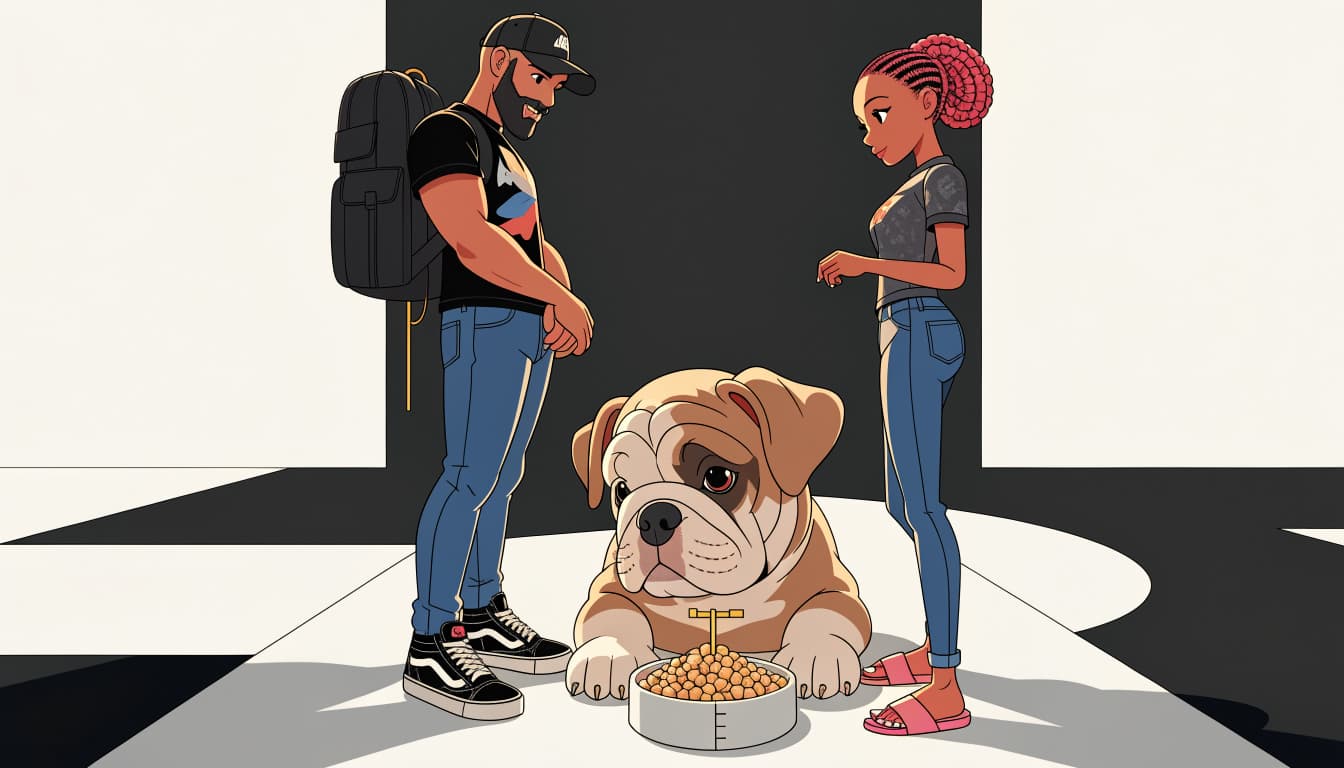
There's no reliable one-number answer for how much an English Bulldog puppy should eat. A useful starting point is the serving guide on the food package, matched to your puppy's age and expected adult size. Then divide that daily amount into meals and adjust with your veterinarian as growth and body condition change.
Use the food label as a starting point
Measure each serving with a measuring cup or kitchen scale, rather than guessing from the bowl. Check the food's calorie information too, because a cup of one formula may contain a different amount of energy than a cup of another. The label's daily amount is a starting estimate, not a rule that overrides your puppy's growth or your vet's advice.
Keep an eye on your puppy's body condition as well as the number on the scale. Regular veterinary visits can help you spot whether the plan needs a tweak. If you change foods, recalculate the portion using the new food's own serving guidance. Same bowl, different kibble, different math.
Set a meal rhythm that fits your puppy
A practical starting rhythm for many puppies is three meals a day. Very young or recently weaned puppies may do better with four smaller meals, while older puppies may move to two meals as they grow. General veterinary guidance varies on exactly when to make those changes, so ask your veterinarian to help set a schedule for your puppy. The Merck Veterinary Manual's guidance on feeding practices also emphasizes matching food and feeding practices to the animal's life stage.
Measured meals make it easier to track what your puppy eats. They also make it easier to notice a sudden appetite change, instead of discovering that the bowl has been mysteriously empty all day. Avoid unlimited access to food unless your veterinarian recommends it for your puppy.
Choose food and treats that support a balanced diet
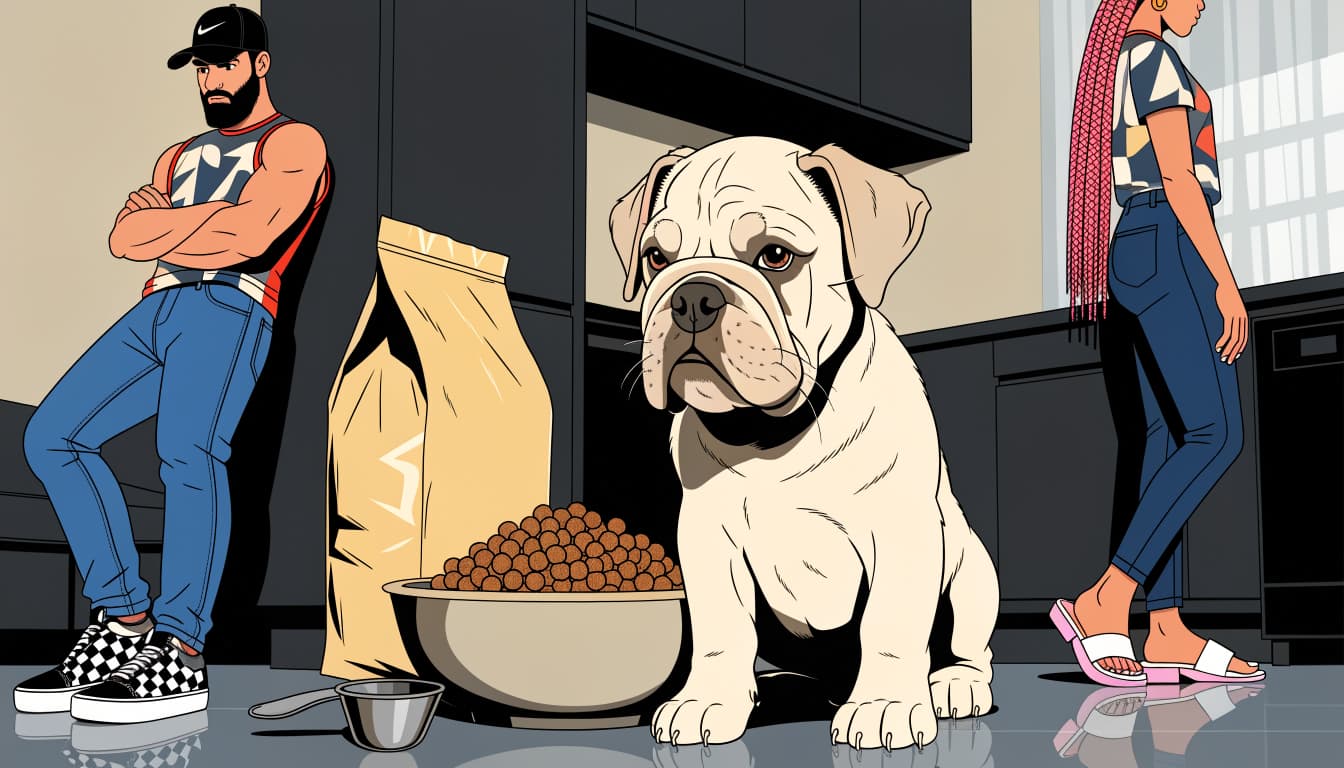
Once you've found a food with the right growth statement, keep it at the center of your puppy's diet. The rest is a matter of reading the label, tracking extras, and resisting the urge to turn every meal into a custom buffet. A growing puppy needs a consistent source of the nutrients in its complete food.
Compare the useful details on the package
Check the life-stage statement, calorie information, and feeding guide. Ingredients can help you understand what's in the food, but the words "natural" or "premium" don't tell you whether it meets the nutritional needs of a growing puppy. AAFCO's guide to selecting the right pet food explains why food intended for young animals differs from adult-maintenance diets.
Wet and dry foods can both be options when they're complete and balanced for growth. If you're comparing products, compare their intended life stage and feeding information, not just the front of the bag. You don't need to add a supplement to a complete diet unless your veterinarian recommends one for a specific reason.
Keep extras in their lane
Treats, chews, table food, and food used to give medication all count as extras. Keep them modest so they don't displace the balanced meals that provide the bulk of your puppy's nutrition. The VCA guidance on nutrition for large and giant breed dogs cautions against using treats and other foods as a substitute for a growing puppy's diet.
For training, set aside a little of your puppy's measured daily kibble and use it as a reward. That keeps the treat budget from turning into a surprise second dinner. If you want to offer another food, keep the portion small and ask your veterinarian whether it fits your puppy's needs.

Make food changes slowly as your puppy grows
Puppyhood brings a few food transitions, and none needs to happen overnight. When your puppy comes home, find out what it has been eating and keep that food steady at first if it's appropriate. Later, make changes gradually so your puppy has time to adjust.
Wean onto puppy food gradually
Weaning typically starts around 3 to 4 weeks, as puppies begin to eat solid food. It's a gradual change, with puppy food introduced in a form the young pup can manage. The timing and pace depend on the litter and the puppy, so follow the breeder's feeding plan and your veterinarian's guidance.
If you're caring for a puppy during weaning, don't improvise a replacement diet from household ingredients. Choose food made for puppy growth, and ask your veterinarian what to offer and when. Once your puppy is eating solid food, keep meals consistent while it settles into its new home.
Transition to new food and adult food
For a routine switch between foods, plan on a gradual transition rather than an abrupt bowl swap. One common approach takes 7 to 14 days, starting with mostly the old food and a small amount of the new food, then increasing the new food over time. If loose stool, vomiting, or reduced appetite appears, slow down. Contact your veterinarian if those signs don't settle within 24 hours.
Move to adult food when your puppy is approaching maturity, not just because a calendar date arrived. Timing varies with growth and expected adult size. Your veterinarian can help decide when the puppy diet is no longer the right fit. The AAFCO life-stage food guidance can help explain why the food appropriate for a puppy may differ from an adult diet.
Streetwear & Casual Styling
Puppy walks come with enough logistics. Your outfit can be the easy part. A Cyber-Brutalist Anime Graphic Tee pairs well with relaxed jeans or cargos, then add a simple overshirt or hoodie when the weather wants to join the plot.
For a dog-parent look with a little internet-chaos energy, try the Dog Eats Custom Kibble Tee. The If They Could Use the Internet Tee brings a different kind of puppy-parent commentary. Keep the rest of the outfit simple and let the graphic do its thing.

Frequently Asked Questions
Can puppies eat plain cooked meat?
Tiny portions of plain, fully cooked, boneless meat can be an occasional treat. Keep balanced puppy food at the center of every meal, and don't use meat as a replacement for a complete growth diet.
Should I add vitamins or calcium to puppy food?
Don't add supplements unless your veterinarian recommends them. A complete and balanced puppy food is designed to provide the nutrients needed for growth, and extra supplements can change the diet without solving a real need.
Should I leave food out all day?
Measured meals are a practical way to track how much your puppy eats and notice appetite changes. Ask your veterinarian if your puppy has a health or feeding issue that calls for a different routine.
What if my puppy suddenly refuses food?
A single missed meal can have several causes, but ongoing refusal or a change alongside vomiting, diarrhea, or low energy deserves a call to your veterinarian. Puppies are growing, so don't wait on a persistent appetite change.
Conclusion
Feed your English Bulldog puppy a complete and balanced growth food, measure meals, and keep treats from taking over the menu. Use the package guide as a starting point, then adjust portions and feeding routines as your puppy grows. A label can't see your puppy's body condition or health, so your veterinarian is the right teammate when appetite, digestion, or growth changes. The best plan is the one that supports your puppy now and can be adjusted as the little tank gets bigger.