

When Do Shih Tzu Puppies Get Fluffy?
TrendReactTees.STORE TeamShih Tzu puppies often begin changing into their adult coat around 10 to 12 months. The transition can continue into the second year, with some dogs losing puppy hair and growing their adult coat through 12 to 18 months.
Your puppy's fluff doesn't arrive on a guaranteed schedule, and that adorable coat needs regular care along the way. If your dog has already claimed main-character status, the My Therapist Is A Dog Tee and Best Dog Mom Tee are two ways to wear your dog-lover status.
First, here's what you can expect as that puppy coat grows up.
This post may contain affiliate links. If you make a purchase through these links, I may earn a small commission at no extra cost to you.
Key Takeaways
- Many Shih Tzus begin changing coats around 10 to 12 months, though timing varies.
- Puppy-coat loss and adult-coat growth can continue through 12 to 18 months.
- Loose puppy hair can catch in the growing coat, so tangles may appear more often.
- Long coats need daily brushing, while shorter cuts may be easier to maintain.
- Contact your veterinarian about bald patches, persistent itching, redness, or sore skin.
When Do Shih Tzu Puppies Get Fluffy? A Coat Timeline
Your Shih Tzu can look fluffy as a young puppy and still have a lot of coat development ahead. The adult coat is known for its long, silky appearance and double coat, but the final look depends on the dog and the haircut you choose.
What your puppy's coat looks like in the early months
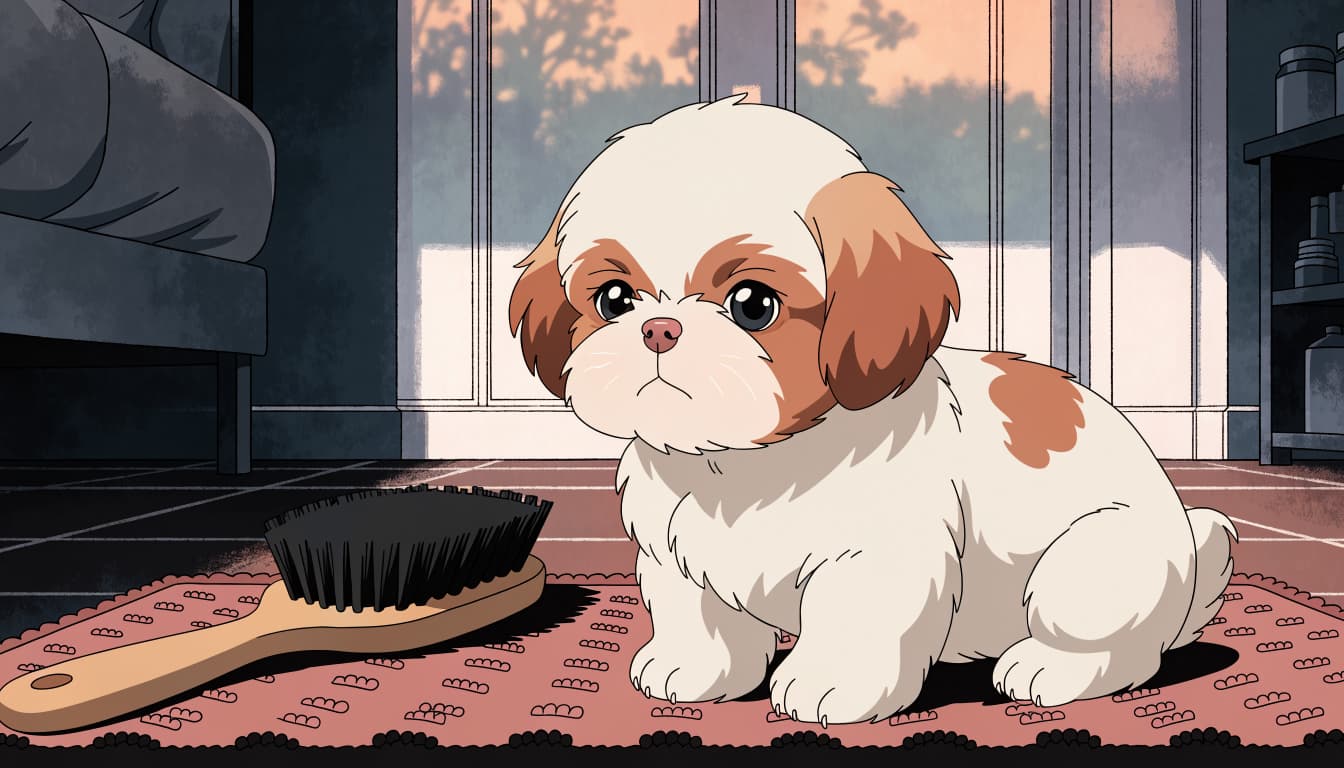
In the early months, your puppy's hair may feel soft and look plush. As the hair grows, you may notice more length around the face, ears, legs, and body. The texture can change gradually rather than switching overnight.
"Fluffy" also means different things to different people. You might picture a rounded puppy cut, while someone else means a long coat with plenty of volume. Both looks can be cute; neither tells you exactly where your dog is in the coat transition.
Your puppy doesn't need to match another dog's photos at the same age. Coat length and fullness vary, and a trim changes what you see.
Why the adult coat may take until the second year
The American Shih Tzu Club says many dogs change coat around 10 to 12 months. Wahl USA describes a broader 12-to-18-month period for losing puppy hair and developing the adult coat.
Those ranges give you a useful window, not a birthday deadline. Some dogs change gradually, and their coats may look fuller at different times depending on their individual hair and how long you let it grow.
Coat care also differs across breeds. Our Jack Russell coat comparison covers the different textures and upkeep of smooth and rough coats. Your Shih Tzu's own coat condition is the better guide for its routine.
What to Expect During the Shih Tzu Puppy-Coat Change
The coat-change phase can make your usual brushing routine feel like it's lost a boss fight. You may find more tangles than you did a few weeks earlier, even if your puppy's care hasn't changed.
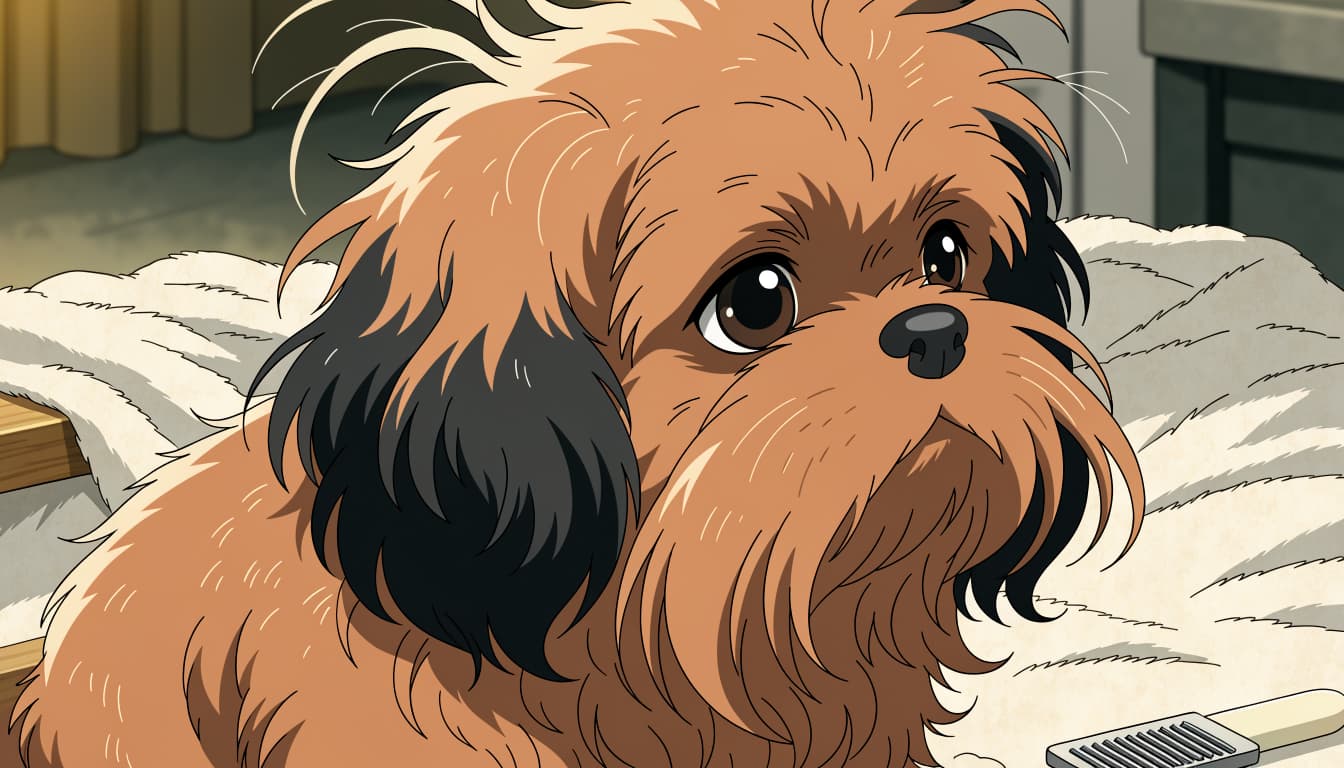
The American Shih Tzu Club describes the difficult part of the change as usually lasting about three weeks. Treat that as guidance, not a countdown timer every puppy follows. Keep watching the coat and adjust your routine to what you find.
More tangles can appear as coat textures overlap
As loose puppy hair comes away, it can catch in the growing adult coat. Those loose strands may form tangles close to the skin, even when the surface looks reasonably tidy.
This doesn't automatically mean your puppy has an unhealthy coat. It does mean you'll want to pay attention to the hair beneath that fluffy exterior. A quick pass over the top can miss a developing mat.
Check after muddy walks or trips through vegetation, too. Remove caught debris gently, and look for knots where the hair rubs together. Some puppies tangle faster than others, so use your dog's coat as the guide.
How to tell normal coat change from a skin concern
A gradual change in length or texture can be part of growing up. Sudden hair loss, bald patches, persistent itching, redness, or sore skin deserves a different response.
Contact your veterinarian if you notice those symptoms or your puppy seems uncomfortable. A coat transition shouldn't be your explanation for a dog that can't stop scratching or has irritated skin.
You can also tell your veterinarian if your puppy reacts to a grooming product or resists handling in one area. That detail helps you discuss a routine that keeps your dog comfortable.
How to Keep Your Shih Tzu's Growing Coat Fluffy and Tangle-Free
A good routine protects your puppy's comfort, not just the fluff rating. The right frequency depends on coat length, tangling, activity, and what your dog tolerates.
Brush gently, all the way through the coat
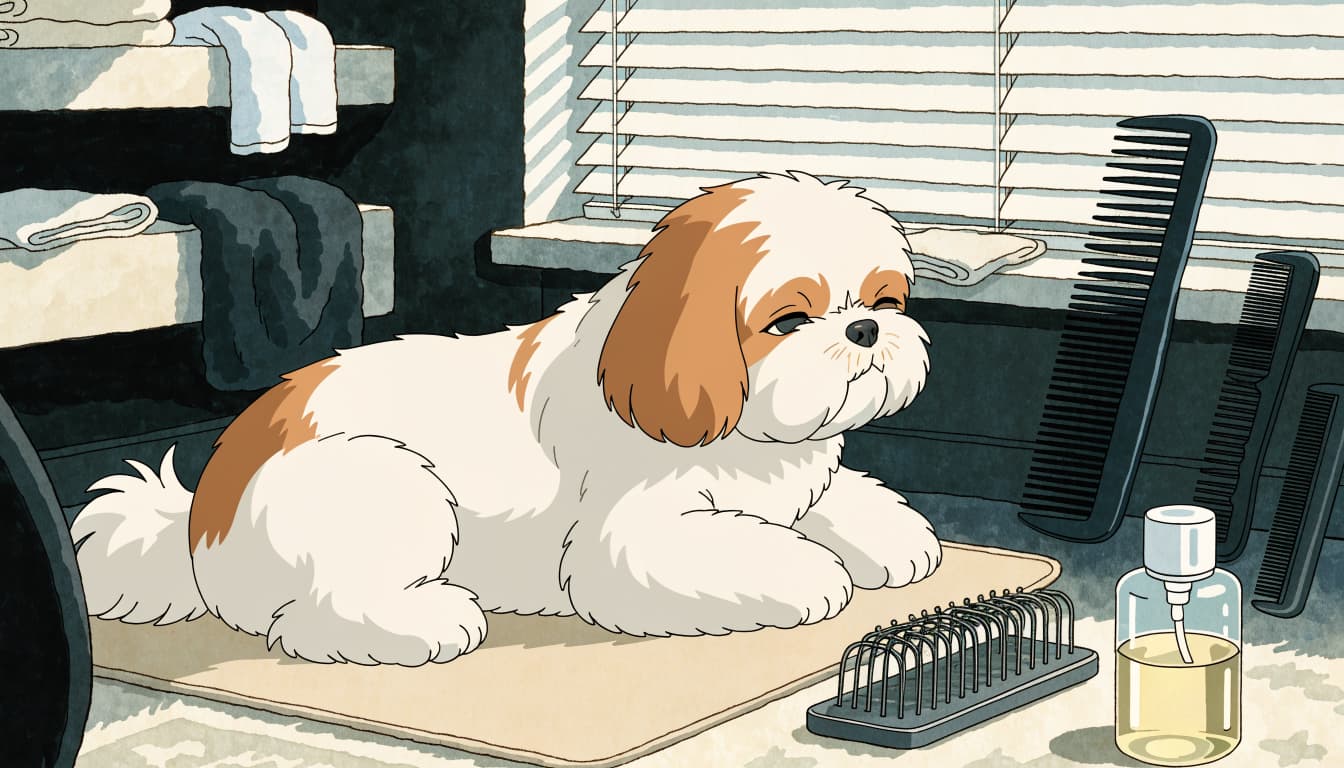
The American Kennel Club recommends daily brushing for a long Shih Tzu coat. The American Shih Tzu Club suggests a flexible-pin wire brush and working in layers down to the skin.
Lightly mist the coat with water and conditioner first if suitable for your dog. Lift a section of hair, brush gently through it, and ease small tangles apart with your fingers rather than yanking.
Pay attention to the inside of the legs, neck, and ears. Those spots are easy to miss, and a fluffy top layer can hide knots underneath. Keep sessions calm and short enough for your puppy to handle comfortably.
Deal with mats before bath time
Dirty hair can tangle more easily, so bathing belongs in your care routine. Use a dog-appropriate product and adjust the schedule to your puppy's coat and needs.
Never bathe a matted coat. The American Shih Tzu Club's grooming advice warns that water can set mats and make them harder to remove.
If a knot is tight, close to the skin, or painful, don't force the brush through it or cut at it with scissors. Ask a groomer for help, or contact your veterinarian if the skin looks sore.
Choose a haircut that fits your time and your puppy's comfort
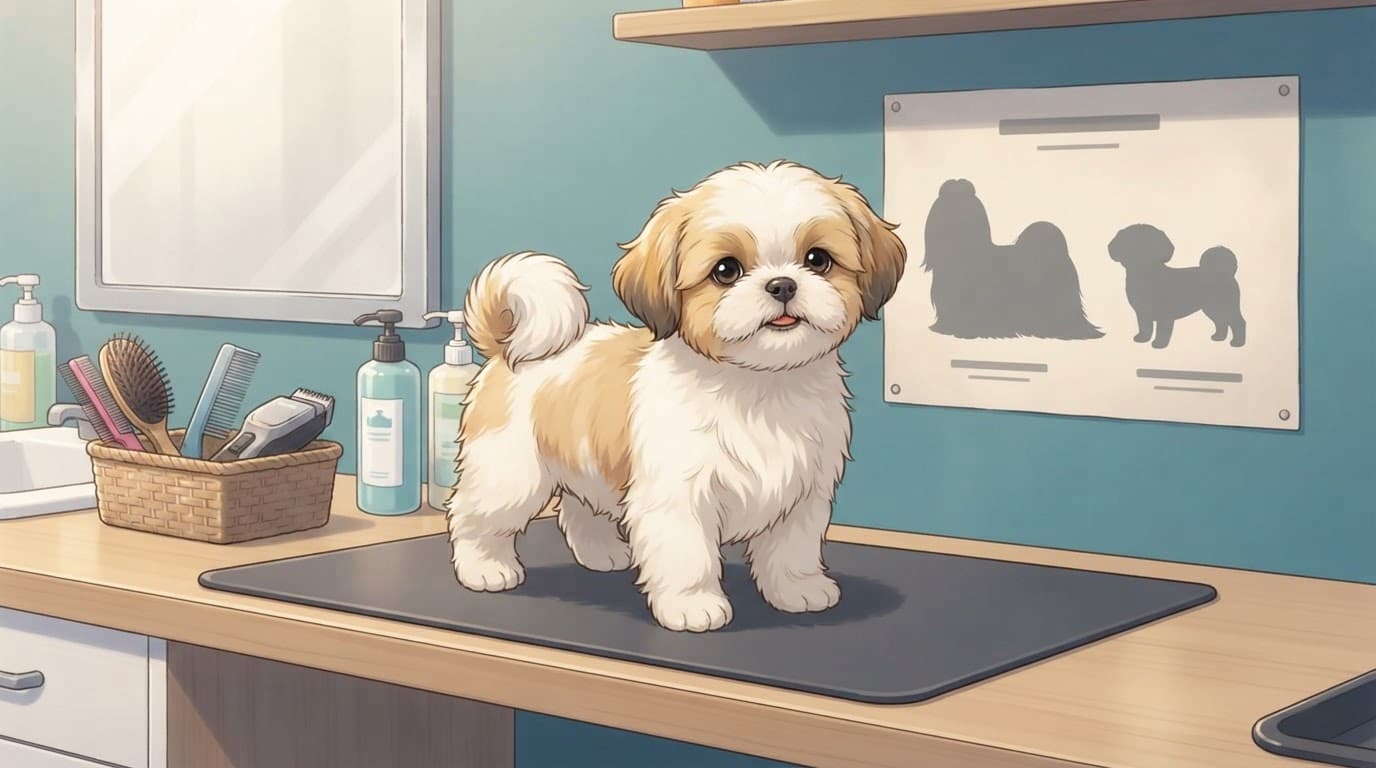
A short puppy cut can make daily upkeep easier, while a longer coat calls for more frequent brushing. Neither style removes the need to check the skin and look for tangles.
Talk with a qualified groomer about your puppy's coat, skin, and tolerance for handling. Pick a length you can maintain between appointments. Your dog's comfort deserves more attention than achieving a particular silhouette.
Streetwear & Casual Styling
Once your puppy's grooming plan is sorted, your outfit can have its own character arc. A Cyber-Brutalist Anime Graphic Tee pairs easily with simple jeans and comfortable shoes. Let the graphic do the talking while the rest of the fit stays relaxed.
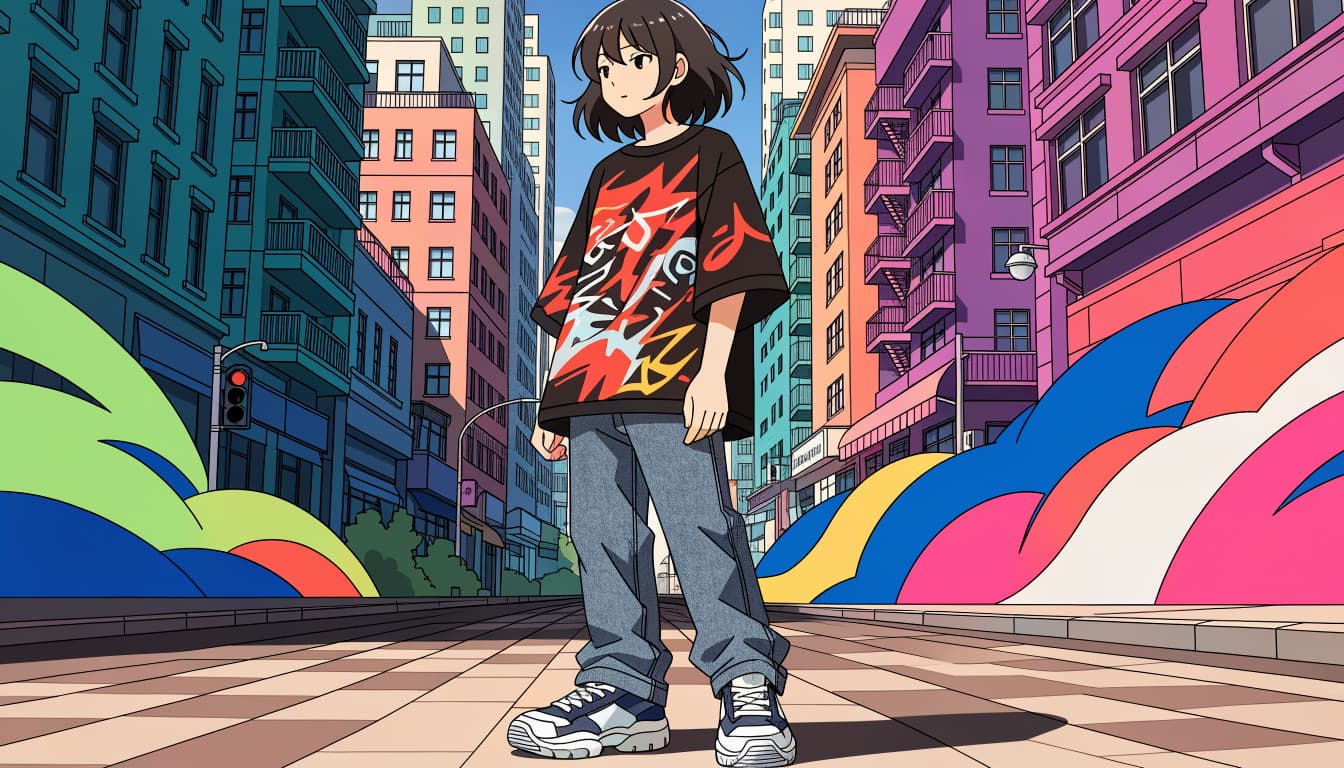
The Dog Eats Custom Kibble Living On Ramen Tee brings dog-parent humor to that casual combination. If your dog's online ambitions concern you, the If They Could Use Internet We'd Be In Trouble Tee offers another pet-lover pick.
Add a light layer when you need one, and choose footwear you can comfortably walk in. Your clothes are personal expression; your puppy's grooming supplies and walking gear are separate priorities.
Frequently Asked Questions
Will my Shih Tzu puppy's coat become long and silky?
Shih Tzus are known for long adult coats, but your dog's final appearance depends on the individual coat and how you maintain it. Regular trimming keeps the hair shorter, while a longer style needs more brushing. You can choose the look that fits your dog's comfort and your routine.
Does a fluffy coat mean my puppy is fully grown?
No. Coat development doesn't reliably tell you whether your puppy has reached overall maturity. Consider your dog's age and overall development, and ask your veterinarian about growth if you have concerns. A dramatic fluff upgrade isn't a completion screen.
Should you brush a Shih Tzu puppy every day?
Daily brushing is recommended for a long Shih Tzu coat. A shorter coat may need a different routine, so watch for tangles and adjust to your puppy's needs. Start gentle handling early and keep sessions calm, with breaks when your puppy needs them.
Why does my puppy's coat look less fluffy after a haircut?
A trim changes the visible length and shape of the hair, so your puppy may look less full afterward. The coat continues growing, though its appearance will depend on the individual dog and future grooming. A shorter look can also make coat checks easier between appointments.
When should you ask a groomer or veterinarian for help?
Ask a qualified groomer about difficult mats or a haircut you can maintain comfortably. Contact your veterinarian for irritated skin, unusual hair loss, persistent itching, or signs of discomfort. If your puppy reacts to a product, mention that when you discuss care.
Give Your Puppy's Coat Time
Many Shih Tzus start changing coats around 10 to 12 months, and the transition may continue through 12 to 18 months. Your puppy's timing and final look can differ from another dog's.
Focus on gentle, regular grooming rather than chasing a particular amount of fluff. Check beneath the top layer, handle tangles carefully, and get help when the coat or skin needs it.
Your puppy doesn't need to hit a perfect coat milestone on schedule. A comfortable dog and a routine you can maintain are the real wins.