

Why Is My Puppy So Hungry? Growth, Meals, and Health Signs
TrendReactTees.STORE TeamA puppy can finish dinner, lick the bowl clean, then ask for a second serving like the first one was a deleted scene. If you're asking "why is my puppy so hungry," a strong appetite is often part of normal growth, but begging alone doesn't prove your puppy needs more food.
Start by checking portions, food, and meal timing, then look at your puppy's weight and body condition. If the appetite comes with poor growth or signs of illness, call your veterinarian rather than adding extra meals.
If your puppy has already taken over the household like a tiny chaotic NPC, our Dog Eats Custom Kibble tee and My Therapist Is a Dog tee bring pet-parent humor to your daily uniform.
This post may contain affiliate links. If you make a purchase through these links, I may earn a small commission at no extra cost to you.
Key Takeaways
- Rapid growth can raise a puppy's energy needs, but a clean bowl or persistent begging doesn't prove you're feeding too little.
- Use complete puppy food, measure each meal, and treat package amounts as a starting point.
- Track weekly weight, body condition, treats, and appetite changes instead of guessing from food-seeking behavior.
- Poor growth, weight loss, ongoing stomach problems, or weakness call for veterinary advice, not a bigger scoop.
Why is my puppy so hungry? Growth may be the reason
Puppies grow quickly, especially in their first months, and that growth takes energy. Age, breed, expected adult size, activity, and individual metabolism all affect how much food a puppy needs. Two puppies of the same age can have different needs, even if both treat mealtime like a competitive speedrun.
A big appetite can fit normal growth, but the bowl isn't a measuring tool for your puppy's needs. Some puppies eat quickly because food is exciting. Others beg because they've learned that looking adorable near the kitchen sometimes pays off. Neither behavior, by itself, tells you whether the daily portion is right.

How age and growth change your puppy's appetite
Appetite and meal needs shift as puppies grow, and there's no single schedule that fits every dog. Small-breed puppies may need more frequent meals than larger puppies. Large and giant breeds can keep growing for much longer, so their feeding plan may need to change over time.
The Merck Veterinary Manual gives general meal-frequency guidance of four meals daily at 6 to 12 weeks, three meals at 3 to 6 months, and two meals at 6 to 12 months. Some of the largest breeds may take longer to reach maturity. Use the schedule as a starting point, not a rule that overrides your veterinarian's advice. Merck's puppy-care guidance covers how care changes as puppies grow.
Fast eating isn't proof of an empty tank
Finishing every crumb may simply mean your puppy enjoys eating. If your puppy is gaining steadily and maintaining a healthy body condition, begging after meals doesn't automatically call for extra food. Look at the whole pattern rather than treating each empty bowl as a dramatic nutritional plot twist.
Check your puppy's portions, food, and meal schedule
Before increasing the portion, compare the amount you feed with your puppy's age, expected adult size, and growth. Food labels provide a useful starting point, but individual needs vary. Your veterinarian can help adjust the daily amount based on body condition and weight trends.
Keep the daily total in view, too. A measured breakfast and dinner can become unmeasured extras once training treats, table scraps, and well-meaning family members enter the picture. Record what your puppy actually gets for a few days. That gives you a clearer picture than trying to remember how many "tiny" snacks happened between meals.
Use complete puppy food and measure each meal
Choose a complete, balanced food made for puppy growth. For a puppy expected to weigh 70 pounds or more as an adult, look for food labeled as suitable for the growth of large-size dogs. AAFCO explains large-size growth food labeling.
Measure meals with a consistent scoop or kitchen scale, rather than estimating by eye. Weigh your puppy weekly and keep a simple record. A steady trend is more useful than a single number, and your veterinarian can tell you whether growth is on track.
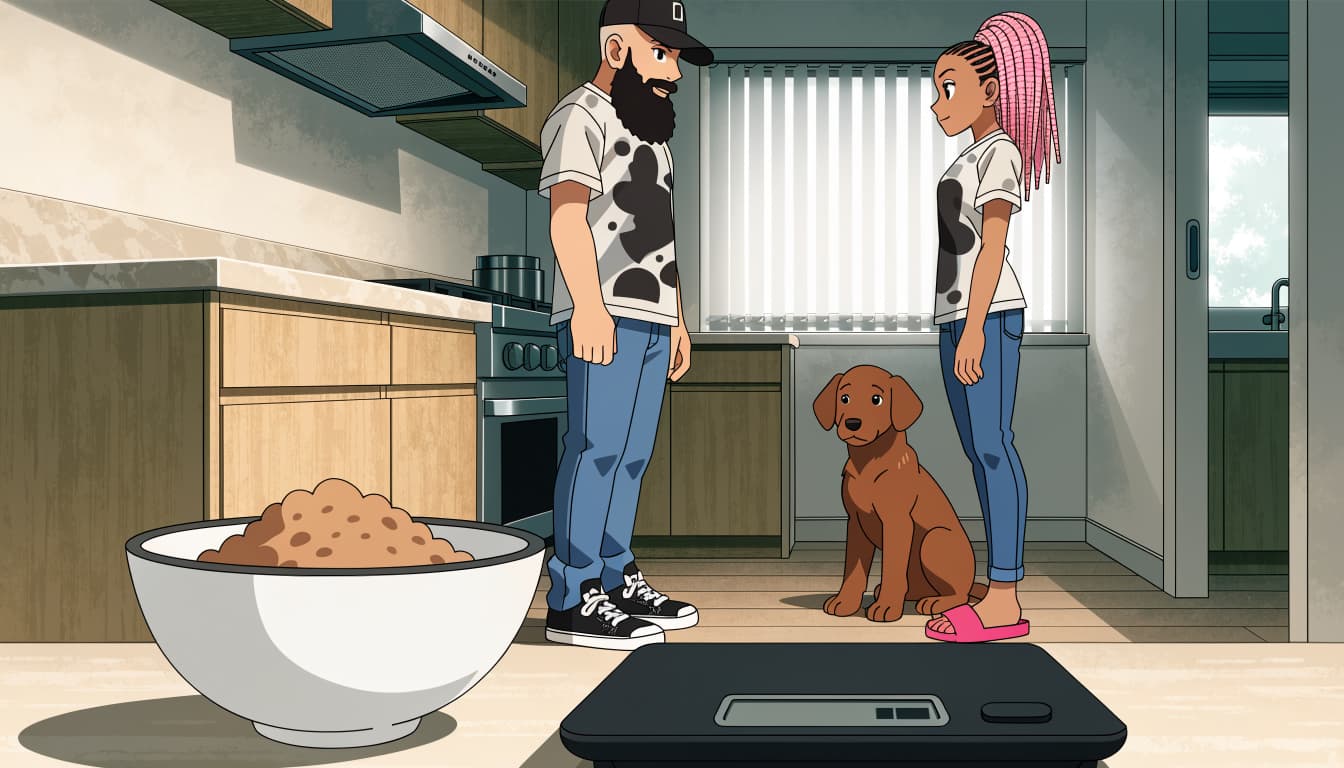
Feed smaller meals on a schedule, not by constant grazing
Very young puppies often do better with several measured meals. General guidance commonly starts around four meals daily for younger puppies, moves to three meals during much of the 3-to-6-month stage, and reaches two meals daily for many older puppies. Small breeds may need more frequent meals. Your vet and the food label can help set the schedule for your puppy.
Free-feeding makes it harder to tell how much your puppy eats and when. A consistent schedule gives you a better record of appetite and makes it easier to notice a real change.
Keep treats and extras from crowding out balanced food
Treats and table scraps should stay limited so your puppy still gets most nutrients from balanced puppy food. If you offer meat, keep it to a tiny portion of plain, fully cooked, boneless meat as an occasional extra. It isn't a meal replacement or a fix for persistent begging.
Look beyond the food bowl before adding more
Food-seeking isn't always hunger. Eating is rewarding, and puppies can quickly learn that begging earns a bonus bite. Some also hover near the bowl because they're bored, need activity, or want your attention. A puppy's face can be persuasive; it cannot calculate its daily calorie needs.
Instead of using bowl cleanup as your guide, watch weight, body shape, and the overall growth pattern. A puppy who gains too quickly may already be eating enough, or more than enough, and still beg whenever food appears.
Track weight, body shape, and eating habits
Keep a brief record of daily meal amounts, treats, appetite changes, and weekly weight. Ask your veterinarian to assess body condition and growth rather than relying on appearance alone. Thick fur can disguise weight gain, and a puppy who looks small may still be growing at a healthy rate.
If weight gain slows, drops, or speeds up, share the record at your puppy's next checkup. The trend gives your vet more to work with than "they seem hungry all the time."
Use play and training to meet needs that aren't hunger
Try safe play, short training sessions, or a puppy-safe food puzzle when your puppy is asking for attention between meals. You can use part of the measured daily food for training rewards. That keeps practice fun without letting extra snacks quietly expand the menu.

Know when constant hunger could signal a health problem
Parasites and other illnesses can affect appetite, weight, growth, and stools. Appetite alone can't tell you what's wrong. If hunger arrives with poor weight gain or other changes, get veterinary advice instead of responding with a larger portion.
Watch for worms, poor growth, and stomach changes
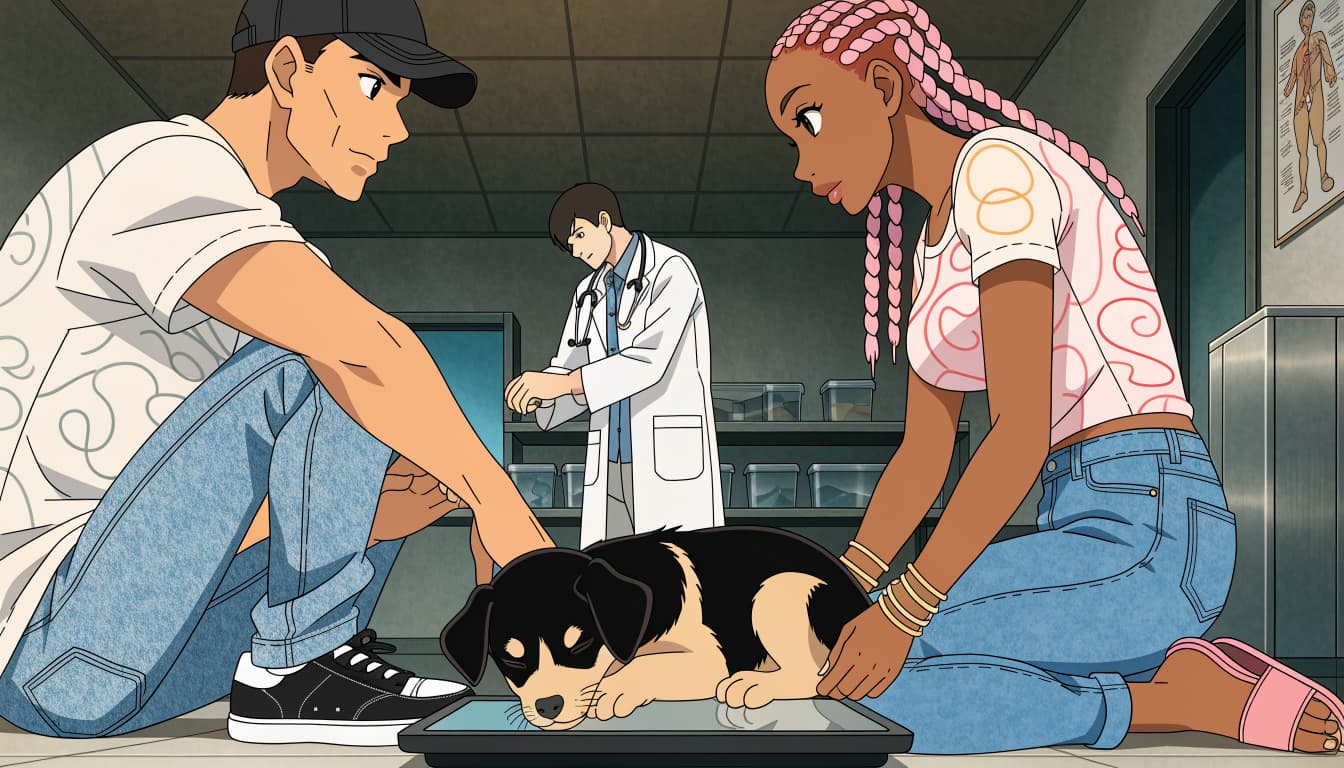
Contact your veterinarian if you notice poor or falling weight, a swollen-looking belly, diarrhea or ongoing soft stools, a dull coat, weakness, or visible worms in stool or vomit. These signs can have several causes, so they don't identify a specific parasite on their own.
Some puppies with parasites show few obvious signs. Your vet may recommend a stool test. The Companion Animal Parasite Council's parasite-care guidance recommends fecal examinations at least four times during a puppy's first year, with the timing adjusted to the individual puppy.
Contact your veterinarian promptly for severe symptoms
Repeated vomiting, persistent or bloody diarrhea, dark or tarry stools, marked weakness, or sudden weight loss warrant prompt veterinary care. Failure to gain weight, or any weight loss in a very young puppy, is especially concerning.
Don't start a dewormer or other treatment without veterinary direction. A veterinarian can assess your puppy and decide whether testing or treatment is needed.
Build a feeding plan that supports healthy growth
A useful routine is simple: serve measured meals on a schedule, keep track of treats, and weigh your puppy weekly. Pay attention to body condition and changes in appetite or digestion. Bring those notes to checkups so your veterinarian can adjust the plan as your puppy grows.
Overfeeding during growth can encourage excess weight and may interfere with healthy skeletal development. That's why "they still seem hungry" isn't a good reason to keep increasing portions. Follow the growth pattern, not the puppy's post-dinner campaign for an encore.
Bring useful details to your veterinary visit
Bring the food label, daily measured portions, treat amounts, and recent weight records. Your veterinarian can tailor the plan to your puppy's age, expected adult size, health, and growth pattern. If the appetite changed suddenly, note when it began and any changes in stools, energy, or weight.
Make adjustments gradually and with guidance
If your puppy's growth or body condition suggests a portion change, discuss it with your veterinarian. A plan based on the individual puppy is more reliable than guessing from a feeding chart or changing the amount every time the bowl is empty.
Streetwear & Casual Styling
Puppy care can take over your calendar. Your outfit doesn't need to become another project. For a casual dog-walk fit, pair a Cyber-Brutalist Anime Graphic Tee with jeans and comfortable everyday shoes. Keep the graphic tee as the focal point, then let the rest of the look stay easy.
Our Scream at the Void dog-parent tee brings anime-style pet humor to a simple outfit. The If They Could Use the Internet tee keeps the dog-parent energy intact, because your puppy already has plenty to say without Wi-Fi.

Frequently Asked Questions
Can your puppy's appetite change from week to week?
Yes. Growth, activity, and individual appetite can shift, but one hungry day doesn't establish that your puppy needs a larger portion. Track weight and eating habits, and call your vet about a persistent change or one that comes with other symptoms.
Should you wake a sleeping puppy for a meal?
There isn't one schedule that fits every age, breed, and health situation. Ask your veterinarian how to handle overnight feeding for your puppy, especially if your puppy is very young or has a medical concern.
Can you offer meat as a snack?
A tiny portion of plain, fully cooked, boneless meat can be an occasional extra. Keep complete puppy food at the center of meals, and count extras as part of the overall feeding plan.
What if your puppy eats faster than another puppy?
Eating speed varies and doesn't show whether a portion is right. Measure each puppy's food separately and ask your vet to assess weight and body condition rather than comparing appetites.
A big appetite needs a better guide than begging
A strong appetite is often part of puppy growth, but begging by itself isn't a reliable portion guide. Measure meals, track weight and body condition, and keep treats in view.
If appetite changes come with poor weight gain, stomach problems, weakness, or weight loss, contact your veterinarian. The empty bowl can wait; your puppy's health comes first.