

BMW Dash Symbol Meaning: A Complete Guide to Dashboard Warning Lights
Key Takeaways
A dashboard symbol is an early and crucial message about your vehicle’s current condition, serving as a vital communication tool rather than a mere decoration to be ignored. The specific color of the symbol, its flashing behavior, any accompanying text displayed on the instrument cluster or infotainment screen, and the way the car feels while you are driving all combine to help you accurately judge what action to take next, ensuring your safety and the longevity of your vehicle.
- Red warnings usually call for immediate attention or a safe stop.
- Yellow or amber symbols generally indicate a fault, limitation, or service need.
- Green and blue lights usually confirm that a feature is active.
- Your owner’s manual and iDrive message provide model-specific details.
- Clearing a warning without repairing its cause can leave the underlying problem unresolved.
Understanding BMW dashboard symbol colors
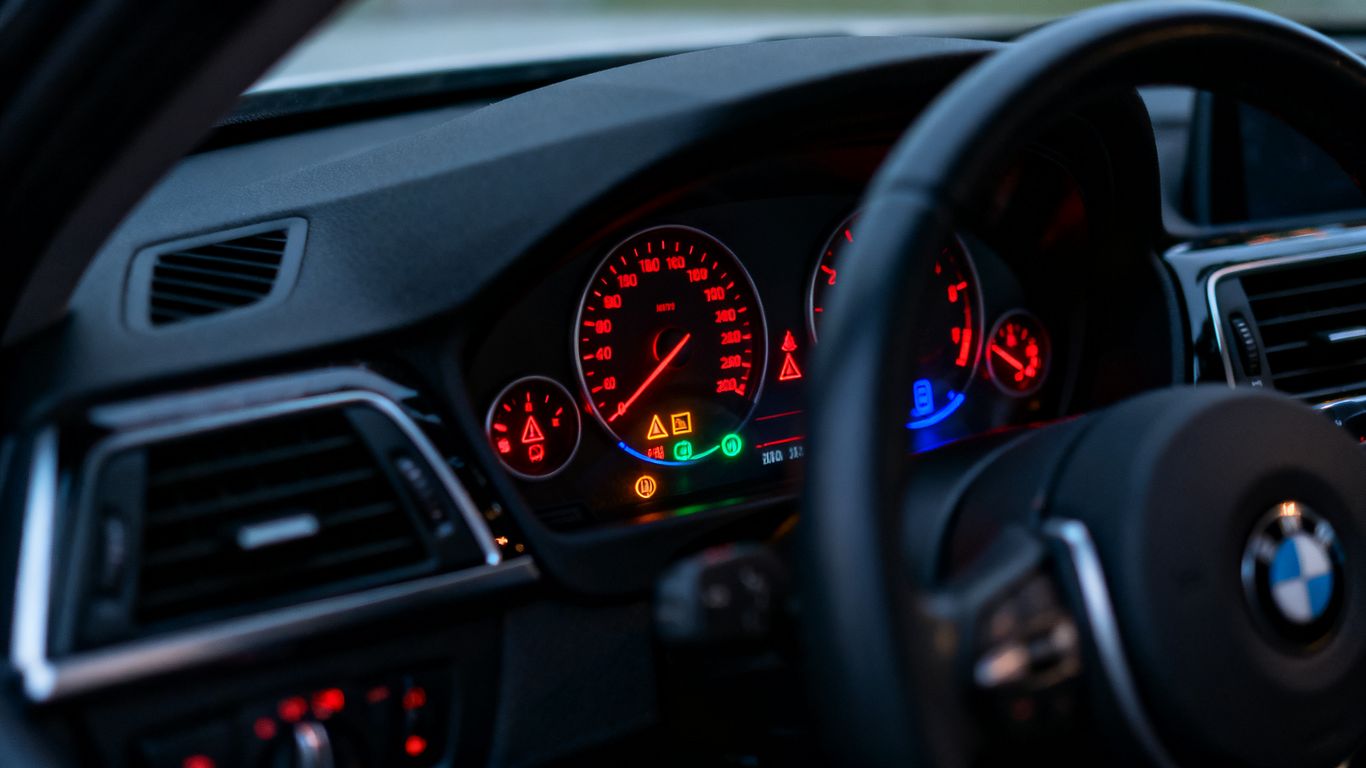
Learning the color system is a useful first step when you are trying to understand the BMW dash symbol meaning. The color gives you a quick sense of priority, but it does not tell the whole story. A red lamp may be a serious mechanical or safety issue, while a yellow lamp can still require prompt attention. The vehicle’s behavior and the written message matter just as much as the icon.
A helpful dashboard warning lights guide can reinforce the basic distinction between symbol colors, shapes, and timing. Use it as a starting point, then confirm the exact meaning for your model in the owner’s manual.
Red symbols that require immediate attention
Red symbols generally indicate a condition that can affect safety or cause damage if you continue driving. Examples include warnings associated with oil pressure, braking, engine temperature, or the charging system. If a red symbol appears with smoke, unusual noise, loss of power, a burning smell, or a major change in braking or steering, pull over as soon as it is safe.
Do not assume that a red light is only a reminder because the car still moves normally. Some faults become severe before you notice a change from the driver’s seat. Turn off the engine when the message or manual directs you to do so, and arrange roadside assistance or professional help rather than taking a risk.
Yellow and amber symbols that indicate caution
Yellow and amber symbols usually mean that a system has detected a fault, a condition outside its normal range, or a maintenance need. You may be able to continue for a short distance, but that depends on the specific symbol and whether the vehicle feels normal. A tire-pressure warning, engine warning, or assistance-system fault should not be treated as interchangeable with a simple feature indicator.
Read any accompanying message before deciding what to do. If the light remains on after a restart, note when it appeared, whether it is steady or flashing, and whether another warning appeared at the same time. That information can make diagnosis more efficient.
Green and blue symbols that show active features
Green and blue symbols most often confirm that a feature is switched on or operating. Examples can include lighting functions, turn signals, cruise-related status, or high-beam operation, depending on the equipment fitted to your vehicle. These lights are usually informational rather than evidence of a fault.
Even so, a familiar green or blue icon can appear alongside a separate warning. Look at the complete instrument-cluster display instead of focusing on one color in isolation. A feature indicator may simply be active while another system needs attention.
Why a flashing warning light is more urgent
A flashing warning is commonly used to signal a more immediate or active condition than a steady light. The exact meaning varies by system, but flashing behavior should make you more cautious, particularly when the engine is running roughly or the car is losing power. Reduce speed and avoid hard acceleration while you assess the message.
If the warning concerns braking, steering, engine temperature, oil pressure, or another safety-critical system, stop when it is safe and seek assistance. A flashing lamp should never be dismissed simply because it disappears after a few seconds.
Common BMW warning symbols and their meanings
The most stressful dashboard moments often involve symbols connected to the engine, electrical system, fluids, or brakes. These warnings can share similar colors while pointing to very different causes. Your safest approach is to combine the icon with the written message, the vehicle’s symptoms, and the instructions in the manual.
The BMW warning light overview is another useful reference for comparing common engine, battery, temperature, and diesel-related indicators. Treat online explanations as general guidance, since equipment and wording can change between vehicles.
Check engine and emissions warning
A check-engine or emissions warning indicates that the vehicle’s engine-management or emissions-related system has detected a fault. A steady light may allow you to drive carefully to a repair facility if the car feels normal, but it still deserves diagnosis rather than indefinite postponement. A flashing engine warning is more urgent, especially if the engine is misfiring, shaking, or producing unusual exhaust.
Avoid repeatedly restarting the vehicle to make the light disappear. Record any related symptoms and have the fault codes read with suitable diagnostic equipment. The code points technicians toward a system or condition; it is not automatically a complete diagnosis or a list of parts to replace.
Battery and charging system warning
A battery-shaped warning while driving can indicate a charging-system problem rather than a battery that merely needs replacing. Possible causes include a charging component, wiring, belt, or battery-related fault, and the vehicle may eventually stop once available electrical power is exhausted. You may also notice dimming lights, electrical irregularities, or difficulty starting.
Switch off unnecessary electrical loads if the manual permits it, and plan to stop safely rather than continuing on a long journey. If the warning appears with a belt problem, overheating, or other serious symptoms, stop promptly and arrange professional assistance.
Engine temperature warning
An engine-temperature warning can mean that the engine or cooling system has become too hot. Continuing to drive while the temperature remains high may cause expensive damage, so pull over safely and follow the manual’s instructions. Do not open a hot coolant system, because pressurized steam or fluid can cause severe burns.
Allow the vehicle to cool only in a safe location, and do not treat a lower temperature reading after a short pause as proof that the fault has gone away. A coolant leak, fan problem, thermostat issue, or other cooling-system fault still needs investigation.
Oil pressure and oil level warnings
Oil pressure and oil level warnings are related but not identical. A low-level message may call for checking the oil and adding the specified type if the manual permits it, while an oil-pressure warning can indicate that the engine is not receiving adequate lubrication. If an oil-pressure warning appears while the engine is running, stop as soon as it is safe and follow the vehicle’s instructions.
Do not rely on the absence of a puddle beneath the car. Oil can be low because of consumption, a leak, an inaccurate reading condition, or another engine problem. Stop before damage escalates when the warning indicates low pressure or the engine begins making unusual mechanical noise.
Brake system and brake pad warnings
A brake-system warning deserves prompt attention because the consequences affect stopping ability. Check whether the parking brake is fully released, but do not assume that explains a warning that remains illuminated while driving. A red brake warning, reduced pedal feel, low fluid indication, or warning that appears with an ABS light should lead you to stop safely and seek professional advice.
A brake-pad warning generally means the pads or their wear-detection system needs inspection. Arrange service soon, and be especially cautious if you hear grinding, feel vibration, notice pulling, or experience a change in pedal response. A car that still stops is not necessarily a car with healthy braking hardware.
BMW safety and driver assistance symbols
Safety and driver-assistance indicators tell you whether protective systems are available, limited, switched off, or reporting a fault. They do not replace attentive driving, and many depend on road markings, weather, sensor cleanliness, and operating conditions. A warning may describe a temporary limitation rather than a permanent failure, but you should still understand what is unavailable.
Read the text message that accompanies the icon and consider recent conditions. Heavy rain, snow, dirt, glare, or a blocked sensor area can affect some systems, while a persistent warning after conditions improve needs further checking.
Airbag and restraint system warnings
An airbag or restraint-system warning indicates that a safety restraint component or its monitoring circuit may not be operating as intended. That can involve an airbag, belt tensioner, seat-occupancy detection, or related wiring, depending on the vehicle. Because these systems are designed for a crash, do not ignore a persistent warning simply because the seats and belts appear normal.
Avoid probing connectors or attempting an improvised repair beneath a seat. Arrange inspection by a qualified technician, and tell the technician whether the warning began after a seat was moved, an interior repair, water exposure, or another event.
ABS and dynamic stability control symbols
ABS warnings relate to the anti-lock braking function, while stability-control indicators can relate to traction, vehicle stability, or a system that has been switched off. Your conventional brakes may still work when ABS or stability assistance is unavailable, but the vehicle may not respond in the same way during hard braking or on a slippery surface.
Reduce speed and drive defensively if the car feels normal and the manual indicates that limited driving is acceptable. If the brake pedal feels abnormal, the car pulls sharply, or a red brake warning appears as well, stop and obtain assistance instead of continuing.
Tire pressure monitoring system warning
A tire-pressure monitoring warning can result from low pressure, a puncture, temperature-related pressure change, or a sensor or system issue. Inspect the tires as soon as you can do so safely, including the sidewalls and tread. If a tire is visibly damaged or losing air, do not continue driving merely because the vehicle still steers.
After correcting the pressure, the vehicle may require a reset or initialization procedure. Use the specified cold pressures from the vehicle information, not a generic number found online, and seek inspection if the warning returns.
Lane departure and collision warning indicators
Lane-departure and collision-related indicators may show that a system is active, unavailable, limited, or issuing an alert. They are assistance features, not guarantees that the vehicle will detect every lane edge, vehicle, cyclist, or hazard. Keep your attention on the road and adjust your driving when visibility, markings, weather, or traffic make assistance less reliable.
If the message says the function is temporarily unavailable, check for obvious obstructions around the relevant sensors or camera area without touching anything that could be damaged. A warning that persists in clear conditions should be documented and checked.
Parking brake and auto hold symbols
Parking-brake and auto-hold symbols can be normal status indicators when the feature is engaged. A warning that remains after the parking brake is released, however, may indicate a brake-system fault or a problem with the holding function. Confirm the vehicle is securely stopped before investigating the message.
Pay attention to whether the vehicle rolls unexpectedly, whether the parking brake releases correctly, or whether the brake pedal behaves differently. Any change in basic brake operation makes this a safety issue rather than a minor convenience warning.
BMW service and maintenance indicators
Service indicators help you plan maintenance, but they should not be read as a substitute for checking the vehicle between scheduled visits. Some messages concern time or mileage intervals, while others respond to measured conditions or fluid levels. A service reminder may be routine; a separate red warning appearing at the same time may not be.
Keep records of completed work, including the date, mileage, fluids, and parts inspected. That history makes it easier to distinguish a genuine new issue from a reminder that was not reset correctly.

Service due and vehicle inspection reminders
A service-due or vehicle-inspection message usually tells you that scheduled maintenance is approaching or overdue. The displayed interval can depend on time, mileage, and the vehicle’s operating history. Read the detailed message and arrange the appropriate inspection rather than resetting it simply to remove the reminder.
Routine maintenance can uncover worn components or fluid issues before they become roadside failures. If the reminder appears alongside a warning about temperature, oil, brakes, or charging, prioritize the active warning instead of treating everything as a normal service visit.
Brake pad replacement alerts
A brake-pad alert generally means the vehicle has detected that inspection or replacement is due through a wear sensor or related system. The alert may appear before braking feels different, which gives you an opportunity to schedule work before the material is fully worn. Do not wait for grinding or severe noise to make an appointment.
Ask for the brake pads, discs or rotors where relevant, sensors, and surrounding brake hardware to be assessed together. A warning that remains after replacement may require the sensor circuit or reset procedure to be checked.
Washer fluid and coolant level warnings
Washer-fluid warnings are usually a convenience issue, although poor visibility makes a prompt refill sensible. Use fluid suitable for the conditions and keep the windshield clear before driving. Coolant-level warnings are more serious because a low level can accompany a leak or cooling-system fault.
Check levels only according to the manual and only when the vehicle is in a safe condition. Never remove a pressurized coolant cap from a hot engine. If the coolant warning returns after topping up, arrange inspection rather than repeatedly adding fluid without finding the cause.
AdBlue and diesel particulate filter alerts
Diesel vehicles may display alerts related to AdBlue or the diesel particulate filter, while gasoline vehicles and electric vehicles use different systems. An AdBlue message can progress from a refill reminder to a restriction if it is ignored, so read the countdown or instruction carefully. A particulate-filter alert may relate to the filter loading condition or a regeneration requirement, but the exact response depends on the vehicle and message.
Do not guess at a remedy from the icon alone. Follow the owner’s manual, especially if the warning is flashing, the vehicle has lost power, or the message says driving may soon be restricted. Professional diagnosis is appropriate when the alert returns or appears with another engine warning.
How BMW Condition Based Service affects warnings
Condition Based Service can calculate service needs from time, mileage, and operating information rather than presenting every vehicle with one fixed interval. That means two similar vehicles may show different maintenance timing. The displayed service item can help you plan, but it does not rule out an issue that falls outside the scheduled categories.
Use the service menu and detailed iDrive message to understand what is due. After work is completed, confirm that the correct item was recorded and that no separate fault message remains. A reset should reflect completed maintenance, not simply silence the reminder.
What to do when a BMW dash symbol appears
Your first response should be calm and practical. Note the color, shape, flashing behavior, written message, and any change in how the vehicle sounds or feels. If you are moving, prioritize a safe place to stop over trying to interpret a small icon while driving.
The following sequence is useful when the message is unfamiliar, provided the vehicle is not showing an obvious emergency:
- Reduce speed and create a safe stopping opportunity.
- Read the instrument cluster or iDrive message when stationary.
- Check the manual for the exact symbol and required response.
- Record related symptoms, recent work, and when the warning appeared.
- Arrange a diagnostic inspection if the warning persists or returns.
This process prevents a common mistake: treating the first visible icon as the entire diagnosis. Once you have safely stopped and gathered the details, you can make a better decision about driving farther or calling for help.
When to stop driving immediately
Stop driving as soon as it is safe when a warning concerns oil pressure, overheating, serious brake problems, major charging failure, steering control, or another system that directly affects safe operation. Smoke, fluid leaks, burning smells, severe vibration, loss of power, or unusual mechanical noise are additional reasons to stop. Move away from traffic when possible and follow roadside-safety procedures.
Do not continue just because the warning has appeared before without causing trouble. A repeated warning can become more severe, and a vehicle that reaches the shoulder may not be safe to restart or drive onward.
When it is safe to continue to a repair shop
Short, careful driving to a repair shop may be reasonable for a steady amber warning when the vehicle feels normal and the manual does not instruct you to stop. Keep the route short, avoid hard acceleration and heavy loads, and choose a facility where the relevant system can be properly diagnosed. If symptoms develop, stop rather than pressing on.
A professional guide to reading BMW warning lights can help you compare the urgency of brake, pad, and ABS messages. It should support, not replace, the instructions for your particular vehicle.
Checking the owner’s manual and iDrive messages
The owner’s manual is the most reliable place to confirm the meaning and immediate response for your specific model and equipment. iDrive may provide a fuller explanation than the small instrument-cluster icon, including a condition, operating limitation, or service instruction. Read the message while parked and save a photo if it is likely to disappear.
If the vehicle provides a status menu or service menu, review it without changing settings you do not understand. The wording may distinguish between a feature being switched off, temporarily unavailable, or affected by a detected fault.
A video can help you recognize an icon visually, but it cannot establish why your vehicle has displayed it. Match any visual explanation to your manual, symptoms, and diagnostic findings.
Turning off a warning after completing repairs
Some warnings disappear after the fault is corrected and the vehicle completes its own checks. Others require a service reset, sensor initialization, or diagnostic procedure. Do not reset a maintenance item until the corresponding work has actually been completed and recorded.
If a warning remains after a repair, return to the repairer with the exact message and the date of the work. It may indicate an incomplete repair, a related fault, a sensor issue, or a reset that was not performed correctly.
Why clearing a code does not fix the underlying problem
Deleting a diagnostic code only removes stored information or turns off a warning under certain conditions. It does not repair a failed component, restore fluid pressure, seal a leak, or correct a wiring problem. If the original condition remains, the warning may return after the vehicle runs its checks again.
A proper diagnosis connects the code with symptoms, live data, inspections, and the vehicle’s history. Clearing a code before recording it can also make the technician’s job harder, so preserve the information whenever possible.
Why BMW dash symbols vary by model and year
A dashboard symbol is not always universal across an entire vehicle range. Model generation, engine, drivetrain, optional equipment, market specification, and software version can all affect which systems are fitted and how a warning is displayed. Even when two icons look similar, their accompanying messages may call for different actions.
That is why a general chart is useful for recognition but insufficient for a final decision. Use your vehicle identification details and the exact text on the display when checking a reference.
Differences between BMW series and model generations
Different series and generations can use different instrument clusters, sensors, restraint systems, and braking hardware. A newer display may show a graphic and a detailed instruction, while an older cluster may present a simpler lamp with less supporting text. Equipment packages can add driver-assistance or parking symbols that another version does not have.
Compare the warning with the manual for your exact year and body style. Avoid assuming that a symbol found in a forum for one generation has precisely the same meaning in another.
Variations between gasoline, diesel, hybrid, and electric models
Powertrain type changes the warnings you may see. Diesel vehicles can display AdBlue and particulate-filter messages, while hybrid and electric models may show information about high-voltage systems, charging, or regenerative operation. Gasoline vehicles have their own engine and emissions indicators, and some traditional engine-related warnings may not apply to an electric drivetrain.
Never apply a combustion-engine troubleshooting step to a high-voltage system. If an electrified vehicle displays a warning involving the battery, charging system, or high-voltage equipment, follow the manual and use technicians trained for that vehicle type.
How instrument clusters and iDrive displays change the message
The same underlying issue may be represented by a lamp, a color-coded graphic, a sound, a pop-up message, or a service entry. Some displays show the warning briefly and store more detail in a menu. Others may use a changing icon to indicate whether a feature is active, limited, or faulty.
Look for the full message rather than relying on memory of the icon’s shape. Note whether the warning appears at startup, while driving, after refueling, after a tire change, or during a particular weather condition. Timing often supplies useful diagnostic context.
Using the VIN to identify the correct warning symbol
The vehicle identification number can help a service department or parts and diagnostic provider identify the correct model, production period, equipment, and powertrain. Use it when ordering a manual, confirming a service procedure, or asking whether a particular symbol applies to your vehicle. It is more dependable than describing the car only as a broad series.
Keep the VIN private when sharing photos or posts online. For a warning that affects safety or drivability, give the technician the VIN along with the exact dashboard message and symptoms.
When professional diagnostic scanning is necessary
Professional scanning is appropriate when a warning persists, returns after a reset, appears with symptoms, or involves braking, restraint, charging, engine management, or high-voltage equipment. A suitable scan can reveal manufacturer-specific information that a basic code reader may not show. Diagnosis should still include physical inspection and testing rather than relying on a code alone.
Seek help promptly if several systems warn at once, because one electrical or network fault can produce multiple messages. The right diagnostic process is usually faster and safer than replacing parts based on the icon alone.
Conclusion
Understanding the BMW dash symbol meaning starts with color and ends with context: the exact message, the vehicle’s behavior, the model’s equipment, and the instructions in its manual. Treat red or flashing warnings seriously, investigate persistent amber alerts, and use service information to plan routine work. When a symbol affects braking, temperature, oil pressure, restraints, charging, or high-voltage equipment, professional help is the sensible next step.
Frequently Asked Questions
What does a red dashboard symbol usually mean?
A red symbol usually signals a condition that may affect safety or cause mechanical damage. Stop safely when instructed, especially if the vehicle shows unusual behavior or the warning involves brakes, oil pressure, temperature, steering, or charging.
Can I drive with a yellow dashboard warning light on?
Sometimes, but only if the manual allows it, the light is steady, and the vehicle feels normal. Drive carefully to an appropriate repair facility and stop if the warning changes, flashes, or is joined by symptoms.
Why is my dashboard warning light flashing?
Flashing often indicates a more immediate or active fault than a steady light. Reduce speed, avoid hard acceleration, and check the message while stationary; stop and seek help when the warning concerns a safety-critical system.
Will restarting the car clear a warning light?
A restart may make a temporary message disappear, but it does not prove that the underlying condition is fixed. If the warning returns or remains stored, have the vehicle inspected and diagnosed.
What should I do if several warning lights appear together?
Safely stop and read the full message before continuing. Several lights can result from one electrical or system fault, but the combination may also indicate a serious problem requiring roadside assistance.
How do I find the meaning of an unfamiliar dashboard symbol?
Check the owner’s manual for your exact vehicle, then read the detailed message in the vehicle’s information display. Note the color, flashing behavior, timing, and symptoms, and seek professional diagnosis if the meaning remains unclear.
Is a service reminder the same as a fault warning?
No. A service reminder generally indicates scheduled maintenance, while a fault warning reports a detected condition or limitation. They can appear together, so review each message separately and do not reset a reminder without completing the related work.