

How Much Water Should a 6-Week-Old Puppy Drink?
TrendReactTees.STORE TeamA 6-week-old puppy should have fresh water available whenever it's awake. The amount it drinks from a bowl can vary because nursing, gruel, and wet food also provide fluids. Any daily estimate is a starting point, not a quota your puppy has to finish.
You can keep an eye on your puppy's drinking without turning the water bowl into a boss battle. And if your new roommate has already taken over your wardrobe, our Best Dog Mom Tee and Dog Eats Custom Kibble Tee know the feeling.
Here's how to offer water, gauge intake, and spot changes that deserve a veterinarian's attention.
This post may contain affiliate links. If you make a purchase through these links, I may earn a small commission at no extra cost to you.
Key Takeaways
- Give your puppy clean, fresh water whenever it's awake, including between meals.
- An older, weaned puppy may drink about half to one fluid ounce per pound daily, but a 6-week-old puppy's needs vary.
- Milk, gruel, and wet food add fluids that won't show up in your bowl measurements.
- Call your veterinarian promptly for weakness, repeated vomiting or diarrhea, or several possible dehydration signs.
- A lasting increase in thirst, especially with more urination, also deserves a veterinary call.
How much water should a 6 week old puppy drink?
For older puppies that are fully weaned, the American Kennel Club's water estimate is about half to one US fluid ounce per pound of body weight per day. For an 8-pound puppy, that's roughly half a cup to one cup daily.
Your 6-week-old may still be weaning, though, so that estimate doesn't predict exactly how much water should disappear from the bowl. Think of the number as context for a conversation with your veterinarian, not a daily score to beat.
The AKC also gives broad guidance of about half a cup every two hours during weaning. Your puppy's size and feeding routine matter, so don't force that amount or use it to replace veterinary advice.
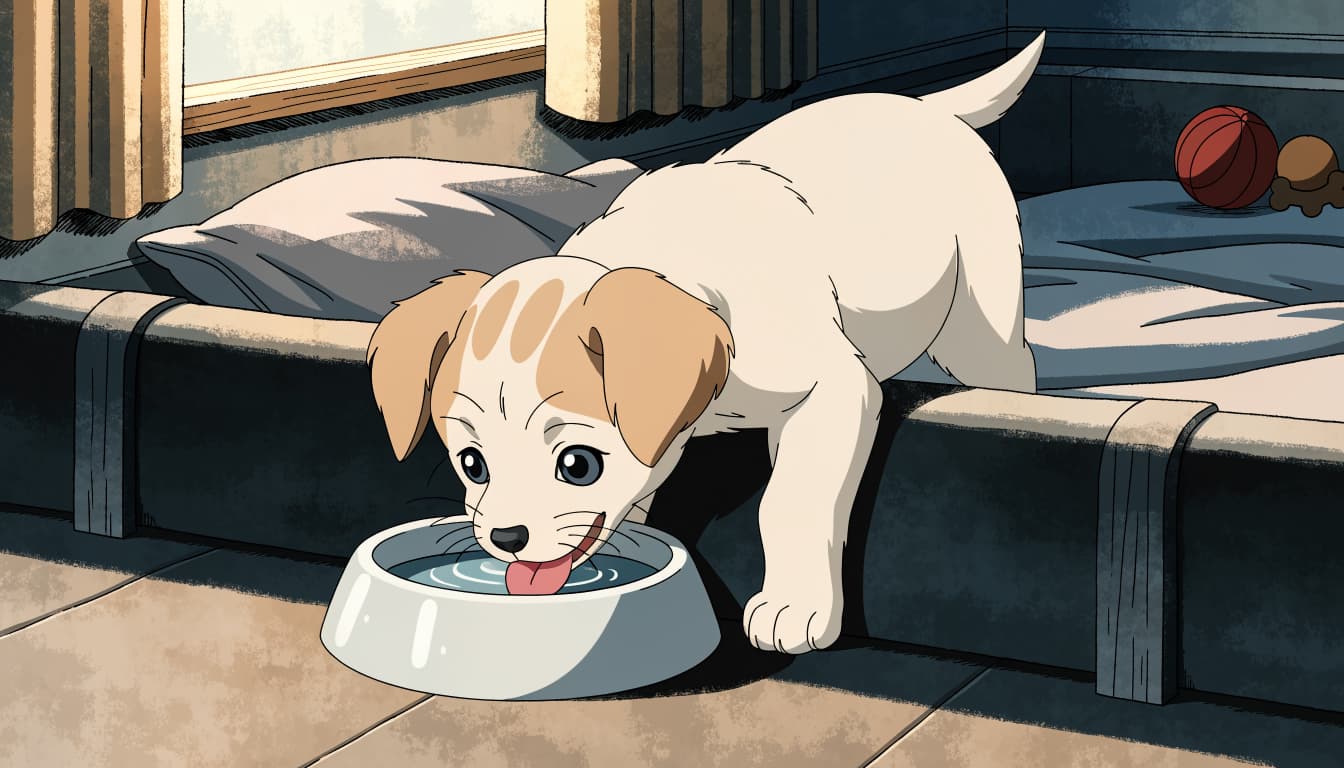
This video offers a look at when puppies begin drinking water:
Why your puppy's bowl intake may not show the full picture
At six weeks, your puppy may still be moving from nursing toward solid food. Milk, soft gruel, and wet food all provide fluid, even though none of it passes through the water bowl.
That means two puppies of the same weight may drink different amounts from their bowls. A puppy eating moist meals may visit the dish less often than one eating a drier diet.
Use weight as a guide, not a drinking quota
If your puppy's intake seems unusual, measure the water you put in the bowl and what remains. Record refills and spills, too, so you don't mistake a tipped dish for an impressive drinking session.
Don't pressure your puppy to finish a set amount. Give your veterinarian its weight, feeding routine, and observations if you're unsure what's normal.
How to offer water while your puppy is weaning
Your puppy is learning a lot at once, including how to eat and drink without wearing half the meal. Make water easy to find whenever your puppy is awake, even when it's still nursing or eating soft food.
The AKC recommends keeping fresh water available and washing the bowl to prevent buildup. A simple setup makes it easier for your puppy to drink and for you to notice when the dish needs attention.
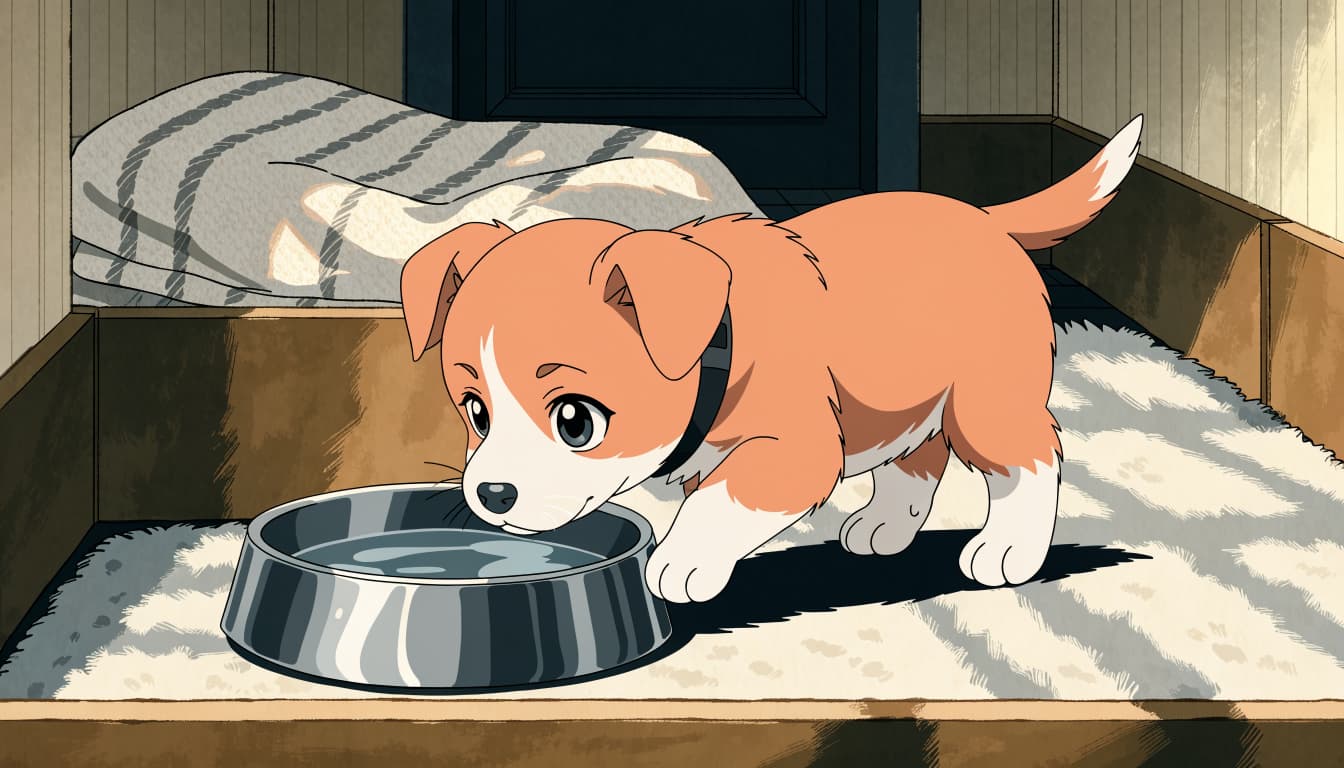
Choose a clean, shallow, steady bowl
Pick a shallow dish your puppy can reach comfortably, with a sturdy base that's difficult to tip. Place it somewhere accessible in the puppy's safe area, away from bedding that could get soaked.
Refresh the water regularly and wash the bowl. Watch your puppy around it: tiny paws can turn a water dish into a splash zone, and a spill can leave the bowl empty.
If your puppy has trouble finding the dish, keep it in a consistent spot. You can guide your puppy toward it when awake, then let it approach and drink at its own pace.
Keep water available, even during house-training
Accidents are part of puppy life. Taking the water away as a routine house-training shortcut isn't a safe fix for a puppy this young.
Instead, give your puppy frequent chances to go to its toilet area and keep its living space clean. Ask your veterinarian before changing access to water, especially if someone suggests restricting it to manage accidents.
Water access is separate from the feeding schedule. Your puppy should be able to find a fresh drink between meals, not only when the food bowl appears.
What can change how much water your puppy needs?
A weight estimate gives you a reference point. Your puppy's whole day gives you a better picture. Food, temperature, activity, and health can all affect either its fluid needs or the amount it drinks from a bowl.
Heat, play, panting, and food all matter
Warm weather and active play can make your puppy thirstier. Panting can also increase fluid loss, so keep water accessible and give your puppy a comfortable place to rest.
Food changes the picture, too. Wet food and gruel contain moisture, while a puppy eating more dry food may drink more from the bowl. A change in bowl intake after a diet change doesn't automatically mean something is wrong, but a veterinarian can help if the change concerns you.
Your puppy's size matters alongside its food and activity. If you're raising a mix, the parents' sizes can provide context for growth, though they can't predict an exact adult weight. Our Pomeranian Dachshund mix care guide explains why individual dogs vary.
Illness can affect thirst and fluid loss
Fever, vomiting, diarrhea, and increased urination can change how much fluid your puppy needs or loses. A puppy may also drink differently when it feels unwell.
Pay attention to a sudden increase in thirst that continues, especially if your puppy is urinating more or its appetite and behavior have changed. Call your veterinarian rather than trying to diagnose the cause from the water bowl alone.
You don't need to calculate an extra amount for a hot day or an illness. Keep fresh water available and ask your veterinarian for guidance if your puppy's intake or condition worries you.
Signs your puppy may be dehydrated or drinking too much
Your puppy can't send a status update, so changes in its gums, energy, and bathroom habits deserve attention. Home checks offer clues, but they can't diagnose dehydration or rule out illness.
Young puppies can worsen quickly. If your puppy seems unwell, contact your veterinarian rather than waiting for every sign to appear.
Watch for dry gums, weakness, and less urination
Possible warning signs include dry or sticky gums, weakness, unusual lethargy, and reduced urination. Skin that returns slowly after a gentle lift can also be a clue.
You can gently press the gum until it pales and watch for the pink color to return, often within about two seconds. Don't rely on that check alone: normal-looking gums don't replace an examination when your puppy seems sick.
Know when to call a veterinarian urgently
Contact a veterinarian promptly if your puppy is weak or markedly lethargic, has repeated vomiting or diarrhea, or shows several dehydration signs. Tell the clinic what you've observed and follow its instructions.
A persistent increase in drinking also merits a call, particularly alongside more urination or changes in appetite. Don't force water into a weak or vomiting puppy; ask your veterinarian how to proceed.
Streetwear & Casual Styling
When your puppy's settled and you're ready for a casual outing, keep the outfit as low-effort as your new roommate's demands are high. Pair our If They Could Use the Internet Tee with relaxed jeans and sneakers.
For more dog-parent humor, try the Scream at the Void Tee with dark denim. Both bring our Cyber-Brutalist Anime Graphic Tee style to a comfortable everyday fit.
Frequently Asked Questions

Should a six-week-old puppy have water available all day?
Yes. Fresh water should generally be available whenever your puppy is awake, including between meals. Follow different instructions if your veterinarian gives them for your puppy's health.
Can milk or wet food replace drinking water?
Milk and wet food add fluids, but they aren't a reason to remove the water bowl. If your puppy isn't eating or drinking normally, speak with your veterinarian.
Should you wake a puppy to make it drink?
A healthy sleeping puppy doesn't usually need to be woken just to drink. Make fresh water available when it wakes, and seek veterinary advice if it seems unwell or isn't drinking normally.
What should you tell the veterinarian if intake changes?
Share your puppy's weight, food, and weaning stage, along with the water offered and left in the bowl. Mention recent activity and weather, changes in urination, and any vomiting or diarrhea. Those details help your veterinarian understand the change in context.
Give Your Puppy Water and Watch for Changes
There's no single daily amount that fits every 6-week-old puppy. Size, weaning foods, activity, weather, and health all affect the picture.
Keep fresh water available, and pay attention to your puppy's usual energy and urination. Skip routine water restriction, even when house-training gets messy.
If drinking changes persist or warning signs appear, contact your veterinarian. A quick call gives your tiny roommate the care it needs without turning a rough estimate into a rule.