

Puppy Leg Shakes When Sitting: What to Do
TrendReactTees.STORE TeamIf your puppy's leg starts trembling while they sit, it's natural to wonder whether something is wrong. A brief shake can have a simple trigger, but the movement alone can't tell you the cause.
Notice whether it stops when your puppy stands, and whether they can walk and bear weight normally. For the dog person keeping watch, our Dog Eats Custom Kibble tee and My Therapist Is a Dog tee bring pet-person humor to your off-duty look. First, though, here's how to read the symptoms and decide when to call the vet.
This post may contain affiliate links. If you make a purchase through these links, I may earn a small commission at no extra cost to you.
Key Takeaways
- A trembling leg is a sign, not a diagnosis. Sitting posture, cold, excitement, pain, and illness can all be factors.
- Check whether the tremor changes with movement, and whether your puppy can walk normally.
- Call a veterinarian about repeated or worsening shaking, or shaking with other symptoms.
- Collapse, seizure-like activity, inability to walk, or possible poisoning calls for emergency care.
- A short video and clear notes can help your veterinarian assess what happened.
Puppy leg shakes when sitting: what it may mean
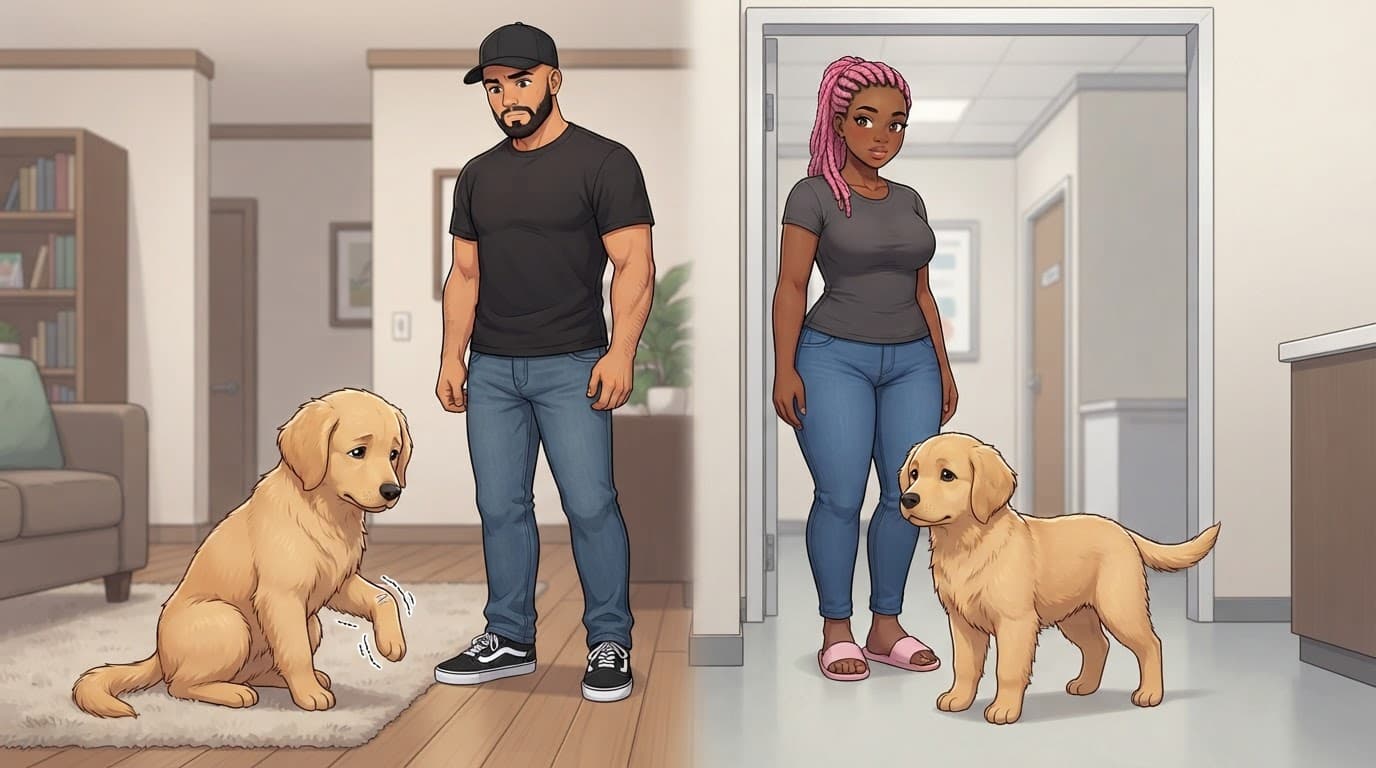
A single mildly trembling leg can happen when your puppy is holding an awkward position or using muscle effort to stay upright. Cold, excitement, and stress can also cause shaking. A brief tremor that appears in one situation and stops when the trigger passes may be less concerning than one that keeps returning, but it still doesn't identify the cause.
Pay attention to the pattern. Does the same leg shake every time your puppy sits? Does it stop when they stand or shift position? Can they walk, turn, and put weight on all four legs as usual? These observations can help you describe what you see, but they can't rule out pain or another health problem.

Notice what changes when your puppy moves
Compare the tremble while your puppy is sitting with their movement before and after it. If the shaking ends after they stand and they walk normally, note that detail. Also note whether they seem reluctant to rise, favor a leg, or avoid putting weight on it.
A short episode with an obvious trigger differs from repeated, worsening, or unexplained trembling. There isn't a reliable home-watch time limit that fits every puppy. If you can't explain the pattern, or it keeps happening, call your veterinary clinic for advice.
Know which health problems can also cause shaking
Pain or injury may cause trembling, especially when your puppy also limps, whines, or resists movement. Low blood sugar is another concern, particularly for very small or toy-breed puppies. Toxin exposure and other illnesses, including neurologic problems, can also cause tremors.
A shake in one leg doesn't prove any of these conditions. Even a broader tremor pattern needs a veterinary assessment to identify its cause. For example, VCA describes shaker syndrome as involuntary tremors that can affect a dog's ability to eat or walk, but a single shaking leg doesn't establish that diagnosis. VCA's overview of shaker syndrome can help explain why the term shouldn't be applied to every tremble.
When leg trembling needs prompt or emergency care
Call your veterinarian promptly if the shaking repeats, worsens, or has no clear trigger. Do the same if you notice limping, whining, pain, weakness, vomiting, diarrhea, poor appetite, or a change in your puppy's behavior or alertness. The combination of signs matters, and your puppy's clinic can help determine how quickly they need to be seen.
Sudden trouble walking, dragging a hind leg, or being unable to walk are urgent warning signs. If your puppy collapses, can't stand, becomes unresponsive, seems severely weak, or has seizure-like activity, seek emergency veterinary care now. Don't wait overnight when symptoms are severe. Don't give human pain medicine, which can be dangerous for dogs.

Treat suspected toxin exposure as urgent
Human medicines and household products can harm puppies. If you think yours swallowed a medicine or another potentially dangerous substance, contact a veterinarian or emergency hospital right away. Tell them the product and the amount your puppy may have encountered. Bring the packaging if you can, and don't wait for symptoms to worsen.
VCA lists tremors, seizures, and difficulty standing or walking among signs that need urgent attention after a possible toxin exposure. Its guidance on acute toxin ingestion describes when emergency treatment is needed.
Recognize seizure-like signs
A localized leg tremble is different from an episode that includes collapse, paddling, loss of bladder or bowel control, or reduced awareness. If you think your puppy may be having a seizure, move nearby objects away to prevent injury. Keep your hands away from their mouth and contact a veterinarian immediately. VCA's dog emergency guidance also warns against putting a hand in a dog's mouth during a seizure.
How to track your puppy's leg shaking and respond safely
If it's safe, record a short video of the episode. Don't delay care or put yourself at risk to film it. Note which leg shakes, how often the episode happens, how long it lasts, what your puppy was doing, and whether standing or changing position affects it.
Add useful context: recent exercise, cold or stressful events, meals, medicines, possible access to toxins, and any other symptoms. These details can help your veterinarian understand the pattern. Keep your puppy calm, and limit movement if pain, injury, or a neurologic problem may be involved. VCA's first-aid advice recommends keeping a dog quiet and minimizing movement when trauma or neurologic symptoms may be present.

Share useful details with your veterinarian
A short video and clear timeline can make it easier for the clinic to understand what you saw. Mention whether the shaking occurs only while sitting, whether it stops when your puppy moves, and whether walking looks normal afterward.
Call for advice if the trembling is new, recurring, unexplained, or paired with other symptoms. There's no universal amount of time to watch an episode at home before seeking guidance. Your puppy's age, size, other symptoms, and possible exposures all matter.
Keep your observations safe and simple
Don't force your puppy to stand, walk, or repeat a position to see whether the leg shakes again. Avoid stretching or massaging the leg, especially if it may be painful or injured. Observation is useful; trying to reproduce a symptom can make discomfort worse and won't diagnose the cause.
If your puppy's movement suddenly changes, stop the observation and contact a veterinarian. Inability to walk or hind-leg dragging requires urgent care, not another round of home testing. For dogs with long backs and short legs, sudden walking trouble can be especially concerning. Read more about hind-leg weakness and back health in small dogs.
What to expect at a veterinary visit
Your veterinarian will ask when the episodes started, how often they happen, and what your puppy was doing before the shaking began. They'll examine your puppy and may assess movement and neurologic function. A video can help if the tremor doesn't happen during the appointment.
The exam helps narrow down possible causes; the sitting-related pattern alone can't name one. Depending on what your veterinarian finds, tests may include blood or urine checks and imaging such as X-rays or ultrasound. In selected cases, more advanced tests may be considered.

Streetwear & Casual Styling
Once your puppy's safe and you've got the vet call handled, your casual outfit can return to its usual side quest. Our Cyber-Brutalist Anime Graphic Tees bring pet-person humor into a streetwear look without requiring a full cosplay budget. Try the Scream At Void My Human Understands tee with relaxed jeans and skate shoes, or pair the If They Could Use Internet We'd Be In Trouble tee with a loose overshirt. The graphics carry the personality; the rest of the fit can stay easy.
Frequently Asked Questions
Does one shaking leg mean my puppy has shaker syndrome?
No. One trembling leg doesn't establish shaker syndrome, which generally involves broader involuntary tremors. If the shaking recurs or comes with other signs, ask your veterinarian to assess your puppy.
Can excitement make a puppy's leg tremble?
Excitement can trigger shaking, just as cold or stress can. Don't use excitement to explain trembling that persists, worsens, or keeps happening without a clear reason. Call your veterinarian for advice.
Could a puppy's meal timing matter?
Low blood sugar is one possible concern, especially in very small puppies, but shaking alone can't confirm it. Call a veterinarian promptly if trembling comes with weakness, unusual sleepiness, or other signs of illness.
Should you massage or stretch the shaking leg?
Don't force movement or manipulate a leg that may be painful or injured. Keep your puppy calm and ask a veterinarian what to do, especially if they limp or resist moving.
When to trust the pattern and call
A brief shake may have a simple trigger, but repeated trembling or other symptoms deserve veterinary advice. A safe video and clear notes give your veterinarian useful details without turning your living room into a diagnostic lab.
If your puppy collapses, can't walk, shows seizure-like signs, or may have swallowed something toxic, seek emergency care now. When in doubt, make the call.