

Women's Surf Brands: Choose Gear for Your Session
TrendReactTees.STORE TeamThe best women's surfwear balances a secure fit, sun coverage, comfort, and the water conditions you're facing. Surfwear handles paddling and wipeouts; casual tees handle your personality once you're dry, without being recruited into aquatic survival duties.
For that second assignment, our Reading Total System Crash Tee and Code Is Leaking Out Tee are ideas for dry, post-surf outfits, paired with comfortable bottoms and shoes.
When you're comparing women's surf brands, product-level details matter more than a recognizable logo, especially when two similar-looking suits offer different coverage, lining, and support. Start with the session you're dressing for, then choose the construction that lets you focus on surfing instead of repeatedly negotiating with a neckline.
This post may contain affiliate links. If you make a purchase through these links, I may earn a small commission at no extra cost to you.
Key Takeaways
- Choose surfwear around fit, movement, water conditions, and coverage rather than treating brand recognition as a performance guarantee.
- Compare individual garments because straps, lining, fabric, and sizing vary within the same label.
- Read UPF alongside coverage and testing conditions, including whether fabric was tested wet or stretched.
- Use suitable thermal gear for cold water; lightweight rashguards and swimsuits don't replace wetsuits.
- Keep cotton graphic tees dry and ready for your post-surf outfit.
Women's surf brands: compare labels by what you need on the water
You can narrow the options by the job you need done. Abysse offers bikinis, one-pieces, surfsuits, and rashguards. Ocean Soul sells surf swimwear and wetsuits. Viera Swim emphasizes stretch in selected fabrics, UVEA focuses on fitted sun-protective clothing, and Waterlust combines swimwear and activewear with marine-research support.

Choose a surf suit or bikini that stays secure
For frequent paddling and duck dives, assess close-fitting cuts, supportive straps, and necklines that don't gape when you lean forward. One-pieces and long-sleeve suits offer different coverage options, but neither automatically wins the fit competition.
A bikini can suit your movement preferences when its separate pieces stay secure. A long-sleeve suit may appeal when you want more covered skin. The Skin Cancer Foundation's sun-protective clothing guidance rates UPF 50+ as excellent protection, but uncovered skin remains uncovered.
Use brand examples as a starting point, not a ranking
Abysse describes its Bo Long Sleeve Surfsuit with a front zip, double lining, and recycled UPF 50+ fabric. Those are concrete features you can weigh against your preferences.
Ocean Soul describes stay-put surf designs and double-lined swimwear. Treat those as the brand's claims rather than a promise that every cut will fit you identically.
Viera's named performance fabrics deserve attention if stretch matters to you. UVEA offers fitted pieces built around sun coverage. Waterlust says 5% of sales support marine research and education.
These distinctions give you useful starting points without pretending there's a universal winner. A logo cannot personally escort your waistband through a wipeout.
How to choose women's surfwear that fits your session
Your size label is a starting point, not a binding agreement with every swimsuit ever manufactured. Use the exact garment's size chart alongside your measurements. Return eligibility also belongs in the buying decision, especially when you're trying an unfamiliar cut or a different level of compression.
Check fit with paddling, duck dives, and wipeouts in mind
During a permitted dry try-on, reach overhead, twist, crouch, and simulate paddle strokes. Notice whether straps slide, the neckline opens, or the waistband rolls.
Leg openings should stay positioned without digging into your skin. Shoulder movement shouldn't require the rest of the garment to relocate. Pay attention to seams near your underarms and chest, where repeated paddling can turn minor irritation into an unwanted subplot.
Double lining can add coverage, but it doesn't automatically provide the support you need. For another water activity, our guide to what to wear paddleboarding applies the same movement-first approach.

Match coverage to sun, comfort, and personal preference
Sleeve length, neckline, torso coverage, and bust support are separate choices. You don't have to accept an uncomfortable neckline to get longer sleeves.
Australia's radiation protection agency explains how clothing provides sun protection. Compare the stated UPF with the areas the garment covers, including what happens when you stretch overhead.
Longer coverage may suit extended sun exposure. Shorter cuts may suit your movement preferences, with sun protection needed elsewhere. Either way, choose coverage you can wear comfortably throughout the session rather than adjusting it between every wave.
Understand surfwear fabrics, sun protection, and cold-water limits
Fabric names are useful when they tell you something concrete. Fiber composition, lining, stretch, and the stated test method help you compare garments. A recycled-content label describes an input; it doesn't establish durability, fit, or a lower overall environmental impact by itself. Those require different evidence.
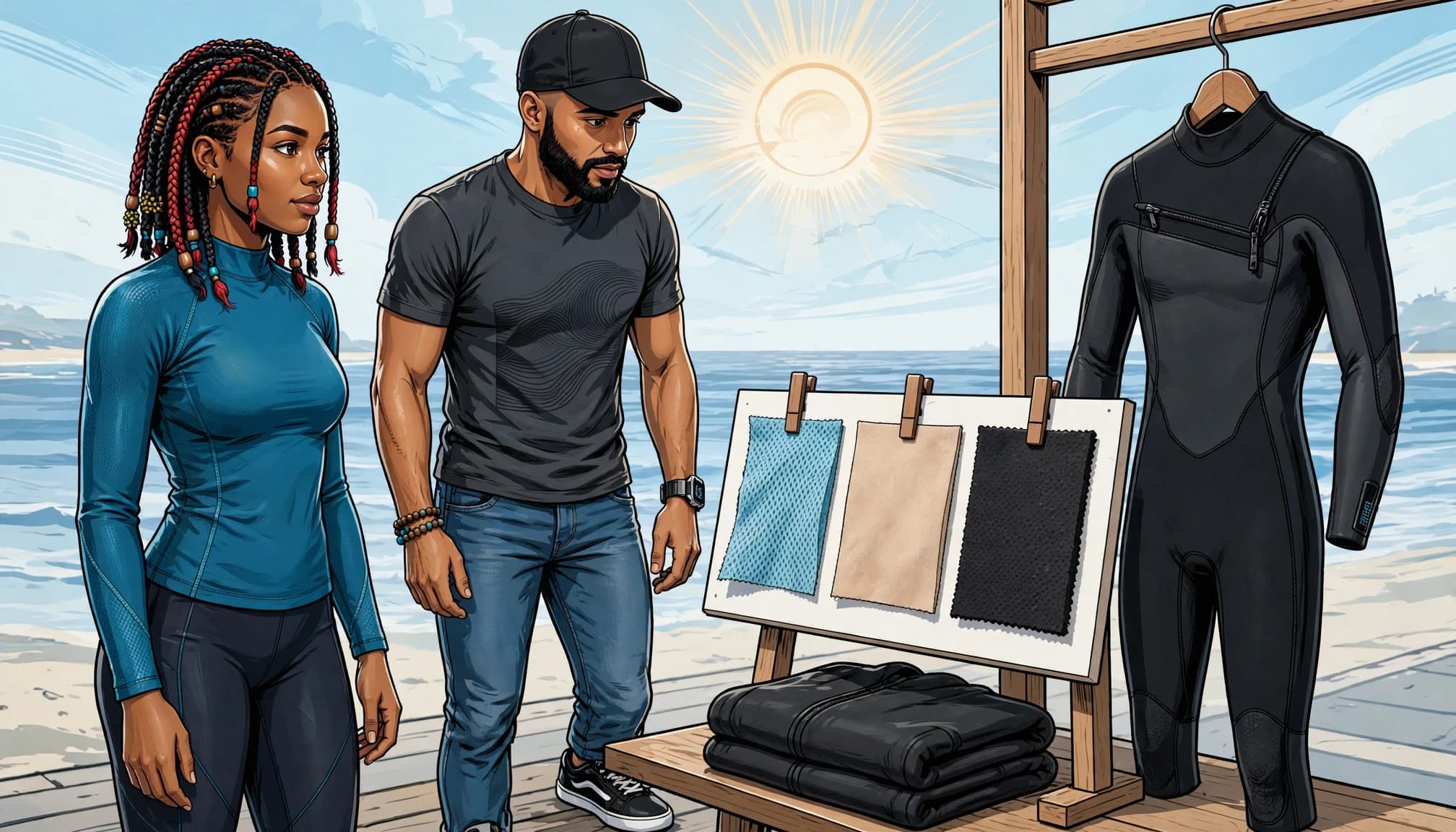
Compare UPF ratings, lining, stretch, and fabric claims
Abysse and Ocean Soul list UPF 50+ options. UVEA describes UPF 80 garments tested under UV Standard 801, including wet and stretched conditions. Different test details mean the numbers aren't a complete comparison on their own.
The Skin Cancer Foundation explains how wet or stretched clothing can lose protective ability. Test conditions matter when your chosen activity involves both.
Viera lists RECLAIM PRIME as 78% recycled nylon and 22% spandex, with four-way stretch and salt- and chlorine-water resistance. Those claims belong to that named fabric, not automatically to everything Viera sells.
Keep certification claims equally precise. A brand mentioning a standard doesn't establish that every garment carries it.
Know when a wetsuit or extra thermal layer matters
A swimsuit or lightweight rashguard doesn't replace a wetsuit in cold water. Consider water temperature, wind, session length, and time immersed when choosing thermal protection.
A higher UPF rating tells you about UV protection, not how warm a garment will keep you.
Ocean Soul lists 2.5 mm limestone-neoprene wetsuits. That thickness is a product specification, not a universal recommendation for every coast or surfer. Your thermal choice needs to match the actual conditions and your session.

Streetwear & Casual Styling
Switch from surf gear to a dry graphic-tee outfit
Pack a clean outfit separately so wet swimwear doesn't sabotage your dry clothes. Change after the session, once you're off the water and ready for food, travel, or general horizontal recovery.
Build around one of our Cyber-Brutalist Anime Graphic Tees with relaxed cargos or dark denim and comfortable sneakers. Cotton graphic tees belong here, on dry land. They don't replace quick-drying surf clothing or thermal protection.
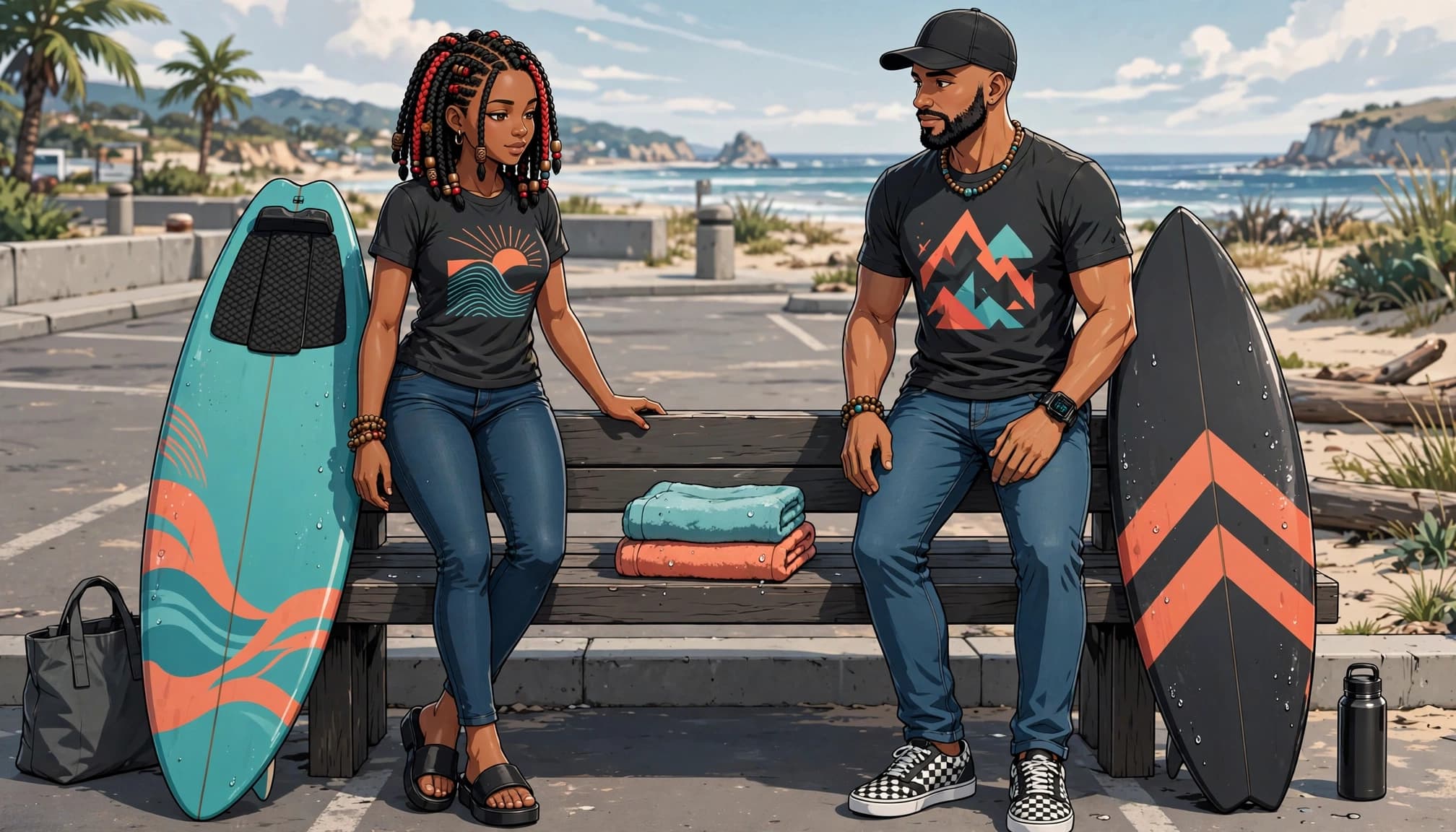
Keep the artwork visible and the layers simple
Pair our Cats Virtual Life More Fulfilling Than Mine Tee with charcoal cargos and skate sneakers. Your cat's simulated achievements can carry the conversation while you locate dinner.
For another combination, wear our Free Love Cyberpunk Tee with dark-wash denim and an open lightweight overshirt. Keep the graphic clear of bulky straps and tucks that fold away the artwork.
Choose a tee length that feels comfortable when seated. Repeat one small print color in an accessory if you like, then stop. Your shoes don't need their own anime opening sequence.
Frequently Asked Questions
Are surf brands' women's swimsuits different from regular bikinis?
Surf-focused designs may prioritize secure coverage and repeated movement more than leisure swimwear. You can still encounter substantial differences between individual products, so a surf label alone doesn't establish better support or construction.
Can you surf in a regular swimsuit?
You can use some regular swimsuits for gentle sessions if they stay secure through movement. Surf-focused cuts may reduce shifting, but no style guarantees the same result for every body or every wipeout.
Do recycled surfwear fabrics hold up in salt water?
Recycled content alone doesn't predict how your suit handles salt water. Product-specific fabric features, care instructions, and wear information are more useful than assuming every recycled blend performs alike.
What should you wear surfing in cold water?
Your cold-water outfit may require a wetsuit and suitable additional thermal gear for the conditions and session length. A swimsuit or lightweight rashguard alone doesn't provide the thermal protection you need for cold-water exposure.
Choose for the Water, Save the Graphics for Shore
Your most useful surfwear is the gear that stays comfortable through the session you're having. Prioritize secure fit, appropriate thermal protection, useful sun coverage, and construction details attached to the actual garment.
Choose women's surf brands by those needs rather than treating any label as a shortcut past fit. You want to spend your attention on the water, without repeatedly rescuing your outfit.
Keep your dry graphic tee packed separately. Once you're ashore and changed, your clothes can resume broadcasting your extremely specific internet personality.