

Swimming With Sea Turtles: How to Watch Responsibly
TrendReactTees.STORE TeamYou can enjoy seeing sea turtles in the water, but you shouldn't swim up to, follow, touch, or interact with a wild turtle. The best encounter lets the animal feed, rest, or swim without changing its plans because you showed up.
Before you head out, check the rules for your exact location and choose an outing that puts wildlife first. Pack a dry change of clothes for afterward, such as our Nature Is My Wifi tee or Leave No Trace tee. They're for the beach after your swim, not for wearing in the water.
This post may contain affiliate links. If you make a purchase through these links, I may earn a small commission at no extra cost to you.
Key Takeaways
- Watch sea turtles from a distance and let them choose their own route.
- Follow the rule for your location: distances differ between general guidance, Hawaiʻi, and individual parks.
- Never touch, chase, surround, feed, or block a turtle.
- Use zoom or binoculars instead of closing the gap for a photo.
- Check local access, weather, water conditions, and wildlife rules before your visit.
Swimming with sea turtles: how to enjoy a respectful encounter
"Swimming with sea turtles" can sound like an invitation to get close. NOAA Fisheries advises against swimming with, approaching, touching, or trying to interact with wild sea turtles. Think of the encounter as wildlife viewing: you watch while the turtle moves freely, and you leave it enough room to keep doing whatever it was doing.
Distance guidance depends on where you are. NOAA's general marine-life viewing guidance recommends at least 50 yards from sea turtles in U.S. waters, while Hawaiʻi guidance recommends at least 10 feet. Some parks set a larger distance. Check the applicable rule for your exact beach or water, then follow the strictest instruction that applies.
A turtle's calm behavior doesn't mean it wants company. Give it room whether it seems curious, unbothered, or completely focused on lunch.
Know the distance rule before you enter the water
NOAA's marine life viewing distances give the general 50-yard recommendation. For Hawaiʻi, NOAA recommends at least 10 feet (3 meters) on land and in the water in its Hawaiʻi wildlife guidance. At Kaloko-Honokōhau National Historical Park, visitors should stay at least 20 feet away.
Those numbers aren't interchangeable. Rules can differ by location, and one beach's guidance doesn't automatically apply to the next one. Find the instructions for the place you plan to visit, and give the turtle more room if the local rule requires it.
Choose a viewing trip that puts the turtle first
A responsible outing explains local wildlife rules before anyone enters the water. Look for a guide who keeps the group back, makes space for animals to pass, and doesn't sell touching or close encounters as the main event.
Read current park or agency guidance before booking, too. A guide can help you understand the site, but a small group still needs to follow the rules for the water they're in. If the plan depends on getting right beside a turtle, pick a different plan.
Where you may see sea turtles, and how to plan your visit
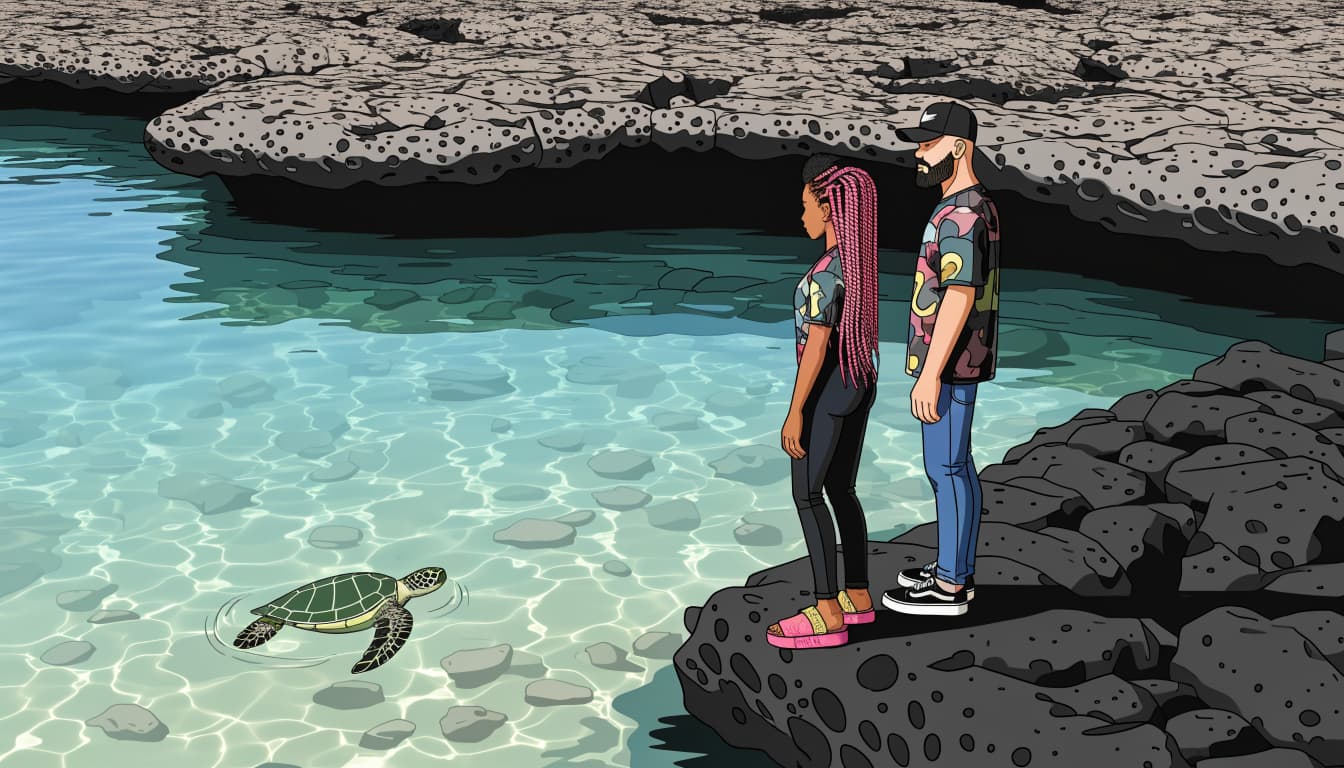
Hawaiʻi offers a grounded example of what respectful viewing can look like. Green sea turtles, known locally as honu, may frequent calm bays, shallow offshore reefs, and lava shelves. Those habitats make it possible to watch from shore or in the water without treating a sighting like a photo-op you need to chase down.
Kaloko-Honokōhau National Historical Park is one place where visitors may see turtles resting and feeding along the coast. The park's turtle guidance asks people to stay at least 20 feet away. Follow that park-specific distance there, rather than assuming NOAA's 10-foot Hawaiʻi recommendation replaces the posted park rule.
Before you go, check access, weather, water conditions, and the rules for the specific site. A calm bay or a well-known viewing spot can make a visit more comfortable, but neither guarantees a turtle sighting. Build your plans around enjoying the coast, not getting a guaranteed wildlife appearance.
Check local rules, conditions, and access before you go
Look up the relevant NOAA, state, park, or site guidance close to your visit. Rules can differ between beaches and nearby waters, and instructions may cover both land and water. Pay attention to closures, posted signs, and any guidance from park staff.
Conditions matter for your own safety, too. Wind, surf, visibility, and currents can change how manageable a snorkel is. If the water feels beyond your ability, stay on shore. A turtle sighting is never worth pushing into unsafe conditions.
Bring simple gear that helps you watch from farther away
A mask and snorkel can help you see underwater; fins may suit some sites if you're comfortable using them and local conditions allow. From shore, binoculars or a camera with zoom can help you watch without wading closer.
Choose gear you can manage safely, and don't use it as an excuse to close the gap. A longer selfie stick doesn't create a respectful distance. It creates a longer object near a wild animal.
What to do when a sea turtle appears nearby
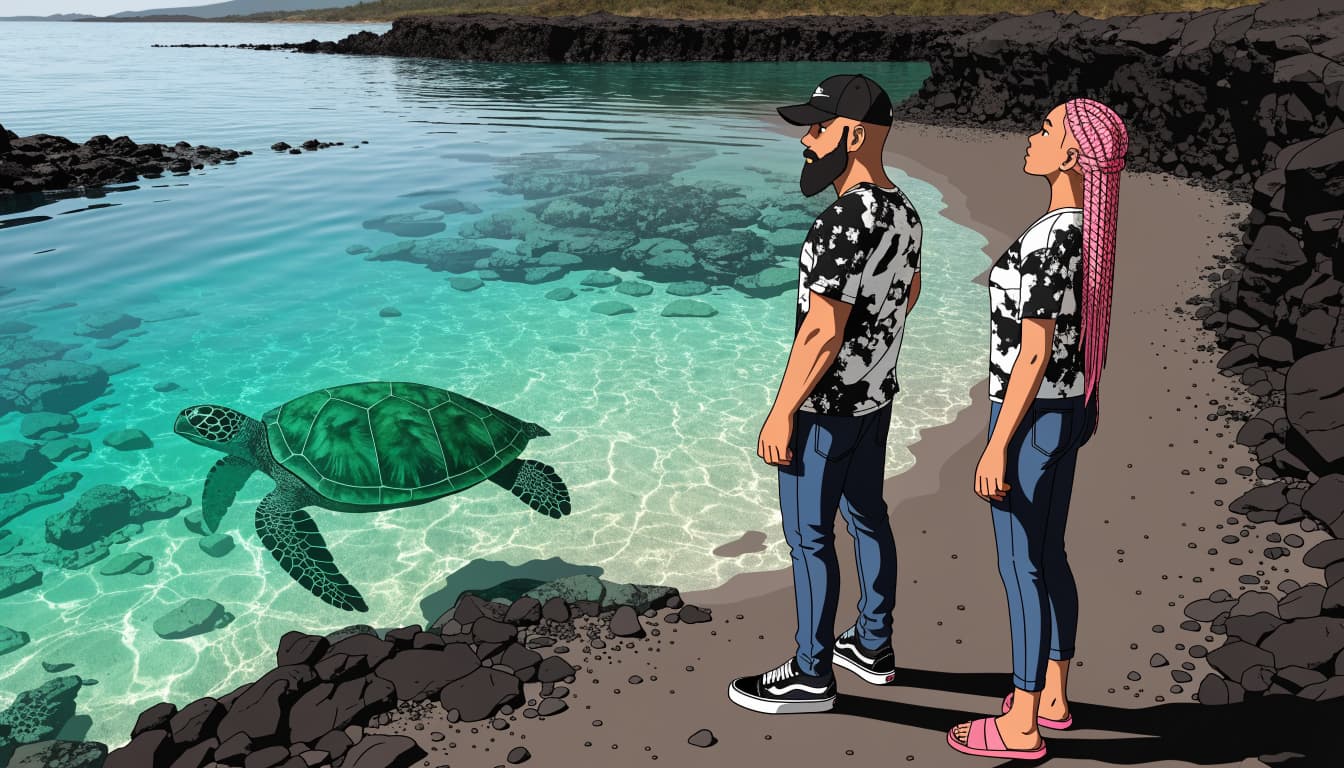
If a turtle shows up while you're in the water, stay calm and stop moving toward it. Leave an open path, then let the turtle decide where to go. Don't touch, chase, surround, block, feed, or try to get a reaction from it. A curious-looking turtle is still a wild animal, not an invitation to interact.
NOAA's sea turtle viewing advice emphasizes sharing the water without disturbing wildlife. If the turtle changes direction or swims away, give it more space. Keep the encounter brief and let the animal carry on.
Keep your movements quiet and your route clear
If you're with friends, spread out instead of forming a ring around the turtle. Keep noise low and avoid blocking its way to the surface, shore, or open water. Turtles need room to move, and a group closing in can cut off more than one route.
Move away calmly if the turtle approaches. Don't reach out, even if it passes close by. The goal is to avoid changing its behavior, not to see how close it will let you get.
Take photos without getting closer
Use zoom, take a quick look, and keep your movements low-key. If the photo isn't clear, let it go. A blurry picture is a better souvenir than a close approach that stresses the animal.
Keep your phone or camera secure, and don't extend a selfie stick, camera, or other object toward the turtle. You don't need a perfect angle to remember a wild animal moving through its own habitat.
Why keeping your distance protects turtles and you
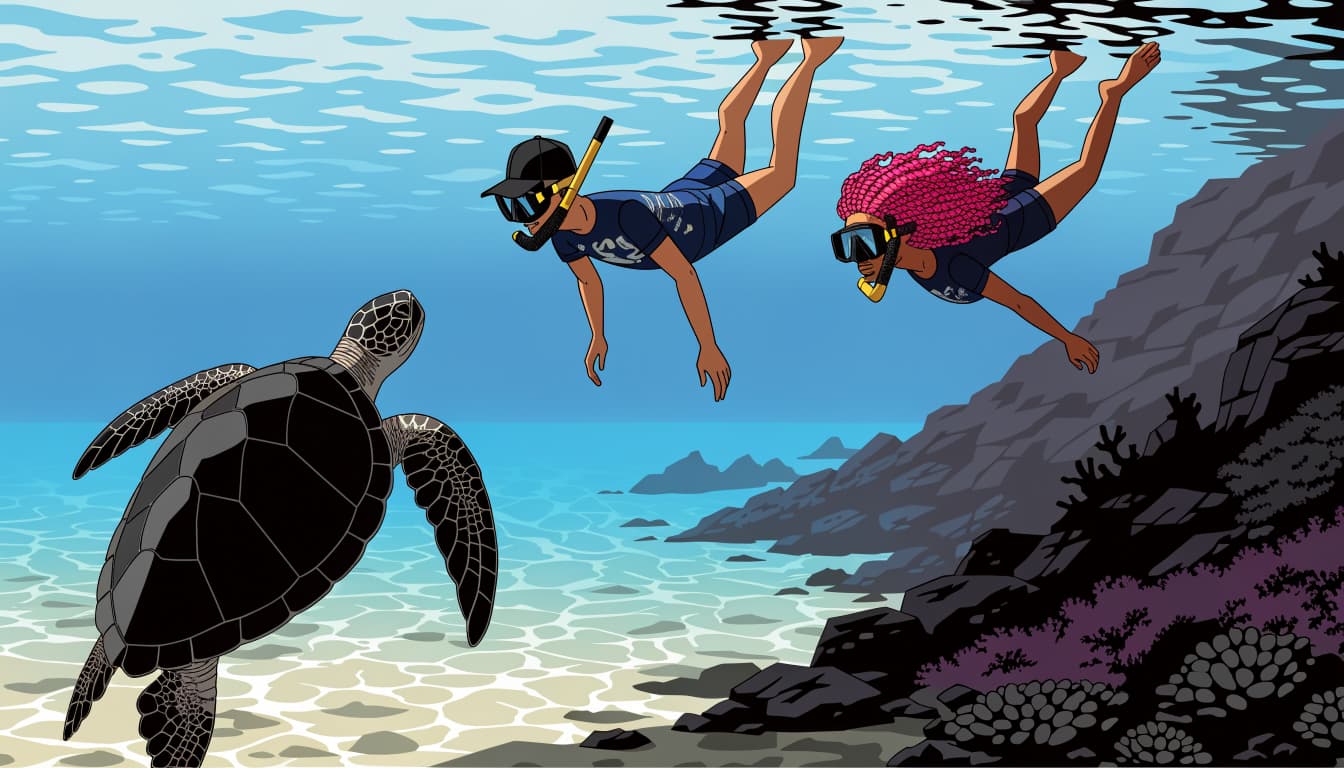
Close approaches can disrupt a turtle that's feeding, resting, or nesting. Turtles also need access to the surface to breathe, so crowding or blocking their route can interfere with a basic need. Touching or feeding may stress them, and a turtle can bite and seriously injure a person who gets too close.
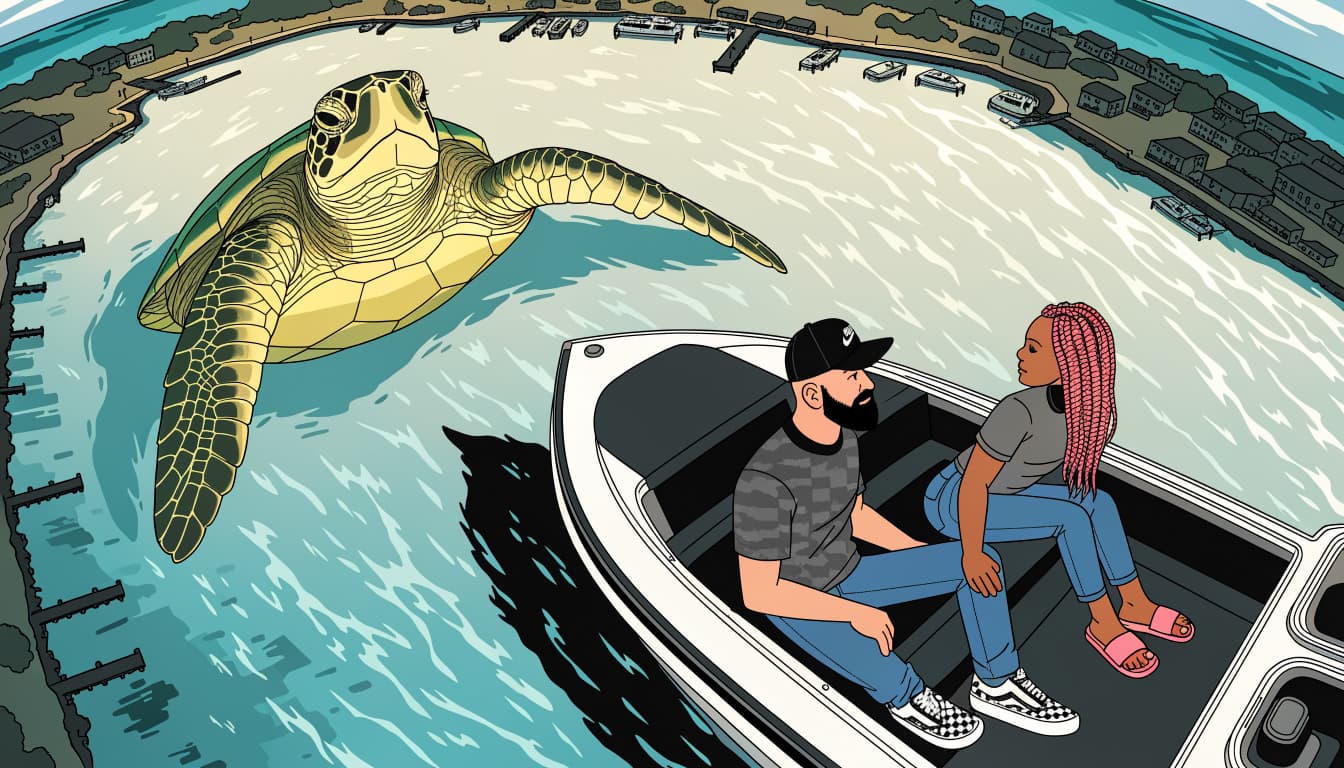
Boats add another risk. A turtle surfacing to breathe can be vulnerable to a strike. Keep well back, don't chase a turtle or trap it between a boat and shore, and follow local boating guidance. Slow to no-wake speed where advised, and put the engine in neutral when appropriate so the turtle can pass.
Protect turtles on beaches as well as in the water
If you visit a nesting beach, follow posted instructions and avoid shining lights at turtles. Before you leave, clear away beach items and fill holes that could obstruct turtles or hatchlings. Small beach leftovers can become obstacles after people have gone home.
Streetwear & Casual Styling
Once you're back on dry ground, a graphic tee makes an easy post-swim change. Our Cyber-Brutalist Anime Graphic Tees work with simple shorts, comfortable shoes, and a light layer if the breeze shows up. Keep the outfit relaxed; the main character of the day was the turtle, and it deserves top billing.
Try the Free Love Cyberpunk Tee with shorts and easy slip-ons, or wear the Reading Total System Crash Tee with a light overshirt. Both are dry-clothes ideas, not swimwear. If your plans include a chilly or windy shoreline, see our cold-weather beach outfit ideas for layering inspiration.

Frequently Asked Questions
Can you swim close to a sea turtle if it swims toward you?
A turtle approaching you doesn't give you permission to touch or follow it. Stay still or move away calmly, leaving it room to continue on its path.
Can you touch or feed a sea turtle?
No. Touching or feeding can stress or harm a turtle, and it may violate local or federal protections. Keep your hands to yourself and your snacks packed away.
Are sea turtles dangerous to swimmers?
Sea turtles are wild animals and may bite if disturbed. Don't reach toward one or corner it; keeping your distance is the smart move, not a reason to fear every turtle in the water.
Is there a best season to see sea turtles?
Sighting chances and local guidance depend on the destination and species, so there isn't one reliable season for every place. Check current local information, and never disturb turtles nesting on a beach.
Give the Turtle the Final Say
A memorable encounter doesn't require contact. Watch from the required distance, keep the turtle's path open, and let it choose where to go next.
Before your visit, learn the rules for the beach or water you'll use. Share the same approach with anyone traveling with you. The best wildlife photo is the one you didn't have to chase.